
Nintedanib Side Effects: Important Safety Risks & Management Guide
Introduction
Understanding nintedanib side effects is extremely important for patients beginning treatment for pulmonary fibrosis and other chronic fibrotic lung diseases. Many individuals researching antifibrotic therapies want reliable information about digestive symptoms, liver safety, medication interactions, and long-term tolerability before starting therapy.
Patients researching chronic respiratory treatments often want detailed information about medication safety before beginning therapy. Searches related to nintedanib side effects are especially common among individuals diagnosed with fibrotic lung conditions who are exploring long-term treatment options.

Nintedanib is an antifibrotic medication commonly prescribed for conditions involving progressive lung fibrosis. While treatment may help slow disease progression in eligible patients, side effects can occur and may require monitoring or supportive management.
This medically reviewed educational guide explains common and serious nintedanib side effects, discusses clinical safety concerns, reviews drug interactions, and highlights important monitoring recommendations.
What Is Nintedanib?
Nintedanib is a prescription medication used in the management of certain progressive fibrotic lung diseases, including idiopathic pulmonary fibrosis (IPF) and some forms of interstitial lung disease (ILD).
The medication belongs to a class known as tyrosine kinase inhibitors and works by targeting pathways involved in tissue scarring and fibrosis progression.
Healthcare providers may prescribe nintedanib as part of a long-term disease management plan intended to help slow lung function decline.
Nintedanib is generally available in capsule form and may be marketed under different brand or generic names depending on the country.

How Nintedanib Works
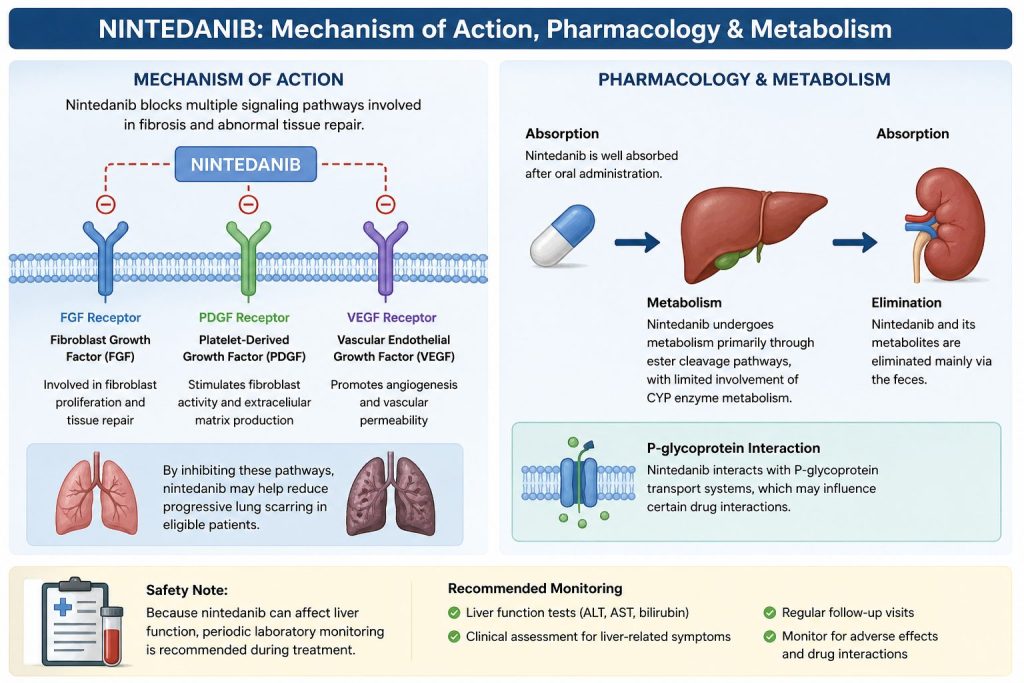
Nintedanib blocks multiple cellular signaling pathways involved in fibrosis and abnormal tissue repair. The medication primarily targets receptors associated with:
Fibroblast growth factor (FGF)
Platelet-derived growth factor (PDGF)
Vascular endothelial growth factor (VEGF)
By interfering with these pathways, nintedanib may help reduce progressive lung scarring in eligible patients.
Pharmacology and Metabolism
Nintedanib undergoes metabolism primarily through ester cleavage pathways, with limited involvement of CYP enzyme metabolism. The medication also interacts with P-glycoprotein transport systems, which may influence certain drug interactions.
Because the medication can affect liver function, periodic laboratory monitoring is recommended during treatment.
Common Nintedanib Side Effects
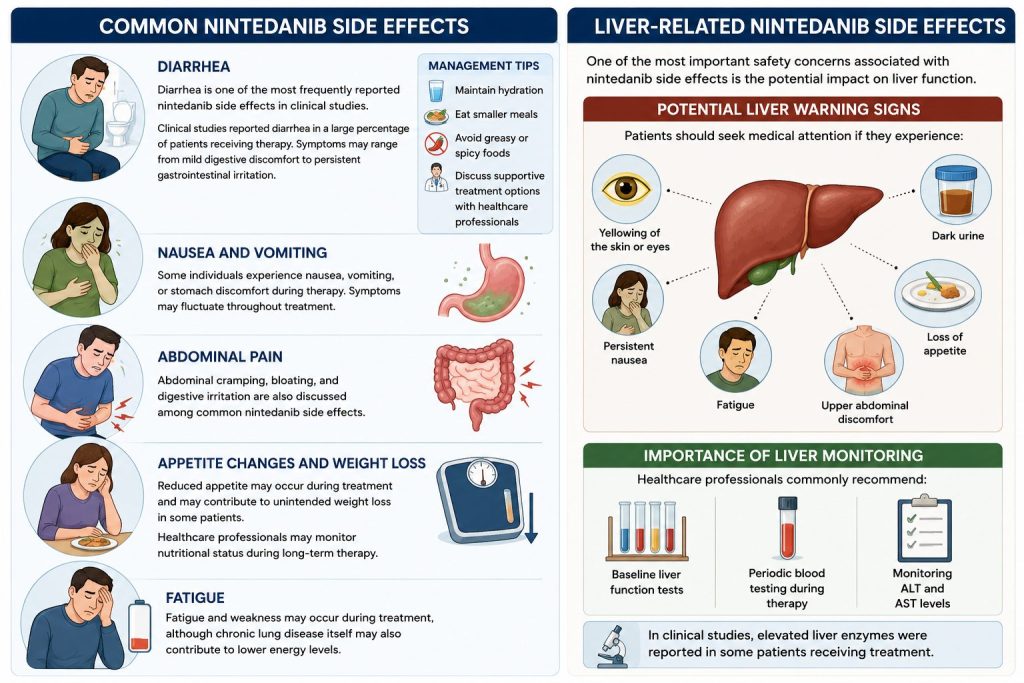
Diarrhea
Diarrhea is one of the most frequently reported nintedanib side effects in clinical studies and
Image Alt Text: Digestive nintedanib side effects during pulmonary fibrosis treatment
Clinical studies reported diarrhea in a large percentage of patients receiving therapy. Symptoms may range from mild digestive discomfort to persistent gastrointestinal irritation.
Management Tips
- Maintain hydration
- Eat smaller meals
- Avoid greasy or spicy foods
- Discuss supportive treatment options with healthcare professionals
Nausea and Vomiting
Some individuals experience nausea, vomiting, or stomach discomfort during therapy. Symptoms may fluctuate throughout treatment.
Abdominal Pain
Abdominal cramping, bloating, and digestive irritation are also discussed among common nintedanib side effects.
Appetite Changes and Weight Loss
Reduced appetite may occur during treatment and may contribute to unintended weight loss in some patients.
Healthcare professionals may monitor nutritional status during long-term therapy.
Fatigue
Fatigue and weakness may occur during treatment, although chronic lung disease itself may also contribute to lower energy levels.
Liver-Related Side Effects and Monitoring
Nintedanib may affect liver enzyme levels in some individuals. Because of this, healthcare professionals commonly recommend periodic liver function monitoring during treatment.
Potential Liver-Related Symptoms
- Fatigue
- Dark urine
- Loss of appetite
- Yellowing of the skin or eyes
- Persistent nausea
Any unusual or concerning symptoms should be discussed promptly with a healthcare professional.
Importance of Routine Testing
Routine laboratory testing may help healthcare providers evaluate medication tolerability and determine whether treatment adjustments are necessary.
Less Common but Serious Safety Concerns
Although many patients tolerate therapy reasonably well, less common but potentially serious complications may occur in some individuals.
Bleeding Risk
Nintedanib may influence bleeding risk in certain patients, particularly those taking anticoagulant medications or those with underlying bleeding disorders.
Cardiovascular Considerations
Healthcare professionals may carefully evaluate cardiovascular history before initiating treatment because some patients may have additional risk factors requiring monitoring.
Gastrointestinal Complications
Rare but serious gastrointestinal complications may occur in some cases. Patients are generally encouraged to report severe or persistent digestive symptoms promptly.
Who May Be More Sensitive to Side Effects?
Not every patient experiences side effects in the same way. Several factors may influence tolerability, including:
- Age
- Overall liver function
- Other medications
- Nutritional status
- Pre-existing gastrointestinal conditions
- Severity of underlying lung disease
Healthcare professionals may individualize monitoring plans based on patient-specific risk factors.
Managing Nintedanib Side Effects
Dietary and Lifestyle Considerations
Some patients discuss dietary adjustments with healthcare providers to help manage digestive discomfort during treatment.
Hydration Support
Maintaining hydration may be important for patients experiencing diarrhea or digestive symptoms.
Regular Medical Follow-Up
Routine appointments may allow healthcare professionals to monitor side effects, review laboratory results, and adjust treatment plans if needed.
Medication Adherence
Patients should follow prescribed dosing instructions and avoid changing therapy without professional guidance.
Nintedanib vs Pirfenidone Side Effects
Patients researching antifibrotic therapies often compare nintedanib with pirfenidone because both medications are used in pulmonary fibrosis management.
Nintedanib
- Diarrhea is frequently discussed
- Digestive symptoms are common
- Liver monitoring is important
Pirfenidone
- Photosensitivity reactions may occur
- Nausea and appetite changes are common topics
- Skin rash may be discussed more frequently
Individual tolerability differs considerably, and treatment decisions are highly personalized.
Long-Term Safety Considerations
Because nintedanib may be prescribed as a long-term therapy, ongoing monitoring and communication with healthcare professionals remain essential.
Important long-term considerations may include:
- Liver function monitoring
- Digestive symptom management
- Medication adherence
- Nutritional support
- Routine respiratory evaluations
Long-term treatment experiences vary widely between individuals.
Data & Insights Section
Nintedanib continues to be one of the recognized antifibrotic therapies used in respiratory specialty care worldwide. Online searches related to nintedanib side effects have increased as awareness of pulmonary fibrosis and chronic respiratory diseases grows internationally.
Digestive symptoms remain among the most frequently discussed tolerability concerns in patient communities and educational resources. Liver monitoring is also consistently emphasized by healthcare professionals due to the potential for liver enzyme changes during treatment.
Many patients researching nintedanib seek balanced information that addresses both treatment goals and practical quality-of-life considerations. Educational content that explains side effects in accessible language continues to attract strong search interest globally.
Healthcare professionals often encourage proactive communication regarding side effects so treatment strategies can be adjusted appropriately when needed.
Frequently Asked Questions (FAQs)
1. What are the most common nintedanib side effects?
Commonly discussed side effects include diarrhea, nausea, abdominal discomfort, fatigue, appetite changes, and liver enzyme elevations. Symptom severity varies between individuals.
2. Does nintedanib cause diarrhea?
Yes. Diarrhea is one of the most frequently reported side effects associated with nintedanib therapy. Some patients experience mild symptoms, while others may require additional medical monitoring.
3. Can nintedanib affect the liver?
Nintedanib may influence liver enzyme levels in some patients. Healthcare professionals often recommend periodic laboratory testing during treatment to monitor liver function.
4. Is fatigue common with nintedanib?
Some individuals report fatigue or reduced energy during treatment. Chronic lung disease itself may also contribute to tiredness and decreased physical stamina.
5. How long do side effects last?
Side effect duration varies between patients. Some symptoms may improve as the body adjusts to treatment, while others may require ongoing monitoring or management strategies.
6. Are serious side effects possible?
Although many patients tolerate therapy reasonably well, serious complications may occur in some cases. Patients should report concerning symptoms to healthcare professionals promptly.
7. Does nintedanib require regular testing?
Yes. Healthcare professionals commonly recommend periodic liver function tests and routine follow-up appointments during therapy.
8. Can patients stop nintedanib if side effects occur?
Patients should not discontinue prescription therapy without consulting a healthcare professional. Treatment changes should always be medically supervised.
9. Is nintedanib used long term?
In many cases, nintedanib is prescribed as part of a long-term disease management plan for chronic fibrotic lung conditions.
10. How does nintedanib compare with pirfenidone regarding side effects?
Digestive symptoms are common with both medications. Nintedanib is frequently associated with diarrhea, while pirfenidone is more commonly linked to photosensitivity and skin-related reactions.
Related Long-Tail Keywords
- nintedanib diarrhea management
- nintedanib liver side effects
- nintedanib treatment risks
- common side effects of nintedanib
- nintedanib safety information
- nintedanib long term side effects
- nintedanib vs pirfenidone side effects
- nintedanib patient experiences
- nintedanib medication guide
Suggested Internal Linking Topics
- Pulmonary fibrosis treatment overview
- Antifibrotic medication comparison guide
- Managing chronic respiratory disease
- Understanding medication side effects
- Drug safety and liver monitoring
Conclusion
This guide to nintedanib side effects highlights important safety considerations related to digestive symptoms, liver monitoring, and long-term treatment management. While many patients may tolerate therapy adequately, side effect experiences vary considerably between individuals.
Patients considering antifibrotic therapy should discuss treatment goals, potential risks, monitoring requirements, and quality-of-life concerns with qualified healthcare professionals. Regular follow-up and open communication remain important components of responsible long-term care.
For more educational information about respiratory therapies, pulmonary fibrosis management, and medication safety, consider consulting trusted healthcare professionals or reliable medical resources.