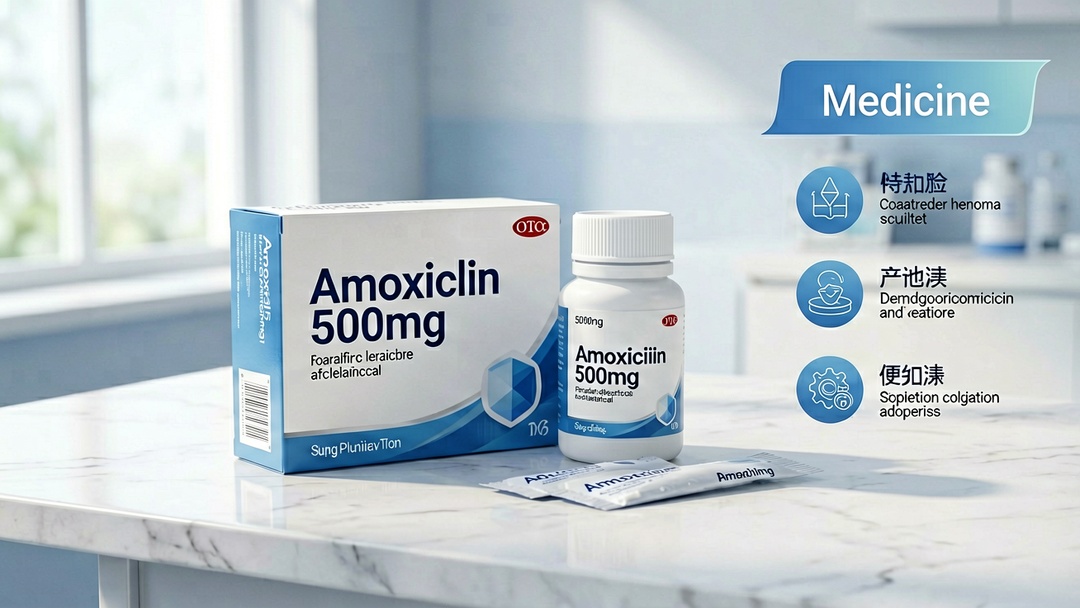
What Is Amoxicillin 500mg?
Amoxicillin 500mg is a widely prescribed generic antibiotic belonging to the aminopenicillin class of beta-lactam antibiotics. It is a semi-synthetic derivative of penicillin, developed to provide enhanced oral bioavailability and a broader spectrum of activity against both Gram-positive and Gram-negative bacteria. Amoxicillin works by interfering with bacterial cell wall synthesis, ultimately leading to cell lysis and death. The 500mg capsule or tablet formulation is one of the most commonly prescribed dosages for adult patients with moderate bacterial infections affecting the respiratory tract, urinary tract, skin, and other organ systems.
First approved by the US Food and Drug Administration (FDA) in 1972, amoxicillin remains on the World Health Organization’s List of Essential Medicines, underscoring its fundamental role in primary healthcare worldwide. Generic versions of Amoxicillin 500mg are manufactured by multiple Indian pharmaceutical companies including CIPLA, Sun Pharmaceutical Industries, Dr. Reddy’s Laboratories, Aurobindo Pharma, and Alkem Laboratories, making it highly accessible and affordable in both domestic and international markets.
Mechanism of Action
Amoxicillin exerts its bactericidal effects by inhibiting the synthesis of peptidoglycan, an essential structural component of bacterial cell walls. Specifically, it binds to penicillin-binding proteins (PBPs) located on the bacterial cell membrane, disrupting the transpeptidation reaction that cross-links peptidoglycan chains. This inhibition weakens the cell wall structure, causing osmotic instability and subsequent bacterial cell rupture.
The drug exhibits time-dependent killing, meaning its antibacterial efficacy correlates with the duration that free drug concentrations remain above the minimum inhibitory concentration (MIC) for the target pathogen. Amoxicillin is most effective against actively dividing bacteria. Its spectrum covers Streptococcus pneumoniae, Streptococcus pyogenes, Haemophilus influenzae, Escherichia coli, Proteus mirabilis, and Enterococcus faecalis, among others. However, widespread resistance due to beta-lactamase production has limited its utility against certain strains, which is why it is sometimes combined with clavulanic acid (co-amoxiclav) to overcome enzymatic degradation.
Clinical Uses and Indications
Amoxicillin 500mg is indicated for the treatment of a wide range of bacterial infections in adults and children. Primary indications include:
- Respiratory Tract Infections: Acute bacterial sinusitis, community-acquired pneumonia, acute exacerbations of chronic bronchitis, and pharyngitis/tonsillitis caused by susceptible Streptococcus strains.
- Urinary Tract Infections (UTIs): Uncomplicated cystitis and asymptomatic bacteriuria in pregnant women, particularly when caused by susceptible E. coli or Proteus mirabilis.
- Otitis Media: Acute otitis media in pediatric patients, often first-line therapy according to clinical practice guidelines.
- Skin and Soft Tissue Infections: Impetigo, erysipelas, and infected wounds caused by susceptible streptococcal or staphylococcal species.
- Helicobacter pylori Eradication: As part of triple therapy (amoxicillin, clarithromycin, and a proton pump inhibitor) for peptic ulcer disease.
- Lyme Disease: Early localized Lyme disease (erythema migrans) in children and pregnant women.
- Endocarditis Prophylaxis: Single-dose prophylaxis for certain dental procedures in patients with high-risk cardiac conditions.
Dosage and Administration
| Condition | Adult Dosage | Duration |
|---|---|---|
| Acute sinusitis | 500mg every 8 hours or 875mg every 12 hours | 5–7 days |
| Community-acquired pneumonia | 500mg–875mg every 12 hours | 7–10 days |
| Uncomplicated UTI | 500mg every 12 hours | 3–7 days |
| Pharyngitis/Tonsillitis | 500mg every 12 hours or 250mg every 8 hours | 10 days |
| H. pylori eradication | 1g twice daily (with PPI + clarithromycin) | 7–14 days |
| Lyme disease (early) | 500mg three times daily | 14–21 days |
Dosage adjustments are required in patients with severe renal impairment (creatinine clearance <30 mL/min). The extended-release formulation (Amoxicillin ER) should not be substituted with immediate-release capsules on a milligram-for-milligram basis.
Side Effects and Safety Profile
Amoxicillin is generally well-tolerated, with most adverse effects being mild and transient. Common side effects (occurring in 1–10% of patients) include diarrhea, nausea, vomiting, rash, and vulvovaginal candidiasis. Diarrhea is the most frequently reported gastrointestinal complaint, often attributable to disruption of normal gut flora. Hypersensitivity reactions ranging from mild maculopapular rash to severe anaphylaxis occur in 3–7% of patients, particularly those with a history of penicillin allergy.
Serious but rare adverse events include: antibiotic-associated pseudomembranous colitis (C. difficile infection), Stevens-Johnson syndrome, toxic epidermal necrolysis, drug rash with eosinophilia and systemic symptoms (DRESS), acute interstitial nephritis, hepatitis, and hemolytic anemia. Patients with infectious mononucleosis have a markedly elevated risk (up to 70–100%) of developing a non-allergic maculopapular rash and should generally avoid amoxicillin therapy. Caution is advised in patients with a history of cephalosporin allergy due to 5–10% cross-reactivity risk. Pregnancy category B: amoxicillin is considered safe during pregnancy when clearly needed.
Amoxicillin vs. Other Antibiotics: Comparison
| Antibiotic | Class | Spectrum | Typical Dosing | Key Advantage |
|---|---|---|---|---|
| Amoxicillin | Aminopenicillin | Broad (Gram+, some Gram-) | 500mg TID/BID | Well-tolerated, oral bioavailability |
| Amoxicillin-Clavulanate | Beta-lactam + inhibitor | Broader (includes beta-lactamase producers) | 875/125mg BID | Covers resistant strains |
| Azithromycin | Macrolide | Broad (atypicals) | 500mg daily × 3–5 days | Short course, atypical coverage |
| Cephalexin | 1st-gen cephalosporin | Gram-positive focused | 500mg QID | Good for skin infections |
| Doxycycline | Tetracycline | Broad (atypicals, tick-borne) | 100mg BID | Anti-inflammatory properties |
| Ciprofloxacin | Fluoroquinolone | Broad Gram-negative | 500mg BID | Excellent against Pseudomonas |
Indian Generic Pricing and Affordability
India is the world’s largest manufacturer of generic amoxicillin, supplying approximately 50% of the global demand. Indian generic Amoxicillin 500mg is available at significantly lower costs compared to branded versions in Western markets. A standard course of 10 capsules of generic Amoxicillin 500mg from Indian manufacturers is typically priced between ₹41–₹99 (approximately $0.49–$1.19). In the United States, a comparable course of generic amoxicillin may range from $8–$30 depending on insurance coverage and pharmacy. For patients seeking long-term or repeated antibiotic therapy, purchasing generic Amoxicillin 500mg from Indian pharmacies offers substantial cost savings without compromising on quality, as Indian manufacturing facilities are regulated by the Central Drugs Standard Control Organization (CDSCO) and often hold WHO-GMP and USFDA approvals. International patients can typically expect to save between 70–90% compared to local US pharmacy prices. Many Indian online pharmacies now offer direct shipping to international customers, further improving access to affordable antibiotic therapy.
Frequently Asked Questions (FAQ)
Can I drink alcohol while taking Amoxicillin 500mg?
While moderate alcohol consumption does not directly reduce amoxicillin efficacy, it may increase the risk of gastrointestinal side effects such as nausea, vomiting, and diarrhea. It is advisable to limit or avoid alcohol during the treatment course.
How long does Amoxicillin 500mg take to work?
Most patients begin to experience symptomatic improvement within 24–72 hours of starting the medication. However, it is essential to complete the full prescribed course even if symptoms resolve early to prevent resistance and relapse.
Can Amoxicillin 500mg be taken during pregnancy?
Amoxicillin is classified as FDA Pregnancy Category B. Animal studies have not demonstrated fetal risk, and amoxicillin is widely prescribed during pregnancy for conditions such as UTIs and respiratory infections. Nevertheless, a healthcare provider should always be consulted before use.
What should I do if I miss a dose?
Take the missed dose as soon as you remember. If it is nearly time for the next scheduled dose, skip the missed dose and resume the regular dosing schedule. Do not double the dose to compensate.
Is Amoxicillin 500mg the same as penicillin?
Amoxicillin is a semi-synthetic aminopenicillin, structurally related to penicillin but with enhanced oral absorption and a broader antibacterial spectrum. However, cross-allergy exists — patients allergic to penicillin should also avoid amoxicillin.
Drug Interactions and Precautions
Amoxicillin has several clinically significant drug interactions. Concomitant use with methotrexate increases methotrexate toxicity due to reduced renal clearance. Warfarin anticoagulation may be potentiated, requiring more frequent INR monitoring. Probenecid decreases renal tubular secretion of amoxicillin, leading to higher and prolonged serum concentrations. Allopurinol co-administration has been associated with an increased incidence of skin rash. Oral contraceptive efficacy may be reduced, and patients should be advised to use additional barrier contraception during treatment. Patients with a history of penicillin hypersensitivity, infectious mononucleosis, phenylketonuria (certain formulations), or severe renal impairment require special monitoring or alternative therapy.
Safety and Regulatory Information
Amoxicillin is regulated as a prescription-only medication (Schedule H) in India under the Drugs and Cosmetics Rules, 1945. In the United States, it is available by prescription only and is regulated by the FDA under NDA 050760. Generic manufacturers must demonstrate bioequivalence to the reference listed drug (Teva Pharmaceuticals’ branded product in the US). The Indian generic pharmaceutical industry operates under strict regulatory oversight by the CDSCO, and many manufacturers voluntarily comply with USFDA, EMA, and WHO-GMP standards. Patients should always verify that their generic amoxicillin is purchased from licensed, reputable pharmacies that provide genuine, quality-assured products with appropriate storage and shipping conditions.
References
- US Food and Drug Administration. Amoxicillin Prescribing Information. FDA Label Database. 2023.
- World Health Organization Model List of Essential Medicines — 22nd List, 2021. WHO/MHP/HPS/EML/2021.02.
- Gutierrez I, et al. Amoxicillin: A Review of Its Clinical Pharmacokinetics and Pharmacodynamics. J Antimicrob Chemother. 2020;75(3):521–534.
- Li J, et al. Clinical Practice Guidelines for the Diagnosis and Management of Community-Acquired Pneumonia. Clin Infect Dis. 2019;68(6):e1–e32.
- National Institute for Health and Care Excellence (NICE). Antimicrobial Prescribing Guidelines: Amoxicillin. NICE Guideline NG. 2022.
- Katzung BG, Vanderah TW. Basic and Clinical Pharmacology. 15th Edition. McGraw-Hill; 2021.
Disclaimer: This article is for informational purposes only and does not constitute medical advice. Always consult a qualified healthcare provider before starting any medication. Pricing information is approximate and subject to change based on manufacturer, pharmacy, location, and market conditions. Generic medications should only be purchased from licensed and reputable sources.