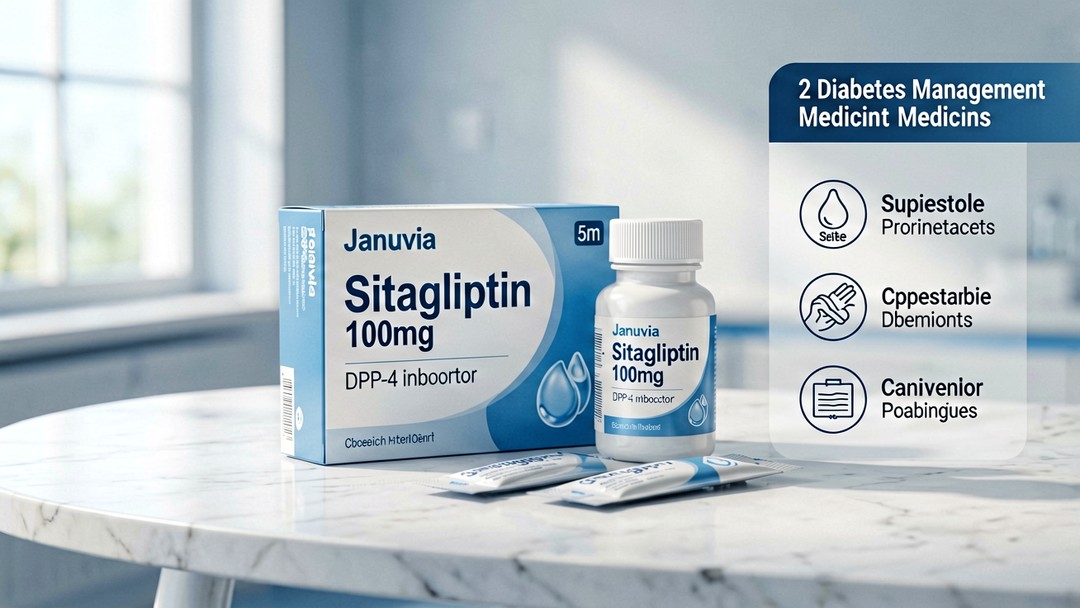
Sitagliptin — sold as Januvia by Merck and now available as a bioequivalent generic from Indian manufacturers — is one of the most prescribed oral medications for type 2 diabetes in the world. As a DPP-4 inhibitor, it lowers blood sugar with a very low risk of hypoglycemia and a neutral effect on weight, which makes it an attractive option for patients who cannot tolerate metformin or need an add-on therapy. This guide covers how sitagliptin works, 100 mg dosing and kidney adjustments, its safety record (including the pancreatitis and joint-pain warnings), and what generic sitagliptin from India costs versus brand Januvia.
What Is Sitagliptin?
Sitagliptin is the first drug in the DPP-4 inhibitor class, approved by the FDA in 2006 as Januvia. It is taken once daily as a 25 mg, 50 mg, or 100 mg tablet. Merck’s Januvia became one of the best-selling diabetes drugs ever, with multi-billion-dollar annual sales at its peak, and it remains a standard comparator in diabetes trials. Generic sitagliptin is now manufactured by Indian companies including Sun Pharma, Dr. Reddy’s, Lupin, and MSN, and is exported at a small fraction of the brand price.
How Sitagliptin Works: Mechanism of Action
Sitagliptin inhibits the enzyme DPP-4, which normally degrades two gut hormones called incretins — GLP-1 and GIP. By blocking DPP-4, sitagliptin raises active incretin levels:
- Glucose-dependent insulin release — higher GLP-1 makes the pancreas secrete more insulin, but only when blood sugar is elevated, which is why hypoglycemia risk is low.
- Suppressed glucagon secretion — reduced glucagon from alpha cells lowers the liver’s glucose output.
- Slowed gastric emptying (mild) — a minor effect compared with GLP-1 receptor agonists.
- Weight-neutral — unlike sulfonylureas and insulin, sitagliptin neither causes significant weight gain nor promotes loss; it is essentially weight-neutral.
The glucose-dependent mechanism is the key safety advantage: because the drug only works when sugar is high, the risk of driving glucose too low is much smaller than with sulfonylureas.
Approved Uses of Sitagliptin
- Type 2 diabetes as monotherapy — when diet and exercise alone do not control blood sugar (usually when metformin is not tolerated).
- Add-on to metformin — the most common combination; sitagliptin plus metformin lowers HbA1c by roughly 0.6–1.0%.
- Add-on to sulfonylureas, SGLT2 inhibitors, or insulin — for patients not at goal on these agents.
- Combination tablets — Janumet (sitagliptin + metformin) is widely used for pill burden reduction.
Sitagliptin is not approved for type 1 diabetes and does not replace insulin in insulin-dependent patients.
Dosage and Administration
| Population | Dose | Frequency | Notes |
|---|---|---|---|
| Normal kidney function | 100 mg | Once daily | Any time of day, with or without food |
| eGFR 30–45 mL/min | 50 mg | Once daily | Reduce per renal function |
| eGFR < 30 mL/min (incl. dialysis) | 25 mg | Once daily | Renal dose adjustment required |
| With sulfonylurea or insulin | 100 mg | Once daily | May need lower sulfonylurea/insulin dose to avoid hypoglycemia |
Key administration points:
- Sitagliptin can be taken with or without food; pick a consistent time each day.
- Kidney function (eGFR) must be checked before starting and periodically — dose reduction prevents accumulation in renal impairment.
- If a dose is missed, take it as soon as remembered unless the next dose is due; do not double up.
- Monitor HbA1c every 3–6 months to confirm the expected 0.5–0.8% reduction.
Sitagliptin vs Other Diabetes Medications
| Drug | HbA1c Reduction | Hypoglycemia Risk | Weight Effect | Key Consideration |
|---|---|---|---|---|
| Sitagliptin | 0.5–0.8% | Low | Neutral | Renal dosing; pancreatitis warning |
| Metformin | 1.0–1.5% | Low | Mild loss | GI intolerance; lactic acidosis (rare) |
| Empagliflozin (SGLT2) | 0.6–0.9% | Low | Loss | CV/kidney benefits; UTI/genital risk |
| Glimepiride (sulfonylurea) | 1.0–1.5% | Moderate-high | Gain | Cheapest; hypoglycemia and weight gain |
| Liraglutide (GLP-1) | 1.0–1.4% | Low | Loss | Injectable; GI side effects; CV benefit |
Sitagliptin’s niche is clear: it is an oral, once-daily, well-tolerated option with a low hypoglycemia risk and no weight penalty — ideal for older adults, patients with irregular eating patterns, and those who cannot tolerate metformin or injectables. Its glucose-lowering is more modest than metformin or GLP-1s, so it is often combined rather than used alone.
Sitagliptin Generic Pricing: India vs US
Prices vary by pharmacy, region, and time; all figures below are approximate ±10% ranges.
| Product | Indian Generic (typical range) | US Generic | US Brand Januvia |
|---|---|---|---|
| Sitagliptin 100 mg, 30 tablets | $12–$27 | $45–$95 | $495–$660 |
| Sitagliptin 100 mg, 90 tablets | $33–$72 | $130–$260 | $1,400–$1,900 |
| Sitagliptin 50 mg, 30 tablets | $10–$22 | $40–$85 | $450–$600 |
| Sitagliptin + metformin 50/500 mg, 30 tablets | $9–$20 | $35–$75 | $500–$670 (Janumet) |
A month of sitagliptin 100 mg costs roughly $12–$27 with Indian generics versus $45–$95 for US generic and $495–$660 for brand Januvia at US retail — a difference of 20–40× per month. Indian WHO-GMP certified generics are bioequivalent to Januvia, and internationally sourced Januvia 100 mg (168-tablet pack) is available at roughly $105–$129, which brings even the brand molecule within reach of uninsured patients. See the medicines category on 984online.com for more cost-effective diabetes treatment options.
Safety Profile and Side Effects
Common side effects include:
- Upper respiratory symptoms — nasopharyngitis and headache are the most reported (5–6%).
- GI symptoms — nausea, diarrhea, abdominal pain in a minority of patients.
- Hypoglycemia — rare when used alone; risk rises when combined with sulfonylureas or insulin.
Serious risks and FDA warnings to know:
- Pancreatitis — post-marketing cases of acute pancreatitis (including rare fatal/hemorrhagic cases) led the FDA to add a warning in 2009. Watch for severe abdominal pain radiating to the back; stop sitagliptin and seek care if suspected.
- Severe joint pain — in 2015 the FDA warned about debilitating joint pain that can appear weeks to years after starting DPP-4 inhibitors; it resolves on stopping the drug.
- Heart failure signal — the SAVOR trial raised a possible heart-failure signal with the related DPP-4 inhibitor saxagliptin; for sitagliptin, the large TECOS trial found no increase in heart-failure hospitalization overall, though one analysis suggested caution in patients with prior heart failure.
- Bullous pemphigoid — rare skin condition reported with DPP-4 inhibitors; discontinue if blisters develop.
- Renal function — post-marketing reports of worsening kidney function; dose adjustment by eGFR is essential.
When NOT to use sitagliptin: type 1 diabetes, diabetic ketoacidosis, history of pancreatitis, and known hypersensitivity. Use with caution in patients with prior heart failure or renal impairment.
Clinical Evidence: What Trials Show
The TECOS trial (2015) — the largest cardiovascular outcomes study of sitagliptin, with over 14,000 patients — showed cardiovascular safety (no increase in major adverse cardiac events) over a median follow-up of 3 years, with a modest HbA1c reduction and no significant difference in pancreatitis or pancreatic cancer rates versus placebo. Real-world analyses consistently confirm a low hypoglycemia rate and good tolerability, which is why sitagliptin remains a first-line add-on in many guidelines, particularly for older adults and patients with renal impairment.
Drug Interactions
- Sulfonylureas and insulin — additive hypoglycemia risk; consider dose reduction of the sulfonylurea/insulin.
- Digoxin — sitagliptin may slightly raise digoxin levels; monitor levels when starting.
- CYP3A4 inhibitors/inducers — minimal effect on sitagliptin (it is largely renally cleared), but ketoconazole, ritonavir, and rifampin have been studied with small effects.
Frequently Asked Questions
1. How much does sitagliptin lower HbA1c?
On average, sitagliptin 100 mg lowers HbA1c by 0.5–0.8% when used alone and by a similar amount as an add-on to metformin. Individual response varies; expect a first check at 3 months.
2. Does sitagliptin cause weight gain?
No — sitagliptin is essentially weight-neutral, which distinguishes it from sulfonylureas and insulin, both of which typically cause weight gain. It does not promote weight loss either, unlike SGLT2 inhibitors and GLP-1 receptor agonists.
3. Can sitagliptin be taken with metformin?
Yes — this is one of the most common and best-studied combinations in diabetes care. Combination therapy with metformin plus sitagliptin improves glucose control more than either drug alone, with a low risk of hypoglycemia. Fixed-dose combination tablets (Janumet-type) simplify dosing.
4. Is sitagliptin safe for the kidneys?
Sitagliptin is safe when the dose is adjusted to kidney function. It is cleared by the kidneys, so patients with reduced eGFR need 50 mg or 25 mg doses. With proper dose adjustment, it is commonly used in chronic kidney disease — a population where metformin is often limited.
5. What should I do if I develop severe joint pain or abdominal pain?
Stop sitagliptin and contact your doctor. Severe, new joint pain has been linked to DPP-4 inhibitors and typically resolves after stopping the drug. Severe upper abdominal pain radiating to the back can signal pancreatitis, which requires urgent medical evaluation.
Bottom Line
Sitagliptin is a safe, well-tolerated, once-daily oral agent for type 2 diabetes with a low hypoglycemia risk, no weight gain, and proven cardiovascular safety in the TECOS trial. Its glucose-lowering is modest, so it works best with metformin or as an add-on — but for patients who cannot take metformin or injectables, it is often the most practical first choice. With bioequivalent Indian generics available at a fraction of Januvia’s US price, cost is no longer a barrier to this class of therapy.
References
- Januvia (sitagliptin) FDA prescribing information, US FDA.
- Green JB, et al. Effect of sitagliptin on cardiovascular outcomes in type 2 diabetes (TECOS). N Engl J Med. 2015;373:232-242.
- US FDA Drug Safety Communication: FDA warns that DPP-4 inhibitors for type 2 diabetes may cause severe joint pain (2015).
- US FDA. Sitagliptin (marketed as Januvia and Janumet) — acute pancreatitis information (2009).
- American Diabetes Association. Standards of Care in Diabetes — Pharmacologic Approaches to Glycemic Treatment. Diabetes Care. 2024.
- Cochrane Database Syst Rev. Dipeptidyl peptidase-4 inhibitors for type 2 diabetes mellitus.
- UpToDate. Sitagliptin: Drug information. Wolters Kluwer.
Medical Disclaimer
This article is for informational purposes only and is not a substitute for professional medical advice, diagnosis, or treatment. Always consult a qualified healthcare provider before starting, changing, or stopping any medication. Prices shown are approximate ranges and may vary by pharmacy, region, and over time.