
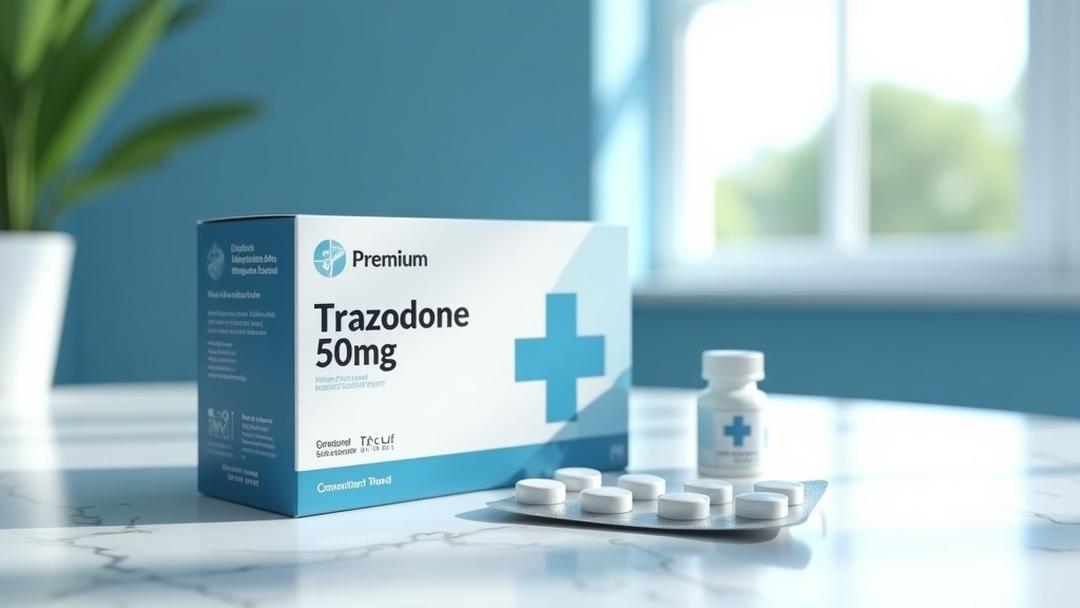
What Is Trazodone?
Trazodone is a serotonin modulator — technically an SARI (serotonin antagonist and reuptake inhibitor) — first approved in the 1980s as an antidepressant. Today it is most commonly prescribed at lower doses for insomnia, especially sleep maintenance difficulty, because it is sedating yet non-habit-forming. Higher doses are still used for major depressive disorder where sleep disturbance and anxiety dominate. Available as an inexpensive generic, it fills an important niche: effective sleep support without the dependence risks of benzodiazepines or “Z-drugs.” This guide explains its dual role, safe dosing, how it compares with other sleep aids, realistic costs, and the side-effect profile patients should know.
How Trazodone Works (Mechanism of Action)
Trazodone blocks the serotonin 5-HT2A receptor and inhibits serotonin reuptake, and at higher concentrations it antagonizes histamine (H1) and alpha-1 adrenergic receptors. The H1 and 5-HT2A blockade are what produce its strong sedative effect. Importantly, trazodone does not bind GABA receptors the way benzodiazepines and Z-drugs do, which is why it carries little to no abuse or physical-dependence potential. At antidepressant doses it also exerts mild serotonergic activity that can lift mood, but at the low 25–100 mg sleep doses the antidepressant effect is minimal.
Approved Uses and Off-Label Sleep Use
The FDA approved trazodone for major depressive disorder. Its widespread use for insomnia — often called “trazodone for sleep” — is off-label but supported by decades of clinical experience and sleep-medicine guidance. It is frequently chosen for patients with depression-plus-insomnia, anxiety-related sleep disruption, or those who cannot tolerate hypnotics. It is not a first-line treatment for primary sleep apnea or for restless legs syndrome; those need targeted therapy.
Dosage Guidelines
| Purpose | Typical Dose | Titration | Maximum |
|---|---|---|---|
| Insomnia (off-label) | 25–100 mg at bedtime | Start 25–50 mg | 100–150 mg |
| Depression (adults) | 150–300 mg/day divided | Start 150 mg/day in divided doses | 400 mg/day (inpatient 600 mg) |
| Geriatric / sensitive | 25–50 mg at bedtime | Go slow | Lower max |
| Extended-release (some regions) | Once daily at bedtime | As directed | Per label |
For sleep, take trazodone shortly before bed on an empty stomach; food can delay onset. Because it causes next-day grogginess in some users, the lowest effective dose is preferred. Do not combine with alcohol. Patients wanting a broader look at mood and sleep treatments can review our antidepressant options guide.
Trazodone vs Other Sleep Aids: Comparison
| Feature | Trazodone | Zolpidem (Ambien) | Doxepin | Melatonin agonist |
|---|---|---|---|---|
| Drug class | SARI | Z-drug (GABA) | Tricyclic | Melatonin receptor |
| Dependence risk | Very low | Low–moderate | Low | Very low |
| Next-day grogginess | Possible | Possible | Common | Rare |
| Good for sleep maintenance | Yes | Yes | Yes | Mild |
| Antidepressant effect | At high dose | No | Mild | No |
| Key advantage | Non-addictive, cheap | Fast onset | Low-dose option | Natural rhythm |
Pricing: Generic and Brand Expectations
Trazodone lost patent protection long ago, making it one of the most affordable sleep and mood medications. The ranges below cover a typical monthly supply and vary by pharmacy and region — they are estimates, not exact quotes.
| Product | Strength / Pack | Estimated Monthly Cost Range |
|---|---|---|
| Generic trazodone (India) | 50 mg, 30 tablets | $2–$4.50 |
| Generic trazodone (India) | 100 mg, 30 tablets | $2.50–$5 |
| US generic trazodone | 100 mg, 30 tablets | $8–$15 |
| Brand (Oleptro/reference) | 100 mg, 30 tablets | $200–$300 |
The affordability gap explains why many patients seek cost-effective generic medication solutions. Always verify the supplier, batch details, and local import rules before purchase.
Side Effects and Safety Profile
At sleep doses, the most common effects are morning drowsiness, dizziness, dry mouth, and headache. A distinctive concern is priapism — a rare but medical-emergency prolonged erection — more reported with trazodone than many other antidepressants; patients should seek urgent care if an erection lasts over 4 hours. Less common risks include orthostatic hypotension (blood-pressure drop on standing, raising fall risk in older adults), arrhythmia in susceptible individuals, and serotonin-related effects when combined with other serotonergic drugs. Unlike benzodiazepines, trazodone has minimal withdrawal or rebound-insomnia upon stopping.
Who Should Use Caution or Avoid
Use caution in older adults (fall risk), people with a history of priapism or certain cardiac arrhythmias, and those on medications that prolong the QT interval. Avoid combining with MAOIs. Because it can cause dizziness, avoid driving or operating machinery until you know how it affects you the next morning. Alcohol amplifies sedation and should be avoided.
Decision Guide: Is Trazodone Right for You?
Trazodone is often a sensible choice for sleep when non-habit-forming treatment is preferred — particularly for patients with depression, anxiety, or fibromyalgia who also struggle to stay asleep. It is less ideal as a primary treatment for difficulty falling asleep (where faster-onset options may help) or for people who experience significant next-day fog. If grogginess persists beyond the first week, a lower dose or an alternative is usually tried. For related medication comparisons, see our pharmaceuticals guide category.
Frequently Asked Questions
Is trazodone addictive?
Unlike benzodiazepines and Z-drugs, trazodone has very low abuse and dependence potential and is not classified as a controlled substance in most regions.
How long before bed should I take it?
Usually 30–60 minutes before sleep, on an empty stomach, because food can slow absorption and delay the sedative effect.
Will it help anxiety or just sleep?
At low doses it mainly helps sleep. Higher antidepressant doses contribute to mood and anxiety relief, but it is not typically a first-line standalone anti-anxiety medication.
Can I stop it suddenly?
Trazodone rarely causes withdrawal, but your prescriber may still taper if you have been on higher antidepressant doses to avoid return of symptoms.
References
- U.S. FDA – Trazodone Prescribing Information
- Mayo Clinic – Trazodone Oral Route Description
- AASM Clinical Practice Guideline – Pharmacologic treatment of chronic insomnia
- NHS – Trazodone patient guidance
- UpToDate – Trazodone use in insomnia and depression
Medical Disclaimer: This article is for informational purposes only and does not constitute medical advice, diagnosis, or treatment. Prices are estimated ranges and vary by supplier and region. Always consult a qualified healthcare provider before starting, changing, or stopping any medication. Generic medication access is subject to local laws and import regulations.
Clinical Evidence and Effectiveness
Multiple controlled studies and meta-analyses find trazodone improves sleep efficiency and reduces nighttime awakenings, particularly in people with comorbid depression or medical illness. While not consistently superior to hypnotics for primary insomnia, its major advantage is the absence of dependence, making it a preferred long-term option and a rational step-down from Z-drugs. In depression-associated insomnia, low-dose trazodone often restores sleep without adding serotonergic load. It is widely used in oncology, chronic-pain, and neurodegenerative settings where non-addictive sleep support is essential.
Drug Interactions to Know
Trazodone is metabolized by CYP3A4; strong inhibitors (certain antifungals, macrolides, HIV protease inhibitors) can raise levels and sedation, while inducers (some anti-seizure drugs, rifampin) can lower effectiveness. Combining it with other serotonergic agents (SSRIs, SNRIs, tramadol, St. John’s wort) increases serotonin-syndrome risk. Additive sedation occurs with alcohol, benzodiazepines, and opioids — avoid concurrent use. NSAIDs may slightly raise bleeding risk when paired with serotonergic drugs. Tell your prescriber about all prescription, herbal, and recreational substances you use.
Patient Experience and Practical Tips
Most users notice sleep benefit within the first few nights, with morning grogginess fading after about a week as the body adjusts. Taking the dose 30–60 minutes before bed, keeping the bedroom cool and dark, and avoiding screens helps. If next-day fog persists, a lower dose (e.g., 25–50 mg) is usually effective for sleep. Because trazodone is non-habit-forming, many patients use it nightly for months without tolerance or rebound insomnia. Track sleep quality in a simple journal for two weeks to help your clinician fine-tune the dose.
Special Populations
Older adults: Start at 25–50 mg and watch for next-day sedation and orthostatic hypotension, which raise fall risk — a bedside lamp and slow position changes help. Pregnancy and breastfeeding: Trazodone is sometimes used when benefits outweigh risks, but discuss with an obstetrician; data are limited. Liver or kidney impairment: Dose reduction may be needed because clearance is reduced. History of priapism or arrhythmia: Use only under close specialist supervision. Children are not typically given trazodone for sleep outside specialist care.
How to Verify a Quality Generic
When sourcing medication internationally, look for products from manufacturers with WHO-GMP or equivalent certification, intact tamper-proof packaging, clear batch and expiry labeling, and a matching patient-information leaflet. Compare the tablet imprint and color to the reference image from a verified pharmacy database. Reputable suppliers provide verifiable lot tracing and require a prescription or pharmacist consultation. Prices that are dramatically below the generic ranges shown earlier can be a red flag for counterfeits. Your health is not worth an unverified bargain — confirm legitimacy before every order.
Combining Trazodone With Other Approaches
Trazodone works best as part of good sleep hygiene rather than as a standalone fix. Pair it with a fixed wake time, limited evening screen use, a cool dark bedroom, and avoidance of late caffeine or large meals. For people whose insomnia is driven by anxiety or depression, addressing the underlying condition with therapy or an antidepressant often improves sleep more durably than medication alone. Trazodone is sometimes added to an SSRI when the antidepressant helps mood but leaves sleep disrupted — a combination generally well tolerated because trazodone is not serotonergically activating. Discuss any plan to combine medications with your prescriber to avoid duplication or excessive sedation.