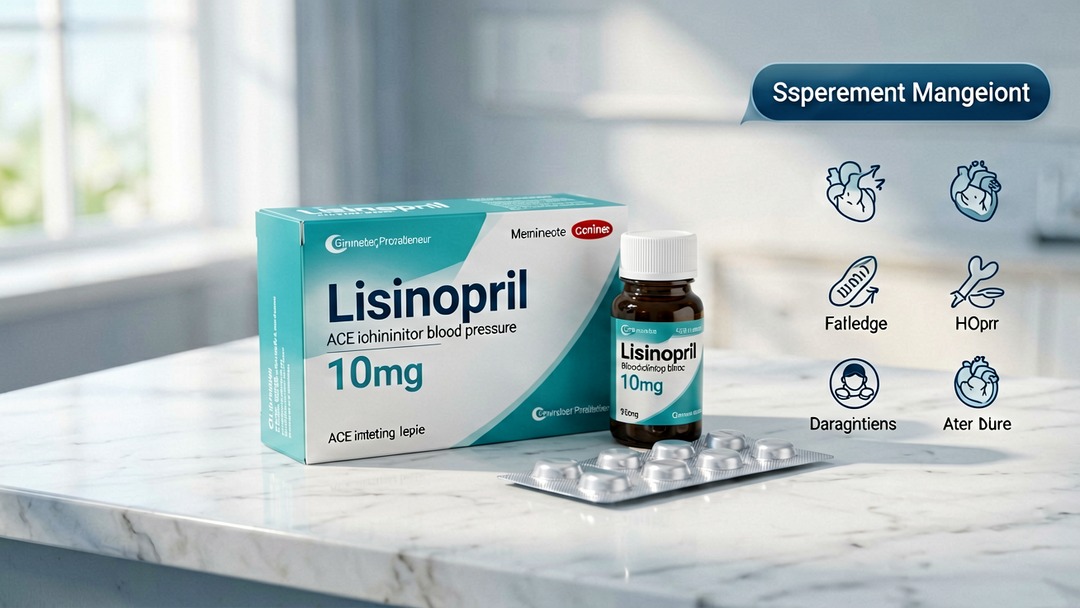
Lisinopril is one of the most prescribed blood-pressure medicines in the world and a cornerstone of heart-failure care. Taken once daily as a 10 mg tablet, it belongs to the ACE inhibitor class and not only lowers blood pressure but also protects the heart and kidneys in ways that many other antihypertensives do not. This guide explains how lisinopril works, who benefits most, correct dosing, what the trials prove, how it compares with related drugs, and what a month of generic therapy typically costs.
What Is Lisinopril?
Lisinopril is an oral angiotensin-converting enzyme (ACE) inhibitor. It was developed from a compound first isolated from the venom of the Brazilian pit viper and refined into a long-acting, once-daily medicine. Marketed originally under brand names such as Prinivil and Zestril, it is now available as numerous generic equivalents containing the identical active molecule.
Unlike a simple “water pill,” lisinopril acts on the body’s renin-angiotensin system, a hormonal cascade that tightens blood vessels and retains salt and water. By dampening this system, lisinopril relaxes arteries and reduces the workload on the heart. That dual action — blood-pressure control plus organ protection — explains why it is used well beyond straightforward hypertension.
How Lisinopril Works: Mechanism of Action
The enzyme ACE converts angiotensin I into angiotensin II, a potent vasoconstrictor that also stimulates aldosterone release, leading to salt and water retention. Lisinopril blocks ACE, so angiotensin II levels fall and blood vessels dilate. Lower angiotensin II also means less aldosterone, so the kidneys excrete more sodium and water, reducing blood volume.
A beneficial side effect of ACE inhibition is a rise in bradykinin, a peptide that helps vessels relax — but bradykinin accumulation is also why some patients develop a dry cough. More importantly, by reducing pressure inside the kidney’s filtering units and lowering protein leakage, lisinopril slows the progression of diabetic and non-diabetic kidney disease. It is not metabolized by the liver and is excreted by the kidneys, which guides dosing in kidney impairment.
Approved Uses and Indications
- Hypertension: alone or with other agents, to lower elevated blood pressure and reduce stroke and heart-disease risk.
- Heart failure: to reduce symptoms, hospitalizations, and death by decreasing cardiac afterload and remodeling.
- After myocardial infarction: to improve survival when given early after a heart attack, especially with reduced ejection fraction.
- Diabetic nephropathy: to reduce albuminuria and slow kidney decline in type 1 and type 2 diabetes.
- Chronic kidney protection: in non-diabetic proteinuric kidney disease under specialist care.
Lisinopril is not a pain reliever and does not treat infections. It is a long-term protective medicine, and stopping abruptly can allow blood pressure and cardiac strain to rebound.
Dosage and How to Take It
| Situation | Typical Regimen | Notes |
|---|---|---|
| Hypertension, initial | 10 mg once daily | Start low; titrate after 1–2 weeks by response. |
| Hypertension, maintenance | 20–40 mg once daily | Maximum usually 80 mg daily. |
| Heart failure / post-MI | 5 mg start, titrate to 10–40 mg daily | Begin under close monitoring for blood pressure. |
| Diabetic nephropathy | 10–20 mg once daily | Dose by blood-pressure and proteinuria targets. |
| Kidney or elderly dose caution | Lower starting dose (2.5–5 mg) | Monitor creatinine and potassium closely. |
Lisinopril is taken once daily, with or without food. Because the first dose can cause a marked drop in blood pressure, clinicians often start low and check readings early. If a dose is missed, take it when remembered unless it is nearly time for the next dose; never double up. Periodic blood tests for potassium and kidney function are important, especially when combined with diuretics or in diabetes.
Clinical Evidence: What the Trials Show
Lisinopril’s standing rests on landmark outcome trials. The SOLVD treatment trial enrolled patients with reduced ejection fraction heart failure and showed that enalapril (a sibling ACE inhibitor) reduced death and hospitalization, establishing the entire class’s role — lisinopril is used equivalently in practice. The GISSI-3 and ISIS-4 trials demonstrated that early ACE inhibition after a heart attack improved survival, supporting routine use in acute coronary care.
For hypertension and kidneys, the ALLHAT trial — more than 33,000 high-risk adults — found that lisinopril-based therapy produced cardiovascular outcomes comparable to a thiazide diuretic and better than an alpha-blocker, while also confirming blood-pressure-lowering equivalence. The RENAL and IDNT-style nephropathy studies showed ACE inhibitors slow progression of proteinuric kidney disease. These datasets explain why guidelines list ACE inhibitors as first-choice agents in diabetes, heart failure, and post-infarct care.
Lisinopril vs Other Blood-Pressure Medicines
| Feature | Lisinopril (ACEi) | Losartan (ARB) | Amlodipine (CCB) |
|---|---|---|---|
| Mechanism | Blocks ACE, lowers angiotensin II | Blocks angiotensin receptor | Relaxes arterial smooth muscle |
| Organ protection | Heart, kidney, stroke prevention | Similar, cough less often | Stroke, isolated systolic HTN |
| Dry cough risk | Present in up to ~10% | Rare | None (ankle swelling instead) |
| Angioedema risk | Rare but serious | Very rare | None |
| Typical acquisition cost (generic) | Very low | Very low | Very low |
For patients who need organ protection — especially those with diabetes, heart failure, or prior heart attack — lisinopril is often preferred. ARBs such as losartan are the usual swap when a cough appears, while calcium-channel blockers suit patients who cannot tolerate ACE inhibitors.
Generic Lisinopril vs Brand: Cost Comparison
Lisinopril has been off patent for years, so generic manufacturers produce bioequivalent tablets that regulators require to match the brand in absorption. For patients paying out of pocket, the gap between a licensed generic and the original brand is large.
| Option | Typical 30-day supply (10 mg) | Typical 90-day supply |
|---|---|---|
| Indian generic lisinopril 10 mg | $2–$6 | $5–$16 |
| US generic lisinopril 10 mg | $4–$20 | $10–$50 |
| US brand-name product (cash price) | $90–$260 | $250–$720 |
In India, lisinopril 10 mg is produced by many WHO-GMP-certified facilities, and a month of therapy often costs only a few dollars. When evaluating licensed generic antihypertensive medication options, a verified supplier can cut annual out-of-pocket spending from hundreds of dollars on brand pricing to a small fraction of that. The active molecule is identical; the key to benefit is consistent daily use and periodic monitoring.
Who Should Consider Lisinopril?
Lisinopril is appropriate if you have hypertension that needs control, especially alongside diabetes, heart failure, prior heart attack, or protein in the urine. It is frequently the first or second agent chosen because of its protective track record. It is not a medicine to start on your own: the first-dose blood-pressure drop, potassium monitoring, and pregnancy warnings require a prescriber. If brand pricing is unaffordable, ask about switching to a bioequivalent generic — the expected effect is equivalent.
Side Effects and Safety Profile
The most characteristic side effect is a persistent dry cough, affecting up to about one in ten users, caused by bradykinin buildup. It is harmless but annoying and usually resolves within a week or two of stopping. A rare but serious reaction is angioedema — swelling of the face, lips, tongue, or throat — which needs emergency care. Because lisinopril can raise potassium and affect kidney function, routine blood tests are sensible.
- Common: dry cough, dizziness on standing, mild headache, fatigue.
- Less common: elevated potassium, reduced kidney function, rash, altered taste.
- Rare but serious: angioedema, severe hypotension, fetal harm in pregnancy.
- Contraindications: pregnancy, history of ACE-inhibitor angioedema, bilateral renal-artery stenosis, prior severe reaction.
Seek emergency help for swelling of the face or throat, difficulty breathing or swallowing, or fainting. Report a new cough, unusual dizziness, or muscle weakness (a sign of high potassium) to your clinician. Do not use lisinopril if you are pregnant or planning pregnancy.
Drug Interactions to Discuss With Your Doctor
- Potassium-sparing diuretics and potassium supplements: additive risk of high potassium; monitor levels.
- NSAIDs (ibuprofen, naproxen): can blunt the blood-pressure effect and strain the kidneys, especially with dehydration.
- Lithium: ACE inhibitors raise lithium levels; close monitoring required.
- Other antihypertensives: additive blood-pressure lowering; doses may need adjustment.
- Gold injections (aurothiomalate): rare nitritoid reactions reported with ACE inhibitors.
Frequently Asked Questions
Why does lisinopril cause a dry cough?
The cough comes from bradykinin, a peptide that rises when ACE is blocked. It is harmless but can be bothersome, and switching to an ARB such as losartan usually resolves it because ARBs do not raise bradykinin as much.
How long does it take for lisinopril to lower blood pressure?
Blood pressure begins falling within an hour of the first dose and reaches steady effect over one to two weeks of daily use. The full protective benefit for heart and kidneys builds over months of consistent therapy.
Is generic lisinopril as effective as the brand?
Yes. Generic lisinopril must meet the same bioequivalence standards as the brand, so blood-pressure control and organ protection are equivalent. Differences are limited to appearance, inactive ingredients, and cost.
Can I take lisinopril with food?
Yes, with or without food. Taking it at the same time each day helps build the habit. Some clinicians suggest the first dose at bedtime to reduce first-dose lightheadedness.
What tests do I need while on lisinopril?
Baseline and periodic checks of kidney function and blood potassium are recommended, especially when starting, increasing the dose, or adding a diuretic. Blood pressure should be tracked at home as well.
Is lisinopril safe during pregnancy?
No. ACE inhibitors can cause serious fetal harm, especially in the second and third trimesters. They are contraindicated in pregnancy, and women of childbearing potential should use reliable contraception and discuss alternatives with their clinician.
Medical Disclaimer
This article is for informational purposes only and does not replace professional medical advice, diagnosis, or treatment. Lisinopril is a prescription medicine; always consult a licensed healthcare provider before starting, stopping, or changing your dose. Drug prices vary by country, pharmacy, insurance status, and over time; figures shown are approximate ranges, not quotes or guarantees. Never share prescription medicines, and never import medicines without verifying applicable regulations in your country.
References
- FDA. Zestril (lisinopril) Prescribing Information.
- The SOLVD Investigators. Effect of enalapril on survival in patients with reduced left ventricular ejection fraction. N Engl J Med. 1991;325(5):293-302.
- ALLHAT Officers and Coordinators. Major outcomes in high-risk hypertensive patients randomized to angiotensin-converting enzyme inhibitor vs diuretic. JAMA. 2002;288(23):2981-2997.
- GISSI-3 Collaborative Group. Six-month effects of early lisinopril administration. Lancet. 1994;343(8917):1115-1122.
- American College of Cardiology/American Heart Association guideline for the management of heart failure.
- Lewis EJ, et al. Renoprotective effect of angiotensin-receptor antagonist in type 2 diabetic nephropathy.