
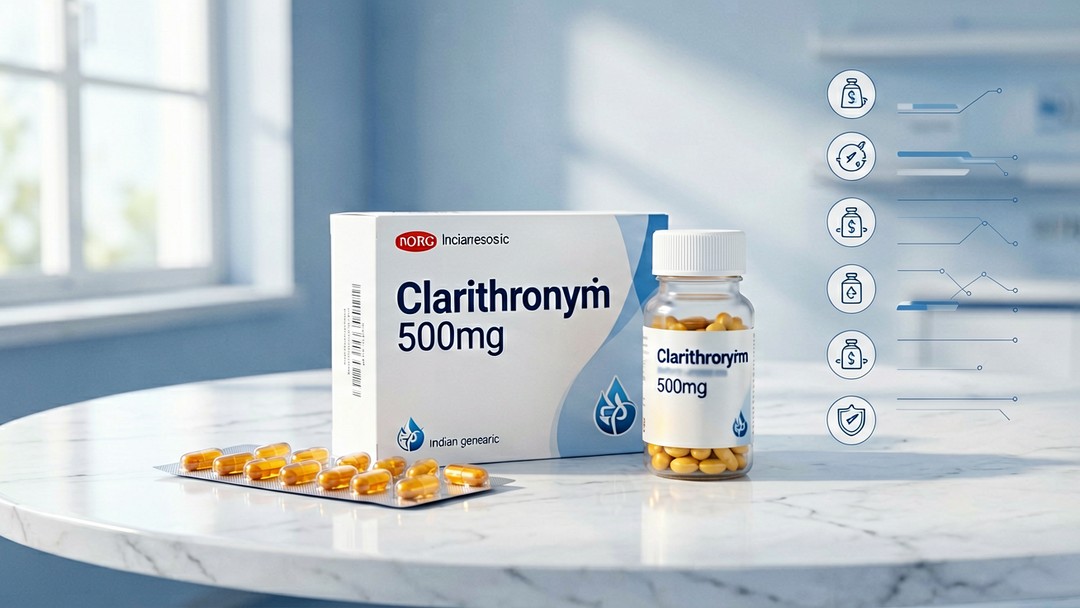
What Is Clarithromycin 500mg?
Clarithromycin 500mg is a second-generation macrolide antibiotic widely prescribed for respiratory tract infections, skin and soft tissue infections, and Helicobacter pylori (H. pylori) eradication therapy. It belongs to the same antibiotic family as azithromycin but differs in its pharmacokinetic profile, antimicrobial spectrum, and clinical applications. Originally developed as a semi-synthetic derivative of erythromycin, clarithromycin offers improved acid stability, better oral absorption, and higher tissue penetration than its predecessor, which translates into reliable clinical efficacy across a broad range of bacterial pathogens.
Clarithromycin is available as 250mg and 500mg immediate-release tablets, 500mg extended-release tablets, and pediatric oral suspensions. The 500mg tablet is the standard adult strength for most indications and is typically dosed twice daily. In India, clarithromycin is manufactured by multiple pharmaceutical companies and is among the most affordable macrolide antibiotics on the market. Because it is a prescription medicine in virtually every regulated market, treatment should always be initiated and supervised by a qualified healthcare provider.
Mechanism of Action
Clarithromycin exerts its antibacterial effect by binding reversibly to the 50S subunit of the bacterial ribosome, specifically interacting with the 23S ribosomal RNA within the peptidyl transferase loop. This binding blocks the translocation step of protein synthesis, preventing the growing polypeptide chain from moving from the A-site to the P-site. The result is inhibition of bacterial protein production, leading to bacteriostatic activity against susceptible organisms and, at higher concentrations, bactericidal activity against certain pathogens.
Compared with erythromycin, clarithromycin is approximately 10 times more acid-stable and achieves significantly higher intracellular concentrations, particularly within macrophages and polymorphonuclear leukocytes. It also undergoes hepatic metabolism to an active metabolite, 14-hydroxyclarithromycin, which is two to four times more active than the parent compound against Haemophilus influenzae. This active metabolite extends the antimicrobial spectrum and contributes to clarithromycin’s clinical effectiveness in respiratory infections caused by Haemophilus species. Additionally, clarithromycin demonstrates immunomodulatory properties, including suppression of pro-inflammatory cytokines, which underlies its use in certain chronic inflammatory airway conditions.
Clinical Uses and Indications
Clarithromycin 500mg is approved and widely used for the following conditions:
- Community-Acquired Pneumonia (CAP): Effective monotherapy for mild-to-moderate CAP caused by Streptococcus pneumoniae, Mycoplasma pneumoniae, and Chlamydia pneumoniae.
- Acute Bacterial Exacerbation of Chronic Bronchitis (AECB): Standard 7-day therapy for exacerbations in patients with underlying COPD.
- Acute Bacterial Sinusitis: Commonly prescribed for acute maxillary sinusitis due to typical respiratory pathogens.
- Pharyngitis and Tonsillitis: Alternative to penicillin in patients allergic to beta-lactam antibiotics.
- H. pylori Eradication: Cornerstone of triple therapy regimens (clarithromycin 500mg twice daily, a proton pump inhibitor, and amoxicillin or metronidazole) for peptic ulcer disease and gastric cancer prevention.
- Skin and Soft Tissue Infections: Uncomplicated cellulitis, impetigo, and abscesses caused by susceptible staphylococci and streptococci.
- Mycobacterium avium Complex (MAC) Infection: Prophylaxis and treatment of disseminated MAC disease in patients with advanced HIV infection.
- Leprosy: Component of multidrug therapy for multibacillary leprosy in combination with rifampicin and dapsone.
- Whooping Cough (Pertussis): First-line agent for treatment and post-exposure prophylaxis in patients older than one month.
Dosage and Administration
| Condition | Dosage Regimen | Total Course |
|---|---|---|
| CAP / AECB / Sinusitis (adults) | 250–500mg PO every 12 hours | 7–14 days |
| Pharyngitis/Tonsillitis | 250mg PO every 12 hours | 10 days |
| H. pylori eradication (triple therapy) | 500mg PO every 12 hours with PPI + amoxicillin/metronidazole | 10–14 days |
| Skin and soft tissue infections | 250mg PO every 12 hours | 7–14 days |
| MAC prophylaxis (HIV) | 500mg PO every 12 hours | Ongoing |
| Pertussis (adults) | 500mg PO every 12 hours | 7 days |
Clarithromycin tablets may be taken with or without food, although taking with food can reduce gastrointestinal irritation. Extended-release tablets should be taken with food and must be swallowed whole. For patients with creatinine clearance below 30 mL/min, the dose should be reduced by half. Clarithromycin is not recommended during pregnancy unless no alternative exists, and it should be used with caution in patients with hepatic impairment.
Clarithromycin vs. Other Macrolides: Comparison
| Antibiotic | Class | Spectrum | Dosing Schedule | Key Advantage |
|---|---|---|---|---|
| Clarithromycin | Macrolide (2nd gen) | Broad (incl. H. pylori, atypicals) | 500mg BID × 7–14 days | H. pylori eradication, active metabolite |
| Azithromycin | Macrolide (Azalide) | Broad (incl. atypicals) | 500mg × 3–5 days | Short course, once-daily dosing |
| Erythromycin | Macrolide (1st gen) | Narrower, more GI side effects | 250–500mg QID | Low cost, long track record |
| Amoxicillin | Aminopenicillin | Broad (Gram+, some Gram-) | 500mg TID × 7–10 days | Well tolerated, pregnancy safe |
| Doxycycline | Tetracycline | Broad (atypicals, tick-borne) | 100mg BID × 7–14 days | Acne, malaria prophylaxis |
When deciding between clarithromycin and azithromycin, the key considerations are indication and tolerability. Clarithromycin is preferred for H. pylori eradication and for infections requiring a longer, twice-daily course, while azithromycin’s shorter once-daily regimen often improves adherence in respiratory infections. Both antibiotics carry a risk of QT interval prolongation, so cardiac risk factors should be assessed before prescribing either agent.
Side Effects and Safety Profile
Clarithromycin is generally well tolerated, but gastrointestinal side effects are the most commonly reported: nausea, diarrhea, abdominal pain, dysgeusia (metallic taste), and dyspepsia. Dysgeusia is particularly characteristic of clarithromycin and occurs in a substantial proportion of patients, although it resolves after treatment discontinuation. Serious adverse events are uncommon but include QT interval prolongation with risk of torsades de pointes, hepatotoxicity (from mild transaminase elevations to rare cases of liver failure), Clostridioides difficile-associated diarrhea, and severe hypersensitivity reactions including Stevens-Johnson syndrome.
Clarithromycin inhibits CYP3A4 and is associated with clinically important drug interactions, which are discussed below. The FDA labeling carries warnings about the increased risk of cardiovascular events, including arrhythmias, when clarithromycin is used in patients with established coronary artery disease; some observational studies have suggested a small increase in long-term cardiovascular mortality, although causality remains debated. In clinical practice, clarithromycin should be reserved for appropriate bacterial infections, prescribed at the lowest effective dose, and avoided in patients with significant cardiac disease or electrolyte abnormalities whenever alternatives exist.
Indian Generic Pricing and Affordability
India is one of the world’s largest producers of clarithromycin active pharmaceutical ingredient and finished dosage forms. A 10-tablet strip of generic Clarithromycin 500mg from Indian manufacturers typically costs approximately ₹70–₹150 ($0.85–$1.85) in the domestic market. A standard 14-day course for H. pylori eradication (28 tablets) generally ranges from ₹195–₹420 ($2.35–$5.10). By comparison, a course of the US brand version can cost $180–$440, and even US generic clarithromycin typically ranges from $40–$130 for a 14-tablet course, depending on pharmacy and insurance status.
Patients seeking affordable macrolide therapy can compare generic antibiotic options available through licensed suppliers at 70–90% savings compared with US retail prices. For readers interested in a related macrolide with a shorter dosing schedule, our detailed azithromycin 500mg guide compares the two agents in depth. All reputable Indian manufacturers operate under the regulatory oversight of the Central Drugs Standard Control Organisation (CDSCO), and many facilities hold international certifications, supporting consistent quality standards for exported medicines.
Drug Interactions and Precautions
Clarithromycin is a potent inhibitor of the CYP3A4 enzyme and P-glycoprotein, making it one of the macrolides with the highest interaction burden. Co-administration with the following drugs is contraindicated or requires careful management: cisapride, pimozide, ergot derivatives, and HMG-CoA reductase inhibitors extensively metabolized by CYP3A4 (simvastatin and lovastatin), because of elevated risk of rhabdomyolysis and cardiotoxicity. Clarithromycin also increases levels of warfarin, digoxin, cyclosporine, tacrolimus, carbamazepine, and certain benzodiazepines, requiring dose adjustment and monitoring.
Combining clarithromycin with other QT-prolonging agents, including fluoroquinolones, certain antipsychotics, and antiarrhythmics, increases the risk of serious arrhythmias and should be avoided when possible. Patients with renal impairment (creatinine clearance below 30 mL/min) require dose reduction, and those with severe hepatic impairment should be monitored closely. Clarithromycin should be used during pregnancy only if the potential benefit justifies the risk, and caution is advised in breastfeeding women.
Safety and Regulatory Information
Clarithromycin is a prescription-only (Schedule H) medication in India and is available by prescription in all regulated pharmaceutical markets. Regulatory labeling requires warnings about QT prolongation, hepatotoxicity, C. difficile-associated diarrhea, and the potential for interactions with CYP3A4 substrates. Generic clarithromycin products must demonstrate bioequivalence to the reference brand product through pharmacokinetic studies, and manufacturing facilities are subject to inspection by CDSCO and, in many cases, international regulatory agencies. Patients should always purchase clarithromycin from licensed pharmacies and complete the full prescribed course even if symptoms improve.
Frequently Asked Questions (FAQ)
Can Clarithromycin 500mg be taken with food?
Yes. Immediate-release clarithromycin may be taken with or without food, though taking it with food may reduce stomach upset. Extended-release tablets should be taken with food and swallowed whole without crushing or chewing.
How long does it take for Clarithromycin to work?
Most patients notice symptom improvement within 48–72 hours of starting therapy. However, the full course (usually 7–14 days) must be completed to eradicate the infection and reduce the risk of bacterial resistance.
What is the difference between Clarithromycin and Azithromycin?
Both are macrolides, but clarithromycin is dosed twice daily and is the preferred agent for H. pylori eradication, while azithromycin is dosed once daily over a shorter course and is often preferred for respiratory infections. Clarithromycin has more drug interactions because it strongly inhibits CYP3A4.
Can I take Clarithromycin for a viral cold or flu?
No. Clarithromycin is an antibacterial agent and is ineffective against viral infections such as the common cold, influenza, and most cases of COVID-19. Taking antibiotics unnecessarily contributes to antimicrobial resistance and exposes patients to side effects without benefit.
Is Clarithromycin safe during pregnancy?
Clarithromycin is generally avoided during pregnancy unless no suitable alternative exists, because some studies have reported a small increased risk of miscarriage and cardiovascular malformations with macrolide use in early pregnancy. Discuss the risks and benefits with your healthcare provider.
References
- US Food and Drug Administration. Clarithromycin Prescribing Information (Biaxin). FDA Label Database. 2023.
- Malfertheiner P, et al. Management of Helicobacter pylori infection: the Maastricht VI/Florence consensus report. Gut. 2022;71(12):2380–2413.
- Metlay JP, et al. Diagnosis and Treatment of Adults with Community-acquired Pneumonia. Am J Respir Crit Care Med. 2019;200(7):e45–e67.
- WHO Model List of Essential Medicines — 22nd List. World Health Organization. 2021.
- Svanström H, et al. Use of clarithromycin and roxithromycin and risk of cardiac death: cohort study. BMJ. 2014;349:g4930.
- Centers for Disease Control and Prevention. Recommended antimicrobial agents for the treatment and postexposure prophylaxis of pertussis. MMWR. 2005;54(RR-14):1–16.
Disclaimer: This article is for informational purposes only and does not constitute medical advice. Always consult a qualified healthcare provider before starting, stopping, or changing any medication. Clarithromycin is a prescription antibiotic that can cause serious cardiac, hepatic, and allergic reactions, and it interacts with many common medications. Pricing information is approximate, varies by market and pharmacy, and is subject to change. Medications should only be purchased from licensed, reputable sources.