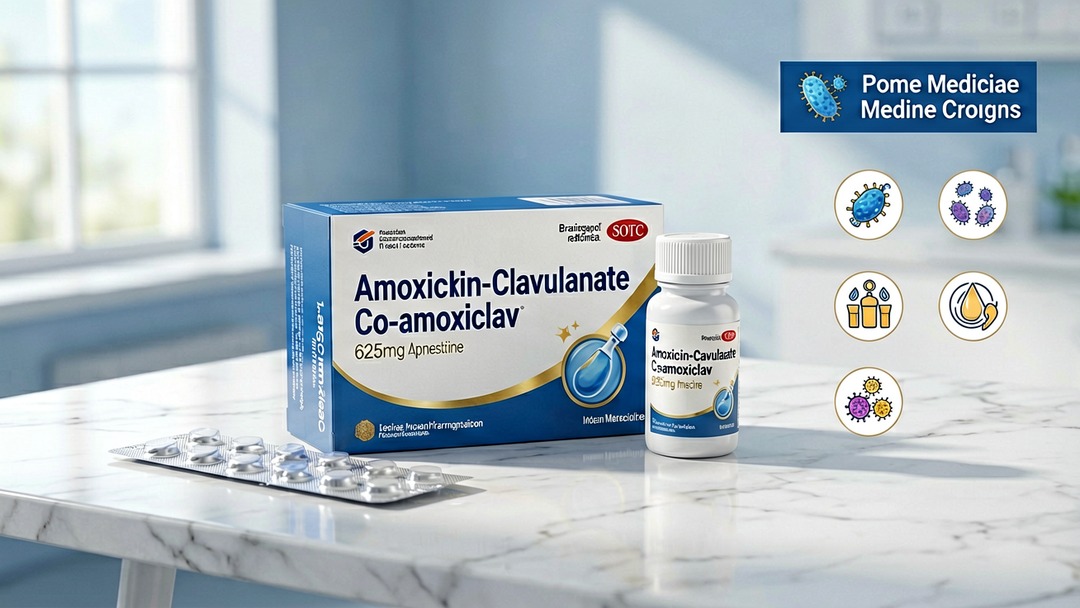
Amoxicillin-clavulanate, sold under the brand name Augmentin, is one of the most widely prescribed antibiotics in the world. It pairs amoxicillin, a proven penicillin-type antibiotic, with clavulanate potassium, a beta-lactamase inhibitor that neutralizes many of the enzymes bacteria use to resist treatment. This guide explains how the combination works, who needs it, correct dosing, what the clinical evidence shows, how it compares with amoxicillin alone, and what a typical course costs when you choose generic alternatives.
What Is Amoxicillin-Clavulanate (Augmentin)?
Amoxicillin-clavulanate is a combination oral antibiotic developed in the 1970s and first marketed as Augmentin by GlaxoSmithKline in 1981. It contains two active ingredients in a fixed ratio. Amoxicillin is a broad-spectrum beta-lactam penicillin that stops susceptible bacteria from building their cell walls, causing them to break apart. Clavulanate is a separate molecule that blocks beta-lactamase enzymes, the defense mechanism many bacteria use to destroy amoxicillin before it can act. Because clavulanate disarms the enzyme, amoxicillin is able to work against a wider range of bacteria than it could on its own.
Clinically, the drug is used to treat infections that are often resistant to amoxicillin alone, including sinusitis, otitis media (middle ear infections), community-acquired pneumonia, and certain skin and urinary tract infections. It is also used for dental infections and for bites where mixed mouth flora are involved. The combination is frequently chosen empirically — before culture results return — when a resistant pathogen is suspected.
How It Works: Mechanism of Action
Amoxicillin kills bacteria by inhibiting transpeptidase enzymes involved in cross-linking peptidoglycan, a structural component of the bacterial cell wall. Without proper cross-linking, the cell wall weakens and the bacterium lyses, or bursts. This action is bactericidal — it directly kills susceptible organisms rather than merely stopping their growth.
The hurdle is that many bacteria produce beta-lactamase enzymes that hydrolyze the beta-lactam ring of amoxicillin, inactivating it before it can bind to its target. This is precisely where clavulanate enters the picture. Clavulanate is itself a beta-lactam, but it has little intrinsic antibacterial activity. Instead, it acts as a “suicide inhibitor”: it binds tightly and irreversibly to many beta-lactamase enzymes, occupying them so they cannot destroy the amoxicillin alongside it. The net effect is that amoxicillin survives to reach its target, and the combination extends coverage to enzyme-producing strains such as Haemophilus influenzae, Moraxella catarrhalis, and many Staphylococcus aureus isolates.
Because clavulanate is absorbed, distributed, and eliminated alongside amoxicillin, the two are formulated in fixed ratios (commonly 2:1, 4:1, or 7:1 by weight depending on the product) so that both remain effective in the same tissues for roughly the same duration. This formulation logic underpins why the combination is dosed as a single tablet rather than two separate medicines.
Approved Uses and Indications
- Acute bacterial sinusitis: one of the most common reasons for prescribing the combination, especially when sinus symptoms persist beyond 10 days.
- Acute otitis media (middle ear infection): frequently used in children and adults, particularly when amoxicillin monotherapy has failed.
- Community-acquired pneumonia: a standard empiric option, including for patients with underlying lung disease.
- Skin and soft-tissue infections: including cellulitis and infected animal or human bites.
- Urinary tract infections: for selected resistant cases, though other agents are often preferred first-line.
- Dental and odontogenic infections: commonly used in acute dentoalveolar abscesses.
- Lower respiratory tract infections: including acute exacerbations of chronic bronchitis.
Amoxicillin-clavulanate should be reserved for infections where enzyme-producing organisms are likely, to limit antibiotic resistance and reduce unnecessary exposure. It is not a treatment for viral infections such as the common cold or influenza, and taking it for a viral illness contributes to antimicrobial resistance without benefit.
Dosage and How to Take It
| Situation | Typical Regimen | Notes |
|---|---|---|
| Adults, mild-moderate infection | 625 mg (500/125) three times daily | Use the lower adult ratio for most community infections. |
| Adults, more severe infection | 1 g (875/125) twice daily | Higher amoxicillin dose, fewer daily doses; better GI tolerance in some patients. |
| Children | Weight-based suspension, commonly 25–45 mg/kg/day | Dose depends on age, weight, and infection severity; use suspension as directed. |
| Duration | Usually 5–10 days | Complete the full course even if symptoms improve; do not stop early. |
| Renal impairment | Reduced dose or longer interval | Discuss creatinine clearance-based adjustment with your clinician. |
Take amoxicillin-clavulanate with food to reduce stomach upset. Swallow tablets whole, do not crush or chew unless the product is labeled as chewable, and space doses evenly. If you miss a dose, take it as soon as you remember unless your next dose is almost due—in that case skip the missed dose and continue on schedule. Antibiotics work best when levels stay steady, so consistent timing and completing the entire course matter clinically.
Clinical Evidence: What the Trials Show
The evidence base for amoxicillin-clavulanate comes from decades of use across common infections. In acute otitis media and acute bacterial sinusitis, meta-analyses show the combination achieves higher clinical cure rates than placebo and comparable or better outcomes than amoxicillin alone when beta-lactamase-producing organisms are present. For acute sinusitis specifically, randomized trials report symptom resolution in a substantial majority of treated patients within 10 to 14 days, though many untreated cases also improve spontaneously—underscoring the importance of reserving antibiotics for confirmed or high-risk bacterial infections.
For community-acquired pneumonia, guidelines in several regions list amoxicillin-clavulanate (often plus a macrolide in some settings) among acceptable empiric regimens for outpatients with comorbidities. In skin and soft-tissue infections and after bites, the combination reliably covers the polymicrobial mouth and skin flora, including anaerobes, that cause many of these wounds. Long-term surveillance data consistently show Streptococcus pneumoniae, Haemophilus influenzae, and Moraxella catarrhalis remain largely susceptible to the combination in many communities, though resistance rates vary by geography and prior antibiotic exposure.
Two practical cautions are well documented. First, the 2:1 (250/125) formulation provides comparatively low amoxicillin relative to clavulanate and is less preferred in high-dose indications. Second, unnecessary use drives community resistance—so the right antibiotic, at the right dose, for the shortest effective course is the guiding principle.
Amoxicillin-Clavulanate vs Amoxicillin vs Other Antibiotics
| Feature | Amoxicillin-Clavulanate | Amoxicillin alone | Azithromycin |
|---|---|---|---|
| Coverage of beta-lactamase producers | Yes (via clavulanate) | No | Not dependent on clavulanate |
| Mechanism | Cell-wall disruption + enzyme inhibition | Cell-wall disruption | Protein synthesis inhibition |
| Common dosing | 625 mg TDS or 1 g BD | 500 mg TDS | 500 mg once daily |
| Gastrointestinal side effects | More common (esp. diarrhea) | Moderate | Low-moderate |
| Bactericidal | Yes | Yes | Yes (largely) |
| Best evidence setting | Sinusitis, otitis, bites, resistant infections | Streptococcal pharyngitis, simple UTI | Atypical pneumonia, certain STIs |
For most respiratory infections, amoxicillin-clavulanate is chosen only when resistance is suspected. Azithromycin, a macrolide, covers atypical organisms and offers once-daily dosing, but some bacteria—notably Streptococcus pneumoniae in certain regions—show rising macrolide resistance. Selection should be guided by local resistance patterns and by a clinician’s assessment rather than self-diagnosis.
Side Effects and Safety Profile
Gastrointestinal symptoms are the most common side effects of amoxicillin-clavulanate. Diarrhea is reported more often with the combination than with amoxicillin alone, largely because clavulanate can directly stimulate gut motility. Nausea, vomiting, and abdominal discomfort are also common, and many patients find taking the medicine with food reduces these effects. Less common effects include rash, headache, and vaginal candidiasis (a yeast overgrowth) following antibiotic disruption of normal flora.
- Common: diarrhea, nausea, abdominal pain, headache, rash, vaginal yeast infection.
- Uncommon but important: allergic reactions ranging from urticaria to rare severe anaphylaxis; Clostridioides difficile-associated diarrhea.
- Liver effects: rare, usually reversible cholestatic hepatitis is classically linked to the combination, more often in older adults and with prolonged courses.
- Contraindication: known penicillin allergy, as cross-reactivity risk with other beta-lactams is significant.
Because amoxicillin-clavulanate contains penicillin-type components, anyone with a documented penicillin allergy should not take it. Symptoms of a serious allergic reaction—facial swelling, difficulty breathing, widespread hives—require immediate medical attention. Severe diarrhea that persists or is bloody may signal C. difficile infection and should be evaluated rather than treated with an over-the-counter antidiarrheal.
Drug Interactions to Discuss With Your Doctor
- Allopurinol: combined use increases the risk of skin rash.
- Oral anticoagulants (e.g., warfarin): amoxicillin can enhance the anticoagulant effect; monitor INR.
- Oral contraceptives: antibiotics may reduce effectiveness in some women; consider backup contraception during the course.
- Methotrexate: penicillins may reduce methotrexate clearance.
- Probenecid: raises amoxicillin levels by reducing renal excretion.
Generic Amoxicillin-Clavulanate vs Brand Augmentin: Cost Comparison
The patent on Augmentin expired many years ago, and the combination is now manufactured by numerous generic producers worldwide. Because generic medicines must demonstrate bioequivalence—meaning the same active ingredients reach the bloodstream at comparable levels—the therapeutic effect is expected to be equivalent when the correct dose is used. The financial difference, however, can be substantial.
| Option | Typical course (10 days) | Notes |
|---|---|---|
| Indian generic amoxicillin-clavulanate 625 mg | $9–$15 | Widely produced by WHO-GMP manufacturers. |
| US generic amoxicillin-clavulanate | $30–$90 | Varies by insurer, pharmacy, and strength. |
| US brand Augmentin (cash price) | $180–$440 | Often higher depending on formulation. |
In India the combination is inexpensive and sold under many brand names at a fraction of the cost of brand-name therapy in high-income countries. If you are looking for cost-effective antibiotic treatment options, comparing licensed generic suppliers can reduce out-of-pocket expense dramatically. As always, only use antibiotics prescribed for your specific infection, and verify applicable regulations if considering imported medicines in your country.
Who Should Consider Amoxicillin-Clavulanate?
Amoxicillin-clavulanate is appropriate when you have a bacterial infection likely to involve enzyme-producing organisms and a clinician has judged the combination necessary. Common scenarios include sinusitis not improving after a few days, middle ear infections that have not responded to amoxicillin, certain chest infections, and infected bites or wounds. It is not appropriate for viral illness, for simple infections that amoxicillin can handle, or for prophylactic use without a clear indication.
Because antibiotic misuse drives resistance, the guiding principle is to use the narrowest effective agent, at the right dose, for the shortest appropriate course. If cost is a barrier to completing your prescription, a licensed generic from a quality-checked source can make therapy far more affordable—but always obtain the medicine through a legitimate prescription pathway and consult your clinician.
Frequently Asked Questions
Can I take amoxicillin alone instead of the combination?
Only if your clinician confirms your infection does not require clavulanate. Many infections, such as simple strep throat or an uncomplicated urinary tract infection, respond to amoxicillin alone. The combination adds coverage for enzyme-producing bacteria but also adds cost and gastrointestinal side effects, so it is not automatically “stronger” in every situation.
Is generic amoxicillin-clavulanate as effective as Augmentin?
Yes. Generic versions must pass the same bioequivalence requirements as the brand, meaning the same amounts of both active ingredients reach the bloodstream. When taken at the correct dose and for the full course, the expected clinical effect is equivalent.
Can I drink alcohol while taking it?
Alcohol is not directly contraindicated with this antibiotic, but it can worsen stomach upset and dehydration. For the sake of recovery and to avoid adding gastrointestinal strain, it is sensible to limit alcohol while completing the course.
How long does it take to work?
Most people feel improvement within 48 to 72 hours of starting the medicine. If there is no improvement after a few days, or symptoms worsen, contact your clinician rather than increasing the dose yourself.
What if I miss a dose?
Take the missed dose as soon as you remember, unless your next dose is almost due—in that case skip it and return to your normal schedule. Do not double up, since that raises the risk of side effects without improving treatment.
Can it cause diarrhea that lasts?
Mild loosening of stools is common while taking the antibiotic and usually resolves once the course ends. Persistent, severe, or bloody diarrhea may indicate a more serious condition such as C. difficile infection and warrants prompt medical review.
Medical Disclaimer
This article is for informational purposes only and does not replace professional medical advice, diagnosis, or treatment. Amoxicillin-clavulanate is a prescription medicine; always consult a licensed healthcare provider before starting, stopping, or changing your dose. Antibiotics must be used only for bacterial infections and exactly as prescribed. Drug prices vary by country, pharmacy, insurance status, and over time; figures shown are approximate ranges, not quotes or guarantees. Never share prescription medicines, and never import medicines without verifying applicable regulations in your country.
References
- FDA. Augmentin (amoxicillin/clavulanate potassium) Prescribing Information.
- Centers for Disease Control and Prevention. Antibiotic Prescribing and Use; Acute Respiratory Tract Infection Guidance.
- Chow AW, et al. IDSA Clinical Practice Guideline for Acute Bacterial Rhinosinusitis. Clin Infect Dis. 2012;54(8):e72-e112.
- Harris AM, Hicks LA, Qaseem A. Appropriate Antibiotic Use for Acute Respiratory Tract Infection in Adults. Ann Intern Med. 2016;164(6):425-434.
- National Institute for Health and Care Excellence. Respiratory tract infections: prescribing guideline (NG120 and related). 2019.