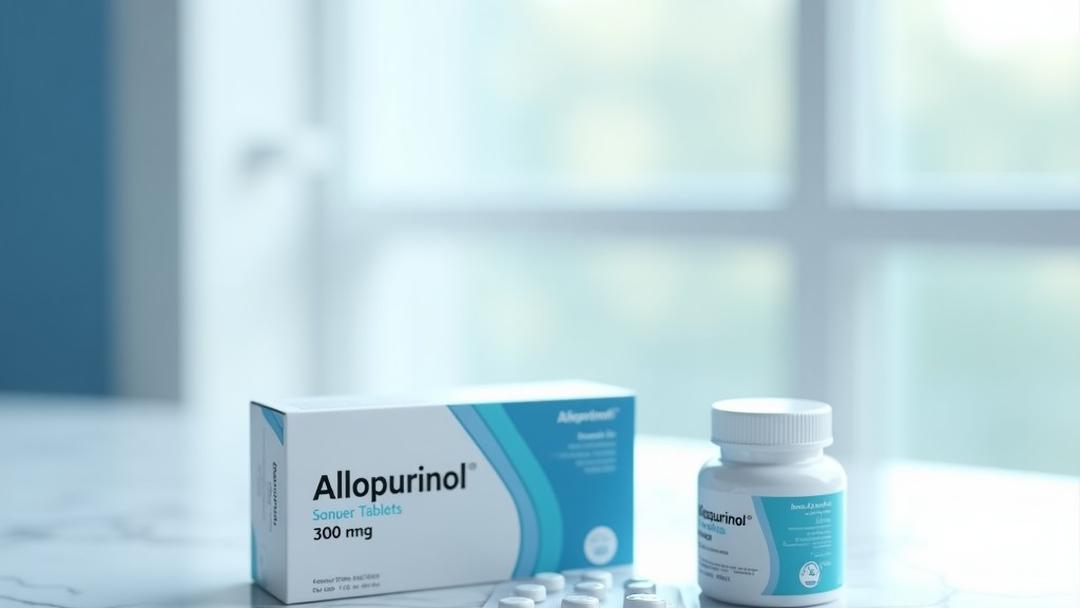
Allopurinol is a long-established urate-lowering therapy used to manage chronic gout and to prevent complications of hyperuricemia, including recurrent gout flares, tophi, and uric-acid kidney stones. By lowering serum uric acid, it reduces the crystal deposits that drive joint inflammation. This guide covers what allopurinol is, how it works, correct dosing, side effects, how it compares with newer agents, typical treatment costs, and the safety steps that protect patients.
What Is Allopurinol?
Allopurinol is a xanthine oxidase inhibitor. It is the most widely prescribed first-line medication for lowering uric acid in adults with recurrent gout, tumor-lysis syndrome prevention, and certain kidney-stone disorders. It is taken orally, most commonly as 100 mg, 200 mg, or 300 mg tablets, and works by reducing the body’s production of uric acid rather than increasing its excretion. It has been used safely for decades and remains the lowest-cost urate-lowering option in most markets.
Mechanism of Action
Xanthine oxidase is the enzyme that converts hypoxanthine to xanthine and then to uric acid. Allopurinol and its active metabolite oxypurinol inhibit this enzyme, decreasing uric acid synthesis. Lower serum urate allows deposited monosodium urate crystals in joints and soft tissues to gradually dissolve, which over months reduces flare frequency and prevents tophus formation. The drug does not relieve an acute flare directly; it prevents future events by correcting the underlying chemical imbalance.
Approved Uses
- Chronic gout: prevention of recurrent flares and tophi in patients with frequent attacks or established deposits.
- Nephrolithiasis: prevention of uric-acid kidney stones in hyperuricemic patients.
- Hyperuricemia secondary to chemotherapy: tumor-lysis syndrome prophylaxis in selected oncology settings.
Recommended Dosage
| Population | Starting Dose | Target / Max |
|---|---|---|
| Most adults with gout | 100 mg once daily | Titrate by 100 mg every 2–4 weeks to <6 mg/dL; common maintenance 300 mg/day |
| Patients with renal impairment | 50–100 mg/day (reduced) | Titrate cautiously; lower maxima |
| Chemotherapy prophylaxis | Per oncology protocol | Individualised |
A key practical point: urate-lowering therapy is usually started after an acute flare has settled and is often co-initiated with anti-inflammatory prophylaxis (e.g., low-dose colchicine or NSAID) for the first months to prevent flare-ups triggered by shifting crystal burden. The goal is a serum urate below 6 mg/dL, or below 5 mg/dL when tophi are present.
Clinical Evidence
Decades of cohort data and randomised trials confirm that sustained urate lowering with allopurinol reduces flare frequency by more than half within the first year of adherent therapy and shrinks tophi over two to three years. The agent is consistently recommended as first-line by the American College of Rheumatology and EULAR because of its efficacy, familiarity, and cost. In cardiovascular subgroups, allopurinol has been studied for possible endothelial benefits, though its primary approved role remains urate lowering.
Drug Interactions
Allopurinol inhibits xanthine oxidase, which also metabolises azathioprine and mercaptopurine — co-use requires marked dose reduction of those immunosuppressants to avoid severe toxicity. Warfarin’s effect may be potentiated. Didanosine levels can rise. Thiazide diuretics may increase the risk of hypersensitivity reactions. Caution is advised when combining with ACE inhibitors or ampicillin, and clinicians should review the full medication list before starting therapy.
Side Effects and Safety
Common, mild effects include skin rash, gastrointestinal upset, and transient elevation of liver enzymes. The most serious concern is severe cutaneous adverse reactions (SCAR), including Stevens-Johnson syndrome, which is more common in patients of Han Chinese, Thai, or Korean descent carrying the HLA-B*5801 allele; testing may be considered in these groups. Allopurinol can also rarely cause bone-marrow suppression or hypersensitivity syndrome, particularly when started at high doses or in those with impaired renal function.
Allopurinol vs Febuxostat
| Feature | Allopurinol | Febuxostat |
|---|---|---|
| Drug class | Xanthine oxidase inhibitor | Non-purine xanthine oxidase inhibitor |
| First-line status | Recommended first-line | Alternative / intolerant patients |
| Renal dosing | Requires reduction | Less renal-dependent |
| CV safety signal | Long track record | Boxed warning for CV events in some guidelines |
| Cost | Very low (generic) | Higher |
Monitoring and Patient Tips
- Stay well hydrated to reduce kidney-stone risk and help excrete urate.
- Do not start allopurinol during an acute flare; begin between attacks.
- Report any skin rash immediately and discontinue the drug pending medical review.
- Attend regular blood tests for serum urate, renal, and liver function.
- Moderate alcohol and high-purine foods; they can worsen hyperuricemia.
India Generic Pricing (±10% ranges)
Generic allopurinol 300 mg is produced by numerous Indian manufacturers and remains one of the most affordable chronic gout therapies. A 30-tablet pack (one month at 300 mg/day) generally ranges from $3–$8. The US-brand equivalent (Zyloprim / Lopurin) for the same quantity typically falls in the range of $40–$90. Prices fluctuate with manufacturer, pack size, and local pharmacy margins; confirm current pricing with a licensed supplier. For related content, see our gout treatment archive and the broader pharmaceuticals library.
Frequently Asked Questions
1. Why did my gout flare get worse after starting allopurinol?
Initiating urate lowering can mobilise crystals and trigger flares. This is why anti-inflammatory prophylaxis is used early; it is not a sign the drug is failing.
2. How long until allopurinol works?
Uric acid levels fall within days, but tophi and flare prevention improve over 6–12 months of consistent therapy aimed at a target urate below 6 mg/dL.
3. Can I take allopurinol during an acute flare?
Therapy is usually begun between flares; if already stable on it, most clinicians continue it through a flare rather than stopping.
4. Do I need blood tests on allopurinol?
Yes. Liver and kidney function and serum urate are monitored, and any rash should be reported immediately.
Who Should Use Caution
Allopurinol should be started at low doses in renal impairment and HLA-B*5801 testing considered in high-risk ethnic groups. It is contraindicated in prior severe allopurinol hypersensitivity. Concomitant azathioprine or mercaptopurine requires dose reduction because allopurinol inhibits their metabolism. A prescriber should weigh benefits against hypersensitivity risk in every patient.
Diet, Purines, Lifestyle, and Long-Term Joint Health
While allopurinol corrects the chemical driver of gout, lifestyle reinforces its effect. Reducing intake of high-purine foods (red meat, organ meats, some seafood), limiting fructose-sweetened drinks and alcohol (especially beer), and maintaining hydration help lower urate load. Weight loss benefits hyperuricemia, but crash diets and fasting can paradoxically trigger flares. Tophi — the chalky urate deposits under skin near joints — shrink gradually with sustained serum urate control; in severe, long-standing cases surgical removal may be considered once medical therapy has stabilised the biochemistry. Most patients who adhere to target-level urate lowering experience progressively fewer flares and regain normal joint function over one to three years.
In patients with chronic kidney disease, allopurinol remains useful but requires dose reduction and monitoring; controlling urate may also support renal outcomes in selected populations. The drug is not a painkiller, so during an acute flare clinicians add colchicine, NSAIDs, or a short steroid course rather than relying on urate lowering alone.
Special Populations: Elderly, Kidney Disease, and Transplant Patients
Older adults are the group most affected by gout and also the most vulnerable to allopurinol toxicity, so starting low (50–100 mg/day) and titrating slowly is essential. In chronic kidney disease, dose reduction protects against accumulation of oxypurinol, and some clinicians prefer febuxostat when renal function is significantly impaired. Transplant recipients taking azathioprine or mycophenolate need careful allopurinol dose adjustment — or avoidance — because of the xanthine-oxidase interaction that can otherwise cause dangerous immunosuppressant toxicity. Pregnancy and breastfeeding require individualised risk-benefit counselling, and the drug is generally used only when clearly indicated.
Children with certain enzyme deficiencies (e.g., Lesch-Nyhan syndrome) may also receive allopurinol under specialist supervision, with dosing based on body surface area. Across all groups, the principle is the same: start low, monitor, and treat to a defined serum-urate target rather than to a fixed dose.
References
- U.S. FDA. Zyloprim (allopurinol) prescribing information. Food and Drug Administration.
- ACR Guideline for the Management of Gout. American College of Rheumatology.
- EULAR recommendations for management of gout.
- UpToDate. Allopurinol: Drug information and gout management.
- Cochrane review of urate-lowering therapy for chronic gout.
Medical disclaimer: This article is for informational purposes only and does not constitute medical advice. Dosing, monitoring, and treatment decisions must be individualised by a licensed healthcare provider. Prices shown are approximate ranges and vary by supplier, country, and regulation; they are not a formal quotation.