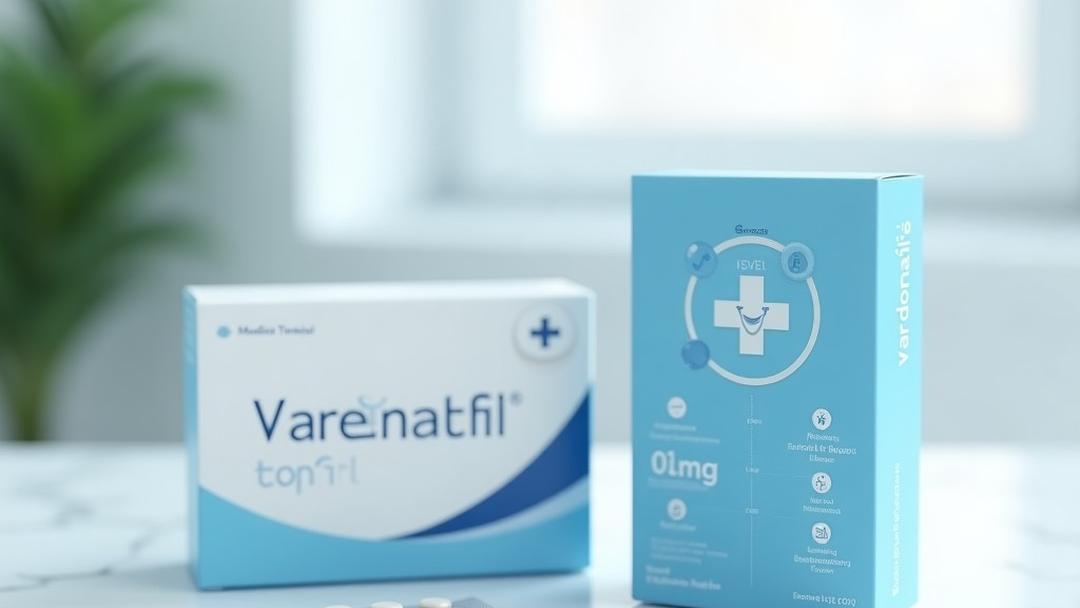
Vardenafil is an oral medication used to treat erectile dysfunction (ED) in adult men. Marketed as Levitra and as generic tablets, it belongs to the phosphodiesterase type 5 (PDE5) inhibitor class alongside sildenafil and tadalafil. This guide explains how vardenafil works, proper dosing, side effects, how it compares with other ED treatments, typical costs, and the safety profile patients need to understand before use.
What Is Vardenafil?
Vardenafil is a selective PDE5 inhibitor that enhances the natural erectile response to sexual stimulation. It does not cause an erection on its own and requires arousal. It is supplied as orally disintegrating or standard film-coated tablets in strengths of 5 mg, 10 mg, and 20 mg. Because erectile dysfunction can be an early marker of underlying cardiovascular disease, a medical evaluation is recommended before starting any PDE5 inhibitor.
Mechanism of Action
During sexual arousal, nerve endings in the penis release nitric oxide, which raises cyclic GMP (cGMP). cGMP relaxes smooth muscle and dilates penile arteries, allowing blood inflow. PDE5 normally breaks cGMP down. Vardenafil inhibits PDE5, so cGMP accumulates and the erectile response is sustained. Because PDE5 is also present in vascular and retinal tissue, the drug has systemic and visual effects that inform its safety profile. The molecule is roughly ten times more potent at PDE5 than sildenafil, though clinical relevance of this varies by individual.
Approved Uses
- Erectile dysfunction: improvement of erectile function across a range of underlying causes (vascular, diabetic, psychogenic, mixed).
- Off-label / related: pulmonary arterial hypertension uses different PDE5 agents; vardenafil is not first-line for that indication.
Recommended Dosage
| Situation | Recommended Dose | Timing |
|---|---|---|
| Most adults | 10 mg | ~25–60 min before activity; once daily max |
| Inadequate response | 20 mg | As above; not more than once per day |
| Age >65 or hepatic/renal impairment | 5 mg starting | Titrate cautiously |
| With strong CYP3A4 inhibitors | Max 5 mg | Avoid if possible |
Vardenafil’s effective window is roughly 4–5 hours, shorter than tadalafil’s 36-hour window but with a faster, predictable onset for many users. It can be taken with or without food, though a very heavy, high-fat meal may slightly delay absorption.
Clinical Evidence
Pivotal trials involving more than two thousand men showed vardenafil significantly improved erectile-function scores versus placebo, with roughly 70–80% of participants achieving successful intercourse across psychogenic, organic, and diabetic aetiologies. Efficacy is generally preserved in men with diabetes, though a 20 mg dose is more often needed in that group. Onset is typically 25–60 minutes, and the drug remains flexible with meals, making it a practical on-demand option for many patients.
Drug Interactions
Vardenafil is absolutely contraindicated with nitrates (e.g., nitroglycerin, isosorbide) because the combination can cause a sudden, life-threatening drop in blood pressure. Caution is needed with alpha-blockers (additive hypotension; separate dosing by several hours). Strong CYP3A4 inhibitors such as ketoconazole, ritonavir, and clarithromycin require a 5 mg maximum or avoidance. Excessive alcohol should be avoided, and other antihypertensives are usually fine but warrant monitoring of blood pressure.
Side Effects and Safety
Common effects are headache, flushing, nasal congestion, dyspepsia, and mild visual changes (a bluish tint or light sensitivity) because PDE6 in the retina is weakly inhibited. Rare but serious adverse events include priapism (prolonged erection >4 hours requiring emergency care), sudden hearing loss, and non-arteritic anterior ischaemic optic neuropathy (NAION). Patients with recent stroke, myocardial infarction, or unstable angina should not use sexual-activity-inducing therapy until stabilised.
Vardenafil vs Sildenafil vs Tadalafil
| Feature | Vardenafil | Sildenafil | Tadalafil |
|---|---|---|---|
| Onset | 25–60 min | 30–60 min | 30–120 min |
| Duration | ~4–5 h | ~4–6 h | up to 36 h |
| Food effect | Minimal | High-fat meal delays | Minimal |
| Visual side effects | Mild | Mild | Rare |
Practical Tips and Patient Experience
- Take 25–60 minutes before activity; sexual stimulation is still required.
- A light meal is fine; avoid very fatty meals that can blunt the response.
- Manage first-dose anxiety — performance pressure can reduce perceived efficacy.
- Effects last about 4–5 hours; do not repeat within 24 hours.
- Use ED as a prompt to screen for cardiovascular risk factors such as blood pressure, lipids, and glucose.
India Generic Pricing (±10% ranges)
Generic vardenafil 20 mg is widely manufactured in India and is substantially cheaper than the US brand. A pack of 10 tablets (20 mg) generally ranges from $15–$35. The US-brand equivalent (Levitra) for the same pack typically falls in the range of $380–$520. Pricing varies by manufacturer, pack size, and local pharmacy; confirm current pricing with a licensed supplier. Related ED content is available via our erectile dysfunction archive and the wider pharmaceuticals library.
Frequently Asked Questions
1. Can I take vardenafil with nitrates?
No. Concomitant use with any nitrate (e.g., nitroglycerin) causes a dangerous, potentially fatal drop in blood pressure and is absolutely contraindicated.
2. How quickly does it work?
Most men respond within 25–60 minutes; a light meal is fine, but very fatty meals can slightly delay onset for some PDE5 agents.
3. Is daily use safe?
Vardenafil is taken on demand, not daily, at the doses described. Daily low-dose regimens are not the standard approved approach for this molecule.
4. What if an erection lasts too long?
A painful erection lasting more than 4 hours (priapism) is a medical emergency and needs immediate treatment to avoid permanent tissue damage.
Who Must Avoid Vardenafil
Vardenafil is contraindicated with nitrates and with guanylate-cyclase stimulators (e.g., riociguat), and in patients with severe cardiovascular disease for whom sexual activity is inadvisable. Caution is needed in those with anatomical penile deformity, bleeding disorders, active peptic ulcer, or significant hepatic/renal impairment. A clinician should confirm suitability before prescribing.
Psychological Factors, Red Flags, and Reassessing Therapy
Erectile dysfunction is frequently intertwined with psychological and relationship factors. Performance anxiety, depression, fatigue, and partner dynamics all influence response, so a holistic approach — including counselling where appropriate — improves real-world outcomes beyond the pill. Vardenafil is a tool, not a cure, and its effectiveness improves when combined with addressing underlying contributors such as sleep, stress, and communication.
Importantly, ED can be an early warning sign of cardiovascular disease, diabetes, or hormonal imbalance. Men with new-onset ED should receive screening for blood pressure, lipids, and glucose, and those with chest pain, breathlessness on exertion, or cardiac risk factors need a cardiac evaluation before resuming sexual activity. If vardenafil fails to produce an adequate response after several attempts at the correct dose and timing, a clinician may review technique, adjust the dose, evaluate drug interactions (notably nitrates and strong CYP3A4 inhibitors), or consider an alternative PDE5 agent. Sudden loss of vision or hearing, or an erection beyond four hours, always warrants emergency care.
What to Expect in the First Month and When to Follow Up
Most men try vardenafil on a few separate occasions before judging effectiveness, because response varies with fatigue, mood, and timing. The first month is about finding the dose and conditions that work: many start at 10 mg, step up to 20 mg if needed (and not contraindicated), and time the dose 30–60 minutes before activity on a relatively light stomach. Mild side effects such as flushing or nasal congestion usually fade as the body adjusts and rarely require stopping the drug.
Follow-up with the prescriber should review efficacy, side effects, cardiac risk, and concurrent medicines. If headaches or visual disturbance are bothersome, dose adjustment or an alternative agent may help. Because ED often coexists with diabetes, hypertension, or depression, periodic review of those conditions is part of responsible long-term care. Men who experience chest pain during intercourse should stop and seek urgent medical attention rather than continuing therapy.
References
- U.S. FDA. Levitra (vardenafil) prescribing information. Food and Drug Administration.
- AUA Guideline on the Management of Erectile Dysfunction. American Urological Association.
- Goldstein I, et al. Oral sildenafil in the treatment of erectile dysfunction (NEJM background context).
- UpToDate. Vardenafil: Drug information and erectile dysfunction management.
- Cochrane review of oral PDE5 inhibitors for erectile dysfunction.
Medical disclaimer: This article is for informational purposes only and does not constitute medical advice. ED can signal underlying cardiovascular disease; a full medical evaluation is recommended. Dosing and safety must be guided by a licensed healthcare provider. Prices are approximate ranges that vary by supplier, country, and regulation and are not a formal quotation.