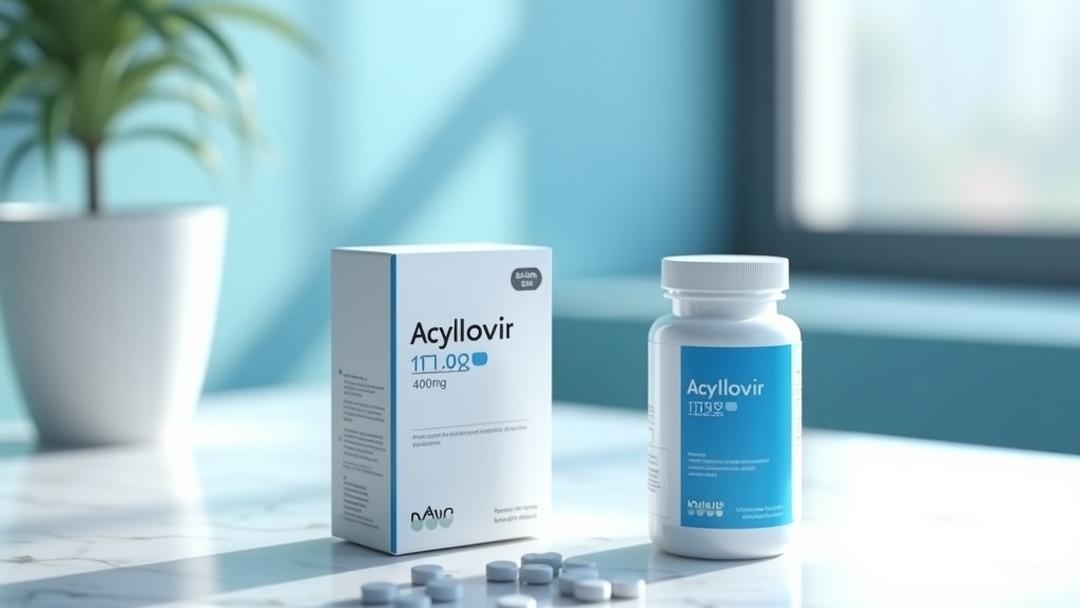
What Is Acyclovir?
Acyclovir is a synthetic nucleoside analogue of guanine that belongs to the family of antiviral medications known as herpesvirus DNA polymerase inhibitors. Since its introduction in the 1980s it has become one of the most widely prescribed treatments for infections caused by herpes simplex virus type 1 (HSV-1), herpes simplex virus type 2 (HSV-2), and varicella-zoster virus (VZV). It is available internationally under the brand name Zovirax and as numerous high-quality generic formulations manufactured by companies such as Cipla, Hetero, and Cadila.
Unlike broad-spectrum antibiotics, acyclovir is highly selective. It is activated almost exclusively inside virus-infected cells, which is why it produces relatively few systemic side effects compared with older antiviral drugs. It does not cure herpes permanently — the virus remains latent in nerve ganglia — but it reliably suppresses replication, shortens outbreaks, and reduces the risk of transmission.
How Acyclovir Works (Mechanism of Action)
The drug’s selectivity comes from a two-step activation process. First, the viral enzyme thymidine kinase phosphorylates acyclovir to acyclovir monophosphate. Host cellular kinases then convert it into acyclovir triphosphate, the active moiety. This triphosphate competitively inhibits viral DNA polymerase and, once incorporated into the growing viral DNA chain, acts as a chain terminator. Because uninfected cells lack viral thymidine kinase, far less active drug accumulates in healthy tissue.
Clinically, this translates into three measurable effects: (1) faster healing of visible lesions, (2) reduced viral shedding, and (3) fewer recurrent episodes when used as suppressive therapy. A 2019 Cochrane review of suppressive therapy confirmed that daily oral acyclovir reduces the frequency of genital herpes recurrences by roughly 70%–80% compared with placebo.
What Acyclovir Is Used For
- Genital herpes (HSV-2): both episodic treatment of outbreaks and daily suppressive therapy.
- Orolabial herpes (cold sores, HSV-1): topical and oral formulations for recurrent lip lesions.
- Herpes zoster (shingles): high-dose oral or intravenous therapy to limit post-herpetic neuralgia.
- Chickenpox (varicella): primarily in older children and adults at higher risk of complications.
- Herpes simplex encephalitis and neonatal herpes: intravenous acyclovir is the standard of care.
Dosage Guidelines
| Indication | Typical Adult Dose | Duration |
|---|---|---|
| First episode genital herpes | 200 mg five times daily or 400 mg three times daily | 7–10 days |
| Recurrent episode (episodic) | 400 mg three times daily or 800 mg twice daily | 5 days |
| Suppressive therapy | 400 mg twice daily | Long-term, reviewed every 6–12 months |
| Herpes zoster (shingles) | 800 mg five times daily | 7–10 days |
Renal dose adjustment is mandatory. Because acyclovir is eliminated largely unchanged by the kidneys, patients with impaired kidney function require reduced dosing and adequate hydration to avoid crystalline nephropathy.
Clinical Evidence & Guidelines
International guidelines from the US Centers for Disease Control and Prevention (CDC) and the World Health Organization (WHO) position acyclovir as a first-line agent for herpes suppression. The 2015 CDC sexually transmitted diseases treatment guidelines recommend acyclovir, valacyclovir, or famciclovir for both episodic and suppressive genital herpes management. For shingles, earlier initiation (within 72 hours of rash) is associated with reduced pain duration and a lower incidence of post-herpetic neuralgia in adults over 50.
Acyclovir vs. Valacyclovir — Comparison
| Feature | Acyclovir | Valacyclovir |
|---|---|---|
| Bioavailability | ~15%–30% | ~55% |
| Dosing convenience | 3–5 times daily | 1–2 times daily |
| Active compound | Acyclovir | Valacyclovir → acyclovir |
| Typical cost per course | Lower | Higher |
Valacyclovir is simply the L-valyl ester prodrug of acyclovir; both deliver the same active molecule, but valacyclovir’s superior absorption allows less frequent dosing. For many patients the convenience justifies the higher price, while those prioritizing cost often prefer generic acyclovir.
Drug Interactions
- Probenecid reduces renal clearance of acyclovir, raising blood levels — dose adjustment may be needed.
- Nephrotoxic drugs (e.g., certain IV aminoglycosides, cyclosporine) increase the risk of kidney injury when combined with high-dose IV acyclovir.
- Mycophenolate levels may be affected; monitoring is advisable in transplant patients.
Generic Pricing in India vs. US Brand
The figures below are indicative ranges and will vary by pharmacy, strength, pack size, and exchange rate. Always confirm current pricing with a licensed supplier.
- Indian generic (400 mg tablet, pack of 10): approximately $1.80–$2.20 per pack at leading Indian pharmacies.
- US brand Zovirax (400 mg, pack of 50): roughly $180–$440 depending on pharmacy and insurance.
- US generic acyclovir (400 mg, pack of 50): about $15–$55 via large retail chains.
For travelers and patients comparing cost-effective treatment options, generic acyclovir sourced through accredited international pharmacies can represent a meaningful saving. Explore related guides in our Pharmaceuticals section.
Side Effects & Safety
Acyclovir is generally well tolerated. The most commonly reported reactions include nausea, headache, and diarrhea. Higher intravenous doses can cause reversible kidney injury, particularly if the patient is dehydrated. Less common but important adverse events include neuropsychiatric symptoms (confusion, hallucinations) in elderly patients receiving IV therapy, and rare thrombotic thrombocytopenic purpura/hemolytic uremic syndrome with prolonged high-dose use.
Patients should maintain hydration, report any decrease in urine output, and disclose all concurrent medications. Topical acyclovir is associated with mild local burning or stinging.
Who Should Avoid or Use With Caution
- People with significant renal impairment (dose adjustment required).
- Older adults on high-dose IV therapy (neurotoxicity risk).
- Anyone with a documented hypersensitivity to acyclovir or valacyclovir.
Acyclovir is classified by the FDA as Pregnancy Category B; it is frequently used in pregnant women with recurrent genital herpes near term to reduce caesarean delivery risk, but only under obstetric supervision.
Patient Experience & Practical Tips
Most patients find episodic therapy easiest when they start at the very first sign of tingling or burning. Keeping a small supply on hand shortens the window between symptom onset and treatment. For suppressive therapy, taking the tablet at the same two times each day (for example, morning and bedtime) improves adherence. Because the drug is water-soluble, drinking extra fluids during high-dose courses protects the kidneys.
Frequently Asked Questions
Does acyclovir cure herpes permanently?
No. Acyclovir suppresses viral replication and controls outbreaks, but the virus remains dormant in nerve cells for life. Stopping therapy allows recurrences to return in most patients.
Can I take acyclovir daily for years?
Many patients use daily suppressive therapy safely for years. Clinicians typically review the need every 6–12 months, and some attempt a treatment holiday to see whether outbreaks have become less frequent.
Is generic acyclovir as effective as Zovirax?
Yes. Regulatory agencies require generic acyclovir to be bioequivalent to the brand, meaning the active drug reaches the bloodstream at comparable rates and extents.
What should I do if I miss a dose?
Take it as soon as you remember unless it is nearly time for the next dose. Never double up to compensate for a missed tablet.
How to Take Acyclovir Correctly
For episodic therapy the best outcomes occur when the first dose is taken at the earliest symptom — the familiar tingling, itching, or burning that precedes a visible lesion. Patients should complete the full prescribed course even if lesions clear quickly, because stopping early can permit rebound replication. With suppressive therapy, consistency matters more than timing: most clinicians recommend splitting the daily 400 mg dose into two evenly spaced doses (for example, morning and bedtime) to keep tissue levels steady. Acyclovir can be taken with or without food, but spreading doses through the day improves tolerability. Tablets should be swallowed whole with water; crushing is unnecessary. Because the drug is excreted by the kidneys, drinking an extra one to two glasses of water per day during treatment helps protect renal function, particularly at higher doses.
Storage and Handling
Store acyclovir tablets and capsules at room temperature (roughly 20°C–25°C / 68°F–77°F), away from moisture, direct light, and heat. The bathroom medicine cabinet is a poor choice because humidity degrades the tablets. Keep all formulations out of the reach of children and pets, and never use medication past its printed expiry date. Topical cream should be recapped tightly after each use. If a tablet appears discolored or crumbles easily, discard it and obtain a fresh supply from a licensed pharmacy.
Special Populations
Elderly patients are more susceptible to neurotoxic effects and kidney changes, so prescribers often start at the lower end of the dosing range and monitor renal function. Patients with renal impairment require dose reductions proportional to creatinine clearance; haemodialysis removes acyclovir, so a supplemental dose may be given after the session. Pregnant women with recurrent genital herpes near term may receive acyclovir to reduce viral shedding and the need for caesarean delivery, under obstetric supervision. Breastfeeding mothers should note that acyclovir passes into milk in small amounts; the clinical significance is generally low, but a clinician should weigh the benefit.
More Frequently Asked Questions
Can acyclovir prevent passing herpes to a partner?
Suppressive daily therapy reduces asymptomatic viral shedding and lowers transmission risk by roughly 50% in discordant couples, according to long-term studies — but condoms and open communication remain essential, as transmission can still occur.
Does acyclovir interact with birth control pills?
No clinically significant interaction with hormonal contraceptives is documented. However, severe diarrhea or vomiting from any cause can reduce pill absorption, so a backup method is wise during a stomach illness.
Medical Disclaimer
This article is for informational purposes only and does not constitute medical advice, diagnosis, or treatment. Drug prices fluctuate and vary by supplier, country, strength, and pack size; the ranges shown are estimates, not quotations. Always consult a qualified healthcare provider before starting, stopping, or changing any medication. Nothing here should replace the judgment of your physician or pharmacist.