
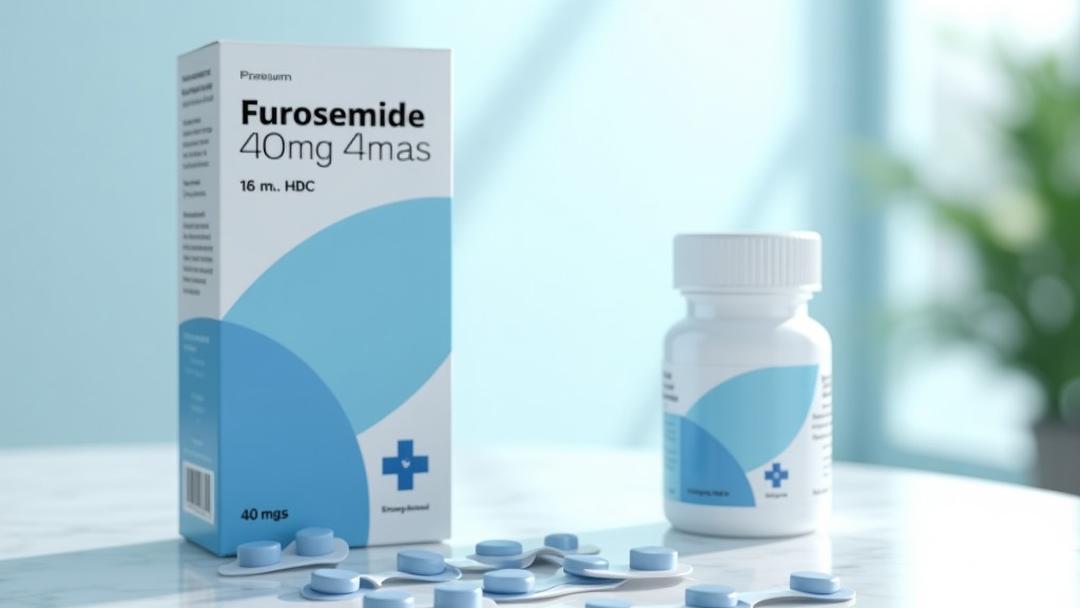
What Is Furosemide?
Furosemide is a potent loop diuretic — a “water pill” — sold under the brand name Lasix and widely available as a low-cost generic. Since the 1960s it has been a cornerstone therapy for fluid overload (edema) caused by heart failure, chronic kidney disease, liver cirrhosis, and nephrotic syndrome, as well as for managing acute pulmonary edema and some cases of resistant hypertension. Because it acts on the kidney’s loop of Henle, it can remove far more sodium and water than the milder thiazide diuretics. This guide covers how furosemide works, typical dosing, how it compares with other diuretics, realistic cost expectations, and the safety monitoring that protects patients from electrolyte problems.
How Furosemide Works (Mechanism of Action)
Furosemide blocks the Na+-K+-2Cl− cotransporter in the thick ascending limb of the loop of Henle. This transporter normally reabsorbs roughly 25% of filtered sodium; by inhibiting it, furosemide prevents reabsorption and dramatically increases sodium, chloride, and water excretion in the urine. In practical terms, a loop diuretic can eliminate 40–80% of filtered sodium — far more than the 5–10% handled by thiazides. The rapid fluid shift out of tissues is what relieves swollen legs, fluid in the lungs, and the stretch on a failing heart.
The drug begins working within 30–60 minutes when taken orally and within 5 minutes when given intravenously. Effects peak around 1–2 hours and last 6–8 hours, which is why twice-daily dosing is common. Because potassium is dragged out alongside sodium, monitoring blood potassium is essential during therapy.
Approved Uses and Clinical Indications
Clinicians prescribe furosemide for congestive heart failure with fluid retention, edema from liver cirrhosis and nephrotic syndrome, chronic kidney disease-associated volume overload, acute pulmonary edema (often IV in emergencies), and hypertension that does not respond to first-line agents. It is also used off-label to manage hypercalcemia and to promote diuresis after acute kidney injury. Loop diuretics do not cure the underlying disease; they control the dangerous consequences of fluid buildup while the root cause is treated.
Dosage Guidelines
| Indication | Oral Starting Dose | Typical Range | Max (single/day) |
|---|---|---|---|
| Edema (adults) | 20–80 mg/day | 20–120 mg/day in 1–2 doses | 600 mg/day |
| Heart failure maintenance | 20–40 mg/day | 40–80 mg/day | 600 mg/day |
| Hypertension (adjunct) | 20 mg twice daily | 40–80 mg/day | 80–120 mg/day |
| Acute pulmonary edema (IV) | 20–40 mg IV push | Repeat per response | Per protocol |
| Pediatric (edema) | 1–2 mg/kg/dose | Titrate to response | 6 mg/kg/day |
Doses are highly individualized — some patients need only 20 mg while others require hundreds of milligrams. “Diuretic resistance” can develop in advanced heart or kidney disease, prompting combination with a thiazide. Never self-adjust the dose; sudden changes can trigger dehydration or blood-pressure crashes. For broader context on managing hypertension, see our complete hypertension medication guide.
Furosemide vs Other Diuretics: Comparison
| Feature | Furosemide (loop) | Bumetanide | Torsemide | Hydrochlorothiazide (thiazide) |
|---|---|---|---|---|
| Site of action | Loop of Henle | Loop of Henle | Loop of Henle | Distal tubule |
| Filtered Na+ blocked | 40–80% | 40–80% | 40–80% | 5–10% |
| Onset (oral) | 30–60 min | 30–60 min | 60 min | 2 hr |
| Duration | 6–8 hr | 4–6 hr | 12–24 hr | 12–24 hr |
| Potency (relative) | 1× | ~40× | ~2× | Weaker |
| Best for | Rapid, high-volume diuresis | GI-absorbed cases | Once-daily CHF | Mild HTN/edema |
Pricing: Generic and Brand Expectations
Furosemide is off-patent and inexpensive to manufacture, so it sits among the most affordable cardiovascular medications. The estimated monthly ranges below assume a typical daily dose and will vary by pharmacy, country, and insurance — they are not exact quotes.
| Product | Strength / Pack | Estimated Monthly Cost Range |
|---|---|---|
| Generic furosemide (India) | 40 mg, 30 tablets | $1.50–$3.50 |
| Generic furosemide (India) | 80 mg, 30 tablets | $2–$4 |
| US generic furosemide | 40 mg, 30 tablets | $4–$9 |
| Brand Lasix (reference list) | 40 mg, 30 tablets | $120–$180 |
The wide brand-to-generic gap is why many patients explore cost-effective generic medication solutions through verified suppliers. Confirm dosing, manufacturer, and local import rules before ordering.
Side Effects and Safety Monitoring
The most common problems stem from over-diuresis: dehydration, low blood pressure, dizziness, and electrolyte disturbances (low potassium, magnesium, or sodium). Muscle cramps, weakness, and irregular heartbeat can signal dangerous potassium loss. Less common but serious risks include ototoxicity (ringing in the ears or hearing loss, more likely with high IV doses or kidney impairment), gout flares from elevated uric acid, kidney function decline, and severe dehydration. Blood tests for electrolytes and kidney function are typically checked 1–2 weeks after starting or changing dose, then periodically.
Who Should Use Caution or Avoid
Furosemide is contraindicated in anuria (no urine output) and in patients with severe electrolyte depletion or hepatic coma. Use cautiously with sulfa allergies (cross-reactivity is possible), diabetes, gout, or when combining with other blood-pressure or potassium-altering drugs. Because it can reduce blood volume, standing up slowly helps prevent lightheadedness. Alcohol and hot weather both raise dehydration risk.
Decision Guide: Is Furosemide Right for You?
Furosemide is usually the right choice when fluid retention is significant — such as leg edema with heart failure, fluid in the lungs, or cirrhosis-related ascites — because weaker diuretics cannot move enough volume. For mild hypertension without edema, a thiazide is often preferred due to a gentler electrolyte profile. The correct agent depends on kidney function, sodium levels, and how quickly fluid must be removed. Track daily weight; a sudden gain of 2–3 lb often means fluid is returning and the dose may need review. More background is in our blood-pressure medication guide.
Frequently Asked Questions
How fast does furosemide make you urinate?
Orally, diuresis usually begins within 30–60 minutes and peaks at 1–2 hours. IV dosing works in about 5 minutes, which is why it is used in emergencies like pulmonary edema.
Will furosemide deplete my potassium?
It often does. Loop diuretics increase potassium loss, so clinicians routinely check levels and may add a potassium-sparing diuretic or supplement.
Can I take it at night?
Most people avoid evening doses because the frequent urination disrupts sleep. Morning (and midday, if twice daily) dosing is typical.
Is generic furosemide equivalent to Lasix?
Yes. Regulators require generic loop diuretics to be bioequivalent, delivering the same active effect at the same rate as the brand.
References
- U.S. FDA – Furosemide Prescribing Information
- Mayo Clinic – Furosemide Oral Route Description
- ACC/AHA Heart Failure Guideline – Diuretic Management
- NHS – Furosemide patient guidance
- UpToDate – Loop diuretic use in edema and heart failure
Medical Disclaimer: This article is for informational purposes only and does not constitute medical advice, diagnosis, or treatment. Prices are estimated ranges and vary by supplier and region. Always consult a qualified healthcare provider before starting, changing, or stopping any medication. Generic medication access is subject to local laws and import regulations.
Clinical Evidence and Effectiveness
Decades of randomized trials and real-world registry data support loop diuretics as the backbone of volume management in heart failure. Landmark studies show that furosemide and its loop-class peers reliably reduce pulmonary congestion and peripheral edema within hours, improving breathing and exercise tolerance. In nephrotic syndrome, furosemide combined with albumin can mobilize refractory edema. Its effect is dose-dependent up to a ceiling, which is why clinicians escalate in measured steps rather than jumping to very high doses that raise ototoxicity and kidney-risk. In acute pulmonary edema, IV furosemide is a long-standing emergency standard that reduces preload and eases the struggling heart.
Drug Interactions to Know
Several combinations need caution. NSAIDs (ibuprofen, naproxen) blunt furosemide’s effect and can worsen kidney function — a “triple-whammy” with ACE inhibitors/ARBs raises acute kidney injury risk. Furosemide lowers potassium, so pairing it with digoxin raises digoxin toxicity risk if potassium drops. Lithium levels can rise (reduced renal clearance), requiring monitoring. Aminoglycoside antibiotics and high-dose IV furosemide both risk hearing damage, so concurrent use is avoided when possible. Blood-pressure medications add to the hypotension effect. Always give your prescriber a full medication list, including over-the-counter pain relievers.
Monitoring and Follow-Up
Effective diuresis is tracked simply: a daily morning weight is the single best home signal — a gain of 2–3 lb (about 1–1.5 kg) in a day often means fluid is returning. Blood pressure should be checked periodically because over-diuresis causes low readings and dizziness. Blood tests for sodium, potassium, magnesium, and creatinine are typically done 1–2 weeks after starting or changing dose, then every few months when stable. Report muscle cramps, irregular heartbeat, severe dizziness, or hearing changes promptly. With structured monitoring, furosemide remains safe and highly effective for long-term use.
Practical Tips for Daily Use
Take furosemide at a consistent time each morning so diuresis does not interrupt sleep — if a second dose is prescribed, schedule it before mid-afternoon. Weigh yourself daily at the same time in similar clothing; a steady rise signals fluid retention that needs medical review. Protect against dehydration in hot weather or during illness with vomiting or diarrhea, and watch for muscle cramps as an early sign of electrolyte shift. Wearing compression stockings and elevating the legs can complement the medication for lower-limb edema. Keep a current list of all drugs you take, since NSAID pain relievers and some blood-pressure medicines interact with loop diuretics.