
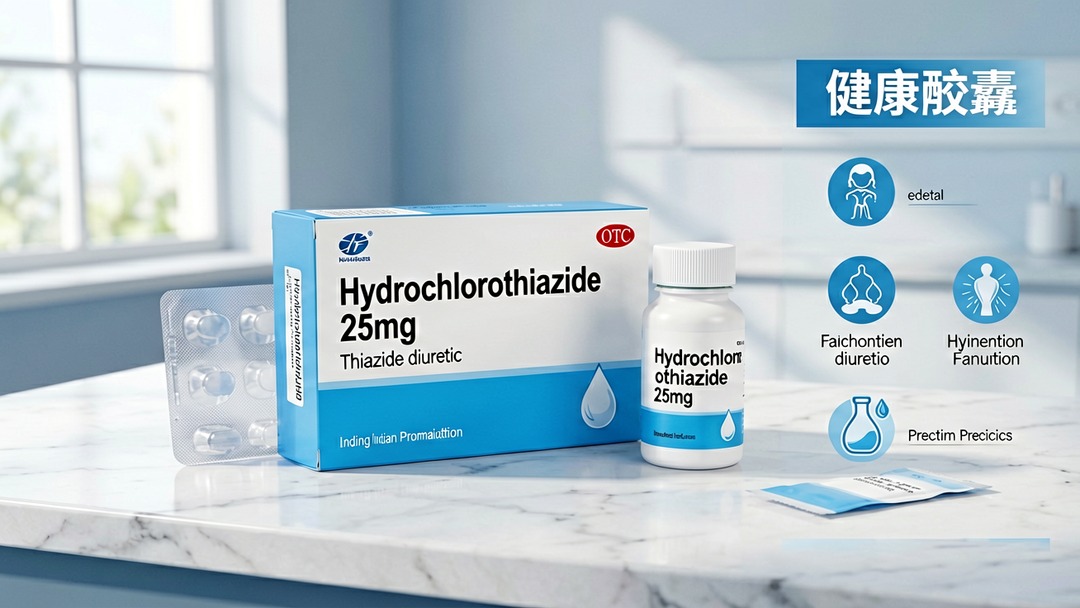
Hydrochlorothiazide is a thiazide diuretic — often called a “water pill” — and one of the most prescribed blood-pressure medicines in the world. Taken once daily as a 25 mg tablet, it has been a backbone of hypertension care for more than six decades because it is inexpensive, well studied, and protects the heart and kidneys when used long term. This guide explains how hydrochlorothiazide works, who benefits most, the correct dosing, what the major trials proved, how it compares with other blood-pressure drugs, what a month of generic therapy typically costs, and the safety points every patient should know.
What Is Hydrochlorothiazide?
Hydrochlorothiazide (often abbreviated HCTZ) is an oral thiazide-type diuretic. It acts on the kidneys to increase the excretion of sodium and water, which lowers the volume of fluid circulating in the blood vessels. Originally developed in the late 1950s, it is marketed under brand names such as Microzide and Esidrix and is now available worldwide as low-cost generic tablets and capsules in strengths of 12.5 mg, 25 mg, and 50 mg.
Unlike loop diuretics such as furosemide, which act on the thick ascending limb of the kidney’s loop of Henle, hydrochlorothiazide acts more distally in the nephron. That makes it gentler and better suited to long-term blood-pressure and fluid-control therapy rather than rapid decongestion in acute heart failure. It is almost always used as a chronic, once-daily medicine rather than an as-needed pill.
How Hydrochlorothiazide Works: Mechanism of Action
Hydrochlorothiazide blocks the sodium-chloride cotransporter (NCC) in the distal convoluted tubule of the kidney. When this transporter is inhibited, less sodium is reabsorbed, more sodium stays in the urine, and water follows the sodium out of the body. The resulting loss of fluid volume reduces the pressure inside the arteries.
A second, slower effect explains much of its long-term benefit. As the kidneys lose a small amount of sodium, the smooth muscle in artery walls relaxes, lowering peripheral resistance. Over weeks, this vascular effect becomes the dominant blood-pressure-lowering mechanism, which is why the full benefit builds gradually rather than after the first dose. By reducing arterial pressure, hydrochlorothiazide also lessens the mechanical strain on the heart, brain, and kidneys that drives strokes, heart failure, and kidney decline.
Approved Uses and Indications
- Hypertension: alone or with other agents, to lower elevated blood pressure and cut the risk of stroke and coronary disease.
- Edema (fluid retention): from congestive heart failure, cirrhosis, corticosteroid therapy, or kidney disorders.
- Stroke prevention in hypertension: large trials show thiazides reduce first-ever stroke more than some newer classes when used as initial therapy.
- Kidney stone prevention: by increasing urinary calcium excretion modestly in some patients, it can reduce recurrent calcium stones under specialist care.
- Diabetes insipidus (nephrogenic): a secondary use in which it paradoxically reduces urine output.
Hydrochlorothiazide is not a pain reliever and does not treat infections. It is a long-term protective medicine, and stopping it abruptly can allow blood pressure to rebound toward pretreatment levels.
Dosage and How to Take It
| Situation | Typical Regimen | Notes |
|---|---|---|
| Hypertension, initial | 12.5–25 mg once daily | Lower start reduces dizziness and electrolyte shifts. |
| Hypertension, maintenance | 25–50 mg once daily | Little extra benefit above 50 mg; side effects rise. |
| Edema (heart failure, cirrhosis) | 25–100 mg daily or intermittent | Dose by fluid balance; often given with potassium monitoring. |
| Elderly or low kidney function | 12.5 mg once daily | Start low; watch sodium and potassium closely. |
| Combination therapy | 12.5–25 mg with an ACE inhibitor or ARB | Common “single-pill” pairing improves adherence. |
Hydrochlorothiazide is taken once daily, preferably in the morning so the extra urine output does not disturb sleep. It can be taken with or without food. Because it increases urination, clinicians often check blood sodium, potassium, and kidney function a couple of weeks after starting or raising the dose. If a dose is missed, take it the same day unless it is nearly bedtime; never double up to make up for a missed tablet.
Clinical Evidence: What the Trials Show
The standing of hydrochlorothiazide rests on decades of outcome data. The ALLHAT trial, which enrolled more than 33,000 high-risk adults with hypertension, found that a thiazide-based regimen prevented heart attacks, heart failure, and strokes at least as well as newer drug classes, and it reduced heart failure more effectively than an ACE inhibitor or calcium-channel blocker. The SHEP trial in older adults showed thiazide therapy cut stroke by roughly 30% and coronary events by about 23%, proving that treating systolic hypertension in the elderly saves lives.
More recent analyses suggest that low-dose hydrochlorothiazide (12.5–25 mg) delivers most of the blood-pressure benefit with fewer metabolic side effects than higher doses, which is why modern guidelines favor starting low and combining it with another class rather than pushing the dose upward. In head-to-head cardiovascular-outcome terms, thiazides remain a recommended first-line option in major U.S. and European hypertension guidelines.
Hydrochlorothiazide vs Other Blood Pressure Medicines
| Drug class | Typical drop in systolic BP | Key strengths | Key cautions |
|---|---|---|---|
| Hydrochlorothiazide (thiazide) | About 10–15 mmHg | Cheap, strong outcome proof, stroke prevention | Low potassium, gout flares, glucose shifts |
| Lisinopril (ACE inhibitor) | About 10–15 mmHg | Kidney and heart protection, tolerated | Dry cough, angioedema, pregnancy risk |
| Losartan (ARB) | About 10–15 mmHg | Like ACE inhibitors without the cough | Similar organ protection, dizziness |
| Amlodipine (calcium-channel blocker) | About 10–20 mmHg | Good in older adults, edema-prone | Ankle swelling, flushing |
Because each class lowers pressure through a different pathway, clinicians frequently pair hydrochlorothiazide with an ACE inhibitor or ARB in a single combination pill. That strategy controls blood pressure in more patients, offsets the potassium loss from the diuretic with the potassium-sparing effect of the partner drug, and simplifies the daily routine.
For readers comparing options, our Lisinopril Guide and Losartan Guide cover the ACE-inhibitor and ARB alternatives in depth, and the full Pharmaceuticals archive lists every blood-pressure medicine we have reviewed.
Generic and Brand Pricing
Hydrochlorothiazide is one of the least expensive prescription medicines on the market, which is a major reason it remains a guideline-recommended first choice. Prices vary widely by pharmacy, country, and insurance, so the figures below are approximate monthly ranges rather than exact quotes — always confirm the current price with your supplier.
| Product | Typical monthly cost range |
|---|---|
| Generic HCTZ 25 mg, 30 tablets (Indian manufacturers) | About $1–$4 |
| Generic HCTZ 25 mg, 30 tablets (U.S. retail pharmacy) | About $4–$12 |
| Brand Microzide 25 mg, 30 capsules | About $40–$110 |
| Single-pill combination (HCTZ + ARB/ACE inhibitor) | About $10–$45 |
The active ingredient is identical regardless of the manufacturer, so a low-cost generic provides the same blood-pressure control as the brand. Many patients obtain a month of therapy for the price of a cup of coffee when using generic suppliers, which removes cost as a barrier to staying on treatment — an important factor, because blood-pressure medicine only works if it is taken every day.
Side Effects and Safety
Most people tolerate hydrochlorothiazide well, especially at 12.5–25 mg, but it changes fluid and electrolyte balance and therefore needs basic monitoring.
- Low potassium (hypokalemia): the most common lab issue; can cause muscle cramps or irregular heartbeat. Often prevented by a low dose or combination with a potassium-sparing partner.
- Low sodium (hyponatremia): more likely in older adults; may cause confusion or falls.
- Gout flares: thiazides raise uric acid and can trigger attacks in susceptible people.
- Blood sugar and cholesterol shifts: small rises in glucose and lipids at higher doses; relevant for diabetics and the metabolic syndrome.
- Dizziness or lightheadedness: from fluid loss, usually early in therapy.
- Sun sensitivity: a mild rash or burn with strong sun exposure is possible.
Who Should Avoid It and Drug Interactions
Hydrochlorothiazide is generally avoided or used with caution in people with severe kidney impairment, difficult-to-control gout, an allergy to sulfa drugs, or significant electrolyte disturbances. It is not used in pregnancy for blood-pressure control because other agents are safer for the fetus.
Notable interactions include other blood-pressure medicines that can compound low pressure, potassium-lowering diuretics, digoxin (where low potassium raises toxicity risk), lithium (thiazides raise lithium levels), and nonsteroidal anti-inflammatory drugs (NSAIDs such as ibuprofen), which can blunt the blood-pressure effect. Always give your prescriber a full medicine list, including over-the-counter products.
Patient Decision Guide
Hydrochlorothiazide is usually a strong fit if you have uncomplicated hypertension, especially with fluid retention or a history of stroke, and you want an affordable, outcome-proven option. It is less ideal as a solo agent if you have gout, marked kidney impairment, or frequent low-potassium problems unless paired with a protective combination. If a dry cough appeared on an ACE inhibitor, switching to a thiazide-plus-ARB pairing is a common, effective move. The right choice depends on your full profile, so it should be made with a clinician rather than guessed from a guide.
Frequently Asked Questions
References
- FDA. Microzide (hydrochlorothiazide) Prescribing Information.
- The ALLHAT Officers and Coordinators. Major outcomes in high-risk hypertensive patients randomized to angiotensin-converting enzyme inhibitor vs calcium channel blocker vs diuretic. JAMA. 2002;288(23):2981-2997.
- SHEP Cooperative Research Group. Prevention of stroke by antihypertensive drug treatment in older persons with isolated systolic hypertension. JAMA. 1991;265(24):3255-3264.
- Whelton PK, et al. 2017 ACC/AHA Guideline for the Prevention, Detection, Evaluation, and Management of High Blood Pressure in Adults.
- ESH/ESC Guidelines for the management of arterial hypertension. J Hypertens. 2018;36(10):1953-2041.
- Ernst ME, Moser M. Use of diuretics in patients with hypertension. N Engl J Med. 2009;361(22):2153-2164.
Medical Disclaimer
This article is for general information only and is not medical advice, diagnosis, or treatment. Blood-pressure therapy must be individualized by a licensed clinician who knows your full history and current medicines. Prices shown are approximate ranges that shift with pharmacy, country, dose, and insurance, and they are not a quote or guarantee. Always consult a healthcare provider before starting, stopping, or changing any medication, and seek emergency care for symptoms such as fainting, irregular heartbeat, or severe weakness.