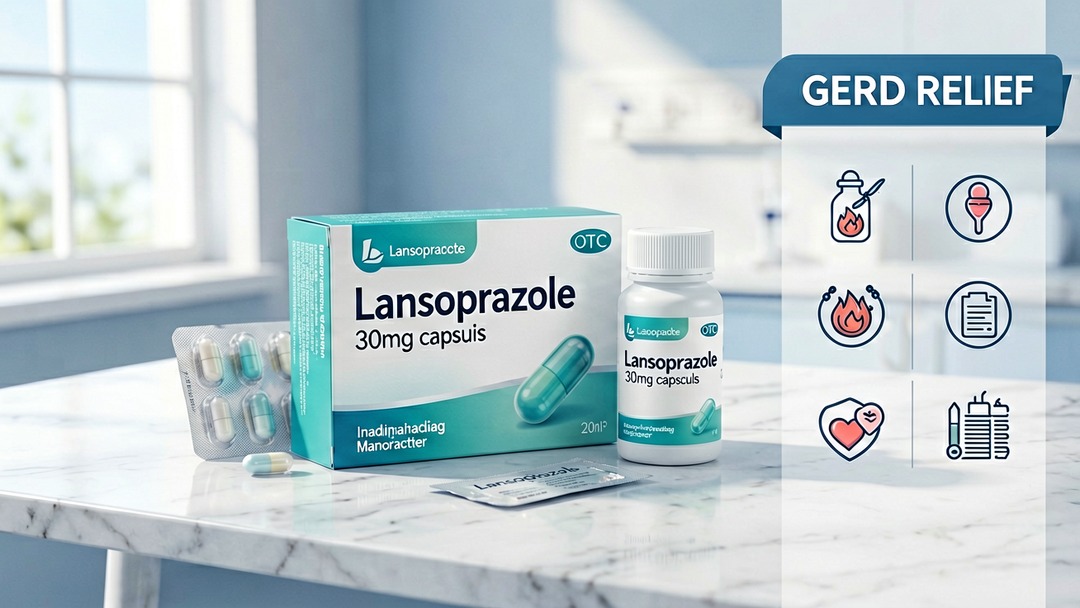
Lansoprazole is a proton-pump inhibitor (PPI) that quiets stomach acid at its source, making it one of the most effective medicines for heartburn, acid reflux, and stomach ulcers. Taken as a 30 mg capsule, it is used both for quick relief of symptoms and for healing the esophagus and stomach lining over weeks. This guide covers how lansoprazole works, who it helps, correct dosing, what the trials prove, how it compares with other acid-reducing drugs, what therapy typically costs, safety over the long term, and a practical decision guide.
What Is Lansoprazole?
Lansoprazole is an oral proton-pump inhibitor. It was developed as a more potent, longer-acting follower to earlier acid reducers and is marketed under brand names such as Prevacid, now widely available as a low-cost generic capsule and orally disintegrating tablet in 15 mg and 30 mg strengths. It belongs to the same family as omeprazole, esomeprazole, and pantoprazole, but differs slightly in how the body handles it.
Rather than just neutralizing acid after it forms, lansoprazole switches off the “pump” that makes acid in the stomach lining. That gives stronger and more sustained acid control than antacids or histamine-blockers, which is why PPIs are the treatment of choice for frequent reflux and ulcer healing.
How Lansoprazole Works: Mechanism of Action
The stomach’s parietal cells use an enzyme called H+/K+-ATPase — the proton pump — to push acid into the stomach. Lansoprazole is a prodrug: after absorption it becomes active in the acidic environment of the parietal cell and binds irreversibly to that pump, shutting it down. Because the body must make new pump molecules to restart acid secretion, the effect lasts well beyond the drug’s time in the blood — roughly 24 to 48 hours per dose.
Acid falls within the first hour or two and reaches its lowest level after several days of daily dosing. With less acid reaching the esophagus and duodenum, inflamed tissue heals, and the burning pain of reflux fades. Lansoprazole is absorbed in the small intestine and is usually taken before the first meal of the day so it is active when the pumps switch on with eating.
Approved Uses and Indications
- GERD (gastroesophageal reflux disease): to relieve heartburn and heal erosive esophagitis.
- Stomach and duodenal ulcers: to heal and prevent recurrence, often with antibiotic therapy for H. pylori.
- H. pylori eradication: as part of a combination regimen with antibiotics.
- Zollinger-Ellison syndrome: a rare acid-overproduction condition needing high doses.
- Prevention of NSAID-related ulcers: in people who must take long-term anti-inflammatory pain relievers.
Lansoprazole treats acid-related disease, not nausea from unrelated causes or routine indigestion that lifestyle changes would fix. It is not an antacid for instant relief; it works as a course, though symptoms often improve within a few days.
Dosage and How to Take It
| Situation | Typical regimen | Notes |
|---|---|---|
| GERD, healing | 30 mg once daily, 4–8 weeks | Take 30–60 min before breakfast. |
| GERD, maintenance | 15–30 mg once daily | Use the lowest dose that controls symptoms. |
| Duodenal ulcer | 15–30 mg once daily, 2–4 weeks | Longer if slow to heal. |
| H. pylori eradication | 30 mg twice daily with antibiotics | Part of a 10–14 day regimen. |
| NSAID ulcer prevention | 15–30 mg once daily | While the NSAID continues. |
Lansoprazole is taken once daily, ideally 30 to 60 minutes before the first meal, because the pump is most active after eating. Swallow capsules whole; the orally disintegrating form is for people who cannot swallow pills. Because PPIs are intended for defined courses, clinicians prefer the lowest effective dose and periodic attempts to step down once symptoms are controlled, rather than indefinite maximum dosing without review.
Clinical Evidence: What the Trials Show
Lansoprazole’s efficacy is well established. Head-to-head healing trials show roughly 80% to 90% of erosive esophagitis cases heal after eight weeks of PPI therapy, with lansoprazole performing at least as well as omeprazole and comparable to esomeprazole for most patients. For H. pylori eradication, lansoprazole-based triple therapy clears the infection in a large majority of patients, which both heals ulcers and prevents recurrence better than acid suppression alone.
Symptom data are equally clear: once-daily lansoprazole controls heartburn in most people with frequent GERD, and it outperforms histamine-blockers (such as famotidine) for both symptom relief and complication prevention. The main research focus now is not whether PPIs work — they do — but how to use the lowest safe dose for the shortest needed duration, given the long-term signals reviewed below.
Lansoprazole vs Other Acid-Reducing Medicines
| Medicine | Acid control | Best use | Key cautions |
|---|---|---|---|
| Lansoprazole (PPI) | Strong, sustained | GERD healing, ulcers, H. pylori | Long-term bone, B12, kidney signals |
| Omeprazole (PPI) | Strong, sustained | Same indications | Drug interactions via CYP2C19 |
| Esomeprazole (PPI) | Strong, slightly longer | Severe erosive GERD | Similar long-term profile |
| Famotidine (H2 blocker) | Moderate | Mild, occasional heartburn | Less potent; tachyphylaxis |
| Antacids | Brief | Instant, rare symptoms | Very short action; aluminum/magnesium |
Our Omeprazole Guide and Pantoprazole Guide cover the closest alternatives, and the full Pharmaceuticals archive lists every reflux and ulcer medicine we have reviewed. Among PPIs the choice is often about cost, form (capsule vs tablet), and interaction profile rather than large differences in acid control.
Generic and Brand Pricing
Lansoprazole is now inexpensive as a generic, which removes cost as a barrier to treating reflux properly instead of masking it with antacids. As with all medicines here, the figures are approximate monthly ranges, not exact quotes — verify the current price with your pharmacy.
| Product | Typical monthly cost range |
|---|---|
| Generic lansoprazole 30 mg, 30 capsules (Indian manufacturers) | About $3–$10 |
| Generic lansoprazole 30 mg, 30 capsules (U.S. retail) | About $10–$30 |
| Brand Prevacid 30 mg, 30 capsules | About $200–$420 |
| Over-the-counter omeprazole (store brand), 14–28 count | About $7–$20 |
The gap between generic and brand is striking: a month of generic lansoprazole can cost a fraction of a single brand prescription, with the same active ingredient and equivalent healing rates. For people who need months of therapy, that difference decides whether treatment is continuous or stop-start — and continuous, correctly dosed therapy is what actually heals the esophagus.
Side Effects and Long-Term Safety
Short courses of lansoprazole are well tolerated. Common mild effects include headache, nausea, diarrhea, or stomach pain. The bigger questions are about long-term use, where several associations have been observed:
- Low magnesium or B12: with prolonged use, levels can drift down; periodic checks may be advised.
- Bone fracture risk: some studies link long-term, high-dose PPI use to hip and spine fractures, especially in older adults.
- Kidney signals: rare kidney inflammation (AIN) and a small chronic-kidney-disease association with long use.
- Rebound acid: stopping suddenly after months can briefly worsen reflux, so a step-down is preferred.
- Diarrhea / infection: PPIs slightly raise the risk of Clostridioides difficile gut infection.
None of these mean PPIs are unsafe; they mean long-term therapy should be reviewed so the dose matches the need. For most people with genuine GERD, the benefit of healing the esophagus far outweighs these manageable risks, and the risks shrink when the lowest effective dose is used.
Drug Interactions
Lansoprazole can change the absorption of drugs that need stomach acid — such as certain antifungals (ketoconazole), some HIV medicines, and levothyroxine or iron if taken at the same time. It is also processed partly by liver enzymes that interact with medicines like clopidogrel, though lansoprazole’s effect on clopidogrel is smaller than omeprazole’s. Give your prescriber the full medicine list so timing and choices are adjusted.
Patient Decision Guide
Lansoprazole is usually the right call if you have frequent heartburn, confirmed GERD, an ulcer, or H. pylori, and you want strong, proven acid control. It is less ideal as a daily, open-ended habit for occasional mild heartburn, where an antacid or short H2 blocker plus lifestyle change may suffice. If you need a PPI for a year or more, periodically review the dose with your clinician and watch for the long-term signals above. The best choice balances solid symptom relief today against the lowest necessary exposure over time — a balance made with your prescriber.
Frequently Asked Questions
References
- FDA. Prevacid (lansoprazole) Prescribing Information.
- Katz PO, et al. Guidelines for the diagnosis and management of gastroesophageal reflux disease. Am J Gastroenterol. 2022;117(1):27-56.
- Chiba N, et al. Speed and durability of healing with lansoprazole in reflux esophagitis. Aliment Pharmacol Ther. 1997;11(6):987-994.
- Malfertheiner P, et al. Management of Helicobacter pylori infection. Gut. 2023;72(1):1-28.
- Eom CS, et al. Use of proton pump inhibitors and risk of fracture. Ann Pharmacother. 2011;45(9):1-10.
- Heidelbaugh JJ, et al. Overutilization of proton pump inhibitors. Therap Adv Gastroenterol. 2017;10(2):243-253.
Medical Disclaimer
This article is for general information only and is not medical advice, diagnosis, or treatment. Reflux and ulcer symptoms can overlap with more serious conditions, so persistent or alarming symptoms (trouble swallowing, weight loss, vomiting blood, black stools) need prompt medical review. Prices shown are approximate ranges that vary with pharmacy, country, dose, and insurance, and they are not a quote or guarantee. Always consult a healthcare provider before starting, stopping, or changing any medication.