
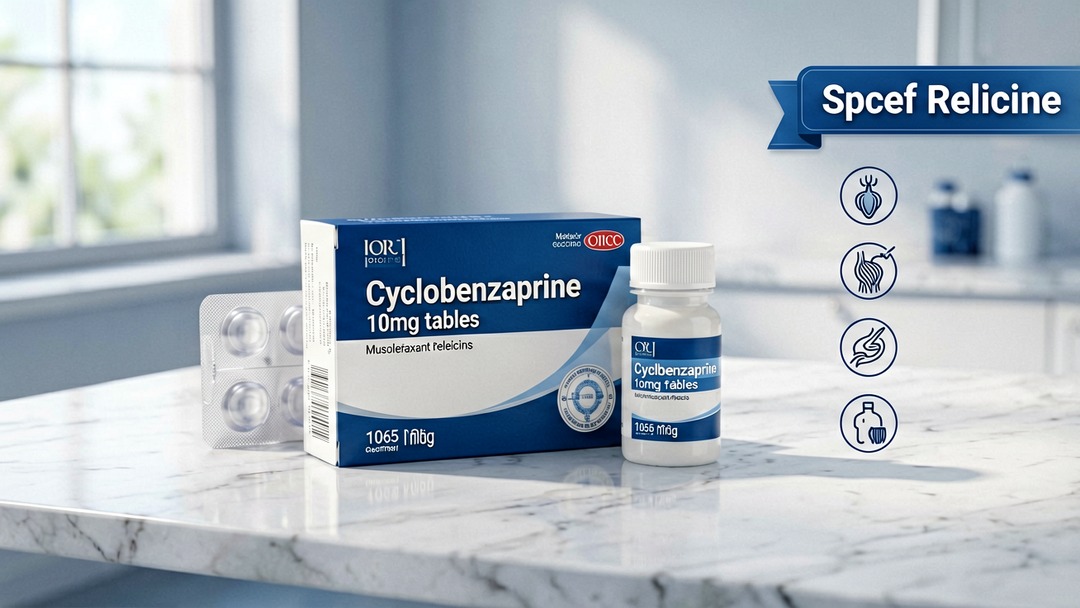
Cyclobenzaprine, sold under the brand name Flexeril, is one of the most commonly prescribed muscle relaxants in the world. Taken as a short-term treatment, it helps relieve the muscle spasms and stiffness that often accompany acute back pain, neck pain, and other musculoskeletal injuries. This guide explains how cyclobenzaprine works, who needs it, correct dosing, what the clinical evidence shows, how it compares with other muscle relaxants, and what a typical month of therapy costs when you choose generic alternatives.
What Is Cyclobenzaprine (Flexeril)?
Cyclobenzaprine is a skeletal muscle relaxant first approved in the United States in 1977 and originally marketed as Flexeril. Chemically, it is closely related to the tricyclic antidepressants, which explains both its mechanism and some of its side-effect profile. It is available in immediate-release tablets at 5 mg and 10 mg strengths, and as an extended-release 15 mg form and a 30 mg strength in some markets.
The medicine is approved for use alongside rest and physical therapy to relieve muscle spasm associated with acute, painful musculoskeletal conditions. Importantly, it is intended for short-term use — typically no more than two to three weeks — because clinical trials have not demonstrated effectiveness beyond that period, and longer use adds side-effect risk without evidence of continued benefit.
How It Works: Mechanism of Action
Cyclobenzaprine does not relax muscle at the neuromuscular junction the way a depolarizing or non-depolarizing paralytic agent does. Instead, it works primarily within the central nervous system. Its actions are complex, but the key effects are reduced activity in the brainstem and a decrease in the descending signals that drive muscle spasm and hyperactivity in skeletal muscle. By calming the reflex arcs that perpetuate spasm, it reduces the sensation of tightness and involuntary contraction.
Because of its structural resemblance to the tricyclic antidepressants, cyclobenzaprine also has anticholinergic effects — it can cause dry mouth, blurred vision, and sedation. These effects are largely responsible for both its muscle-relaxing benefit and its common side effects. The sedative quality is often considered part of the therapeutic effect in patients whose pain disrupts sleep, but it also limits daytime use and activities such as driving.
Onset of relief is generally within one to two hours of taking an oral dose, with peak blood levels reached quickly. The half-life is relatively short for the immediate-release form, which is why it is typically dosed three times a day.
Approved Uses and Indications
- Acute low back pain: the most common reason cyclobenzaprine is prescribed, usually combined with rest, ice or heat, and gentle physical therapy.
- Acute neck pain and whiplash: used for painful muscle spasm after minor trauma.
- Musculoskeletal strain and sprain: muscle spasm accompanying injuries to muscles and ligaments.
- Fibromyalgia (extended-release form): the once-daily 15 mg (and 30 mg) formulation is separately approved to improve sleep and reduce pain and fatigue in fibromyalgia.
- Adjunct to rest and physical therapy: the label explicitly frames cyclobenzaprine as an adjunct, not a replacement, for non-drug measures.
Cyclobenzaprine is not approved for long-term daily use in most musculoskeletal conditions, and it is not a treatment for the underlying cause of pain — it relieves the secondary muscle spasm. It is also not a direct analgesic; treating the spasm is what reduces pain in many cases, but widespread pain from other causes will not respond.
Dosage and How to Take It
| Situation | Typical Regimen | Notes |
|---|---|---|
| Immediate-release (most patients) | 5 mg three times daily | Can increase to 10 mg three times daily if needed; start low in older adults. |
| Extended-release (fibromyalgia) | 15 mg once daily at bedtime | May increase to 30 mg daily with clinician guidance. |
| Duration | Typically 2–3 weeks | Evidence of benefit beyond 3 weeks is limited for acute spasm. |
| Older adults | 5 mg, often reduced to twice daily | Higher sensitivity to sedation and falls; use lowest effective dose. |
| Hepatic impairment | Use cautiously, reduced doses | Metabolized in the liver; avoid in significant liver disease. |
Take cyclobenzaprine with or without food. Because sedation is prominent, clinicians often advise taking it near bedtime or when you do not need to drive or operate machinery. Do not take more than prescribed, and do not extend use beyond the recommended short course without medical review. If you miss a dose, skip it if the next dose is near; do not double up.
Clinical Evidence: What the Trials Show
Clinical trials of cyclobenzaprine have consistently shown that it produces a meaningful reduction in muscle spasm, local pain, tender points, and limitation of motion compared with placebo in patients with acute musculoskeletal conditions. In pooled analyses, improvement in spasm and pain was seen within the first week, with patients rating overall benefit significantly higher than with placebo. Effects on muscle spasm are generally more consistent than effects on pain alone, reinforcing the drug’s role as a spasm-relieving adjunct rather than a primary analgesic.
Importantly, trials demonstrate the benefit is greatest when the drug is combined with rest and physical therapy — the circumstances under which it is approved. The results are also time-limited: studies that extended beyond two to three weeks did not show additional benefit, which is why guidelines and labeling discourage longer courses for acute pain. Sedation is the most frequently reported side effect in these trials, affecting a meaningful proportion of patients and explaining why dosing to minimize daytime drowsiness is common.
For fibromyalgia, the extended-release form was studied in randomized trials in which patients took 15 mg or 30 mg once nightly. Modest but measurable improvements in sleep quality, pain, and fatigue were reported relative to placebo, and the once-daily bedtime regimen was generally well tolerated. As with all fibromyalgia treatments, response varies widely between people, and the drug is one component of a broader multimodal plan.
Cyclobenzaprine vs Other Muscle Relaxants
| Feature | Cyclobenzaprine | Methocarbamol | Tizanidine |
|---|---|---|---|
| Mechanism | Central, tricyclic-related | Central, poorly defined | Central alpha-2 agonist |
| Sedation | Prominent | Moderate | Prominent |
| Daily dosing (IR) | 3 times daily | 3–4 times daily | Up to 3 times daily |
| Evidence for acute spasm | Strong | Moderate | Moderate |
| Common use | Back/neck spasm | Musculoskeletal spasm | Spasticity, some migraine |
| Generic cost | Very low | Very low | Low |
Head-to-head comparisons among muscle relaxants show broadly similar efficacy for acute pain, with the main differences being side-effect profiles, dosing convenience, and cost. Cyclobenzaprine is among the most studied and is a common first choice. The choice should be individualized based on sedation tolerance, interactions, and specific conditions such as the presence of fibromyalgia.
Side Effects and Safety Profile
Drowsiness is by far the most common side effect of cyclobenzaprine, reported in a substantial proportion of treated patients. Dry mouth, dizziness, and fatigue are also frequent. Less common effects include blurred vision, constipation, and difficulty urinating, which result from the drug’s anticholinergic activity. Because sedation can impair coordination, during the first days of treatment you should be cautious about driving, operating machinery, and drinking alcohol.
- Common: drowsiness, dry mouth, dizziness, fatigue, headache.
- Anticholinergic: blurred vision, constipation, urinary retention — more likely at higher doses or in susceptible people.
- Cardiac caution: avoid in patients with recent heart attack, heart rhythm problems, or heart block; use caution in hyperthyroidism and glaucoma.
- Serotonin caution: combining with MAO inhibitors is contraindicated; combining with SSRIs/SNRIs can raise serotonin syndrome risk.
Because cyclobenzaprine is structurally related to the tricyclic antidepressants, it carries some of the same cautions. It should not be taken within 14 days of an MAO inhibitor. Combining it with other medicines that increase serotonin — including many antidepressants — should be discussed with a clinician because of the small but serious risk of serotonin syndrome. Patients with severe liver disease should generally avoid the drug because metabolism is reduced and levels can rise.
Drug Interactions to Discuss With Your Doctor
- Central nervous system depressants: alcohol, benzodiazepines, opioids, and other sedatives add to drowsiness and can cause dangerous oversedation.
- Serotonergic antidepressants (SSRIs/SNRIs, MAOIs): risk of serotonin syndrome; MAOIs are contraindicated.
- Anticholinergic medicines: combining with other drugs that have anticholinergic effects can worsen dry mouth, constipation, and confusion.
- Medicines affecting heart rhythm: caution with agents that prolong the QT interval.
Generic Cyclobenzaprine vs Brand Flexeril: Cost Comparison
The patent on Flexeril expired long ago, and cyclobenzaprine is now widely available as a low-cost generic. Generic and brand tablets contain the same active ingredient and meet the same bioequivalence standards, so the expected effect is identical at the correct dose. For patients paying out of pocket, the price difference is substantial.
| Option | Typical 30-day supply (10 mg TDS) | Notes |
|---|---|---|
| Indian generic cyclobenzaprine 10 mg | $6–$10 | Widely produced by WHO-GMP manufacturers. |
| US generic cyclobenzaprine 10 mg | $15–$45 | Varies by insurer, pharmacy, and strength. |
| US brand Flexeril (cash price) | $90–$220 | Brand pricing is frequently higher. |
In India, cyclobenzaprine is inexpensive and available from many manufacturers at a fraction of the cost of brand therapy elsewhere. If you are looking for affordable muscle relaxant and pain relief options, comparing licensed generic suppliers can lower treatment costs considerably. As with any prescribed medicine, obtain it only through a legitimate prescription pathway and follow your clinician’s instructions.
Who Should Consider Cyclobenzaprine?
Cyclobenzaprine is appropriate for short-term relief of muscle spasm in acute musculoskeletal injuries, such as a strained back or neck. It works best when used together with rest, a gradual return to movement, and simple physical therapy rather than relying on the medicine alone. It is not meant to be a maintenance treatment for chronic muscle pain, and older adults, who are more sensitive to sedation and falls, should use the lowest effective dose with extra caution.
Before starting, tell your clinician about any heart conditions, glaucoma, urinary problems, liver disease, or depression, and list all other medicines and supplements you take. Because a prescription is required in most countries, obtain cyclobenzaprine through a legitimate channel and follow the exact dosing plan provided rather than self-medicating.
Frequently Asked Questions
Is cyclobenzaprine addictive or habit-forming?
Cyclobenzaprine is not classified as a controlled substance and is not considered to have significant abuse potential. However, it can cause physical side effects and sedation, so it should be used only for the short course recommended rather than as ongoing daily therapy.
How long does cyclobenzaprine take to work?
Most people notice muscle spasm relief within one to two hours of taking a dose, and meaningful improvement in pain and tightness over the first several days when taken regularly. If there is no improvement within a week, review the plan with your clinician.
Can I take cyclobenzaprine during the day?
Yes, but the sedation can impair alertness. If daytime activity and driving are needed, a lower 5 mg dose and careful assessment of your reaction is typical. Many clinicians prefer an evening dose to limit daytime drowsiness.
Can I take it with ibuprofen or other painkillers?
Cyclobenzaprine is often used alongside simple analgesics like acetaminophen or NSAIDs, but combining it with other sedatives, opioids, or alcohol is not advisable. Always confirm the full combination with your clinician or pharmacist to avoid excessive sedation and interaction risk.
Can I drive after taking it?
Avoid driving and operating machinery until you know how the medicine affects you, as drowsiness and reduced coordination are common, especially in the first days. Do not drive within a few hours of a dose.
What if I miss a dose?
If your next scheduled dose is more than a few hours away, take the missed dose when you remember; otherwise skip it. Never double up on doses to make up for a missed one.
Medical Disclaimer
This article is for informational purposes only and does not replace professional medical advice, diagnosis, or treatment. Cyclobenzaprine is a prescription medicine; always consult a licensed healthcare provider before starting, stopping, or changing your dose. Drug prices vary by country, pharmacy, insurance status, and over time; figures shown are approximate ranges, not quotes or guarantees. Never share prescription medicines, and never import medicines without verifying applicable regulations in your country.
References
- FDA. Flexeril (cyclobenzaprine hydrochloride) Prescribing Information.
- Chou R, et al. Drug Class Review: Skeletal Muscle Relaxants. Final Report. (Evidence-based review for musculoskeletal pain.)
- Chou R, Peterson K, Helfand M. Comparative efficacy and safety of skeletal muscle relaxants for spasticity and musculoskeletal conditions. J Pain Symptom Manage. 2004;28(2):140-175.
- Browning R, et al. Cyclobenzaprine and patient-reported outcomes in acute low back pain (review of controlled trials).
- Moldofsky H, et al. Efficacy of controlled-release cyclobenzaprine in fibromyalgia. J Rheumatol. 2011;38(3):534-542.