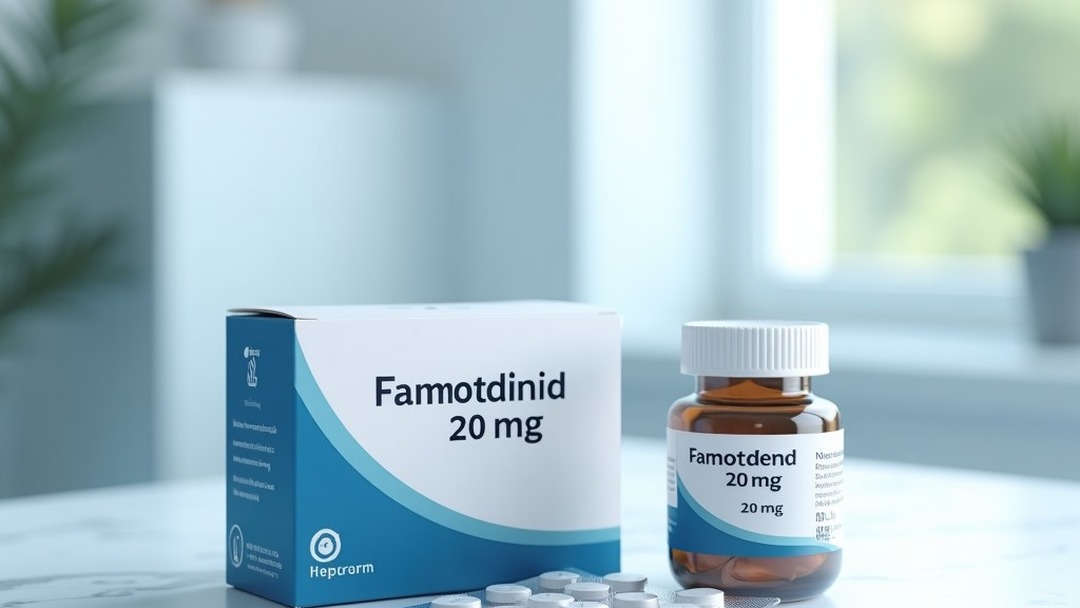
Famotidine is an H2 blocker (histamine-2 receptor antagonist) that dials down stomach acid by a different route than proton-pump inhibitors, making it a go-to for mild heartburn, acid indigestion, and ulcer prevention. Sold under the brand name Pepcid and widely available as a low-cost generic tablet and liquid in 10 mg, 20 mg, and 40 mg strengths, it is taken once or twice daily and is also found in many over-the-counter heartburn products. This guide explains how famotidine works, who it helps, correct dosing, what the research shows, how it compares with PPIs and antacids, what therapy typically costs, safety, and a practical decision guide.
What Is Famotidine?
Famotidine is an oral H2 blocker. It was developed as a longer-acting, more potent follower to earlier acid reducers such as ranitidine and cimetidine, and it is now one of the most common acid-relief medicines on the market. It belongs to the same family as ranitidine and nizatidine, but famotidine is preferred today because it has fewer drug interactions and no ranitidine-associated impurity concerns.
Rather than switching off the acid pump, famotidine blocks the histamine signal that tells the stomach to make acid. That gives solid, moderate acid control that is stronger and longer-lasting than antacids but generally less complete than a PPI — which is exactly why it fits mild or occasional symptoms and nighttime acid, not severe erosive disease.
How Famotidine Works: Mechanism of Action
The stomach’s parietal cells carry H2 (histamine-2) receptors. When histamine binds them, the cells ramp up acid secretion. Famotidine binds those receptors and blocks the signal, so less acid is released — especially the acid stimulated by food and by the body’s own histamine. The effect begins within an hour, peaks around 1 to 3 hours, and lasts roughly 10 to 12 hours, which is why twice-daily dosing covers daytime and nighttime acid.
Because famotidine works on a different step than PPIs, it does not “turn off the pump” — it merely lowers the volume. That makes it ideal for symptom control and prevention, but it heals severe inflammation more slowly than a PPI. Understanding that difference is the key to choosing the right acid medicine.
Approved Uses and Indications
- Heartburn and acid indigestion: occasional or frequent, mild to moderate symptoms.
- GERD (gastroesophageal reflux disease): maintenance and mild cases, often when a PPI is not needed.
- Stomach and duodenal ulcers: healing and, at higher doses, prevention of recurrence.
- Prevention of NSAID-related ulcers: in people who must take long-term anti-inflammatory pain relievers.
- Pathological hypersecretion: rare high-acid states such as Zollinger-Ellison syndrome, at higher doses.
- Heartburn of pregnancy: often used short-term under clinician guidance when lifestyle steps are not enough.
Famotidine treats acid-related discomfort, not every cause of chest or stomach pain. It is not a substitute for urgent evaluation of alarming symptoms (trouble swallowing, weight loss, vomiting blood, black stools). For frequent or severe reflux, a clinician may prefer a PPI; famotidine shines for milder, intermittent, or nighttime symptoms.
Dosage and How to Take It
| Situation | Typical regimen | Notes |
|---|---|---|
| Occasional heartburn (OTC) | 10–20 mg as needed, up to twice daily | Take 15–60 min before trigger meals. |
| Frequent GERD, treatment | 20 mg twice daily, up to 6 weeks | Morning and evening. |
| Ulcer healing | 40 mg once daily at bedtime | Longer if slow to heal. |
| NSAID ulcer prevention | 20 mg twice daily | While the NSAID continues. |
Famotidine can be taken with or without food, though for anticipated meal-related heartburn it is best 15 to 60 minutes before eating. Over-the-counter products are intended for short courses (usually up to 14 days); if symptoms persist beyond that, a clinician should evaluate rather than extend self-treatment. Liquid forms are measured by syringe or cup, not a kitchen spoon.
Clinical Evidence: What the Trials Show
Famotidine’s efficacy for acid control is well established. It reduces stomach acid by roughly 70% to 90% at standard doses and relieves heartburn in most people with mild to moderate GERD, performing better than placebo and comparably to other H2 blockers. For duodenal ulcer healing, once-daily 40 mg at bedtime heals a large majority of ulcers over 4 to 8 weeks.
The honest limitation is severity: famotidine is less potent than PPIs for healing erosive esophagitis and controlling very frequent reflux. Head-to-head data show PPIs outperform H2 blockers for both symptom control in severe GERD and complication prevention. The practical takeaway is fit-for-purpose use — famotidine for milder or nighttime symptoms, PPIs for confirmed or severe erosive disease.
Famotidine vs Other Acid-Reducing Medicines
| Medicine | Acid control | Best use | Key cautions |
|---|---|---|---|
| Famotidine (H2 blocker) | Moderate, ~10–12 h | Mild/occasional, nighttime reflux | Tolerance with daily long use |
| Omeprazole (PPI) | Strong, sustained | GERD healing, ulcers | Long-term bone/B12/kidney signals |
| Ranitidine (H2 blocker) | Moderate, shorter | Legacy use | Impurity (NDMA) concerns; largely withdrawn |
| Antacids | Brief | Instant, rare symptoms | Very short action; aluminum/magnesium |
Our Omeprazole Guide and Lansoprazole Guide cover the stronger PPI alternatives, and the full Pharmaceuticals archive lists every reflux medicine we have reviewed. Among acid drugs the choice is about how severe and how frequent the symptoms are — famotidine is the right tool for the milder end.
Generic and Brand Pricing
Famotidine is inexpensive as a generic, and the over-the-counter versions are also cheap, which keeps acid relief accessible. As with all medicines here, the figures below are approximate ranges, not exact quotes — verify the current price with your pharmacy.
| Product | Typical monthly cost range |
|---|---|
| Generic famotidine 20 mg, 30 tablets (Indian manufacturers) | About $2–$9 |
| Generic famotidine 20 mg, 30 tablets (U.S. retail) | About $8–$25 |
| Brand Pepcid 20 mg, 30 tablets | About $12–$35 |
| OTC famotidine, 25–30 count | About $6–$20 |
Because famotidine is available both as a prescription generic and as a store-brand OTC product, cost is rarely a barrier. The bigger value question is using the right strength and frequency: for mild, intermittent heartburn, a low-dose generic or store brand is all most people need, while escalating to a daily PPI without reason adds long-term considerations for no extra benefit.
Side Effects and Long-Term Safety
Famotidine is generally well tolerated. Common mild effects include headache, dizziness, constipation, or diarrhea. Points worth knowing:
- Tolerance: with daily use, acid control can partially fade over weeks — a reason to use the lowest effective dose and step down when possible.
- Kidney signals: rare kidney inflammation reported; tell your clinician if urine output drops or you swell.
- Confusion in older adults: high doses, especially IV, can rarely cause confusion — use caution in the elderly.
- B12 with very long use: like other acid suppressors, prolonged high-dose use can affect B12 absorption.
None of this means famotidine is unsafe; it is one of the better-tolerated acid medicines and has fewer interactions than cimetidine or the PPIs’ CYP effects. The main cautions are using it at the right dose and not masking persistent symptoms that deserve evaluation.
Drug Interactions
Famotidine has relatively few interactions compared with cimetidine. It can slightly change the absorption of drugs that need acid (such as certain antifungals or iron) and may interact with some heart-rhythm medicines. It is processed partly by the kidney, so dose adjustment may be needed in significant kidney disease. Give your prescriber the full medicine list, including OTC products, since many combination cold remedies also contain acid reducers.
Who Should Avoid Famotidine or Use Caution
Famotidine is suitable for most adults with mild acid symptoms, but a few groups should check with a clinician first. People with significant kidney disease may need a lower dose because the drug is cleared by the kidneys. Older adults should use the lowest effective dose, since high doses have rarely caused confusion. Anyone with persistent reflux, trouble swallowing, unintentional weight loss, vomiting blood, or black tarry stools should not simply treat with famotidine — those symptoms need evaluation to rule out ulcers, bleeding, or other conditions. Pregnant or breastfeeding people should confirm use with their clinician, though famotidine is often used short-term when lifestyle steps are not enough. Because many cold, allergy, and combination products also contain acid reducers, add up total daily amounts so you do not exceed the labeled limit.
Patient Decision Guide
Famotidine is usually the right call for mild, occasional, or nighttime heartburn, for ulcer prevention in NSAID users, or as a step below a PPI when symptoms are not severe. It is less ideal as a daily, open-ended habit for frequent or worsening reflux, where a PPI or a proper evaluation is the better path. The best choice matches the strength of the drug to the severity of the symptom — a balance made with your clinician, especially if you are over 50 or have alarm symptoms.
Frequently Asked Questions
References
- FDA. Pepcid (famotidine) Prescribing Information.
- Katz PO, et al. Guidelines for the diagnosis and management of gastroesophageal reflux disease. Am J Gastroenterol. 2022;117(1):27-56.
- Simon WA, et al. Clinical pharmacology of famotidine. Clin Ther. 1991;13(4):501-509.
- Chiba N, et al. Speed and durability of healing with acid suppressants. Aliment Pharmacol Ther. 1997;11(6):987-994.
- Heidelbaugh JJ, et al. Overutilization of proton pump inhibitors. Therap Adv Gastroenterol. 2017;10(2):243-253.
- Food and Drug Administration. Safety alert on ranitidine (NDMA) impurities. 2019-2020.
Medical Disclaimer
This article is for general information only and is not medical advice, diagnosis, or treatment. Reflux and ulcer symptoms can overlap with more serious conditions, so persistent or alarming symptoms (trouble swallowing, weight loss, vomiting blood, black stools) need prompt medical review. Prices shown are approximate ranges that vary with pharmacy, country, dose, and insurance, and they are not a quote or guarantee. Always consult a healthcare provider before starting, stopping, or changing any medication.