Sildenafil Citrate 100mg: A Comprehensive Guide to Erectile Dysfunction Treatment, Dosage, Side Effects and Affordable Generic Options
Sildenafil citrate is the active ingredient in the original brand-name medication Viagra and remains one of the most widely prescribed treatments for erectile dysfunction globally. Since its introduction in 1998, sildenafil has helped millions of men regain sexual function and confidence. Today, generic sildenafil citrate is available from numerous manufacturers at a fraction of the original brand cost, making effective ED treatment more accessible than ever. This guide covers how sildenafil works, appropriate dosing, safety considerations, and realistic pricing comparisons.
Understanding Erectile Dysfunction
Erectile dysfunction is the persistent inability to achieve or maintain an erection sufficient for satisfactory sexual performance. It is one of the most common sexual health concerns in men, with prevalence increasing with age. Large-scale epidemiological studies estimate that approximately 52 percent of men between ages 40 and 70 experience some degree of ED, with severe ED affecting roughly 10 percent of men in this age group. Worldwide, it is estimated that over 150 million men are affected, a number expected to rise as populations age and rates of diabetes, cardiovascular disease, and obesity — all major risk factors for ED — continue to increase.
ED is not simply a quality-of-life issue. It is often an early warning sign of underlying cardiovascular disease — the penile arteries are smaller than coronary arteries, so endothelial dysfunction from atherosclerosis often manifests as ED years before cardiac symptoms appear. This is why medical evaluation for ED should include assessment of cardiovascular risk factors, and why patients with ED should be screened for hypertension, diabetes, dyslipidemia, and smoking.
What Is Sildenafil Citrate?
Sildenafil citrate belongs to the class of medications known as phosphodiesterase type 5, or PDE5, inhibitors. It was originally developed by Pfizer scientists as a potential treatment for angina, but during clinical trials, male participants reported improved erections as a side effect — leading to its development and FDA approval specifically for erectile dysfunction in 1998, under the brand name Viagra.
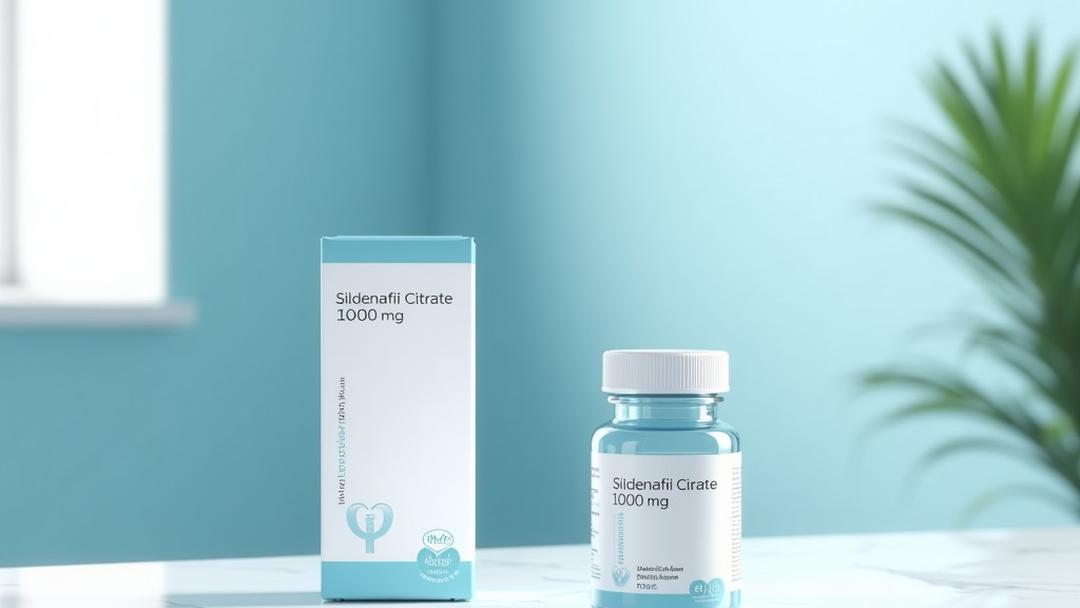
Sildenafil citrate is available in tablet strengths of 25 mg, 50 mg, and 100 mg. The 100 mg tablet is the maximum standard single dose and is typically used for men who do not achieve adequate response at lower doses, or as a starting point for dose adjustment under medical supervision. Generic sildenafil citrate is manufactured by numerous pharmaceutical companies and is bioequivalent to the brand-name product.
Mechanism of Action
Sildenafil works by enhancing the natural physiological process of erection — it does not create an erection on its own, but amplifies the body’s response to sexual stimulation. The physiology of a normal erection involves a sequence: sexual stimulation triggers the release of nitric oxide from nerve endings and endothelial cells in the penile corpus cavernosum, nitric oxide activates the enzyme guanylate cyclase, which increases levels of cyclic guanosine monophosphate, or cGMP, in smooth muscle cells, elevated cGMP causes relaxation of smooth muscle in the corpus cavernosum allowing increased blood flow into the erectile tissue, the trapped blood expands the corpus cavernosum compressing the veins that normally drain blood from the penis producing a rigid erection, and PDE5 normally breaks down cGMP, ending the erection by allowing smooth muscle to contract and blood to drain.
Sildenafil’s role is to selectively inhibit PDE5, slowing the breakdown of cGMP. This allows cGMP levels to remain elevated longer after sexual stimulation, prolonging smooth muscle relaxation and the erection. The key point is that sexual stimulation is required for sildenafil to work — without the initial nitric oxide release triggered by stimulation, there is no cGMP to preserve, and the drug will not produce an erection. Sildenafil is highly selective for PDE5 — it has approximately 100-fold greater affinity for PDE5 than for PDE6, which is found in the retina and explains the temporary visual effects some users experience.
Approved Uses
Sildenafil is FDA-approved for the treatment of erectile dysfunction in men. It is effective across a wide range of ED etiologies — vascular, neurogenic, psychogenic, and medication-induced — though response rates vary by underlying cause. Men with psychogenic ED and mild-to-moderate vascular ED tend to have the highest response rates, while men with severe diabetes, post-prostatectomy nerve damage, or complete venous leakage may have more limited response.
Under the brand name Revatio, sildenafil is also approved at a lower dosing regimen — typically 20 mg three times daily — for the treatment of pulmonary arterial hypertension, a condition characterized by high blood pressure in the arteries of the lungs. The PAH indication uses the same mechanism of PDE5 inhibition causing vasodilation but targets pulmonary vessels rather than the corpus cavernosum.
Dosage and Administration
Sildenafil dosing is individualized based on response, tolerability, and the patient’s overall health. For erectile dysfunction, the 25 mg dose is typically used for first-time users and men sensitive to PDE5 inhibitors, with an onset of effect of 30 to 60 minutes and a duration of 4 to 6 hours. The 50 mg dose is the standard starting dose for most men without contraindications, also with an onset of 30 to 60 minutes and a duration of 4 to 6 hours. The 100 mg dose is for men who do not achieve adequate response at 50 mg and is the maximum single dose, with the same onset and duration profile.
Administration guidelines include taking the medication orally with or without food, approximately 30 to 60 minutes before sexual activity. Effectiveness may be delayed if taken with a high-fat meal, as absorption can be slowed by up to 60 minutes. The maximum recommended frequency is once per day — taking more than one dose in 24 hours increases the risk of adverse effects without improving efficacy. Sexual stimulation is required, as sildenafil will not produce an erection without it. The erection will not last indefinitely — the drug supports the body’s natural erectile mechanism for up to 4 to 6 hours, but the erection resolves after sexual activity or when stimulation ceases. If an erection lasts more than 4 hours, known as priapism, immediate medical attention is required as prolonged erection can damage penile tissue.
Dose adjustment considerations include starting at 25 mg for older adults over 65 due to slower drug clearance and increased sensitivity, starting at 25 mg for patients with hepatic impairment as clearance is reduced, starting at 25 mg for patients with severe renal impairment with creatinine clearance below 30 mL per minute as this population has not been studied extensively, and exercising caution with patients taking alpha-blockers as this combination requires special considerations.
Side Effects and Safety Considerations
Common side effects of sildenafil include headache affecting 10 to 16 percent of users — the most common side effect, related to cerebral vasodilation — flushing in 10 to 15 percent due to peripheral vasodilation — indigestion or dyspepsia in 5 to 10 percent — nasal congestion in 4 to 10 percent — dizziness in 2 to 5 percent — visual disturbances including blurred vision, color tinge with a blue tint, and increased light sensitivity reported in 1 to 3 percent of users, related to mild PDE6 inhibition in the retina — and back pain and myalgia reported in a small percentage of users with the mechanism unclear.
Serious safety considerations include the fact that nitrates are absolutely contraindicated — concurrent use of sildenafil or any PDE5 inhibitor with nitrates including nitroglycerin, isosorbide mononitrate, isosorbide dinitrate, and recreational poppers containing amyl nitrite can cause a dangerous, potentially fatal drop in blood pressure. This contraindication is absolute and applies to all PDE5 inhibitors. Alpha-blocker interaction requires caution — concurrent use with alpha-blockers such as doxazosin, tamsulosin, and terazosin used for BPH or hypertension can cause additive blood pressure lowering. This combination is not absolutely contraindicated but requires that patients be stable on their alpha-blocker therapy before adding sildenafil, start with the lowest sildenafil dose of 25 mg, and ensure adequate time between alpha-blocker and sildenafil dosing of at least 4 hours.
Cardiovascular considerations include the fact that sexual activity itself increases cardiac workload. Patients with unstable angina, recent myocardial infarction within 90 days, uncontrolled arrhythmia, or severe heart failure should be evaluated by a cardiologist before using any ED treatment. Sildenafil does not protect against the cardiovascular demands of sexual activity — it only facilitates erection in response to stimulation. Sildenafil can lower blood pressure typically by 8 to 10 mmHg systolic, which is generally mild and well-tolerated in healthy individuals, but patients with pre-existing hypotension or those on multiple blood-pressure-lowering medications should use caution.
Priapism is a rare but serious condition where an erection lasts more than 4 hours — this is a medical emergency as prolonged ischemia of penile tissue can cause permanent damage. Risk is higher in patients with sickle cell disease, leukemia, or multiple myeloma. Rare cases of sudden hearing loss and tinnitus have been reported with PDE5 inhibitors — the causal relationship is not fully established, but patients should stop the drug and seek medical attention if they experience sudden hearing reduction or ringing in the ears. Non-arteritic anterior ischemic optic neuropathy, or NAION, a rare cause of sudden vision loss, has been reported in association with PDE5 inhibitors — men with a history of NAION in one eye or with risk factors including age over 50, hypertension, diabetes, and hyperlipidemia should discuss this risk with their doctor.
Sildenafil is contraindicated in patients with known hypersensitivity to sildenafil or any component of the formulation, patients taking any form of organic nitrate whether prescribed or recreational, and patients with severe hepatic or severe renal impairment without medical supervision. It is not approved for use in women or children.
Sildenafil vs. Other ED Treatments
Sildenafil is a PDE5 inhibitor with an onset of action of 30 to 60 minutes and a duration of effect of 4 to 6 hours. High-fat meals can delay its onset. It does not offer a daily dosing option. Common side effects include headache, flushing, and dyspepsia. Visual side effects are more common with sildenafil due to PDE6 inhibition. Moderate alcohol may reduce effectiveness. Generic sildenafil is typically low cost per dose.
Tadalafil, sold as Cialis, is also a PDE5 inhibitor but has an onset of 30 to 120 minutes and a duration of up to 36 hours, earning it the nickname the weekend pill. It is minimally affected by food and offers a daily dosing option at 2.5 to 5 mg. Common side effects include headache, back pain, myalgia, and dyspepsia. Visual side effects are less common. Heavy alcohol may increase side effects. Generic tadalafil is available at moderate to low cost.
Vardenafil, sold as Levitra, is a PDE5 inhibitor with an onset of 30 to 60 minutes and a duration of 4 to 5 hours. High-fat meals may delay onset. It does not offer a daily dosing option. Common side effects include headache, flushing, and nasal congestion. Visual side effects are less common than with sildenafil. Moderate alcohol may increase side effects. Generic vardenafil is available at low to moderate cost.
Avanafil, sold as Stendra, is a highly PDE5-selective inhibitor with the fastest onset of 15 to 30 minutes and a duration of up to 6 hours. It is not significantly affected by food. It does not offer a daily dosing option. Common side effects include headache, flushing, and nasal congestion, with lower rates for some effects due to high selectivity. Visual side effects are rare. Moderate alcohol may increase side effects. Avanafil is primarily brand-name with emerging generics, making it generally more expensive.
The choice between PDE5 inhibitors often comes down to individual preference regarding onset time, duration of the window for sexual activity, side effect profile, and cost. Sildenafil’s shorter duration of 4 to 6 hours can be an advantage for men who prefer not to feel medicated for an entire day, while tadalafil’s 36-hour window offers spontaneity without planning. Avanafil’s faster onset and high selectivity appeal to men seeking rapid onset with minimal side effects, though it is generally more expensive.
Generic Sildenafil Pricing and Cost Comparison
One of the most significant developments in ED treatment over the past decade has been the dramatic reduction in cost due to generic competition. Since sildenafil’s patent expired in most markets, generic sildenafil citrate has become widely available at a small fraction of the original brand-name Viagra cost.
In India, generic sildenafil citrate 100 mg tablets are manufactured by numerous pharmaceutical companies at very competitive prices. A pack of 4 tablets of generic sildenafil 100 mg typically ranges from 1.50 to 4 USD, approximately 120 to 330 Indian rupees, depending on the manufacturer, formulation, and pharmacy. A pack of 10 tablets generally ranges from 3 to 8 USD, and larger packs of 20 or 30 tablets are proportionally more economical, typically ranging from 5 to 15 USD for 20 tablets and 7 to 20 USD for 30 tablets. These are estimate ranges — actual prices vary by manufacturer, pharmacy, and location.
In the United States, brand-name Viagra 100 mg with 4 tablets has historically cost approximately 300 to 500 USD without insurance, depending on the pharmacy. Since generic sildenafil became available, US retail prices for generic sildenafil 100 mg with 4 tablets typically range from 20 to 60 USD at major pharmacies, with some discount programs offering prices as low as approximately 10 to 20 USD for 4 tablets. A 30-day supply of generic sildenafil at US retail prices generally ranges from 50 to 150 USD without insurance, though discount cards, manufacturer coupons, and online pharmacy options can reduce this significantly.
It is worth noting that sildenafil for ED and sildenafil for PAH, sold as Revatio, are the same drug — in some cases, physicians may prescribe sildenafil for ED at the generic PAH formulation pricing, which can be substantially lower, though this depends on pharmacy pricing structures and insurance coverage.
To explore available generic sildenafil citrate formulations, visit our men’s health product category for an overview of options.
For a patient using sildenafil on an as-needed basis approximately 2 to 4 times per month, the annual cost of generic sildenafil 100 mg in India might range from approximately 9 to 48 USD annually at 24 to 48 tablets per year, compared to approximately 120 to 360 USD annually for US generic sildenafil at retail prices. For brand-name Viagra, the annual cost in the US would be approximately 720 to 1,200 USD or more at similar usage levels — representing a savings of 90 to 95 percent with Indian generic sildenafil.
Clinical Evidence and Effectiveness
The pivotal placebo-controlled trials that led to FDA approval demonstrated that sildenafil 50 to 100 mg significantly improved erectile function compared to placebo. Across multiple trials, the rate of successfully achieving and maintaining erections sufficient for intercourse was approximately 65 to 75 percent with sildenafil 100 mg, compared to approximately 25 to 35 percent with placebo — representing an absolute improvement of 30 to 40 percentage points.
Sildenafil demonstrates a clear dose-response effect, with 100 mg producing higher response rates than 50 mg, and 50 mg producing higher response rates than 25 mg. However, side effects also increase with dose — the 50 mg dose is generally considered the optimal starting point, balancing efficacy and tolerability. Observational studies and registry data suggest that real-world effectiveness is somewhat lower than in clinical trials, largely due to the inclusion of men with more severe disease, diabetes, post-surgical ED, and psychogenic components that may not respond as robustly. In real-world populations, response rates of 50 to 65 percent at 100 mg are commonly reported.
Men with diabetes have lower response rates to PDE5 inhibitors than the general ED population, but sildenafil still provides meaningful benefit — studies in diabetic men report success rates of approximately 50 to 60 percent at 100 mg, compared to 20 to 30 percent with placebo. Men with well-controlled diabetes and preserved penile vascular function tend to respond better than those with long-standing disease and complications. Response to sildenafil after radical prostatectomy varies considerably based on whether nerve-sparing surgery was performed and the extent of nerve damage — men who underwent bilateral nerve-sparing procedures have better outcomes of approximately 50 to 65 percent response at 100 mg compared to those with non-nerve-sparing surgery. Early postoperative use of PDE5 inhibitors within weeks of surgery may improve long-term outcomes by promoting oxygenation and preventing fibrosis of the corpus cavernosum, a strategy known as penile rehabilitation.
Men whose ED is primarily psychological — performance anxiety, relationship issues, depression — tend to have excellent response rates to sildenafil, often exceeding 80 percent at 50 to 100 mg, as the physiological erectile mechanism is intact and simply requires pharmacological support to overcome the psychological inhibition.
Drug Interactions
All forms of organic nitrate — nitroglycerin, isosorbide mononitrate, isosorbide dinitrate, amyl nitrite from poppers — are absolutely contraindicated with sildenafil due to the risk of severe, potentially fatal hypotension. This includes recreational use of poppers. Alpha-blockers can cause additive blood pressure lowering when used with sildenafil — start sildenafil at 25 mg, ensure the patient is stable on the alpha-blocker, and separate dosing by at least 4 hours.
CYP3A4 inhibitors including ketoconazole, itraconazole, ritonavir, saquinavir, erythromycin, and grapefruit juice can increase sildenafil blood levels by inhibiting its primary metabolic pathway — dose adjustment may be needed, with starting at 25 mg and not exceeding 100 mg in 24 hours recommended when used with potent CYP3A4 inhibitors. CYP3A4 inducers such as rifampin, phenytoin, and carbamazepine can reduce sildenafil effectiveness by accelerating its metabolism — higher doses may be required.
Antihypertensives including alpha-blockers, ACE inhibitors, ARBs, calcium channel blockers, and diuretics can have their blood-pressure-lowering effects potentiated by sildenafil — the combination is generally well-tolerated in stable patients but should be used with caution in those with borderline hypotension or on multiple blood-pressure-lowering medications. Heavy alcohol consumption can impair erectile function, increase the risk of side effects including dizziness, headache, and low blood pressure, and impair judgment — moderate alcohol consumption of 1 to 2 drinks is generally acceptable for most men taking sildenafil. Other PDE5 inhibitors — tadalafil, vardenafil, and avanafil — should not be combined with sildenafil as this provides no additional benefit and substantially increases the risk of adverse effects.
Practical Tips for Patients
Plan ahead — take sildenafil 30 to 60 minutes before sexual activity, as it will not work instantly. Start with 50 mg unless your doctor recommends otherwise, or 25 mg if you are over 65, have liver or kidney issues, or take interacting medications. Remember that sexual stimulation is required — sildenafil is not an aphrodisiac. Limit high-fat meals around the time of dosing as they can delay the onset of effect. Do not exceed one dose in 24 hours. If you experience chest pain, dizziness, or nausea during sexual activity, stop and seek medical attention — these can be signs of cardiovascular stress. Seek emergency care for an erection lasting more than 4 hours, known as priapism. If sildenafil 100 mg does not produce adequate results after several attempts, discuss alternatives with your doctor — switching to a different PDE5 inhibitor or investigating underlying causes such as vascular testing or hormonal evaluation may be appropriate. Address lifestyle factors that contribute to ED — smoking cessation, weight management, regular exercise, and treating underlying conditions such as diabetes, hypertension, and depression all improve erectile function and overall health.
FAQ
How long does sildenafil last?
Sildenafil’s effects typically last 4 to 6 hours, meaning the window of opportunity for sexual activity — the period during which the drug can facilitate an erection in response to stimulation — is open for that duration. The erection itself does not last 4 to 6 hours; it will resolve after sexual activity or when stimulation stops. The 4 to 6 hour window provides flexibility without requiring precise timing. This is shorter than tadalafil, which lasts up to 36 hours and is preferred by some men for spontaneity.
Can I take sildenafil with food?
Yes, sildenafil can be taken with or without food. However, a high-fat meal can significantly delay absorption — the time to peak effect may be extended by 60 minutes or more, meaning you may need to wait longer for the drug to work. Taking sildenafil on an empty stomach or with a light meal provides the most predictable onset of 30 to 60 minutes.
What’s the difference between sildenafil and Viagra?
Sildenafil is the active ingredient in Viagra. Brand-name Viagra and generic sildenafil contain the same active pharmaceutical ingredient — sildenafil citrate — in the same strengths of 25 mg, 50 mg, and 100 mg. Generic sildenafil is bioequivalent to brand-name Viagra — it delivers the same amount of active drug to the bloodstream in the same timeframe and is held to the same quality standards by regulatory authorities. The primary difference is cost: generic sildenafil is typically a fraction of the price of brand-name Viagra.
Can sildenafil help with performance anxiety?
Sildenafil can help men with performance anxiety by reducing the pressure to perform naturally. Knowing that the medication is working can break the anxiety-ED cycle — anxiety impairs erection, the fear of ED creates more anxiety, and so on. Many men with psychogenic ED find that sildenafil provides the confidence boost needed to restore natural erectile function over time. However, sildenafil treats the physiological aspect; addressing underlying psychological factors through counseling, therapy, or relationship work may be important for long-term resolution, especially if performance anxiety is severe or rooted in deeper psychological issues.
Is generic sildenafil as good as brand-name Viagra?
Yes. Generic sildenafil citrate is bioequivalent to brand-name Viagra. Regulatory authorities including the FDA, EMA, WHO, and national drug regulators in India and other countries require generic manufacturers to demonstrate that their product delivers the same amount of active drug into the bloodstream in the same timeframe as the brand-name product. Generic sildenafil contains the same active ingredient at the same strength and is subject to the same quality standards. The substantial cost difference reflects the absence of brand marketing and patent costs, not a difference in efficacy or quality.
Medical Disclaimer
This article is for informational purposes only and does not constitute medical advice. Erectile dysfunction treatment requires a proper medical evaluation to identify underlying causes and determine the most appropriate treatment plan. Sildenafil can interact dangerously with nitrates and other medications — always inform your doctor of all medications you are taking, including recreational substances. Prices provided are estimates only and vary by manufacturer, pharmacy, location, and time — always confirm current pricing with your pharmacist or healthcare provider. Do not start, stop, or change any ED treatment without consulting your doctor. If you experience chest pain, dizziness, an erection lasting longer than 4 hours, or sudden vision or hearing loss while taking sildenafil, seek immediate medical attention. ED can be an early sign of cardiovascular disease — men with ED should be evaluated for underlying heart disease and risk factors.