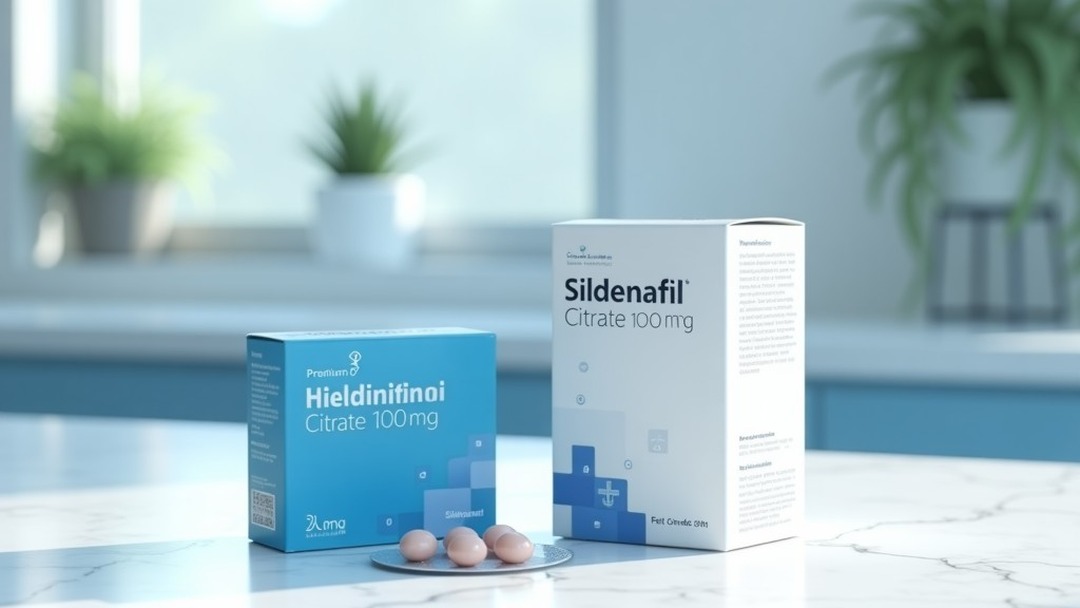
By some estimates, erectile dysfunction (ED) affects 15–30 million men in the United States alone, with prevalence rising steeply after age 40 and climbing to affect a majority of men by their 70s. Sildenafil, introduced in 1998, transformed the treatment landscape and remains a foundational therapy. This guide covers how sildenafil works, the clinical evidence behind it, practical dosing, safety considerations—including the critical nitrate contraindication—drug interactions, and typical generic pricing, so you and your clinician can choose confidently.
What Is Sildenafil and How Does It Work?
Sildenafil is a phosphodiesterase type 5 (PDE5) inhibitor. During sexual arousal, the corpus cavernosum releases nitric oxide (NO), which activates guanylate cyclase and raises cyclic GMP (cGMP). cGMP relaxes smooth muscle and dilates arteries, allowing blood to fill the penis. PDE5 normally breaks down cGMP. By blocking PDE5, sildenafil prolongs and amplifies the cGMP signal, improving the erectile response to stimulation.
Two key points: sildenafil is not an aphrodisiac and does not cause an erection without sexual stimulation. And its half-life is about 3–5 hours, although its functional window can extend with continued arousal. A high-fat meal delays absorption and onset by roughly an hour, so an empty stomach is preferable for predictable timing.
Approved and Common Uses
- Erectile dysfunction — the primary indication across mild, moderate, and severe ED of most etiologies (vascular, diabetic, psychogenic, post-prostatectomy).
- Pulmonary arterial hypertension (PAH) — a separate, lower-dose formulation (Revatio, 20 mg) improves exercise capacity by relaxing pulmonary vessels.
- Off-label / supportive: certain cases of Raynaud’s phenomenon and altitude-illness research, under specialist guidance.
Clinical Evidence and Guidelines
Landmark trials published after sildenafil’s approval showed that roughly 60–80% of men with ED achieve successful intercourse compared with ~20–30% on placebo, with efficacy consistent across diabetic, post-prostatectomy, and psychogenic subgroups. Major urology guidelines list PDE5 inhibitors—sildenafil included—as first-line therapy because they are effective, reversible, and well tolerated. Importantly, new-onset ED can be an early marker of cardiovascular disease, so a cardiac risk assessment is recommended when ED appears suddenly or with exertional symptoms.
Dosage Guidelines
| Scenario (ED) | Recommended dose | Timing |
|---|---|---|
| Standard start | 50 mg | ~30–60 min before activity |
| Based on tolerability/efficacy | 25–100 mg | Adjust per response |
| Maximum | 100 mg once daily | Not more than once per 24h |
| With food note | Absorption delayed by high-fat meal | Take on empty stomach for faster onset |
For PAH, sildenafil is dosed at 20 mg three times daily (a different product and strength). Never substitute ED and PAH dosing regimens interchangeably, and never use the higher ED doses for pulmonary indications.
Drug Interactions and Precautions
The most important interaction is with nitrates (nitroglycerin, isosorbide dinitrate/dinitrate, amyl nitrite “poppers”), which together can cause a catastrophic, sometimes fatal drop in blood pressure. Concomitant strong CYP3A4 inhibitors (such as ritonavir, ketoconazole, clarithromycin) raise sildenafil levels and warrant a lower starting dose (25 mg). Alpha-blockers for BPH are generally safe but can additively lower blood pressure if timed together. Grapefruit juice mildly inhibits metabolism and is best limited.
Side Effects and Safety Profile
Common (usually transient):
- Headache (~12–16%)
- Facial flushing (~10%)
- Nasal congestion, indigestion, and a mild transient visual bluish tint
Serious (rare) warnings:
- ⚠️ Absolute contraindication with nitrates — combined use can cause life-threatening sudden blood-pressure drop.
- Priapism (erection >4 hours) — a urologic emergency requiring immediate care to avoid permanent tissue damage.
- Sudden hearing or vision loss — rare; stop the drug and seek urgent care.
- Caution in cardiovascular disease, recent stroke or myocardial infarction, or severe liver/renal impairment.
Sildenafil vs Other ED Medications
| Drug | Onset | Duration | Food effect |
|---|---|---|---|
| Sildenafil | 30–60 min | ~4–6 hours | High-fat meal delays onset |
| Tadalafil | 30–120 min | Up to 36 hours | Minimal food effect |
| Vardenafil | 25–60 min | ~4–5 hours | Moderate food effect |
Cost and Affordable Generic Options
| Product | Typical range |
|---|---|
| Generic sildenafil 50 mg (30 tablets) | $30–$70 |
| Generic sildenafil 100 mg (30 tablets) | $45–$95 |
| Brand Viagra 50 mg (30 tablets, US) | $1,300–$2,100 |
| Brand Viagra 100 mg (30 tablets, US) | $1,700–$2,900 |
Generic sildenafil became available after patent expiry and is dramatically cheaper than brand. Cost-effective medication solutions through verified generic suppliers can reduce monthly therapy cost by over 90% versus brand. You can compare legitimate men’s health medications here to review current generic tiers and availability. Confirm any supplier requires a valid prescription and operates a licensed pharmacy.
Common Myths About Sildenafil
Several myths persist. Sildenafil is not an aphrodisiac and will not create desire where none exists—it amplifies the body’s response to arousal. It is also not addictive in the physical-dependence sense, though psychological reliance can develop if used to mask relationship or anxiety issues. A second tablet the same day does not double the benefit and raises side-effect and priapism risk, so the once-daily ceiling matters. Generic sildenafil is bioequivalent to brand Viagra when made by a licensed manufacturer, so the lower price reflects competition, not inferior quality. And because ED can be an early warning of cardiovascular disease, treating it casually without a health check is a missed opportunity to catch bigger problems.
Decision Guide
Sildenafil is an excellent first-line ED option for most healthy men without nitrate use or severe cardiovascular contraindications. Men wanting longer windows may prefer tadalafil; those sensitive to side effects may start at 25 mg. A cardiac evaluation is warranted if ED appears suddenly or with exertion, as it can signal underlying vascular disease that deserves attention in its own right.
Practical Tips for Patients
For the best experience, plan intimacy after a light meal rather than a heavy one, since fat delays onset. Avoid excessive alcohol, which can worsen dizziness and itself impair erectile function. Keep the first few uses relaxed and pressure-free; performance anxiety can blunt response, and the medication works with arousal rather than replacing it. Store tablets at room temperature, protected from heat and moisture. If the 50 mg dose is ineffective after several tries, discuss stepping up to 100 mg or switching to a longer-acting option such as tadalafil with your clinician—do not simply take a second tablet the same day.
Beyond pills, lifestyle changes amplify results: regular aerobic exercise improves endothelial function, smoking cessation restores vascular responsiveness, and moderation of alcohol protects both erection quality and the drug’s tolerability. Men who address sleep apnea, blood-sugar control, and blood-pressure targets often find they need lower doses over time. Open conversation with a partner also reduces performance anxiety, which is itself a common and reversible contributor to ED.
Special Populations
Response and caution vary by group. Older men often respond well but may also take nitrates or multiple blood-pressure drugs, so a careful medication review is essential. Men with diabetes—a leading cause of ED—typically respond, though doses may need to be higher and cardiovascular clearance is important. After radical prostatectomy, sildenafil supports rehabilitation of erections and is most effective when started early with a penile-rehabilitation plan. Anyone with recent heart attack, stroke, or unstable angina should not use sildenafil until cleared by cardiology. Because ED can be an early sign of silent coronary disease, a baseline cardiac assessment is wise for men with risk factors such as smoking, hypertension, or high cholesterol.
Frequently Asked Questions
How long before intercourse should I take sildenafil?
Typically 30–60 minutes on an empty stomach; a high-fat meal can delay onset by an hour or more.
Can I take sildenafil with blood pressure medication?
Many antihypertensives are compatible, but never combine with nitrates. Always disclose all cardiovascular drugs to your prescriber.
Is daily use safe?
For ED, sildenafil is taken as-needed (max once daily). A separate low-dose daily regimen is not standard for the ED formulation; do not exceed 100 mg in 24 hours.
Why is generic sildenafil so much cheaper than Viagra?
Once the brand patent expired, multiple manufacturers produced bioequivalent generics, driving competition; typical generic 50 mg supplies run $30-$70 versus $1,300-$2,100 for brand.
References
- US FDA. Sildenafil (Viagra, Revatio) Prescribing Information and nitrate contraindication. fda.gov.
- American Urological Association. Guidelines on the Management of Erectile Dysfunction.
- Goldstein I, et al. Oral sildenafil in the treatment of erectile dysfunction (NEJM, 1998).
- Cochrane Database of Systematic Reviews. PDE5 inhibitors for erectile dysfunction (comparative efficacy).
- UpToDate / Mayo Clinic. PDE5 inhibitor dosing and cardiovascular precautions.
Medical Disclaimer
This article is informational only and is not medical advice. ED can reflect underlying cardiovascular disease; consult a qualified healthcare provider before use, especially if you take nitrates or have heart conditions. Prices are approximate ±10% ranges varying by pharmacy, strength, quantity, and country; not a quote or guarantee.