Amoxicillin (Amoxil) Guide: Uses, Dosage, Side Effects & Affordable Generic Options
Amoxicillin is one of the most prescribed antibiotics in the world — a penicillin-class drug that has been a first-line defense against bacterial infections for decades. Whether you are dealing with a stubborn ear infection, strep throat, a urinary tract infection, or pneumonia, understanding how amoxicillin works, what dose your clinician may choose, and what it costs as a generic can help you have a more informed conversation at the pharmacy counter. This guide covers the practical details without hype, so you can focus on what matters: taking the right antibiotic, at the right dose, for the right duration.
What Is Amoxicillin?
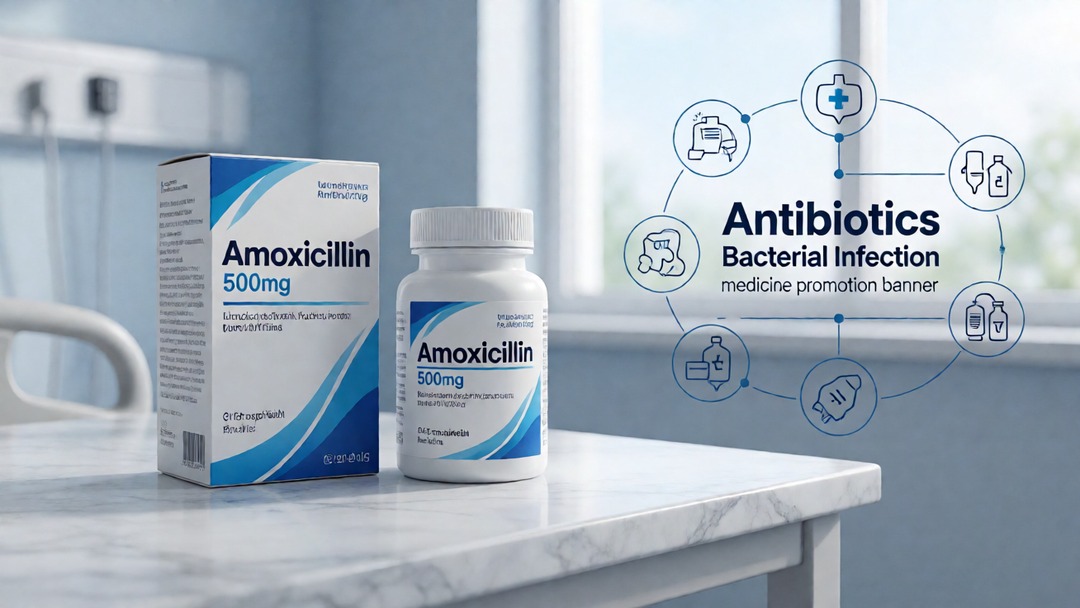
Amoxicillin is a broad-spectrum aminopenicillin antibiotic derived from penicillin. It is available as capsules (most commonly 250 mg and 500 mg), oral suspension powders, chewable tablets, and extended-release formulations. Under the original brand name Amoxil and dozens of generic labels, it is used across all age groups — from infants with otitis media to adults with respiratory or urinary infections.
Amoxicillin is bactericidal: it actively kills susceptible bacteria rather than merely stopping their growth. This property, combined with good oral absorption and a favorable safety record accumulated over many years of widespread use, explains why it remains a staple in primary care, pediatrics, and dentistry.
How Amoxicillin Works (Mechanism of Action)
Like all beta-lactam antibiotics, amoxicillin interferes with bacterial cell-wall synthesis. It binds to penicillin-binding proteins (PBPs) inside the bacterial cell membrane, blocking the cross-linking of peptidoglycan — the structural mesh that gives the cell wall its strength. Without a functional wall, the bacterium swells and bursts (lysis) as internal pressure builds.
Because human cells do not have peptidoglycan cell walls, amoxicillin selectively targets bacteria while leaving human tissue largely unaffected. Its broad spectrum covers many Gram-positive organisms (such as Streptococcus pneumoniae and Streptococcus pyogenes) and a range of Gram-negative bacteria (including Haemophilus influenzae, Escherichia coli, and Helicobacter pylori when used in combination regimens).
Amoxicillin is often paired with clavulanic acid (as amoxicillin-clavulanate) to extend its reach against beta-lactamase-producing bacteria that would otherwise inactivate the penicillin. This combination is common for sinusitis, animal bites, and skin infections where resistant organisms are suspected.
Approved and Common Uses
- Acute otitis media — one of the most common pediatric indications; amoxicillin is frequently first-line for children with ear pain and fever.
- Streptococcal pharyngitis (strep throat) — caused by S. pyogenes; amoxicillin’s narrow spectrum and once-daily or twice-daily dosing make it a practical choice.
- Community-acquired pneumonia — particularly when caused by susceptible S. pneumoniae or H. influenzae.
- Sinusitis — acute bacterial rhinosinusitis when symptoms persist beyond 10 days or worsen after initial improvement.
- Urinary tract infections — uncomplicated UTIs caused by susceptible E. coli and other enterococci.
- Skin and soft-tissue infections — mild cellulitis and erysipelas when streptococcal or susceptible staphylococcal coverage is adequate.
- H. pylori eradication — as part of triple or quadruple therapy alongside a proton pump inhibitor and another antibiotic.
- Dental prophylaxis — for patients at risk of infective endocarditis before certain dental procedures, per guideline recommendations.
Dosage Guidelines
| Indication | Typical Adult Dose | Typical Pediatric Dose | Duration |
|---|---|---|---|
| Strep throat | 500 mg twice daily | 25–50 mg/kg/day divided twice daily | 10 days |
| Acute otitis media | — | 80–90 mg/kg/day divided twice daily (high-dose) | 10 days |
| Community-acquired pneumonia | 500–875 mg twice daily | 45–50 mg/kg/day divided twice daily | 7–14 days |
| Sinusitis (acute bacterial) | 500–875 mg twice daily | 90 mg/kg/day divided twice daily | 10–14 days |
| Uncomplicated UTI | 500 mg twice daily | 25–45 mg/kg/day divided twice daily | 3–7 days |
| H. pylori eradication | 1,000 mg twice daily (with PPI + clarithromycin) | Dose per body weight; per protocol | 10–14 days |
| Dental prophylaxis (at-risk patients) | 2,000 mg 1 hour before procedure | 30–60 mg/kg 1 hour before | Single dose |
Doses are adjusted for kidney function — patients with impaired renal clearance require lower doses or extended dosing intervals. Always follow the specific instructions on your prescription; the numbers above are typical ranges, not individualized medical advice.
Amoxicillin can be taken with or without food. Taking it with a meal may reduce the chance of stomach upset. Complete the full prescribed course even if symptoms improve — stopping early can leave surviving bacteria and contribute to resistance.
Amoxicillin vs Other Common Antibiotics
| Feature | Amoxicillin | Azithromycin | Ciprofloxacin | Doxycycline |
|---|---|---|---|---|
| Class | Penicillin (aminopenicillin) | Macrolide | Fluoroquinolone | Tetracycline |
| Best for | Strep, ear infections, susceptible respiratory/UTI | Atypical pneumonia, MAC, chlamydia | Complicated UTI, gram-negative infections | Acne, Lyme, atypical coverage, malaria prophylaxis |
| Penicillin allergy cross-risk | Yes — contraindicated in true penicillin allergy | Low cross-reactivity | None | None |
| Pediatric use | Widely used; multiple pediatric formulations | Common; taste considerations | Generally avoided in children (cartilage concerns) | Used in children over 8 years |
| Typical generic cost (per course, US retail) | $5–$20 | $9–$26 | $10–$30 | $7–$22 |
The right antibiotic depends on the bug, the site of infection, local resistance patterns, and the patient’s allergy history. For a closer look at how two other widely used antibiotics compare, see our Amoxicillin vs Azithromycin guide in the Pharmaceuticals category.
Generic Pricing: India vs US Brand
Amoxicillin lost patent protection decades ago, so generic manufacturing is mature and competition is strong. The gap between Indian-manufactured generics and US-branded Amoxil is substantial. The figures below are indicative ±10% retail ranges and will vary by pharmacy, strength, and quantity:
| Product | Strength / Pack | Indicative Price Range |
|---|---|---|
| Indian generic amoxicillin | 500 mg × 100 capsules | $6–$18 |
| Indian generic amoxicillin | 500 mg × 30 capsules | $4–$10 |
| Indian generic amoxicillin | 250 mg × 30 capsules | $3–$8 |
| US branded Amoxil | 500 mg × 60 capsules | $60–$160 |
| US generic (retail pharmacy) | 500 mg × 60 capsules | $7–$24 |
Prices fluctuate with supply-chain conditions, currency rates, and local demand. Generic alternatives offer a cost-effective treatment option without compromising the active ingredient specification or bioequivalence standards required by regulators. Always confirm the current figure with your dispensing pharmacy before making a purchase decision.
Side Effects and Safety
Amoxicillin is generally well tolerated. Most adverse effects are mild and gastrointestinal in nature:
- Nausea, vomiting, or diarrhea — the most common complaints; taking with food often helps.
- Rash — a non-allergic amoxicillin rash can appear, especially in children with viral infections; true IgE-mediated allergic reactions are less common but more serious.
- Vaginal yeast infection or oral thrush — from altered flora secondary to antibiotic exposure.
- Rare but serious — anaphylaxis (difficulty breathing, swelling of face/lips/tongue), severe skin reactions such as Stevens-Johnson syndrome, and Clostridioides difficile-associated diarrhea.
Who Should Avoid or Use Caution
People with a known history of penicillin allergy or a prior severe reaction to amoxicillin should not take it. Those with a history of mononucleosis are more likely to develop a widespread rash when given amoxicillin — clinicians often choose a different antibiotic in that setting. Patients with kidney disease need dose adjustment.
Tell your prescriber about all other medications, especially methotrexate (amoxicillin can increase methotrexate levels), probenecid, and oral contraceptives (although the evidence for contraceptive failure with amoxicillin is weak, some guidelines still recommend backup contraception during antibiotic courses).
Decision Guide: When Is Amoxicillin the Right Choice?
- Do you have a confirmed or strongly suspected streptococcal infection, ear infection, or susceptible respiratory infection? → Amoxicillin is often the first choice.
- Do you have a documented penicillin allergy? → Avoid amoxicillin; your clinician will select a non-beta-lactam alternative such as azithromycin or doxycycline depending on the infection.
- Are you pregnant or breastfeeding? → Amoxicillin is generally considered acceptable in pregnancy and lactation under medical supervision, but confirm with your provider.
- Is cost a barrier to filling your prescription? → Generic amoxicillin is widely available at a small fraction of the branded price.
Frequently Asked Questions
How fast does amoxicillin start working?
Many patients notice improvement in symptoms such as fever, pain, or swelling within 48–72 hours of starting amoxicillin. If symptoms persist or worsen after 2–3 days, follow up with your prescriber — the infection may be resistant, viral, or require a different antibiotic.
Can I drink alcohol while taking amoxicillin?
Moderate alcohol consumption does not directly interfere with amoxicillin’s effectiveness, but alcohol can worsen side effects such as stomach upset and may impair your immune response while you are recovering. Most clinicians recommend limiting or avoiding alcohol during an acute infection.
What if I miss a dose?
Take the missed dose as soon as you remember, unless it is close to the time for your next dose. Do not double up. Consistency is important — try to space doses evenly throughout the day to maintain effective drug levels.
Is amoxicillin safe for children?
Yes — amoxicillin is one of the most commonly prescribed antibiotics for children, with pediatric formulations including oral suspension and chewable tablets. Dosing is weight-based, and the high-dose regimen (80–90 mg/kg/day) is often used for resistant ear infections. Always use the measuring device supplied with the suspension; household spoons are not accurate.
Does amoxicillin treat viral infections like the common cold or flu?
No. Amoxicillin and all other antibiotics have no activity against viruses. Using antibiotics for viral illnesses does not help and contributes to antibiotic resistance. If your clinician suspects a bacterial complication on top of a viral illness, they may prescribe amoxicillin selectively.
Why is amoxicillin so much cheaper as a generic?
Amoxicillin has been off-patent for decades, and multiple manufacturers produce it worldwide. Generic competition drives the price down, and international pharmacies — including licensed Indian generic manufacturers — routinely offer the same active ingredient at a fraction of US brand prices. The difference is in manufacturing scale and market pricing, not in the medicine itself.
References
- FDA Amoxicillin prescribing information (label).
- American Academy of Pediatrics — Clinical Practice Guideline for the Diagnosis and Management of Acute Otitis Media.
- IDSA Guidelines for Group A Streptococcal Pharyngitis.
- Infectious Diseases Society of America — Community-Acquired Pneumonia Guidelines.
- CDC — Antibiotic Resistance Threats and Appropriate Antibiotic Use.
- UpToDate: Amoxicillin — drug information and clinical use.
- Cochrane Review: Antibiotics for acute otitis media in children.
Medical disclaimer: This article is informational only and is not a substitute for professional medical advice, diagnosis, or treatment. Always consult a qualified healthcare provider before starting, stopping, or changing any medication. Prices shown are indicative ±10% ranges and may vary by pharmacy, region, strength, and quantity; confirm current pricing with your dispenser. Antibiotic use should always be guided by a licensed clinician based on the specific infection, local resistance patterns, and individual patient factors.