

Dasatinib for CML and Ph+ ALL Treatment: Uses, Dosage, Side Effects, Monitoring & Safe Buying Guide
Dasatinib is an advanced targeted cancer medicine used in the treatment of Philadelphia chromosome-positive (Ph+) chronic myeloid leukemia (CML) and Philadelphia chromosome-positive acute lymphoblastic leukemia (Ph+ ALL). It belongs to a class of medicines called tyrosine kinase inhibitors (TKIs), designed to block the abnormal BCR-ABL protein that drives leukemia cell growth.
Compared with older therapies, dasatinib offers faster molecular response and is often used for newly diagnosed chronic-phase CML, as well as in patients who are resistant or intolerant to imatinib therapy. It is also used in selected cases of Ph+ ALL under specialist supervision.
Because dasatinib is a prescription-only oncology medicine, patients must use it only under the guidance of a hematologist or oncologist. Proper dosing, monitoring, and pharmacy sourcing are essential for both treatment success and patient safety.
What Is Dasatinib?
Dasatinib is a second-generation BCR-ABL tyrosine kinase inhibitor (TKI). It works by blocking multiple kinase pathways involved in leukemia progression, particularly the BCR-ABL fusion protein caused by the Philadelphia chromosome abnormality.
This targeted mechanism helps slow or stop the uncontrolled growth of leukemia cells while reducing damage to normal healthy cells compared with traditional chemotherapy.
Dasatinib is commonly prescribed for:
- Newly diagnosed Philadelphia chromosome-positive chronic phase CML
- Chronic, accelerated, or blast phase CML after imatinib resistance
- Philadelphia chromosome-positive acute lymphoblastic leukemia (Ph+ ALL)
- Patients intolerant to prior TKI therapy
Brand examples include Sprycel and quality-approved generic dasatinib tablets available in India.

Approved Uses of Dasatinib in Leukemia
Dasatinib is indicated for specific Philadelphia chromosome-positive (Ph+) leukemias where the BCR-ABL pathway plays a key role.
Chronic Myeloid Leukemia (CML)
Dasatinib is approved for:
- Adult patients with newly diagnosed Ph+ CML in chronic phase.
- Adult patients with chronic, accelerated, or myeloid/lymphoid blast phase Ph+ CML who are resistant or intolerant to prior therapy, including imatinib.
- Pediatric patients 1 year of age and older with Ph+ CML in chronic phase.
In CML, the disease is often managed long-term with TKIs like dasatinib to help control the abnormal white blood cell production.
Philadelphia Chromosome-Positive Acute Lymphoblastic Leukemia (Ph+ ALL)
Dasatinib is indicated for:
- Adult patients with Ph+ ALL who are resistant or intolerant to prior therapy.
- Pediatric patients 1 year of age and older with newly diagnosed Ph+ ALL, in combination with chemotherapy.
Ph+ ALL is an aggressive form of acute leukemia, and dasatinib may be used as part of a multi-drug regimen in eligible children or in adults when other options have not been effective or tolerated.
These are the primary approved leukemia indications. Dasatinib is not used for all types of leukemia and should only be prescribed by specialists experienced in managing these conditions.
How Dasatinib Works in Leukemia Treatment
The Philadelphia chromosome creates an abnormal BCR-ABL gene that produces a constantly active tyrosine kinase enzyme. This enzyme signals leukemia cells to grow uncontrollably.
Dasatinib blocks this abnormal signaling pathway and helps:
- Reduce leukemia cell multiplication
- Improve complete hematologic response
- Achieve cytogenetic remission
- Support major molecular response (MMR)
- Improve long-term disease control
Its broader kinase inhibition also helps in some patients who no longer respond to imatinib.
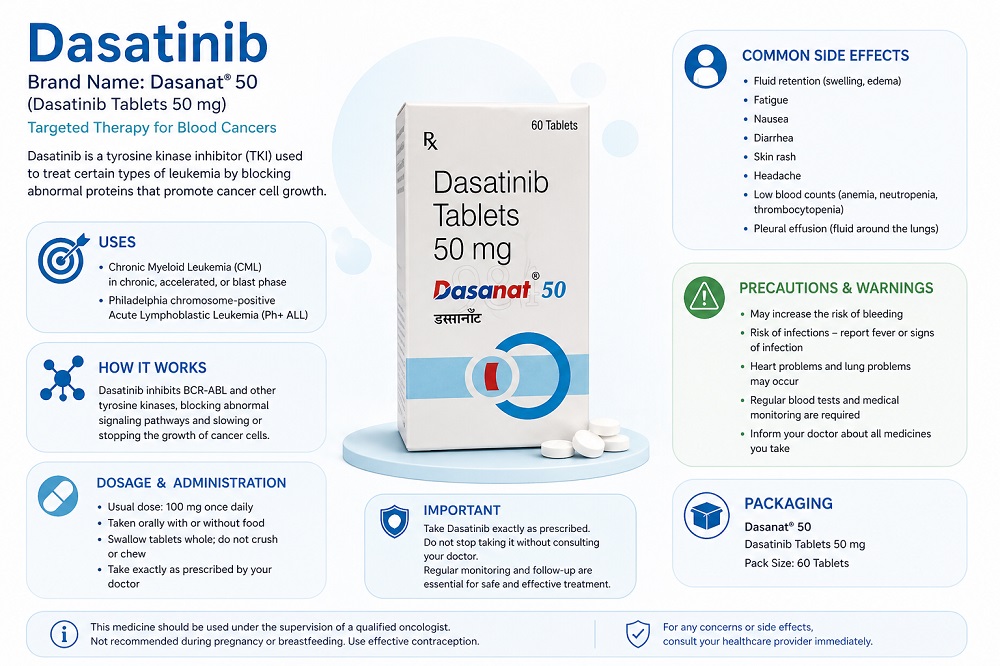
Dosing and Administration Considerations
Dasatinib is taken once daily, with or without food. Dosing varies by indication, patient age, disease phase, and individual response. In adults with CML, common starting doses are often 100 mg or 140 mg daily depending on the phase and prior treatment history. In pediatric patients, dosing is typically weight- or body surface area-based.
For Ph+ ALL in children, it is used in combination with chemotherapy according to specific protocols. Dose adjustments or interruptions may be necessary if side effects occur or based on laboratory results.
Patients should follow their prescribing physician’s instructions exactly and attend all scheduled monitoring visits.
General Safety Information and Potential Side Effects
As with other TKIs, dasatinib can cause side effects. Commonly reported ones include fluid retention (including pleural effusion), diarrhea, headache, fatigue, rash, nausea, musculoskeletal pain, and myelosuppression (low blood cell counts, which can increase risks of infection or bleeding).
Other possible effects include pulmonary arterial hypertension, QT interval prolongation (affecting heart rhythm), severe skin reactions, and bleeding events. Regular monitoring of blood counts, liver function, and cardiac status is typically required.
Dasatinib can cause fetal harm and is not recommended during pregnancy. Effective contraception is advised for patients who can become pregnant during treatment and for an appropriate period afterward.
Important: Side effect experiences vary widely. Many effects can be managed with supportive care, dose modifications, or temporary treatment pauses under medical supervision. Patients should report any new or worsening symptoms—such as shortness of breath, chest pain, severe swelling, unusual bleeding, or persistent fever—immediately to their healthcare team.
Living with Dasatinib Treatment for Leukemia
Long-term treatment with dasatinib often requires ongoing monitoring to assess response (through complete blood counts and molecular testing) and manage tolerability. Many patients continue daily oral therapy for years while maintaining good quality of life, though individual outcomes differ.
Supportive measures such as managing fluid retention, infection prevention, and nutritional support can be important. Lifestyle factors, including medication adherence, avoiding certain interacting drugs or foods, and regular follow-up with the oncology team, contribute to safe and effective use.
Treatment plans are highly individualized. Some patients may eventually explore treatment-free remission under strict monitoring if deep molecular responses are achieved, but this is decided only by the treating specialist.
FAQs About Dasatinib in Leukemia
What types of leukemia is dasatinib used for?
Dasatinib is used for Philadelphia chromosome-positive (Ph+) chronic myeloid leukemia (CML) in adults and children, and for Ph+ acute lymphoblastic leukemia (Ph+ ALL) in specific situations. It targets the BCR-ABL pathway present in these leukemias.
Is dasatinib used as first-line treatment for CML?
Yes, dasatinib is approved as a first-line option for adults with newly diagnosed Ph+ CML in chronic phase. It may also be used when patients do not respond well to or cannot tolerate other therapies like imatinib.
Can children take dasatinib for leukemia?
Yes. Dasatinib is approved for pediatric patients 1 year of age and older with Ph+ CML in chronic phase, and for newly diagnosed Ph+ ALL in combination with chemotherapy.
How does dasatinib work against leukemia cells?
Dasatinib inhibits the BCR-ABL tyrosine kinase and other kinases that drive the growth and survival of Ph+ leukemic cells, helping to reduce abnormal cell proliferation.
What are common side effects of dasatinib in leukemia patients?
Common side effects include fluid retention (such as pleural effusion), diarrhea, fatigue, headache, rash, nausea, and low blood cell counts. Serious risks can include heart or lung problems, so close monitoring is essential.
Is dasatinib better than imatinib for CML?
Both are effective TKIs. Dasatinib may offer certain advantages in potency or activity against some resistant mutations, but choice depends on patient-specific factors including disease characteristics, comorbidities, and tolerability. Your doctor will recommend the most appropriate option.
How long do patients typically take dasatinib for leukemia?
Treatment duration varies. Many patients with CML take it long-term. Regular molecular monitoring helps assess response. In some cases of deep, sustained response, treatment-free remission may be considered under specialist supervision.
Does dasatinib cure leukemia?
Dasatinib does not cure leukemia but can help achieve deep responses, control the disease, and improve outcomes when used as part of appropriate management. Leukemia treatment goals focus on long-term disease control and quality of life.
What monitoring is needed while taking dasatinib?
Regular blood tests for complete blood counts, liver and kidney function, and BCR-ABL levels are standard. Cardiac evaluation and checks for fluid retention or pulmonary issues may also be required depending on symptoms.
Can dasatinib be used in blast phase CML?
Yes, dasatinib is indicated for adults with accelerated or blast phase Ph+ CML who are resistant or intolerant to prior therapy, including imatinib.
Are there generic versions of dasatinib available?
Yes, generic dasatinib tablets have been approved in many markets and are therapeutically equivalent to the brand-name Sprycel in terms of active ingredient delivery.
What should I do if I miss a dose of dasatinib?
Take the missed dose as soon as you remember unless it is almost time for the next dose. Do not take two doses at the same time. Contact your doctor or pharmacist for specific guidance.
Conclusion
Dasatinib is an important targeted therapy in the management of Philadelphia chromosome-positive chronic myeloid leukemia (CML) and Ph+ acute lymphoblastic leukemia (ALL). Its ability to inhibit key signaling pathways has made it a valuable option for newly diagnosed patients as well as those with resistance or intolerance to prior treatments.
While effective for indicated uses, successful treatment requires careful medical supervision, regular monitoring, and individualized dosing to balance benefits and potential side effects. Ongoing communication with your hematology-oncology team is essential for optimal care.
If you or a loved one has been diagnosed with Ph+ leukemia or have questions about dasatinib or other treatment options, speak with your healthcare provider for the most current and personalized guidance. Patient support organizations and leukemia specialists can also provide valuable resources.
Disclaimer: This article is educational and based on general information regarding approved uses of dasatinib. It does not replace professional medical advice, diagnosis, or treatment. Never start, stop, or adjust any medication without consulting your physician. Individual responses and outcomes vary.