

Enzalutamide Survival Rate (2026): Effectiveness, Benefits & Patient Outcomes
SEO Meta
Title Tag: Enzalutamide Survival Rate (2026): Outcomes & Benefits
Meta Description: Discover enzalutamide survival outcomes, benefits, safety insights, and factors affecting prostate cancer treatment success.
Introduction
Understanding enzalutamide survival is important for patients and caregivers exploring treatment options for advanced prostate cancer. Enzalutamide is widely used in modern oncology to help manage disease progression and improve patient outcomes.
This guide explains how enzalutamide works, what affects survival outcomes, safety considerations, and what patients can expect based on current knowledge.
What is Enzalutamide?
Enzalutamide is an oral prescription medication used to treat advanced forms of prostate cancer. It belongs to a class of drugs known as androgen receptor inhibitors. These medicines work by blocking the action of androgens (male hormones like testosterone), which prostate cancer cells rely on for growth and survival. By inhibiting androgen signaling, enzalutamide helps slow disease progression and may improve survival outcomes.
It is commonly prescribed for:
- Metastatic castration-resistant prostate cancer (mCRPC)
- Non-metastatic castration-resistant prostate cancer (nmCRPC)
- Metastatic castration-sensitive prostate cancer (mCSPC)
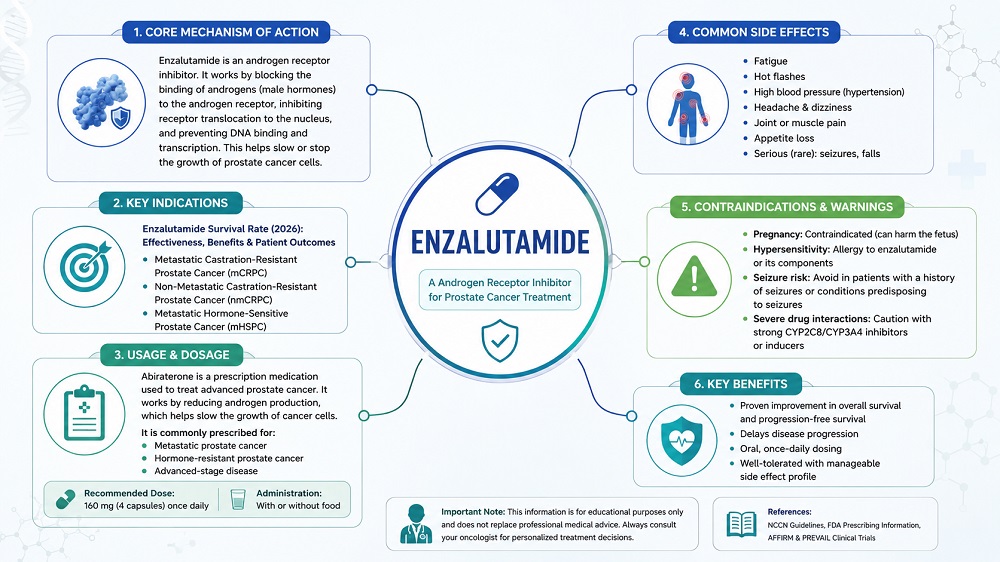 side effects, contraindications, and benefits for prostate cancer treatment” width=”1000″ height=”562″ srcset=”https://984online.com/wp-content/uploads/2026/05/enza.jpg 1000w, https://984online.com/wp-content/uploads/2026/05/enza-300×169.jpg 300w, https://984online.com/wp-content/uploads/2026/05/enza-768×432.jpg 768w” sizes=”auto, (max-width: 1000px) 100vw, 1000px” />
How Enzalutamide Impacts Survival
Enzalutamide is designed to delay disease progression and extend survival in patients with advanced prostate cancer. It works by preventing cancer cells from receiving androgen signals, which slows tumor growth.
While individual outcomes vary, treatment may:
- Delay disease progression
- Improve progression-free survival
- Support overall survival in certain patient groups
Response depends on factors such as stage of disease, overall health, and prior treatments.
Factors That Influence Survival Outcomes
1. Stage of Cancer
Earlier treatment stages may lead to better outcomes compared to advanced disease.
2. Patient Health
General health, age, and co-existing conditions can impact treatment response.
3. Treatment Combination
Enzalutamide may be used alongside other therapies, which can influence outcomes.
4. Treatment Adherence
Following prescribed dosage and monitoring schedules is essential for effectiveness.
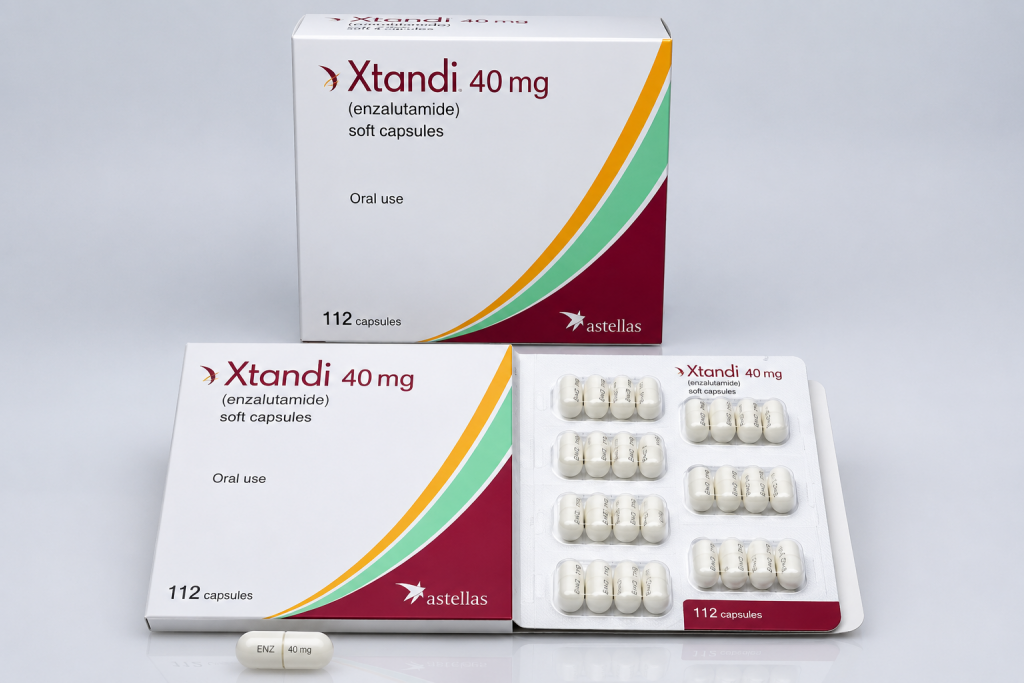
Safety and Side Effects
Common Side Effects
- Fatigue
- Hot flashes
- High blood pressure
- Weakness
Serious Considerations
- Seizure risk (rare)
- Cardiovascular effects
- Falls or fractures in some patients
This information is educational. Always consult a healthcare professional.
Data & Insights
Current trends suggest that enzalutamide plays a significant role in improving patient outcomes when used appropriately. However, survival varies widely between individuals.
Real-world outcomes depend on access to treatment, monitoring, and overall healthcare support systems.
Frequently Asked Questions
1. Does enzalutamide improve survival?
Enzalutamide is designed to help extend survival in certain prostate cancer patients by slowing disease progression.
2. How long can patients live on enzalutamide?
Survival duration varies widely depending on individual health, cancer stage, and response to treatment.
3. Is enzalutamide better than chemotherapy?
It depends on the clinical situation. Doctors choose treatment based on disease stage and patient condition.
4. What stage is enzalutamide used for?
It is commonly used in advanced or metastatic prostate cancer.
5. Are results immediate?
No, treatment works over time and requires monitoring.
6. Can enzalutamide cure cancer?
No, it is not a cure but helps manage disease progression.
7. Is long-term use safe?
Long-term use is possible under medical supervision with regular monitoring.
8. Does age affect outcomes?
Yes, age and overall health can influence treatment effectiveness.
9. Can it be combined with other treatments?
Yes, depending on clinical decisions by healthcare providers.
10. What monitoring is required?
Regular check-ups, blood tests, and symptom tracking are important.
Conclusion
Enzalutamide is an important treatment option for advanced prostate cancer, helping manage disease progression and support survival outcomes. While results vary, informed decisions, proper monitoring, and professional guidance play a key role in treatment success.
If you are exploring treatment options, consult a qualified healthcare provider to understand what is most suitable for your condition.
Suggested Images
- Infographic of prostate cancer treatment pathway (Alt: Prostate cancer treatment flow with enzalutamide highlighted)
- Medical illustration of androgen receptor blocking (Alt: Mechanism of action of enzalutamide in prostate cancer)
- Doctor consulting patient (Alt: Oncologist discussing prostate cancer treatment options)
SEO Extras
URL Slug: enzalutamide-survival-rate-2026
Long-tail Keywords:
- enzalutamide survival rate prostate cancer
- enzalutamide effectiveness 2026
- how long does enzalutamide extend life
- enzalutamide patient outcomes
- enzalutamide vs chemotherapy survival
- advanced prostate cancer survival treatment
- enzalutamide benefits and risks
- prostate cancer hormone therapy survival
Internal Linking Topics:
- Abiraterone vs Enzalutamide comparison
- Prostate cancer treatment options guide
- Hormone therapy side effects management
- Cost of prostate cancer medicines