

Prostate Cancer Drugs (2026): Types, Costs & Treatment Guide
SEO Meta
Title Tag: Prostate Cancer Drugs (2026): Types & Cost Guide
Meta Description: Learn about prostate cancer drugs, treatment types, costs, side effects, and latest options in this complete 2026 guide.
Introduction
Prostate cancer remains one of the most commonly diagnosed cancers among men worldwide. Advances in oncology research have transformed treatment options, allowing physicians to personalize therapy based on disease stage, genetic mutations, prior treatment history, and overall patient health.
In 2026, prostate cancer management extends beyond traditional hormone therapy. Modern treatment strategies may include next-generation androgen receptor inhibitors, chemotherapy, PARP inhibitors, radioligand therapies, and precision medicine approaches designed to improve survival and quality of life.
This comprehensive guide reviews the major drug classes used in prostate cancer treatment, explains how they work, discusses their benefits and limitations, and highlights emerging therapies shaping the future of prostate cancer care.
Understanding Prostate Cancer Treatment
Treatment depends on several factors:
- Localized versus metastatic disease
- Hormone-sensitive versus castration-resistant disease
- Presence of genetic mutations such as BRCA1 or BRCA2
- Patient age and overall health
- Previous treatments received
The goal may be cure, disease control, symptom relief, or prolonging survival.
What Are Prostate Cancer Drugs?
Prostate cancer drugs are medications used to manage or slow the progression of prostate cancer. These drugs work in different ways, such as reducing hormone levels, blocking cancer cell growth, or targeting specific pathways.
They are typically prescribed based on the stage of cancer, patient health, and treatment goals.
Main Types of Prostate Cancer Drugs
1. Hormone Therapy (Androgen Deprivation Therapy)
Hormone therapy reduces levels of male hormones (androgens) that fuel prostate cancer growth.
- LHRH agonists and antagonists
- Anti-androgens
2. Androgen Receptor Inhibitors
These drugs block androgen receptors, preventing cancer cells from using hormones to grow.
- Common examples include modern oral therapies used in advanced stages
3. Chemotherapy Drugs
Chemotherapy may be used when cancer no longer responds to hormone therapy. These drugs kill rapidly dividing cells.
4. Targeted Therapy
Targeted therapies focus on specific genetic or molecular pathways involved in cancer growth.
5. Radiopharmaceuticals
These are radioactive drugs used to target cancer that has spread to bones.
Commonly Used Drugs (General Overview)
Some widely used prostate cancer medications include:
- Hormone-blocking agents
- Androgen receptor inhibitors
- Advanced targeted therapies
The choice of drug depends on individual clinical conditions and treatment response.
Hormonal Therapy: The Foundation of Treatment
Most prostate cancers depend on androgens (male hormones such as testosterone) for growth and survival. Hormonal therapy, also called androgen deprivation therapy (ADT), aims to reduce androgen levels or block their activity.
LHRH Agonists
Examples:
- Leuprolide
- Goserelin
- Triptorelin
These medications suppress testosterone production by affecting signaling between the brain and testes.
Common Side Effects
- Hot flashes
- Fatigue
- Weight gain
- Loss of bone density
- Reduced libido
- Mood changes
Next-Generation Androgen Receptor Inhibitors
Advanced prostate cancer treatment increasingly relies on medications that directly block androgen receptor signaling.
Enzalutamide
Mechanism of Action
Enzalutamide prevents androgens from activating cancer cells by blocking androgen receptor signaling pathways.
Clinical Uses
- Metastatic hormone-sensitive prostate cancer (mHSPC)
- Metastatic castration-resistant prostate cancer (mCRPC)
- Non-metastatic castration-resistant prostate cancer (nmCRPC)
Pharmacokinetics
- Oral administration
- High bioavailability
- Primarily metabolized by CYP2C8 and CYP3A4 enzymes
- Long elimination half-life supports once-daily dosing
Common Side Effects
- Fatigue
- Hypertension
- Dizziness
- Increased risk of falls
Apalutamide
Apalutamide is approved for patients with non-metastatic castration-resistant prostate cancer and metastatic hormone-sensitive disease.
Key Benefits
- Delays disease progression
- Extends metastasis-free survival
- Convenient once-daily oral dosing
Darolutamide
Darolutamide is another androgen receptor inhibitor that offers effective disease control with limited penetration into the central nervous system.
Clinical Advantages
- Lower incidence of cognitive side effects
- Effective in combination with ADT
- Improved overall survival in selected patients
Abiraterone Acetate: Blocking Androgen Production
-
What Is Abiraterone?
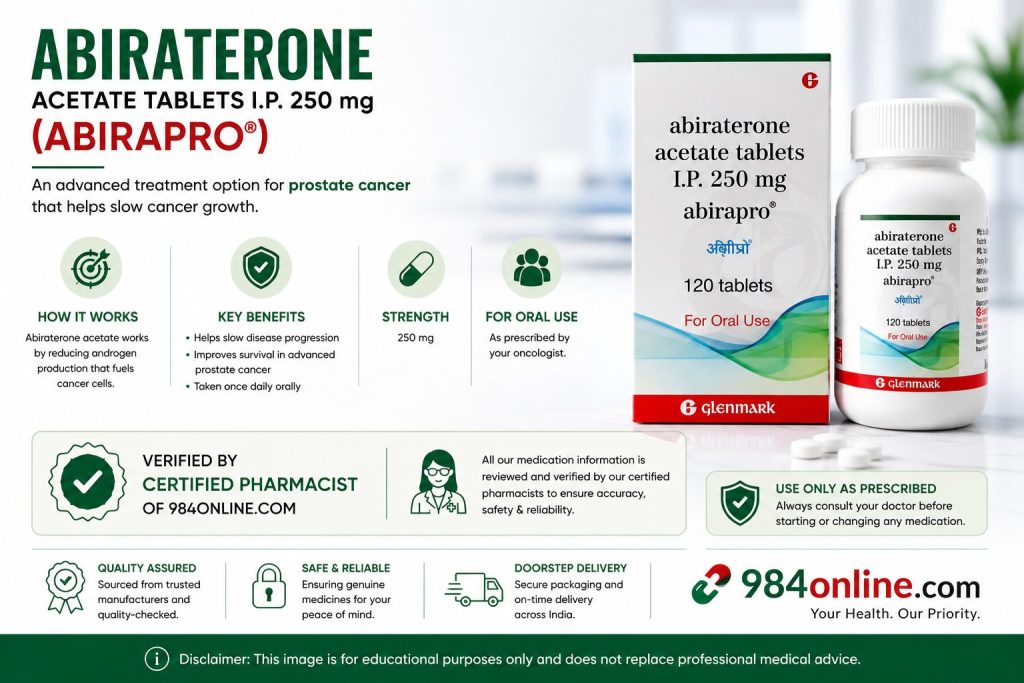
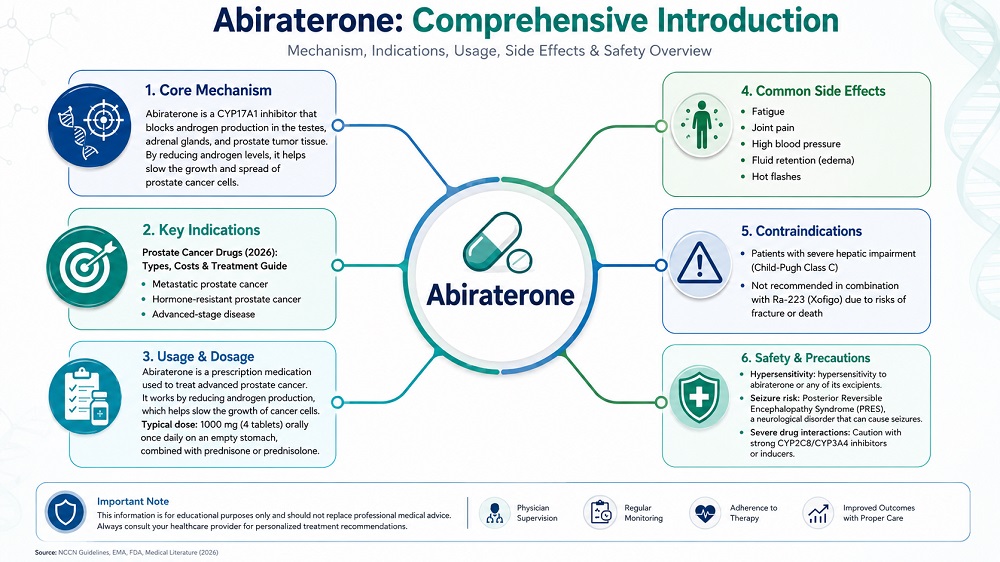
Abiraterone acetate is a CYP17 inhibitor used to treat advanced prostate cancer.
Unlike standard hormonal therapy that reduces testosterone production from the testes, Abiraterone blocks androgen production throughout the body, including the adrenal glands and prostate cancer cells.
Mechanism of Action
Abiraterone inhibits CYP17A1, a critical enzyme involved in androgen synthesis.
This leads to:
- Reduced testosterone levels
- Slower tumor growth
- Improved disease control
Clinical Uses
Abiraterone is commonly prescribed for:
- Metastatic hormone-sensitive prostate cancer (mHSPC)
- Metastatic castration-resistant prostate cancer (mCRPC)
Pharmacokinetics
- Oral administration
- Increased absorption with food
- Extensive liver metabolism
- Usually administered with prednisone
Monitoring Requirements
Patients receiving Abiraterone require regular monitoring of:
- Liver function tests
- Blood pressure
- Potassium levels
- Fluid retention
Common Side Effects
- High blood pressure
- Fluid retention
- Low potassium
- Elevated liver enzymes
- Fatigue
Chemotherapy for Advanced Prostate Cancer
Although targeted therapies have expanded treatment options, chemotherapy remains important for many patients.
Docetaxel
Docetaxel is frequently used for metastatic hormone-sensitive and castration-resistant prostate cancer.
Mechanism of Action
Docetaxel disrupts microtubules, preventing cancer cell division and growth.
Benefits
- Improved overall survival
- Reduced cancer-related symptoms
- Enhanced disease control when combined with ADT
Cabazitaxel
Cabazitaxel is often considered when disease progresses following docetaxel therapy.
Clinical Role
- Second-line chemotherapy
- Effective against resistant prostate cancer cells
- Demonstrated survival benefits in advanced disease
Comparison of Major Prostate Cancer Drugs
| Drug | Class | Route | Common Use |
|---|---|---|---|
| Abiraterone | CYP17 Inhibitor | Oral | mHSPC, mCRPC |
| Enzalutamide | AR Inhibitor | Oral | mCRPC, mHSPC |
| Apalutamide | AR Inhibitor | Oral | mHSPC, nmCRPC |
| Darolutamide | AR Inhibitor | Oral | mHSPC, nmCRPC |
| Docetaxel | Chemotherapy | IV | Advanced disease |
| Cabazitaxel | Chemotherapy | IV | Post-Docetaxel |
| Olaparib | PARP Inhibitor | Oral | BRCA-Mutated Disease |
Cost of Prostate Cancer Drugs (2026)
Average Monthly Cost
- USA: ,000 – 2,000+
- Europe: ,000 – ,000
- India (Generics): 00 – 00
Prices vary depending on drug type, brand, dosage, and availability of generics.
Factors Affecting Cost
- Brand vs generic availability
- Healthcare system and country regulations
- Insurance coverage
- Supply chain and import costs
Safety and Side Effects
Common Side Effects
- Fatigue
- Hot flashes
- Bone thinning
- Nausea
Serious Considerations
- Cardiovascular risks
- Liver function changes
- Increased infection risk
Side effects vary depending on the drug class and patient condition. Always follow medical guidance.
Buying Guide: Accessing Drugs Safely
Best Practices
- Use a valid prescription
- Buy from licensed pharmacies
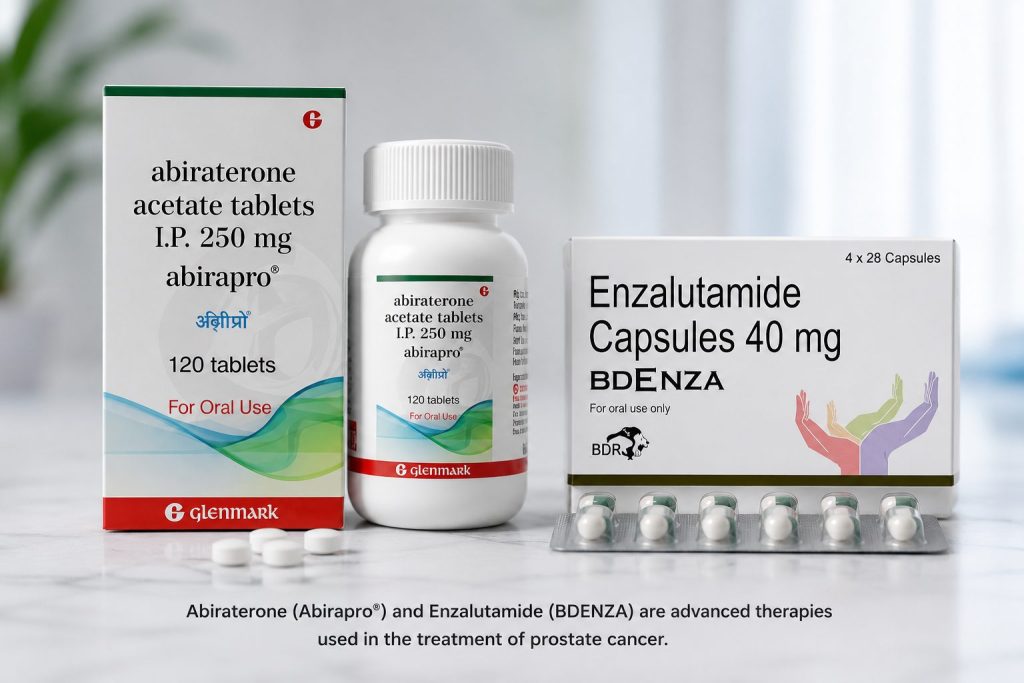
- Verify product authenticity
- Check packaging and expiry date
Avoid
- Unverified online sellers
- No-prescription purchases
- Extremely low-cost offers
Data & Insights
The prostate cancer treatment landscape continues to evolve, with new therapies improving disease management. Increased availability of generics has helped reduce costs in some regions.
However, access to advanced treatments remains uneven globally, especially in low-resource settings.
Frequently Asked Questions
1. What are the most common prostate cancer drugs?
Common drugs include hormone therapies, androgen receptor inhibitors, chemotherapy agents, and targeted therapies.
2. Are prostate cancer drugs expensive?
Yes, especially in high-income countries, though generics can significantly reduce costs.
3. Can these drugs cure prostate cancer?
They are used to manage and control the disease rather than provide a guaranteed cure.
4. How are drugs selected?
Doctors choose medications based on cancer stage, patient health, and treatment goals.
5. Are generics effective?
Generics are designed to be equivalent to branded drugs when approved by regulatory authorities.
6. Can I buy prostate cancer drugs online?
Yes, but only from licensed pharmacies that require prescriptions.
7. What are common side effects?
Fatigue, hot flashes, and nausea are common, but effects vary by drug type.
8. Is long-term treatment required?
Many patients require ongoing treatment depending on disease progression.
9. Does insurance cover these drugs?
Coverage depends on country and insurance provider.
10. Are new drugs available?
Yes, ongoing research continues to introduce new treatment options.
Conclusion
The prostate cancer treatment landscape in 2026 is more advanced than ever before. Modern therapies such as androgen receptor inhibitors, PARP inhibitors, chemotherapy, and PSMA-targeted radioligand treatments provide multiple options for managing both hormone-sensitive and castration-resistant disease.
Treatment selection should always be guided by a qualified oncology team and informed by disease stage, genetic testing, and individual patient needs.
Long-tail Keywords:
- prostate cancer drugs list 2026
- latest prostate cancer medications
- cost of prostate cancer treatment drugs
- hormone therapy prostate cancer drugs
- advanced prostate cancer medicines
- targeted therapy prostate cancer
- best prostate cancer drugs options
- generic prostate cancer medicines
Internal Linking Topics: