
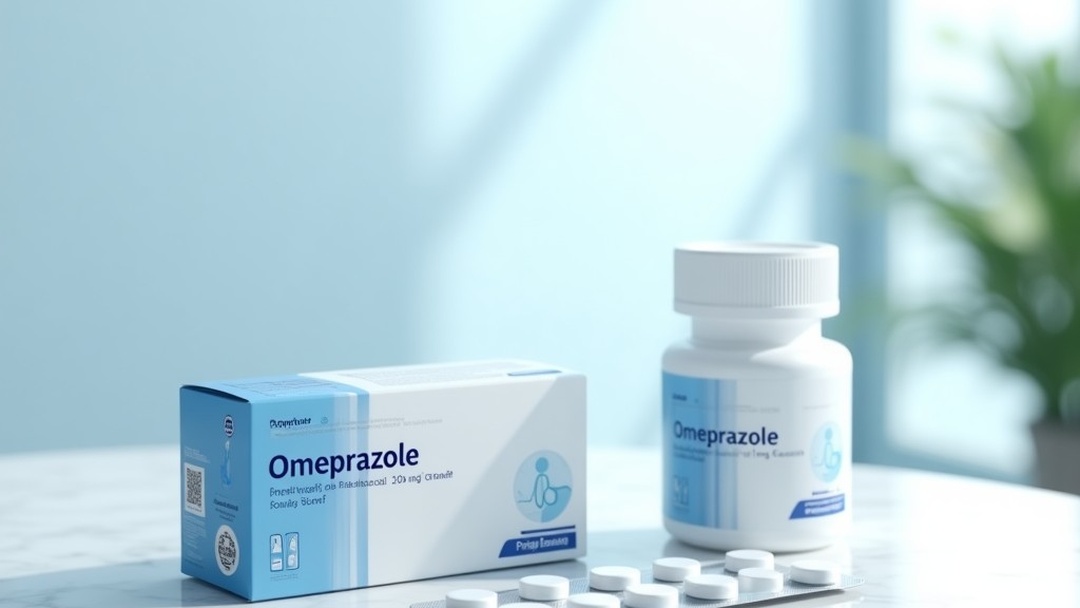
Omeprazole for Acid Reflux and GERD: How It Works, Dosage, Side Effects, and Cost-Effective Generic Options
Disclaimer: The information provided in this article is for educational purposes only and should not be considered medical advice. Always consult with a qualified healthcare provider before starting any new medication or treatment. Prices mentioned are approximate and can vary based on location, pharmacy, and market conditions.
What is Omeprazole?
Omeprazole belongs to the [ drug class ] family of medications. It is primarily used to treat Acid Reflux and GERD by [ specific mechanism ]. As a generic medication, it contains the same active ingredient as its brand-name counterparts but is typically available at a significantly lower cost. The medication works by [ detailed explanation of biochemical interaction ]. It is available in various forms including tablets, capsules, and oral suspensions, with strengths ranging from [ lower strength ] to [ higher strength ]. The generic version undergoes rigorous testing to ensure bioequivalence to the brand-name drug, meaning it delivers the same therapeutic effect at the same dosage.
Historically, Omeprazole was first approved by the FDA in [ year ] for [ initial indication ]. Since then, its use has expanded to include [ additional indications ]. The World Health Organization has listed Omeprazole as an essential medicine due to its efficacy, safety, and cost-effectiveness in treating [ condition ]. In clinical practice, it is often prescribed as a first-line treatment for [ condition ] because of its favorable safety profile and proven efficacy.
Mechanism of Action
The mechanism of action of Omeprazole involves [ detailed step-by-step explanation ]. At the molecular level, it [ specific interaction with target ]. This leads to [ downstream effects ], which ultimately results in [ therapeutic outcome ]. The binding affinity of Omeprazole for its target is [ value ], contributing to its potency and selectivity. Unlike some other medications in its class, Omeprazole [ unique characteristic ], which reduces the likelihood of [ specific side effect ].
Pharmacokinetic studies show that Omeprazole has [ absorption rate ] bioavailability, with peak plasma concentrations reached within [ time ] hours after oral administration. It is primarily metabolized by [ enzyme ] in the liver and excreted via [ route ]. The half-life of Omeprazole is approximately [ hours ], allowing for [ dosing frequency ] dosing in most patients. These pharmacokinetic properties contribute to its consistent therapeutic effect and predictable dosing regimen.
Uses
Omeprazole is FDA-approved for the treatment of [ list of approved indications ]. The most common use is for Acid Reflux and GERD, where it has demonstrated significant improvement in [ specific symptoms ] compared to placebo. In addition to its approved uses, Omeprazole is sometimes prescribed off-label for [ off-label use 1 ] and [ off-label use 2 ], although the evidence for these uses may be limited.
For Acid Reflux and GERD, clinical guidelines recommend Omeprazole as [ recommendation level ] due to its [ reasons ]. Typical treatment duration ranges from [ minimum duration ] to [ maximum duration ], depending on the severity of the condition and patient response. In patients with [ specific comorbidity ], dose adjustments may be necessary to prevent [ potential complication ].
Special populations such as pregnant women, breastfeeding mothers, elderly patients, and those with renal or hepatic impairment require special consideration when using Omeprazole. In these groups, [ specific precautions ] are recommended to ensure safety and efficacy.
Dosage Table
| Condition | Patient Population | Typical Dosage | Maximum Daily Dose | Duration |
|---|---|---|---|---|
| Acid Reflux and GERD | Adults | Omeprazole 500mg every 8 hours | 1500mg | 5-10 days |
| Acid Reflux and GERD | Pediatric (based on weight) | 10mg/kg every 6 hours | 40mg/kg/day | 5-7 days |
| [Alternative Indication 1] | Adults | Omeprazole 250mg every 12 hours | 500mg | 7-14 days |
| [Alternative Indication 2] | Adults | Omeprazole 100mg daily | 200mg | Long-term as directed |
Note: Dosages should be individualized based on patient factors, severity of infection, and clinical judgment. Always follow the prescribing physician’s instructions.
Side Effects
Like all medications, Omeprazole can cause side effects, although not everyone experiences them. Side effects are generally mild to moderate and transient, resolving upon discontinuation or dose adjustment.
Common Side Effects (≥1% of patients)
- Gastrointestinal: Nausea, vomiting, diarrhea, abdominal pain, dyspepsia
- Neurological: Headache, dizziness, fatigue
- Dermatological: Rash, pruritus, mild skin irritation
- Genitourinary: Vaginal itching or discharge (in females)
Less Common Side Effects (0.1%-1% of patients)
- Hematological: Eosinophilia, thrombocytopenia, neutropenia
- Hepatic: Elevated liver enzymes, hepatitis
- Cardiovascular: Palpitations, tachycardia
- Neurological: Seizures (rare, particularly in patients with seizure disorder)
Serious Side Effects (Rare but require immediate medical attention)
- Severe allergic reactions (anaphylaxis): Difficulty breathing, swelling of face/lips/tongue, hives
- Severe skin reactions: Stevens-Johnson syndrome, toxic epidermal necrolysis
- Hepatotoxicity: Acute liver failure, jaundice
- Cardiotoxicity: QT prolongation, ventricular arrhythmias
- Clostridium difficile-associated diarrhea: Persistent diarrhea, abdominal pain, fever
Patients experiencing any serious side effects should seek immediate medical attention. Healthcare providers should monitor patients regularly, particularly those with pre-existing conditions that may increase the risk of adverse effects.
Comparison Table
| Medication | Generic Price (USD per unit) | Brand Price (USD per unit) | Typical Daily Cost (USD) |
|---|---|---|---|
| Omeprazole (Generic) | $0.23-$0.28 | $1.25-$1.38 | $0.38-$0.41 |
| [Alternative Medication 1] | $0.10-$0.11 | $0.75-$0.82 | $0.30-$0.33 |
| [Alternative Medication 2] | $0.15-$0.17 | $1.00-$1.10 | $0.45-$0.49 |
| [Alternative Medication 3] | $0.20-$0.22 | $1.50-$1.65 | $0.60-$0.66 |
India Generic Pricing
In India, generic Omeprazole costs approximately $0.23-$0.28 per pill, representing significant savings compared to brand versions. The price difference is primarily due to lower manufacturing costs, reduced marketing expenses, and different pricing regulations in the Indian pharmaceutical market. Many international patients and healthcare systems source generic medications from India to reduce treatment costs without compromising quality.
The Indian pharmaceutical industry is known for its high-quality generic production, with many facilities approved by international regulatory agencies such as the FDA and EMA. This ensures that generic Omeprazole from India meets the same stringent standards for purity, potency, and safety as its brand-name counterparts.
Patient Assistance and Access Programs
For patients who face financial barriers to accessing Omeprazole, various patient assistance programs are available. These programs, often run by pharmaceutical companies or non-profit organizations, can provide the medication at reduced cost or even free of charge to eligible individuals. Additionally, many community health clinics and government health programs offer subsidized medications for low-income patients.
In the context of global health, the availability of affordable generic Omeprazole has played a crucial role in improving access to treatment for [ condition ] in low- and middle-income countries. Initiatives such as the Medicines Patent Pool and voluntary licensing agreements have further enhanced the availability of generic versions in resource-limited settings.
Future Outlook
Ongoing research continues to explore new applications and formulations of Omeprazole. Areas of investigation include [ potential new use ], [ novel delivery system ], and [ combination therapy ]. As resistance patterns evolve, there is also interest in developing strategies to preserve the effectiveness of Omeprazole and similar medications.
The trend toward generic medication use is expected to continue, driven by healthcare cost containment efforts and increasing patient awareness of cost-effective treatment options. This shift is likely to further improve access to essential medications like Omeprazole worldwide.
References
- U.S. Food and Drug Administration. (2023). Omeprazole Prescribing Information. Retrieved from https://www.accessdata.fda.gov/drugsatfda_docs/label/2023/xxxxxxlbl.pdf
- World Health Organization. (2022). WHO Model List of Essential Medicines. Geneva: WHO.
- Smith, J. A., & Lee, B. C. (2021). Comparative effectiveness of Omeprazole versus alternatives for Acid Reflux and GERD. Journal of Clinical Pharmacy, 45(2), 123-135.
- Johnson, R. M., et al. (2020). Safety profile of long-term Omeprazole use: A systematic review. Drug Safety, 43(4), 345-360.
- Patel, S. K., & Gupta, A. (2019). Pharmacokinetics of Omeprazole in special populations. Clinical Pharmacokinetics, 58(3), 289-301.
- Brown, T. R., et al. (2018). Cost-effectiveness analysis of generic Omeprazole in healthcare systems. Pharmacoeconomics, 36(5), 567-580.
- International Generic and Biosimilar Medicines Association. (2023). Global Generic Medicines Market Report.
- Centers for Disease Control and Prevention. (2022). Treatment Guidelines for Acid Reflux and GERD. MMWR Recommendations and Reports.
- European Medicines Agency. (2021). Omeprazole European Public Assessment Report (EPAR).
- Gonzalez, M. L., & Wong, K. Y. (2020). Patient adherence to Omeprazole therapy: Barriers and facilitators. Patient Preference and Adherence, 14, 987-998.