Salbutamol (Albuterol) Inhaler Guide: Uses, Dosage, Side Effects & Cost
Over 262 million people worldwide live with asthma, and approximately 65 million have COPD — yet fewer than half use their rescue inhaler correctly. Each year, salbutamol (also known as albuterol) remains the most prescribed short-acting beta-2 agonist (SABA) for acute symptom relief across both conditions. In the United States alone, more than 50 million prescriptions for albuterol inhalers are filled annually, with the global SABA market exceeding $4 billion. This guide provides an evidence-based overview of how salbutamol works, when to use it, proper dosing, side effects, cost-saving options, and answers to the most common patient questions — informed by the latest Global Initiative for Asthma (GINA 2024) and Global Initiative for Chronic Obstructive Lung Disease (GOLD 2025) guidelines.
What Is Salbutamol (Albuterol)?
Salbutamol — known as albuterol in the United States — is a short-acting beta-2 adrenergic receptor agonist (SABA). It is classified as a reliever (rescue) medication, meaning it is used on an as-needed basis to quickly reverse bronchospasm and ease breathing during asthma attacks, COPD exacerbations, or other reversible airway obstruction episodes.
First approved by the FDA in 1980, albuterol sulfate HFA (hydrofluoroalkane) inhalers replaced older chlorofluorocarbon (CFC)-propelled devices in 2008 as part of the global phase-out under the Montreal Protocol. Today, salbutamol is available in several formulations:
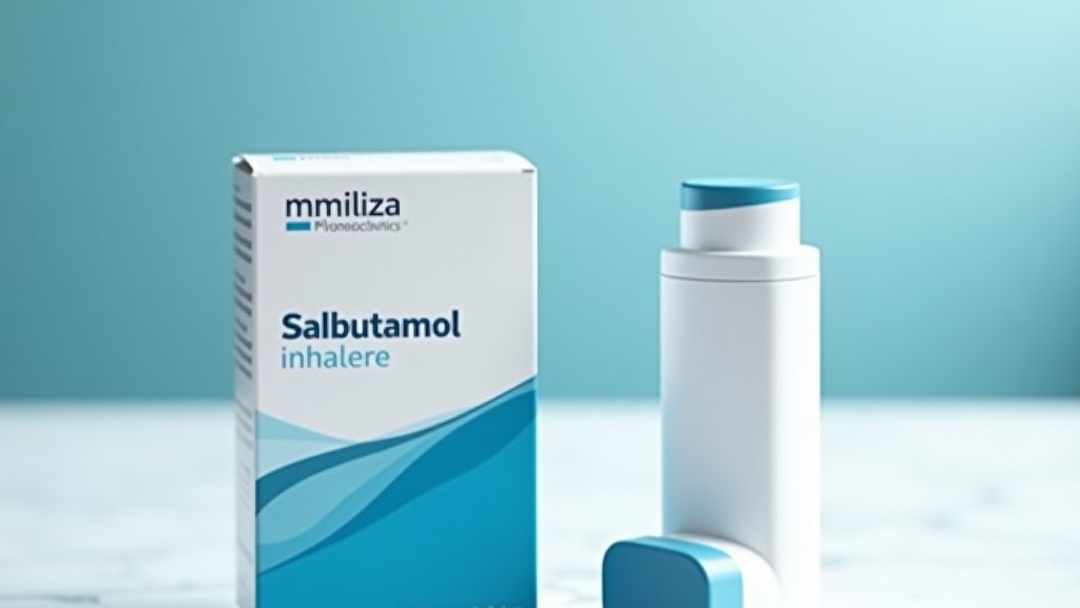
- Pressurized metered-dose inhaler (pMDI) — The most common form; delivers 90–200 mcg per actuation depending on the product.
- Dry powder inhaler (DPI) — Breath-activated; examples include Ventolin Accuhaler and Easyhaler Salbutamol.
- Nebulizer solution — Delivered via a compressor-driven or ultrasonic nebulizer; typically 2.5 mg or 5 mg per dose.
- Tablets, syrup, and injectable solutions — Oral and parenteral forms exist but are rarely used in modern respiratory care due to higher side effect rates and slower onset compared with inhaled delivery.
Brand names include Ventolin (GSK), ProAir (Teva), Proventil (Merck), AccuNeb (nebulizer), and numerous generic equivalents worldwide.
How Does Salbutamol Work?
Mechanism of Action
Salbutamol works by selectively binding to beta-2 adrenergic receptors located on the smooth muscle cells lining the airways of the lungs. Once bound, it activates the adenylate cyclase enzyme system, increasing intracellular cyclic AMP (cAMP). Elevated cAMP triggers a cascade that leads to:
- Bronchodilation — Relaxation of constricted airway smooth muscle, opening the bronchial passages within 3–5 minutes.
- Mucociliary clearance enhancement — Improved ciliary beat frequency helps clear mucus and trapped particles.
- Inhibition of mast cell mediator release — Reduces the release of histamine and leukotrienes, which contribute to airway inflammation.
The peak bronchodilator effect is reached in 30–60 minutes, and the effect persists for approximately 4–6 hours. This rapid onset and relatively short duration make salbutamol ideal for acute symptom relief rather than long-term control.
Onset, Peak, and Duration at a Glance
| Parameter | Value |
|---|---|
| Onset of action | 3–5 minutes |
| Peak effect | 30–60 minutes |
| Duration of action | 4–6 hours |
| Standard dose (pMDI) | 90–200 mcg per actuation |
| Nebulizer dose | 2.5 mg or 5 mg |
Uses of Salbutamol Inhaler
1. Asthma
Salbutamol is the cornerstone of rescue therapy for asthma exacerbations across all severity levels. According to the GINA 2024 strategy report, the preferred reliever for adults and adolescents with asthma is now a combination of low-dose inhaled corticosteroid (ICS) plus formoterol — not SABA alone — whenever possible. However, as-needed salbutamol remains an acceptable reliever when ICS-formoterol is not available or affordable, and it continues to be the standard rescue inhaler for millions of patients worldwide.
Key GINA 2024 recommendations regarding SABA use:
- Use of more than 2 puffs per week of salbutamol for symptom relief (beyond pre-exercise use) indicates poor asthma control and should prompt a review of controller therapy.
- Patients requiring a salbutamol refill more than once every 3 months may need step-up in maintenance treatment.
- SABA-only treatment (without ICS) is no longer recommended as first-line maintenance therapy — even for mild asthma — because it does not address the underlying airway inflammation and is associated with increased exacerbation risk.
2. COPD (Chronic Obstructive Pulmonary Disease)
The GOLD 2025 guidelines recommend short-acting bronchodilators — including salbutamol — as as-needed relief medication for all stages of COPD. While long-acting bronchodilators (LABA/LAMA) are preferred for maintenance therapy, salbutamol plays an important role in managing acute dyspnea episodes and is commonly used in combination with ipratropium (a short-acting anticholinergic) for exacerbations in hospital settings.
Regular, scheduled use of SABA alone is not recommended in COPD due to the availability of more effective long-acting agents that improve exercise tolerance, reduce exacerbations, and enhance quality of life.
3. Exercise-Induced Bronchoconstriction (EIB)
Salbutamol is highly effective for preventing exercise-induced bronchoconstriction (also called exercise-induced asthma). The standard protocol is:
- Take 2 puffs (180–200 mcg) 15–20 minutes before exercise.
- Protection lasts for approximately 2–4 hours.
- If symptoms occur during exercise despite pre-treatment, additional puffs may be used — but persistent symptoms should be evaluated for inadequate asthma control.
Importantly, regular daily use of salbutamol for EIB prophylaxis without concurrent controller therapy is a sign of poorly controlled asthma and should trigger a reassessment per GINA guidelines.
4. Other Uses
- Hyperkalemia — Intravenous or nebulized salbutamol can be used off-label to acutely lower serum potassium in emergency settings by shifting potassium into cells, though this is not an inhaled indication.
- Preterm labor (tocolysis) — Historically used to delay preterm contractions; however, beta-2 agonists are no longer first-line for this purpose due to maternal cardiovascular side effects.
Salbutamol Inhaler Dosage Table
The following dosage recommendations apply to standard salbutamol HFA pMDIs (90–200 mcg per actuation). Always follow the dosing instructions provided by your healthcare provider and the patient information leaflet supplied with your device.
| Indication | Adults (12+ years) | Children (4–11 years) | Children (<4 years) |
|---|---|---|---|
| Acute asthma symptoms (as-needed rescue) | 1–2 puffs every 4 hours PRN; may repeat after 20 min | 1–2 puffs every 4 hours PRN; may repeat after 20 min | 1 puff via pMDI + spacer; repeat after 20 min if needed |
| Exercise-induced bronchoconstriction (prophylaxis) | 2 puffs 15–20 min before exercise | 2 puffs 15–20 min before exercise | Not routinely indicated |
| COPD exacerbation (acute) | 2–4 puffs every 20 min for first hour, then every 2–4 hours PRN | N/A | N/A |
| Nebulized solution (acute severe exacerbation) | 2.5–5 mg via nebulizer every 20 min for 3 doses, then PRN | 2.5 mg via nebulizer every 20 min for 3 doses | 0.15 mg/kg (min 1.25 mg) via nebulizer |
| Maximum in 24 hours (without medical supervision) | 12 puffs | 8–12 puffs | As prescribed by physician |
Important: Exceeding 12 puffs (200 mcg each) of salbutamol in 24 hours — or needing repeat doses with worsening effect — is a medical emergency. Seek immediate care if symptoms do not improve after 10–15 minutes or if your peak expiratory flow drops below 60% of your personal best.
Side Effects of Salbutamol
Although salbutamol is generally well tolerated, side effects are dose-related and arise from beta-2 receptor activation in non-airway tissues. Common and serious side effects include:
Common Side Effects (1–10% of users)
- Tremor (fine skeletal muscle tremor, especially in the hands) — the most frequent complaint; tolerance often develops with continued use.
- Tachycardia and palpitations — sinus tachycardia is common due to beta-1 cross-activation at higher doses.
- Headache — typically mild and transient.
- Nervousness and agitation — reported more often in children.
- Throat irritation or cough — may be related to the propellant rather than the drug.
Less Common but Clinically Significant
- Hypokalemia — transient decrease in serum potassium, particularly at high doses.
- Hyperglycemia — elevated blood glucose, relevant in diabetic patients.
- Paradoxical bronchospasm — rare but serious; immediate discontinuation and alternative therapy indicated.
- Cardiac arrhythmias — atrial fibrillation, supraventricular tachycardia (rare, in predisposed individuals).
When to Seek Emergency Care
- Worsening shortness of breath despite using your inhaler.
- No improvement within 10–15 minutes of treatment.
- Chest pain, severe dizziness, or fainting.
- Inability to speak in full sentences due to breathlessness.
Cost & Generic Options
The cost of salbutamol (albuterol) inhalers varies significantly by region, insurance coverage, and whether you choose brand-name or generic. Below are approximate price ranges in the U.S. market as of 2024–2025 on cash-pay basis (without insurance). Prices are ±10% estimates and may vary by pharmacy and location.
| Product | Typical Cash Price (per inhaler, 200 doses) | Notes |
|---|---|---|
| Generic albuterol HFA (various manufacturers) | $15–$25 | Equivalent to brand; use GoodRx or equivalent for discounts |
| Ventolin HFA (brand, GSK) | $30–$50 | Brand premium; manufacturer savings card may reduce cost |
| ProAir HFA (brand, Teva) | $30–$48 | Similar pricing to Ventolin; has manufacturer coupon programs |
| Proventil HFA (brand, Merck) | $35–$55 | Less commonly stocked; higher list price |
| Levalbuterol HFA (Xopenx HFA) | $60–$120 | R-isomer of albuterol; not first-line due to higher cost |
How to Save on Your Salbutamol Inhaler
- Prescription discount cards — GoodRx, SingleCare, and WellRx often bring generic albuterol down to $10–$18 per inhaler.
- Manufacturer savings programs — Ventolin and ProAir offer printable coupons on their brand websites for commercially insured patients.
- Insurance formulary tiers — Most insurance plans place generic albuterol HFA on Tier 1 (lowest copay, typically $5–$10).
- Mail-order pharmacies — 90-day supplies via Amazon Pharmacy, Costco, or Mark Cuban’s Cost Plus Drugs can reduce per-inhaler costs by 15–30%.
- Patient assistance programs — GSK and Teva offer free or discounted inhalers to eligible uninsured patients through foundation-based programs.
For more information on respiratory medications and cost-saving resources, visit our Pharmaceuticals category page.
Frequently Asked Questions About Salbutamol Inhalers
1. How many puffs of salbutamol is too many?
If you need more than 12 puffs (200 mcg each) of salbutamol in 24 hours — or more than 8 puffs in a single day for regular relief — your asthma may be poorly controlled, according to GINA 2024 guidelines. Needing more than 2 puffs per week for symptom relief (beyond pre-exercise use) is a red flag indicating inadequate controller therapy. Consult your doctor immediately.
2. Can you use an expired salbutamol inhaler?
An expired salbutamol inhaler may deliver less active drug per puff and should not be relied upon in an emergency. The expiration date ensures full potency; after that date, the medication can degrade, and the propellant may not function correctly. Always replace your inhaler before the expiry date and keep a current reliever on hand.
3. What is the difference between albuterol and salbutamol?
Albuterol and salbutamol are the same medication. Albuterol is the international nonproprietary name (INN) used in the United States, while salbutamol is the recommended INN in most other countries. They are chemically identical — both refer to the short-acting beta-2 agonist (SABA) medication delivered via inhaler, nebulizer, or oral formulations.
4. How soon does a salbutamol inhaler start working?
Salbutamol typically begins working within 3 to 5 minutes after inhalation, with peak bronchodilation occurring at 30 to 60 minutes. The effects last approximately 4 to 6 hours. If you do not feel relief within 10 to 15 minutes, or if symptoms worsen, seek emergency medical attention.
5. Is salbutamol safe during pregnancy?
Salbutamol is generally considered safe for use during pregnancy when needed to control asthma symptoms. Uncontrolled asthma poses greater risks to both mother and fetus — including pre-eclampsia, preterm birth, and low birth weight — than the medication itself. Always consult your obstetrician and pulmonologist to manage your asthma during pregnancy.
6. Can salbutamol be used for cough or cold symptoms?
Salbutamol is not effective for cough or cold symptoms in people without asthma or COPD. It only relieves bronchospasm — the tightening of airway muscles — and will not help viral coughs, mucus clearance, or upper respiratory congestion. Using it unnecessarily may still produce side effects like tremor and tachycardia.
For more respiratory health and pharmaceutical resources, explore our Pharmaceuticals hub.
Medical Disclaimer
Disclaimer: This article is for informational and educational purposes only and does not constitute medical advice, diagnosis, or treatment. Always consult a qualified healthcare professional regarding your specific medical condition, medication regimen, and treatment plan. Do not disregard professional medical advice or delay in seeking it because of something you have read on this website. In case of a medical emergency — including severe difficulty breathing, chest pain, or anaphylaxis — call 911 (or your local emergency number) immediately. Drug prices and availability are approximate, subject to change, and may vary by pharmacy, insurance plan, and geographic location. The inclusion of specific brand names does not constitute endorsement. The author and publisher disclaim any liability arising directly or indirectly from the use of this information.
Last reviewed: July 2026. Next review due: July 2027.