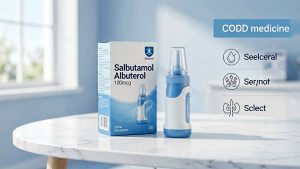

What Is Salbutamol (Albuterol)?
Salbutamol, known as Albuterol in the United States, is a short-acting beta-2 adrenergic receptor agonist (SABA) that serves as one of the most widely prescribed rescue medications for asthma and chronic obstructive pulmonary disease (COPD) worldwide. First approved by the FDA in 1982, salbutamol works by relaxing the smooth muscles lining the airways of the lungs, allowing them to widen and facilitate easier breathing within minutes of administration.
Salbutamol is available through Indian pharmaceutical manufacturers at significantly lower costs compared to brand-name products in Western markets. Generic salbutamol inhalers and tablets produced in WHO-GMP certified facilities in India meet international quality standards while offering affordability to patients globally.
How Does Salbutamol Work?
Salbutamol selectively stimulates beta-2 adrenergic receptors located on bronchial smooth muscle cells. When activated, these receptors trigger a cascade of intracellular events that lead to muscle relaxation and bronchodilation. The onset of action is rapid — typically within 5 to 15 minutes when inhaled — making it the gold standard for acute symptom relief.
The drug’s duration of action lasts approximately 4 to 6 hours, which is why it is classified as a short-acting beta agonist (SABA). Unlike long-acting beta agonists (LABAs) such as salmeterol or formoterol, salbutamol is not intended for daily maintenance therapy but rather for on-demand relief of acute asthma attacks or COPD exacerbations.
FDA-Approved Uses
- Asthma: Relief and prevention of bronchospasm in patients with reversible obstructive airway disease.
- COPD: Maintenance treatment and acute exacerbation management in chronic bronchitis and emphysema.
- Exercise-Induced Bronchoconstriction (EIB): Prevention of airway narrowing triggered by physical activity.
- Off-Label: Hyperkalemia (temporary shift of potassium into cells) in emergency settings under medical supervision.
Dosage Forms and Administration
| Form | Strength | Typical Adult Dose | Frequency |
|---|---|---|---|
| Metered-Dose Inhaler (MDI) | 90 mcg/puff (HFA) | 1-2 puffs | Every 4-6 hours as needed |
| Nebulizer Solution | 0.083%, 0.5% | 2.5 mg (0.5 mL of 0.5% solution) | 3-4 times daily |
| Tablets | 2 mg, 4 mg | 2-4 mg | 3-4 times daily (oral) |
| Oral Syrup | 2 mg/5 mL | 2-4 mg (5-10 mL) | Every 6-8 hours |
Dosage should be individualized based on severity of condition and medical guidance. Pediatric dosing differs by weight and age.
Side Effects and Safety Profile
Salbutamol is generally well-tolerated, but like all medications, it carries potential side effects. Common adverse effects include tremor (especially in the hands), headache, tachycardia (rapid heartbeat), palpitations, muscle cramps, and a feeling of nervousness or anxiety. These effects are dose-dependent and often subside with continued use.
Serious but rare side effects include paradoxical bronchospasm (worsening of wheezing after use), hypokalemia (low potassium levels), cardiac arrhythmias, and allergic reactions. Patients with pre-existing cardiovascular conditions, hypertension, hyperthyroidism, or diabetes should use salbutamol under medical supervision.
⚠️ Medical Disclaimer: This information is for educational purposes only and does not replace professional medical advice. Always consult a healthcare provider before starting or changing any medication regimen.
Salbutamol vs. Other Bronchodilators: Comparison Table
| Drug | Class | Onset | Duration | Primary Use |
|---|---|---|---|---|
| Salbutamol (Albuterol) | SABA | 5-15 min | 4-6 hours | Rescue/acute relief |
| Levalbuterol | SABA (R-isomer) | 5-15 min | 4-6 hours | Rescue (fewer side effects) |
| Salmeterol | LABA | 30-60 min | 12 hours | Maintenance |
| Formoterol | LABA | 5-10 min | 12 hours | Maintenance |
| Tiotropium | LAMA | 30 min | 24+ hours | COPD maintenance |
| Ipratropium | SAMA | 15-30 min | 4-6 hours | COPD rescue |
Generic Salbutamol from India: Affordable Pricing
Indian pharmaceutical manufacturers produce high-quality generic salbutamol inhalers and tablets at a fraction of the cost of branded products in the US, UK, and Europe. The All India Drugs Control Organization and WHO-GMP certifications ensure manufacturing standards are maintained.
Estimated price ranges (Indian generic vs. US brand):
- Salbutamol HFA Inhaler (200 puffs): $9–$17 (Indian generic) vs. $40–$75 (brand Ventolin HFA, US)
- Salbutamol Nebulizer Solution (2.5 mg/3 mL, 20 units): $5–$10 (Indian generic) vs. $25–$50 (US pharmacy)
- Salbutamol Tablets 4 mg (30 tablets): $4–$8 (Indian generic) vs. $18–$35 (US generic)
- Salbutamol Syrup 2 mg/5 mL (100 mL): $3–$7 (Indian generic) vs. $15–$30 (US)
⚠️ Price Variability Note: All prices shown are approximate ranges only and may vary based on manufacturer, pharmacy, location, current exchange rates, and prevailing market conditions. Prices are subject to change.
Major Indian manufacturers include Cipla (Asthalin), Lupin, Zydus Cadila, Intas Pharmaceuticals, and Glenmark — all producing WHO-GMP certified respiratory medications exported globally.
🔗 Explore affordable generic respiratory medications at 984online.com
Frequently Asked Questions (FAQ)
Q: Is salbutamol the same as albuterol?
A: Yes, salbutamol and albuterol are the same drug. Salbutamol is the International Nonproprietary Name (INN) used worldwide, while Albuterol is the United States Adopted Name (USAN). They are chemically identical.
Q: Can I use salbutamol every day?
A: Salbutamol is a rescue inhaler meant for acute symptom relief. Using it more than twice per week suggests inadequate asthma control, and you should consult your doctor for a controller medication review.
Q: How long does a salbutamol inhaler last?
A: A standard 200-puff HFA inhaler typically lasts 1-2 months with occasional use. Each canister should be discarded after the labeled number of actuations, even if it still feels full.
Q: Is generic Indian salbutamol safe?
A: Generic salbutamol produced in WHO-GMP certified Indian facilities undergoes rigorous quality testing for bioequivalence. Many Indian generics supply global markets including the UK, Australia, and parts of Europe.
Q: Can I travel with salbutamol inhalers?
A: Yes, salbutamol inhalers are generally permitted in carry-on luggage. Carry a prescription label and check specific country regulations for controlled substances. Some countries require documentation for inhalers containing HFA propellants.
Safety Precautions and Warnings
- Do not exceed 12 puffs in 24 hours without medical supervision.
- Seek emergency care if salbutamol provides no relief or symptoms worsen rapidly.
- Inform your doctor about any heart conditions, high blood pressure, seizures, or diabetes.
- Salbutamol may interact with beta-blockers, diuretics, digoxin, and MAO inhibitors.
- Pregnancy and breastfeeding: Generally considered safe when benefit outweighs risk — consult your obstetrician.
Clinical Evidence and Guidelines
Salbutamol is recommended as first-line rescue therapy in the Global Initiative for Asthma (GINA) guidelines and the Global Initiative for Chronic Obstructive Lung Disease (GOLD) guidelines. Multiple randomized controlled trials have confirmed its efficacy in reversing acute bronchospasm with a number needed to treat (NNT) of 1.5–2 for symptom relief within 20 minutes.
A 2023 Cochrane review of 32 trials involving over 6,000 patients confirmed that inhaled salbutamol produces significant improvement in FEV1 (forced expiratory volume in 1 second) compared to placebo, with a mean increase of 15–25% within 15 minutes of administration.
Drug Interactions
Salbutamol may interact with several classes of medications. Beta-blockers (including cardioselective agents like atenolol and metoprolol) can antagonize the bronchodilating effects of salbutamol and should be used with caution in patients with asthma. Diuretics (especially loop and thiazide diuretics) may potentiate hypokalemia. MAO inhibitors and tricyclic antidepressants can potentiate the cardiovascular effects of salbutamol. Digoxin toxicity may be increased in the presence of hypokalemia induced by beta-agonists. Patients should always inform their healthcare provider of all medications they are taking before initiating salbutamol therapy.
Storage and Handling
Salbutamol HFA inhalers should be stored at room temperature (20–25°C / 68–77°F) and protected from freezing and direct sunlight. The canister is under pressure — do not puncture, incinerate, or store above 49°C (120°F). Each inhaler should be primed by releasing 4 test sprays into the air before first use, and 2 sprays if not used for more than 7 days. The canister should be discarded after the labeled number of actuations, as the amount of medication delivered may be reduced after this point even if propellant remains.
References
- FDA Prescribing Information: Albuterol Sulfate HFA Inhalation Aerosol. U.S. Food and Drug Administration.
- Global Initiative for Asthma (GINA). Global Strategy for Asthma Management and Prevention, 2024.
- Global Initiative for Chronic Obstructive Lung Disease (GOLD). Pocket Guide to COPD Diagnosis, Management, and Prevention, 2024.
- Cates CJ, Welsh EJ, Rowe BH. Holding chambers (spacers) versus nebulisers for beta-agonist treatment of acute asthma. Cochrane Database of Systematic Reviews. 2023.
- British Thoracic Society/SIGN. British Guideline on the Management of Asthma. 2023.
- UpToDate. Beta-2 Agonists in Asthma: Acute Exacerbations. Wolters Kluwer, 2024.
- National Heart, Lung, and Blood Institute (NHLBI). Expert Panel Report 4: Asthma Management Guidelines.