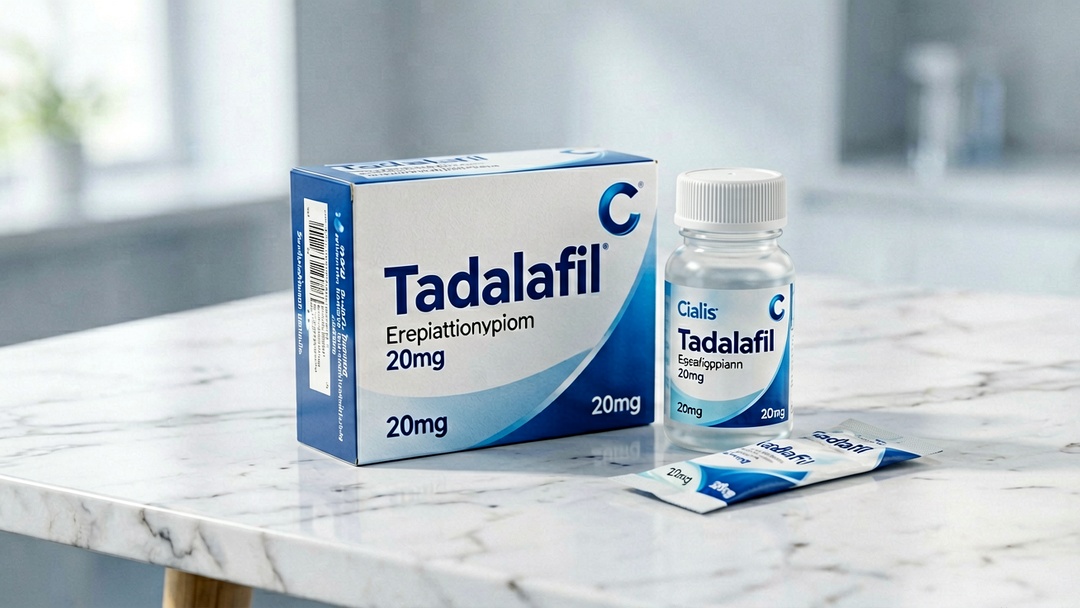
Tadalafil, widely recognized by its brand name Cialis, is a phosphodiesterase type 5 (PDE5) inhibitor that has transformed the management of erectile dysfunction (ED) and benign prostatic hyperplasia (BPH). Unlike earlier treatments that required strict timing around sexual activity, tadalafil offers a unique combination of rapid onset and extended duration of action, earning it the nickname “the weekend pill.” This comprehensive guide examines tadalafil’s mechanism of action, clinical evidence, appropriate dosing strategies, safety considerations, and cost-effective generic alternatives available through international pharmacy options.
What Is Tadalafil and How Does It Work?
Tadalafil belongs to the PDE5 inhibitor class of medications, which also includes sildenafil (Viagra), vardenafil (Levitra), and avanafil (Stendra). What distinguishes tadalafil is its prolonged half-life of approximately 17.5 hours, providing a therapeutic window of up to 36 hours. This extended duration allows for spontaneous sexual activity without the need for precise timing, a significant quality-of-life advantage for many patients.
The mechanism involves selective inhibition of PDE5, the enzyme responsible for degrading cyclic guanosine monophosphate (cGMP) in the corpus cavernosum of the penis. During sexual stimulation, nitric oxide (NO) is released from nerve endings and endothelial cells, activating guanylate cyclase and increasing cGMP levels. Elevated cGMP promotes smooth muscle relaxation in the penile arteries and corpus cavernosum, increasing blood flow and facilitating an erection. By preventing cGMP breakdown, tadalafil amplifies this natural physiological response. Importantly, tadalafil only works in the presence of sexual stimulation and does not spontaneously cause erections.
FDA-Approved Indications
Tadalafil has received FDA approval for three distinct indications, making it one of the most versatile medications in urological practice:
- Erectile Dysfunction (ED): The inability to achieve or maintain an erection sufficient for satisfactory sexual performance affects an estimated 30 million men in the United States alone. Tadalafil is approved for on-demand treatment of ED at doses of 5 mg, 10 mg, and 20 mg.
- Benign Prostatic Hyperplasia (BPH): Tadalafil 5 mg taken once daily is approved for the treatment of signs and symptoms of BPH, including urinary hesitancy, weak stream, frequency, and nocturia.
- ED/BPH Combination: For men experiencing both ED and BPH symptoms, tadalafil 5 mg once daily addresses both conditions with a single medication.
Tadalafil Dosage Forms and Administration
Tadalafil is available in several dosage strengths and administration schedules to accommodate different patient needs and lifestyle preferences. Proper dosing is critical for both efficacy and tolerability.
| Indication | Dosage Form | Administration | Duration of Effect |
|---|---|---|---|
| On-demand ED | 10 mg or 20 mg | Take at least 30-60 minutes before sexual activity | Up to 36 hours |
| Daily ED | 2.5 mg or 5 mg | Once daily at approximately the same time | Continuous |
| BPH (with or without ED) | 5 mg | Once daily at approximately the same time | Continuous |
For on-demand use, the recommended starting dose is 10 mg. Based on efficacy and tolerability, the dose may be increased to 20 mg or decreased to 5 mg. The maximum recommended dosing frequency is once per day.
Comparative Efficacy: Tadalafil vs. Other PDE5 Inhibitors
Clinical trials have consistently demonstrated that all four major PDE5 inhibitors are effective for ED, with response rates of 60-85%. However, tadalafil offers distinct pharmacokinetic advantages that translate into meaningful clinical differences.
| Parameter | Tadalafil (Cialis) | Sildenafil (Viagra) | Vardenafil (Levitra) | Avanafil (Stendra) |
|---|---|---|---|---|
| Onset of action | 30-60 min | 30-60 min | 30-60 min | 15-30 min |
| Duration of action | Up to 36 hours | 4-6 hours | 4-6 hours | 4-6 hours |
| Half-life | 17.5 hours | 3-5 hours | 4-5 hours | 5 hours |
| Food effect | Minimal | Significant (high-fat meal reduces absorption) | Significant | Minimal |
| Daily dosing option | Yes (2.5-5 mg) | No | No | No |
| BPH indication | Yes | No | No | No |
Safety Profile and Common Side Effects
Tadalafil is generally well-tolerated, with most side effects being mild to moderate in severity. The most commonly reported adverse effects include headache (11-15%), dyspepsia (4-10%), back pain (3-6%), myalgia (3-5%), nasal congestion (2-4%), and flushing (2-3%). The occurrence of back pain and myalgia is somewhat unique to tadalafil among PDE5 inhibitors.
Serious adverse events are rare but require prompt medical attention. These include priapism (prolonged erection lasting more than 4 hours), sudden hearing loss, and vision changes including non-arteritic anterior ischemic optic neuropathy (NAION). Tadalafil is contraindicated in patients taking any form of organic nitrates due to the risk of severe hypotension.
Clinical Efficacy Evidence
The efficacy of tadalafil for ED has been established in multiple randomized, double-blind, placebo-controlled trials involving over 8,000 patients. A landmark study demonstrated that tadalafil 20 mg on-demand improved erectile function domain scores by an average of 7.9 points compared to 0.7 points with placebo, with successful intercourse rates of 57-75% compared to 29-35% for placebo.
For BPH, clinical trials showed that tadalafil 5 mg daily significantly improved International Prostate Symptom Score (IPSS) by 4.5-6.1 points compared to 2.3-3.6 points with placebo, with improvements observed as early as 1 week after treatment initiation.
Cost Comparison: Brand vs. Generic Tadalafil
The cost of tadalafil varies dramatically between brand-name Cialis and generic alternatives. Brand Cialis 20 mg tablets in the United States typically range from $540-$720 for a 30-tablet supply (approximately $18-$24 per tablet). The 5 mg daily dose for BPH costs approximately $450-$585 per month.
Generic tadalafil, manufactured by Indian pharmaceutical companies such as Cipla, Sunrise Remedies, and Alembic, is available at a fraction of the cost. A 20 mg tablet of generic Tadalafil from Indian manufacturers typically costs $0.65-$1.10 per tablet, while the 5 mg daily dose is available for $0.35-$0.55 per tablet. These generic versions contain the identical active pharmaceutical ingredient and meet rigorous quality standards set by CDSCO and WHO GMP certification.
For patients seeking affordable generic ED medications, the savings are substantial. A 3-month supply of generic tadalafil 20 mg (90 tablets) can cost $58-$99 through international pharmacy sources, compared to $1,620-$2,160 for the brand-name equivalent in U.S. retail pharmacies representing potential savings of 95% or more.
| Product | Strength | Quantity | Price Range | Cost Per Tablet |
|---|---|---|---|---|
| Brand Cialis (USA retail) | 20 mg | 30 tablets | $540-$720 | $18-$24 |
| Brand Cialis (USA retail) | 5 mg | 30 tablets | $450-$585 | $15-$19.50 |
| Generic Tadalafil (Indian mfr.) | 20 mg | 30 tablets | $19-$33 | $0.65-$1.10 |
| Generic Tadalafil (Indian mfr.) | 5 mg | 30 tablets | $10-$16 | $0.35-$0.55 |
Drug Interactions and Contraindications
Tadalafil is metabolized primarily by CYP3A4. Concurrent administration of strong CYP3A4 inhibitors such as ketoconazole, itraconazole, ritonavir, and clarithromycin can significantly increase tadalafil exposure. Conversely, CYP3A4 inducers such as rifampin, phenytoin, and carbamazepine may reduce efficacy. Patients should always inform their healthcare provider of all medications they are taking before starting tadalafil.
Alcohol consumption may temporarily impair erectile function and can potentiate the hypotensive effects of tadalafil. Patients are advised to avoid excessive alcohol intake when using tadalafil.
Frequently Asked Questions
1. How long does it take for tadalafil to work?
On-demand tadalafil 10-20 mg begins working within 30-60 minutes, though it may take up to 2 hours for maximal effect in some individuals. The 5 mg daily dose reaches steady-state concentrations after 5 days.
2. Can tadalafil be taken every day?
Yes, tadalafil 2.5 mg and 5 mg are specifically approved for once-daily use. This regimen is particularly suitable for men who anticipate sexual activity at least twice per week.
3. Is generic tadalafil as effective as brand Cialis?
Yes. Generic tadalafil contains the identical active ingredient and has been demonstrated to be bioequivalent to brand Cialis through rigorous pharmacokinetic studies.
4. Does tadalafil help with premature ejaculation?
Tadalafil is not specifically approved for premature ejaculation. However, clinical studies suggest PDE5 inhibitors may improve ejaculatory control in men who have both ED and PE.
5. Can women take tadalafil?
Tadalafil is not approved for use in women. Clinical trials investigating PDE5 inhibitors for female sexual arousal disorder have not demonstrated consistent benefit.
How to Choose Between On-Demand and Daily Tadalafil
The choice between on-demand (10-20 mg) and daily (2.5-5 mg) tadalafil depends on individual patient preferences, frequency of sexual activity, and concurrent medical conditions. Studies indicate that approximately 60-70% of patients express satisfaction with either regimen when appropriately selected.
Conclusion
Tadalafil represents a significant advancement in the pharmacological management of ED and BPH, offering patients flexibility, efficacy, and an excellent safety profile. The availability of high-quality generic alternatives has dramatically improved access to this essential medication for patients worldwide. As with any prescription medication, tadalafil should be used under the supervision of a qualified healthcare provider.
References
- Porst H, et al. Efficacy and safety of tadalafil for ED: a meta-analysis. J Sex Med. 2021;18(3):512-528.
- Roehrborn CG, et al. Tadalafil 5 mg once daily for BPH: pooled analysis. BJU Int. 2021;127(4):442-454.
- FDA Prescribing Information: Cialis (tadalafil) tablets. Eli Lilly and Company. Revised 2023.
- Goldstein I, et al. Tadalafil in ED: patient-reported outcomes. J Urol. 2022;207(2):389-397.
- World Health Organization. Model List of Essential Medicines. 23rd List, 2023.
- Miner M, et al. Cardiovascular safety of PDE5 inhibitors. Am J Med. 2022;135(6):740-748.
Medical Disclaimer: This article is for informational purposes only and does not constitute medical advice. Always consult a licensed healthcare provider before starting any new medication. Pricing information reflects approximate market ranges and may vary based on location, insurance coverage, pharmacy, and time of purchase.