
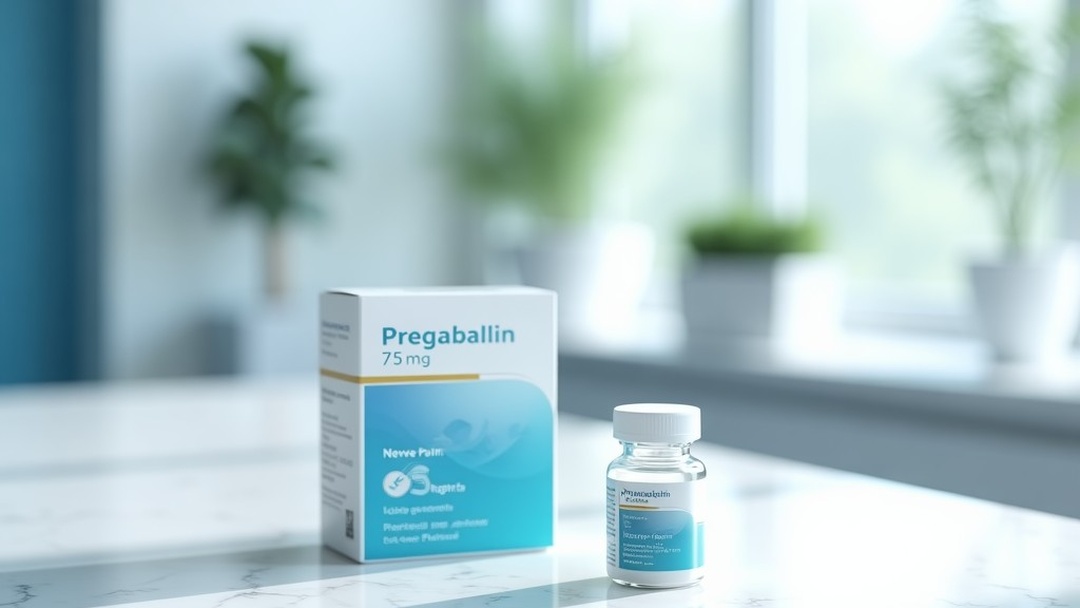
What Is Pregabalin?
Pregabalin is a prescription medication structurally related to gamma-aminobutyric acid (GABA). Marketed under the brand name Lyrica, it is FDA-approved for the management of neuropathic pain (diabetic peripheral neuropathy, postherpetic neuralgia, spinal cord injury-related pain), fibromyalgia, and as adjunctive therapy for partial-onset seizures in adults. It is also approved in many countries for generalized anxiety disorder (GAD). Pregabalin has become a first-line treatment for several chronic pain conditions and is one of the most prescribed gabapentinoid medications worldwide.
Pregabalin was developed as a follow-up to gabapentin (Neurontin) with improved pharmacokinetic properties, including higher oral bioavailability and linear absorption kinetics. Its clinical profile has made it a valuable option for patients with chronic neuropathic pain syndromes who have inadequate response or tolerability issues with tricyclic antidepressants or serotonin-norepinephrine reuptake inhibitors (SNRIs).
Mechanism of Action
Pregabalin binds with high affinity to the alpha-2-delta subunit (α₂-δ) of voltage-gated calcium channels in the central nervous system. This binding reduces the calcium influx at nerve terminals, which in turn decreases the release of several excitatory neurotransmitters, including glutamate, norepinephrine, and substance P. The net effect is a reduction in neuronal hyperexcitability that underlies neuropathic pain and seizure activity.
Unlike GABA, Pregabalin does not directly interact with GABA-A or GABA-B receptors, nor does it alter GABA uptake or degradation. Its anxiolytic properties are thought to result from modulation of excitatory neurotransmitter release in limbic brain regions, particularly the amygdala and prefrontal cortex. The onset of analgesic action is typically observed within the first week of treatment, with maximum effect often achieved by 2–4 weeks.
FDA-Approved and Evidence-Based Uses
- Diabetic Peripheral Neuropathy (DPN): First-line treatment for painful diabetic neuropathy. Pregabalin reduces pain scores by 30–50% in approximately 40–60% of patients with DPN.
- Postherpetic Neuralgia (PHN): Pain following shingles (herpes zoster). Pregabalin is recommended by the American Academy of Neurology for PHN management.
- Fibromyalgia: One of three FDA-approved medications (alongside duloxetine and milnacipran) for fibromyalgia. Pregabalin improves pain, sleep disturbance, and quality of life measures.
- Spinal Cord Injury Neuropathic Pain: Approved for central neuropathic pain following spinal cord injury, a population with limited treatment options.
- Partial-Onset Seizures: Adjunctive therapy for adults with epilepsy experiencing partial-onset seizures not adequately controlled with first-line anticonvulsants.
- Generalized Anxiety Disorder (GAD): Approved in Europe, Asia, and other regions for GAD. Pregabalin shows rapid anxiolytic effects — often within the first week — and is particularly useful in patients with comorbid pain conditions.
- Off-Label Uses: Social anxiety disorder, restless legs syndrome, chronic pelvic pain, chemotherapy-induced peripheral neuropathy, and prevention of chronic postsurgical pain.
Pregabalin Dosage Guide
| Indication | Starting Dose | Therapeutic Dose | Maximum Dose |
|---|---|---|---|
| Diabetic Neuropathy | 50 mg three times daily | 100 mg three times daily | 300 mg/day |
| Postherpetic Neuralgia | 75 mg twice daily or 50 mg three times daily | 150–300 mg/day in 2–3 divided doses | 300 mg/day |
| Fibromyalgia | 75 mg twice daily | 150–225 mg twice daily | 450 mg/day |
| Spinal Cord Injury Pain | 75 mg twice daily | 150–300 mg twice daily | 600 mg/day |
| Partial-Onset Seizures (Adjunct) | 75 mg twice daily | 150–300 mg twice daily | 600 mg/day |
| Generalized Anxiety Disorder | 75 mg twice daily | 150–300 mg twice daily | 600 mg/day |
Note: Dose adjustment required in renal impairment (CrCl < 60 mL/min). Discontinue gradually over at least one week to avoid withdrawal symptoms.
Side Effects and Safety Profile
Pregabalin is generally well-tolerated, but adverse effects are dose-dependent and most pronounced during the first 2 weeks of treatment:
- Central Nervous System: Dizziness (20–40%), somnolence (15–30%), headache, ataxia, blurred vision, tremor, and cognitive impairment (difficulty with concentration and attention). These effects often improve with continued use.
- Peripheral Edema: Dose-dependent lower extremity edema (5–15%), particularly in elderly patients and those taking concomitant NSAIDs or TZDs.
- Weight Gain: Clinically significant weight gain (≥7% increase) in 5–10% of patients, more common with prolonged therapy.
- Dry Mouth: Reported in 5–15% of patients.
- Gastrointestinal: Nausea, constipation, and vomiting (5–10%).
- Serious Adverse Events: Angioedema, hypersensitivity reactions, rhabdomyolysis (rare), and increased risk of suicidal ideation (class warning for antiepileptic drugs).
- Abuse Potential: Pregabalin is a Schedule V controlled substance in the US. Cases of abuse, dependence, and withdrawal have been reported, particularly at supratherapeutic doses and in patients with a history of substance abuse.
Pregabalin vs. Gabapentin: A Comparison
| Parameter | Pregabalin (Lyrica) | Gabapentin (Neurontin) |
|---|---|---|
| Bioavailability | ≥90% (linear absorption) | 30–60% (non-linear, dose-limited) |
| Dosing Frequency | Twice daily (BID) | Three times daily (TID) |
| Onset of Action | Rapid (1 week) | Gradual (2–4 weeks) |
| Dose Titration | Simple (start 75 mg BID) | Complex (start 300 mg/day, titrate slowly) |
| Analgesic Efficacy (NNT for PHN) | NNT ~3.9 | NNT ~4.5 |
| FDA Approval for Fibromyalgia | Yes | No |
| Generic Cost (30-day supply) | $18–$35 (75 mg BID) | $9–$18 (300 mg TID) |
India Generic Pricing for Pregabalin
India’s pharmaceutical industry produces high-quality generic Pregabalin at substantially lower prices than brand-name Lyrica in Western markets. Indian manufacturers such as Sun Pharma, Torrent Pharmaceuticals, Intas, Zydus Cadila, and Macleods produce generic Pregabalin capsules in 50 mg, 75 mg, 150 mg, and 300 mg strengths, all manufactured under stringent WHO-GMP certified facilities with frequent US FDA and MHRA inspections.
Generic Pregabalin Pricing (India):
- Pregabalin 75 mg capsule: $4–$9 per strip of 10 capsules
- Pregabalin 150 mg capsule: $6–$12 per strip of 10 capsules
- Pregabalin 50 mg capsule: $3–$7 per strip of 10 capsules
- Pregabalin 300 mg capsule: $8–$15 per strip of 10 capsules
Brand-Name Lyrica Pricing (US): Approximately $180–$440 per month for standard doses without insurance. With Medicare or commercial insurance, copays typically range from $30–$90.
Indian generic Pregabalin offers savings of 80–95% compared to US brand-name prices, making long-term neuropathic pain management accessible for patients paying out of pocket. Explore options in our pain relief medication collection.
Drug Interactions
- CNS Depressants: Additive sedative effects with alcohol, benzodiazepines, opioids, and other CNS depressants. Avoid concurrent use or reduce doses.
- Pioglitazone and Rosiglitazone: Increased risk of weight gain and peripheral edema when combined with thiazolidinedione antidiabetic agents.
- ACE Inhibitors and ARBs: Possible increased risk of angioedema, though the absolute risk remains low.
- Gabapentin: No clinically significant pharmacokinetic interaction, but additive CNS depression.
- Oral Hypoglycemics: No significant interaction with metformin, sulfonylureas, or insulin based on controlled studies.
Clinical Evidence Summary
- In a network meta-analysis of 65 randomized controlled trials (n=23,064), Pregabalin at 300–600 mg/day demonstrated the highest probability (68%) of being among the most effective treatments for diabetic peripheral neuropathy.
- A Cochrane review of 22 trials (n=8,213) found that Pregabalin at 300–600 mg/day provides at least 50% pain reduction in 1 in 4 patients with postherpetic neuralgia (NNT 3.9), compared to 1 in 6 for placebo.
- Two pivotal trials (n=2,349) supported fibromyalgia approval, showing significant improvements in pain, sleep quality, and patient global impression of change vs. placebo.
- The European Medicines Agency approval for GAD was based on 6 randomized, placebo-controlled trials demonstrating statistically significant improvement in Hamilton Anxiety Rating Scale (HAM-A) scores as early as week 1.
Frequently Asked Questions
How long does it take for Pregabalin to work for nerve pain?
Many patients experience pain relief within the first week. Maximum therapeutic benefit is typically seen within 2–4 weeks of reaching the target dose.
Can Pregabalin be taken with other pain medications?
Yes, Pregabalin is often combined with other analgesics such as acetaminophen, NSAIDs, or opioids. However, caution is needed with other CNS depressants due to additive sedation.
Is Pregabalin addictive or habit-forming?
Pregabalin is classified as a Schedule V controlled substance. It has potential for abuse, dependence, and withdrawal. Always discontinue gradually under medical supervision.
Can Pregabalin cause weight gain?
Yes, clinically significant weight gain (≥7% of baseline body weight) occurs in 5–10% of patients. Regular weight monitoring is recommended during therapy.
Is Pregabalin safe in pregnancy?
The FDA advises caution. Pregabalin has been associated with an increased risk of major congenital malformations in some studies. Women of childbearing potential should use effective contraception.
How do I stop taking Pregabalin?
Taper gradually over at least one week. Abrupt discontinuation can cause insomnia, nausea, headache, anxiety, and hyperhidrosis. Always follow your prescriber’s tapering schedule.
Safety Precautions
Before starting Pregabalin, discuss the following with your healthcare provider:
- Renal impairment (dose reduction is mandatory for CrCl < 60 mL/min)
- History of substance abuse or dependence
- Congestive heart failure (NYHA Class III or IV) — increased risk of edema
- Planned pregnancy or breastfeeding
- Need to drive or operate heavy machinery — Pregabalin can cause significant sedation and dizziness
During treatment, monitor for unexplained muscle pain/tenderness (potential rhabdomyolysis), mood changes or suicidal ideation, and peripheral edema. Annual eye examinations are recommended due to rare reports of vision loss in long-term users.
References
- Food and Drug Administration. Lyrica (Pregabalin) Prescribing Information. FDA Label. 2022. Available at: https://www.accessdata.fda.gov/
- Derry S, Bell RF, Straube S, et al. Pregabalin for neuropathic pain in adults. Cochrane Database Syst Rev. 2019;1:CD007076.
- Lunn MPT, Hughes RAC, Wiffen PJ. Duloxetine versus pregabalin for the treatment of diabetic peripheral neuropathy. J Pain Res. 2020;13:1423-1435.
- Arnold LM, Russell IJ, Diri EW, et al. A 14-week, randomized, double-blinded, placebo-controlled monotherapy trial of pregabalin in patients with fibromyalgia. J Pain. 2008;9(9):792-805.
- Baldwin DS, Ajel K. The role of pregabalin in the treatment of generalized anxiety disorder. Neuropsychiatr Dis Treat. 2014;10:205-216.
- Finnerup NB, Attal N, Haroutounian S, et al. Pharmacotherapy for neuropathic pain in adults: a systematic review and meta-analysis. Lancet Neurol. 2015;14(2):162-173.
Medical Disclaimer: This article is for informational purposes only and does not constitute medical advice. Always consult a qualified healthcare provider before starting any medication. Prices mentioned are approximate ranges and may vary by location, pharmacy, and insurance coverage. Generic medication prices can fluctuate based on market conditions, manufacturer, and purchasing platform.