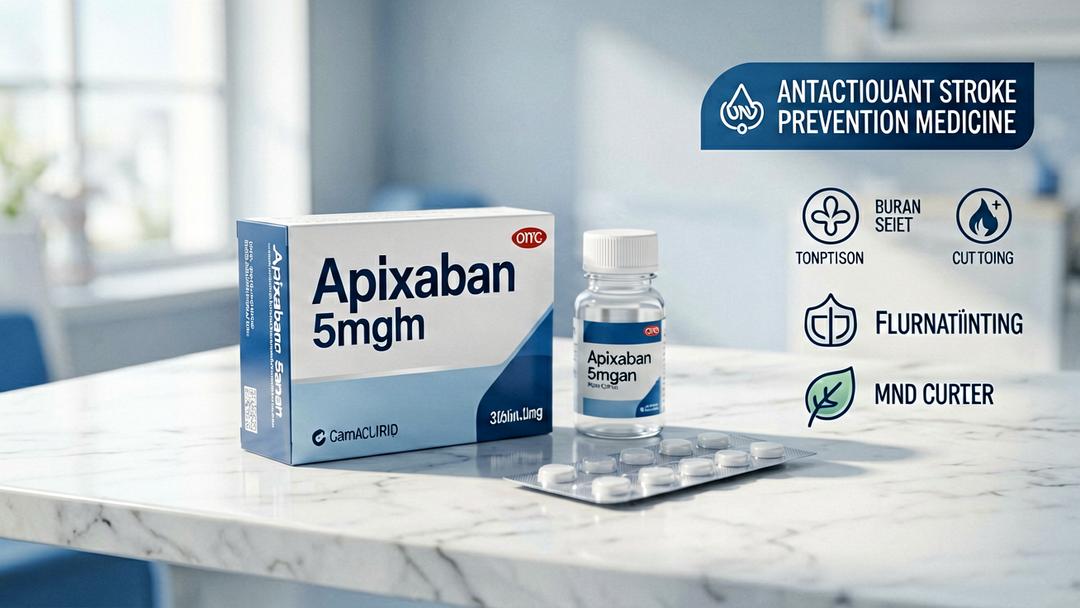
Apixaban is an oral anticoagulant (blood thinner) belonging to the direct oral anticoagulant (DOAC) class. Sold under the brand name Eliquis, it is prescribed to reduce the risk of stroke and systemic embolism in patients with non-valvular atrial fibrillation, to treat and prevent deep vein thrombosis (DVT) and pulmonary embolism (PE), and to prevent venous thromboembolism after hip or knee replacement surgery. This guide explains how apixaban works, who it helps, the correct dosage, side effects, how it compares with warfarin, typical treatment costs, and the safety precautions every patient should know.
What Is Apixaban?
Apixaban is a small-molecule inhibitor of factor Xa, one of the key enzymes in the coagulation cascade. By blocking factor Xa, it interrupts the conversion of prothrombin to thrombin, reducing the formation of fibrin clots. Unlike older anticoagulants such as warfarin, apixaban has a predictable dose-response, a rapid onset of action, and does not require routine blood-monitoring (INR checks). It is available as film-coated tablets in 2.5 mg and 5 mg strengths. Apixaban is taken by mouth, usually twice daily, and reaches peak concentrations within three to four hours.
Mechanism of Action
Factor Xa sits at the convergence point of the intrinsic and extrinsic coagulation pathways. Once activated, it converts prothrombin (factor II) into thrombin (factor IIa), which then converts fibrinogen into fibrin — the mesh that stabilises a clot. Apixaban binds reversibly and selectively to the active site of factor Xa, suppressing both free and clot-bound enzyme activity. Because it targets a single, pivotal step, apixaban provides effective anticoagulation with a lower reliance on multiple co-factors compared with vitamin-K antagonists. Roughly half of the drug is excreted renally and half hepatically, which informs dosing in organ impairment.
Approved Uses
- Non-valvular atrial fibrillation (NVAF): to lower the risk of stroke and systemic embolism in patients with at least one additional risk factor such as age over 65, diabetes, hypertension, or prior stroke.
- Deep vein thrombosis (DVT) and pulmonary embolism (PE): treatment of acute events and secondary prevention of recurrence.
- VTE prophylaxis: prevention of venous thromboembolism in adults after elective hip or knee replacement surgery.
Recommended Dosage
| Indication | Standard Dose | Frequency |
|---|---|---|
| NVAF (most adults) | 5 mg | Twice daily |
| NVAF (≥2 of: age ≥80, weight ≤60 kg, serum creatinine ≥1.5 mg/dL) | 2.5 mg | Twice daily |
| DVT/PE treatment (after 7 days of parenteral anticoagulant) | 5 mg | Twice daily |
| VTE prophylaxis after knee replacement | 2.5 mg | Twice daily for 12 days |
| VTE prophylaxis after hip replacement | 2.5 mg | Twice daily for 35 days |
Apixaban can be taken with or without food. Patients should not crush or chew the tablets. Dose adjustments are required in patients with severe renal impairment, and the drug is generally avoided in those with prosthetic heart valves or severe mitral stenosis.
Clinical Evidence
Two large randomised trials underpin apixaban’s role. In ARISTOTLE (18,201 patients with atrial fibrillation), apixaban 5 mg twice daily was superior to warfarin for preventing stroke or systemic embolism (1.27% vs 1.60% per year; about a 21% relative risk reduction) and produced significantly less major bleeding (2.13% vs 3.09% per year). In AVERROES, apixaban reduced stroke risk versus aspirin in patients unsuitable for warfarin. For VTE treatment, the AMPLIFY trial showed that apixaban alone (10 mg twice daily for 7 days, then 5 mg twice daily) was non-inferior to standard heparin plus warfarin while causing less major bleeding. These data support apixaban as a front-line option where appropriate.
Drug Interactions
Apixaban is a substrate of CYP3A4 and P-glycoprotein. Strong inhibitors such as ketoconazole, itraconazole, ritonavir, and clarithromycin raise drug levels and increase bleeding risk — they should be avoided or the dose reduced. Strong inducers including rifampin, phenytoin, carbamazepine, and St John’s wort lower levels and may reduce effectiveness. Combining apixaban with other anticoagulants, antiplatelet drugs (aspirin, clopidogrel), NSAIDs, or SSRIs/SNRIs adds bleeding risk and should be supervised by a clinician.
Side Effects and Safety
The most common adverse reaction is bleeding, which can range from minor bruising and nosebleeds to serious gastrointestinal or intracranial haemorrhage. Other reported effects include nausea, anaemia, and mild skin reactions. Because apixaban has no universally available rapid reversal agent, any unusual bleeding, black stools, coughing up blood, or severe headache should prompt urgent medical attention. Patients should carry a medication alert card and inform every clinician and dentist about their anticoagulant use.
Apixaban vs Warfarin
| Feature | Apixaban (DOAC) | Warfarin (VKA) |
|---|---|---|
| Routine blood monitoring | Not required | Regular INR checks |
| Onset of action | Rapid (hours) | Delayed (days) |
| Dietary restrictions | Minimal | Vitamin-K limited |
| Major bleeding in NVAF (ARISTOTLE) | ~2.1% per year | ~3.1% per year |
| Drug–food interactions | Fewer | Numerous |
In the pivotal ARISTOTLE trial, apixaban reduced the risk of stroke or systemic embolism and caused significantly fewer major bleeding events than warfarin, while all-cause mortality was also lower in the apixaban group.
Practical Patient Tips
- Take doses at roughly 12-hour intervals to keep levels steady.
- If a dose is missed, take it as soon as remembered on the same day; never double up.
- Limit alcohol, which can raise bleeding or fall risk, especially in older adults.
- Store at room temperature away from moisture and keep out of children’s reach.
- Inform surgeons and dentists before any procedure so the drug can be paused safely.
India Generic Pricing (±10% ranges)
Generic apixaban 5 mg is manufactured by multiple Indian pharmaceutical companies. A typical monthly supply (60 tablets, 5 mg twice daily) generally falls in the range of $20–$45, depending on manufacturer and pack size. By contrast, the US-brand equivalent (Eliquis) for the same monthly supply is typically priced in the range of $490–$620 before any insurance or copay adjustments. Prices vary by pharmacy, country, and import regulations, so patients should confirm current local pricing with a licensed supplier.
Explore more cardiovascular and anticoagulation topics in our cardiovascular treatment archive or browse the full pharmaceuticals library on 984online.com.
Frequently Asked Questions
1. Can I stop apixaban suddenly?
No. Stopping an anticoagulant without medical guidance can sharply increase the risk of stroke or clot formation. Always consult your prescriber before discontinuing.
2. Does apixaban affect the INR?
Apixaban does not require INR monitoring. Routine coagulation tests are not useful for dose adjustment, though specific anti-Xa assays can measure drug levels in select situations.
3. Can I take it with aspirin?
Combining apixaban with aspirin or other antiplatelet drugs raises bleeding risk. Concomitant use should only occur when clearly indicated and supervised by a physician.
4. What should I do before surgery or dental work?
Inform your surgeon or dentist that you take apixaban. It is usually paused for a defined interval before invasive procedures to reduce bleeding risk, then restarted as directed.
Who Should Avoid Apixaban
Apixaban is contraindicated in patients with active pathological bleeding, severe hypersensitivity, or mechanical prosthetic heart valves. Caution is required in those with renal impairment, prior gastrointestinal bleeding, or concurrent use of strong P-gp/CYP3A4 inhibitors. A formal risk-benefit discussion with a prescriber is essential before starting therapy.
Managing Missed Doses, Overdose, and Switching Anticoagulants
If a dose of apixaban is missed, take it as soon as it is remembered on the same day; if the next dose is due, skip the missed one and resume the normal schedule — never double up. In suspected overdose, the main risk is bleeding, and the patient should seek emergency care; activated charcoal may be considered soon after ingestion, and supportive measures including transfusion are the mainstays because no universal reversal agent is reliably available at every hospital. When switching from warfarin to apixaban, warfarin should be stopped and apixaban started only once the INR falls below 2.0. When switching from apixaban to warfarin, overlap is needed until the INR is in the therapeutic range, because apixaban’s anticoagulant effect overlaps the early warfarin period.
Bleeding precautions in daily life include using a soft toothbrush, electric razors over blades, and avoiding contact sports with high injury risk. Patients should inform every clinician, dentist, and pharmacist that they are anticoagulated, and carry an alert card. Routine dental work usually proceeds without stopping the drug, while major surgery typically requires a defined pause guided by renal function.
References
- U.S. FDA. Eliquis (apixaban) prescribing information. Food and Drug Administration.
- Granger CB, et al. Apixaban versus warfarin in patients with atrial fibrillation. N Engl J Med. 2011;365(11):981-992 (ARISTOTLE).
- American College of Cardiology / AHA guideline for management of patients with atrial fibrillation.
- UpToDate. Apixaban: Drug information and uses in atrial fibrillation.
- European Society of Cardiology guidelines on atrial fibrillation management.
Medical disclaimer: This article is for informational purposes only and does not constitute medical advice. Treatment decisions, dosing, and safety monitoring must be made with a licensed healthcare provider. Prices are approximate ranges and vary by supplier, country, and regulation; they are not a substitute for a formal quotation.