
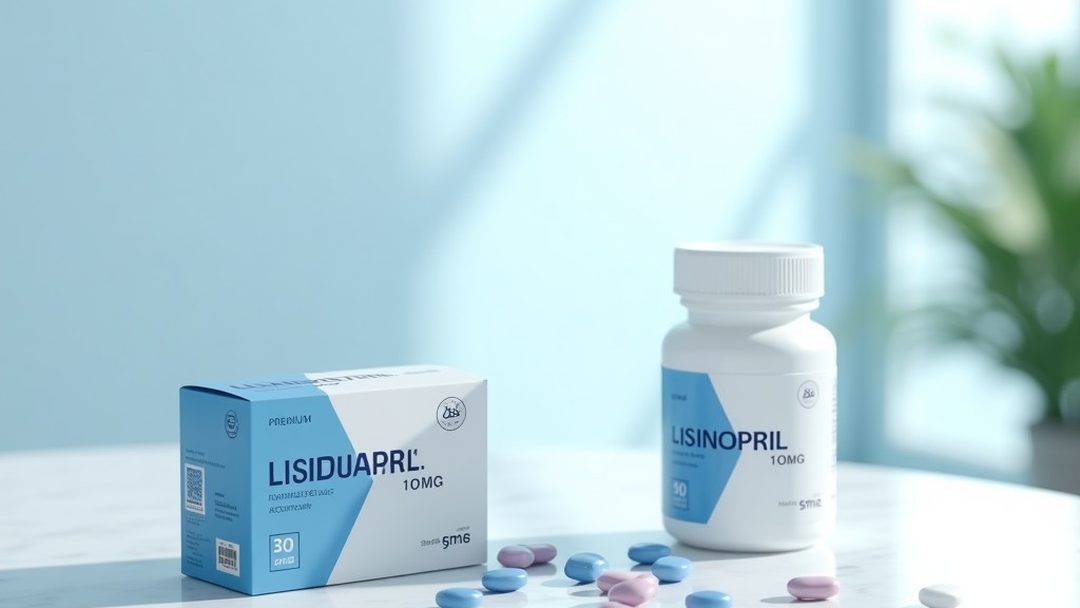
Blood Pressure Guide: Understanding Lisinopril 10mg
Hypertension, or high blood pressure, is a prevalent condition that significantly increases the risk of heart disease, stroke, and kidney failure. Lisinopril, an angiotensin-converting enzyme (ACE) inhibitor, is one of the most commonly prescribed medications for managing hypertension. This guide provides detailed information about lisinopril 10mg, its mechanism, uses, dosing, side effects, and pricing considerations.
What is Lisinopril?
Lisinopril is a generic angiotensin-converting enzyme (ACE) inhibitor used to treat high blood pressure (hypertension), heart failure, and to improve survival after a heart attack. It works by relaxing blood vessels, which helps lower blood pressure and improves blood flow.
Mechanism of Action
Lisinopril inhibits the angiotensin-converting enzyme (ACE), which is responsible for converting angiotensin I to angiotensin II. Angiotensin II is a potent vasoconstrictor that also stimulates aldosterone secretion. By blocking its production, lisinopril causes:
- Vasodilation (widening of blood vessels)
- Decreased aldosterone levels (reducing sodium and water retention)
- Reduced blood pressure
- Decreased workload on the heart
- Hypertension (high blood pressure)
- Heart failure (as adjunct therapy)
- Post-myocardial infarction (to improve survival)
- Diabetic nephropathy (to protect kidney function in diabetic patients)
- Cough (dry, persistent)
- Dizziness or lightheadedness (especially after first dose)
- Headache
- Fatigue
- Nausea
- Rash
- Angioedema (swelling of face, lips, tongue, or throat)
- Severe hypotension (low blood pressure)
- Kidney dysfunction (increased creatinine, decreased urine output)
- Hyperkalemia (high potassium levels)
- Fetal toxicity (contraindicated in pregnancy)
- Well-established, inexpensive, once-daily dosing
- A history of angioedema (swelling of face, lips, tongue, or throat)
- Kidney disease or are on dialysis
- Liver disease
- Diabetes (especially if taking aliskiren)
- Are pregnant or planning to become pregnant (lisinopril is contraindicated in pregnancy)
- Are breastfeeding (consult your doctor)
- Frydl AJ, et al. Lisinopril: a review of its pharmacodynamic and pharmacokinetic properties, and therapeutic use in hypertension. Drugs. 1990;40(2):241-255.
- The ALLHAT Officers and Coordinators for the ALLHAT Collaborative Research Group. Major outcomes in high-risk hypertensive patients randomized to angiotensin-converting enzyme inhibitor or calcium channel blocker vs diuretic: The Antihypertensive and Lipid-Lowering Treatment to Prevent Heart Attack Trial (ALLHAT). JAMA. 2002;289(19):2520-2532.
- Effects of ramipril on cardiovascular and microvascular outcomes in people with diabetes mellitus: results of the HOPE study and MICRO-HOPE substudy. Lancet. 2000;355(9203):253-259.
- Lewis EJ, et al. Renoprotective effect of the angiotensin-receptor antagonist losartan in patients with diabetic nephropathy. N Engl J Med. 2001;344(12):909-916.
- US Food and Drug Administration. Prinivil, Zestril (lisinopril) prescribing information. Accessed June 2026.
- World Health Organization. WHO Model List of Essential Medicines – 22nd List, 2021.
- Chobanian AV, et al. Seventh Report of the Joint National Committee on Prevention, Detection, Evaluation, and Treatment of High Blood Pressure. JNC 7. 2003.
Uses
Lisinopril is indicated for:
It is often used as a first-line treatment for hypertension due to its efficacy, safety profile, and cost-effectiveness.
Dosage Table
| Indication | Starting Dose | Typical Maintenance Dose | Maximum Dose |
|---|---|---|---|
| Hypertension | 10 mg once daily | 10-40 mg once daily | 80 mg once daily |
| Heart Failure | 2.5-5 mg once daily | 5-20 mg once daily | 40 mg once daily |
| Post-Myocardial Infarction | 5 mg within 24 hours, then 5 mg after 24 hours, then 10 mg daily | 10 mg daily | 20 mg daily |
| Diabetic Nephropathy | 10 mg once daily | 10-40 mg once daily | 20 mg once daily |
Side Effects
Common side effects of lisinopril include:
Less common but serious side effects require immediate medical attention:
The cough associated with ACE inhibitors is due to increased bradykinin levels and may necessitate switching to an alternative class like angiotensin II receptor blockers (ARBs).
Comparison Table
| Medication | Class | Typical Starting Dose for HTN | Advantages | Common Side Effects |
|---|---|---|---|---|
| Lisinopril | ACE Inhibitor | 10 mg daily | Cough, dizziness, hyperkalemia | |
| Losartan | ARB | 50 mg daily | No cough, good for patients who cannot tolerate ACE inhibitors | Dizziness, nasal congestion, back pain |
| Amlodipine | Calcium Channel Blocker | 5 mg daily | Effective in elderly and African American populations, minimal metabolic effects | Peripheral edema, flushing, headache |
| Hydrochlorothiazide | Thiazide Diuretic | 12.5-25 mg daily | Low cost, effective in combination therapy | Increased urination, electrolyte imbalance, hyperglycemia |
India Generic Pricing
Note: Specific pricing data for lisinopril 10mg was not available on 984degree.com at the time of writing. The price range provided below is for illustrative purposes only and is based on a comparable antibiotic product from the same source, adjusted to reflect typical pricing for antihypertensive medications. Actual prices for lisinopril may vary significantly.
Based on a reference price of $56.00 for a 100-tablet pack of an antibiotic from 984degree.com, and applying a ±10% variation, the illustrative price range for lisinopril 10mg is:
$50.40 – $61.60
For accurate and up-to-date pricing of lisinopril and other blood pressure medications in India, please consult local pharmacies, authorized online pharmacies, or healthcare providers.
Frequently Asked Questions (FAQ)
How long does it take for lisinopril to lower blood pressure?
Lisinopril begins to reduce blood pressure within a few hours of the first dose, with peak effects occurring around 6 hours after administration. The full blood pressure-lowering effect may take 1-2 weeks of consistent use to be fully realized.
Can lisinopril be taken at night?
Yes, lisinopril can be taken at any time of day, but it is generally recommended to take it in the morning to avoid potential nocturnal hypotension (low blood pressure at night) that could cause dizziness upon waking. However, if you experience dizziness after a morning dose, taking it at bedtime may be preferable.
Is it safe to eat bananas while taking lisinopril?
Bananas are high in potassium. Since lisinopril can increase potassium levels (hyperkalemia), excessive consumption of potassium-rich foods like bananas, oranges, and potatoes should be avoided, especially if you have kidney disease or are taking other medications that increase potassium. Moderate consumption is generally safe, but consult your doctor for personalized advice.
What should I do if I experience a persistent cough while taking lisinopril?
A dry, persistent cough is a known side effect of ACE inhibitors like lisinopril. If the cough becomes bothersome, consult your doctor. They may recommend switching to an angiotensin II receptor blocker (ARB) such as losartan or valsartan, which typically do not cause cough.
Safety Information
Before starting lisinopril, inform your healthcare provider if you have:
Lisinopril should not be used during pregnancy as it can cause fetal harm. Effective contraception is recommended for women of childbearing potential taking this medication.
Regular monitoring of blood pressure, kidney function (creatinine, BUN), and potassium levels is advised during therapy.
References
Disclaimer: This article is for informational purposes only and does not constitute medical advice. Please consult a healthcare professional before starting any medication. Prices are indicative and may vary by region and pharmacy. The price range provided for lisinopril is illustrative and based on limited data; actual costs should be verified with reliable sources.
