
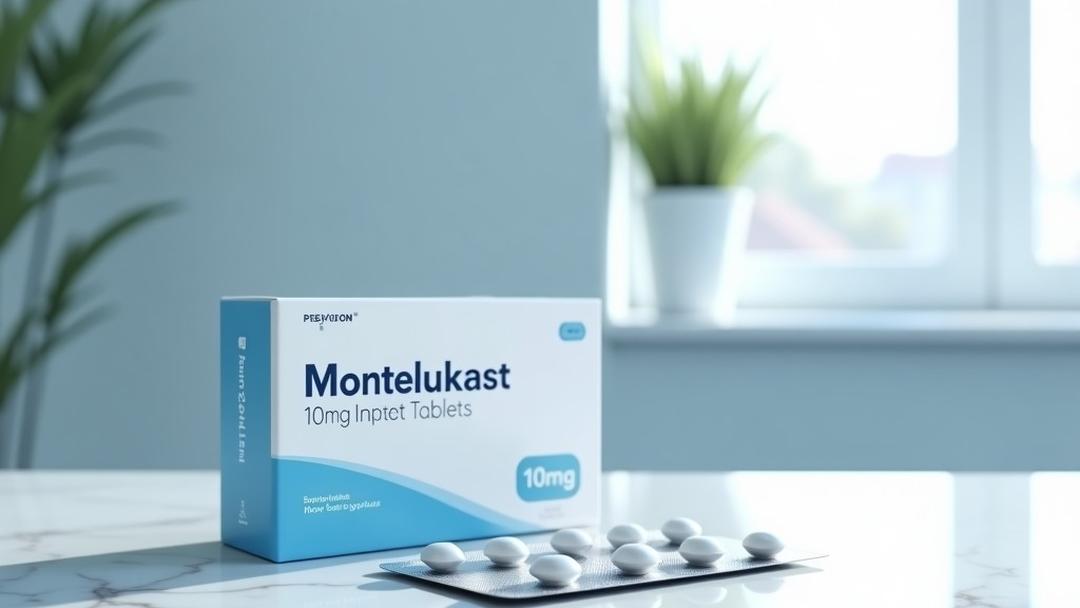
Montelukast (Singulair) Guide: Uses, Dosage, Safety & Affordable Generic Options for Asthma & Seasonal Allergies
Montelukast is a once-daily leukotriene receptor antagonist used to manage asthma and relieve seasonal allergy symptoms. Marketed as Singulair and widely available as low-cost generics, it offers a convenient alternative or add-on to inhaled steroids. This guide reviews how montelukast works, the evidence, practical dosing, pricing differences, and — importantly — its neuropsychiatric safety warnings. Related respiratory and allergy treatments are covered in explore our full pharmaceuticals catalog.
What Is Montelukast?
Montelukast is an orally active selective antagonist of the cysteinyl leukotriene receptor CysLT1. Leukotrienes are inflammatory mediators released by the immune system that constrict airways, increase mucus, and promote allergic response. By blocking their action, montelukast reduces bronchoconstriction and allergic inflammation. It is supplied as 4 mg, 5 mg, and 10 mg chewable or film-coated tablets.
Mechanism of Action
Allergen exposure and exercise trigger the leukotriene pathway via the 5-lipoxygenase route, producing LTC4, LTD4, and LTE4. These bind CysLT1 receptors in bronchial tissue and on eosinophils, driving bronchospasm and edema. Montelukast occupies the receptor competitively, preventing the cascade. Unlike bronchodilators, its effect builds with daily use rather than providing instant rescue.
Approved Uses & Evidence
Asthma prophylaxis: GINA and AAAAI/ACAAI guidelines recognize montelukast as an alternative controller, particularly in mild persistent asthma or in patients who struggle with inhalers.
Seasonal allergic rhinitis: Effective for nasal congestion, sneezing, and itching, especially when combined with antihistamines.
Exercise-induced bronchoconstriction: A single dose taken at least 2 hours before activity reduces episodes.
Limitations: Montelukast is not for acute attacks and is less potent than inhaled corticosteroids for moderate-to-severe asthma control.
Dosage Reference
| Age / Group | Typical Daily Dose | Form |
|---|---|---|
| Adults & adolescents ≥15 | 10 mg once daily | Film-coated tablet |
| Children 6–14 | 5 mg once daily | Chewable |
| Children 2–5 | 4 mg once daily | Chewable |
| Exercise-induced | 10 mg ≥2 h before | Tablet |
Doses are weight- and age-based. Montelukast is taken in the evening for asthma; allergy dosing may be morning or evening per prescriber guidance.
Montelukast vs. Other Allergy & Asthma Treatments
| Option | Type | Best Use |
|---|---|---|
| Montelukast | Leukotriene antagonist | Add-on asthma, allergic rhinitis |
| Loratadine / Cetirizine | Antihistamine | Primarily nasal/eye allergy |
| Fluticasone inhaler | Inhaled steroid | First-line asthma control |
| Singulair + Antihistamine | Combination | Multi-symptom allergy |
Affordable Generic Pricing (India vs. US Brand)
Montelukast generics produced in India are dramatically cheaper than the US brand Singulair. Estimated market ranges (±10% variability):
| Product | Indian Generic (per 10 mg tab) | US Brand (Singulair, per 30 tabs) |
|---|---|---|
| Montelukast 10 mg | ₹18–₹66 (approx. $0.22–$0.80) | $180–$440 |
For patients on long-term therapy, generic montelukast offers a sustainable, budget-friendly route to daily control. As always, prices shift with supplier, packaging, and currency, so request a current quote from a regulated pharmacy.
Safety Profile & the FDA Boxed Warning
In 2020 the FDA required a boxed warning for montelukast (Singulair) regarding serious neuropsychiatric events, including disturbances in mood, agitation, depression, suicidal thinking, and sleep abnormalities such as nightmares. These can occur at any time during therapy and have been reported even in children.
Because of this, guidelines now position montelukast as an alternative rather than preferred first-line therapy for mild asthma, and clinicians should weigh benefits against mental-health risk — particularly in patients with a history of depression or anxiety.
Common Side Effects
Beyond the neuropsychiatric signals, montelukast is generally well tolerated. The most frequent reported effects are headache, abdominal pain, fatigue, upper-respiratory symptoms, and occasional elevation in liver enzymes. Most are mild and transient.
Who Should Use Caution
Patients with prior mood disorders, children and adolescents (where behavioral monitoring is essential), and those on other medications affecting mental state need careful assessment. Discontinue and seek medical advice if agitation, mood change, or suicidal thoughts emerge.
Decision Guide
Montelukast suits patients with mild persistent asthma who prefer a pill, those with co-existing allergic rhinitis, or as add-on therapy when inhalers alone are insufficient. It is not a rescue medicine. If you or a family member experience mood changes on montelukast, contact a healthcare provider promptly to review alternatives.
Real-World Effectiveness & Guideline Positioning
Across clinical studies, montelukast reduces asthma exacerbations and improves lung function and quality of life, though its effect size is generally smaller than that of low-dose inhaled corticosteroids. For seasonal allergic rhinitis, patients report meaningful relief of nasal congestion and ocular symptoms, and combination with a non-sedating antihistamine targets both the leukotriene and histamine pathways. Because of the 2020 boxed warning, major guidelines now position montelukast as an alternative rather than preferred first-line controller for mild asthma, reserving it for patients who cannot or will not use inhaled corticosteroids or who have prominent allergic rhinitis overlap.
Monitoring Checklist for Patients & Families
Before starting, document any personal or family history of depression, anxiety, or suicidal behavior. During therapy, watch for new or worsening mood changes, irritability, aggression, vivid dreams or nightmares, sleepwalking, or confusion — particularly in the first weeks. Keep a simple symptom-and-mood diary; if concerning behaviors appear, stop the medication and contact a clinician. Caregivers should be enlisted as co-monitors for children and adolescents, who may not volunteer emotional changes.
Switching & Combination Strategies
Patients moving from an inhaled steroid to montelukast should do so under supervision and not abruptly stop controller therapy during an active flare. Montelukast can be added to an existing low-dose inhaled corticosteroid when control is incomplete, or paired with an antihistamine for combined asthma-plus-allergy management. Because it is oral and once-daily, adherence is often better than with inhaled devices — a practical advantage that, alongside the safety discussion, informs shared decision-making with the prescriber.
Drug Interactions & Laboratory Monitoring
Montelukast is metabolized mainly by CYP2C8 and CYP3A4, giving it fewer interactions than many other asthma drugs, but notable combinations still matter. Gemfibrozil and strong CYP2C8 inhibitors can raise montelukast levels; phenytoin and rifampin may lower them. NSAIDs can, in rare individuals, unmask aspirin-sensitive asthma when combined with leukotriene modulation. Routine blood tests are not required for montelukast alone, but clinicians often check liver function if transaminases were elevated at baseline or if symptoms of hepatotoxicity (jaundice, dark urine, fatigue) appear. Always disclose all prescription, over-the-counter, and herbal products to the prescriber before starting therapy.
Frequently Asked Questions
1. Is montelukast a steroid?
No. It is a leukotriene receptor antagonist, not a corticosteroid, which is why some patients prefer it to avoid steroid-related concerns.
2. Can montelukast stop an asthma attack?
No. It is a preventive controller taken daily; use your prescribed rescue inhaler for acute symptoms.
3. Why does montelukast have a black-box warning?
Due to reports of serious neuropsychiatric effects including depression and suicidal thoughts, the FDA added a boxed warning in 2020.
4. Can children take montelukast?
Yes, with age-specific chewable dosing, but parents should monitor behavior and sleep closely.
5. How long until montelukast works?
Some allergy benefit appears within a day, but full asthma control develops over about one week of daily use.
Medical Disclaimer: This article is provided for general informational purposes only and does not constitute medical advice, diagnosis, or treatment. Prices for generic medications vary by supplier, country, batch, and exchange rate, and the ranges shown reflect approximate market estimates that may change without notice. Always consult a licensed healthcare provider before starting, stopping, or changing any medication. Generic alternatives should be sourced from verified, regulated pharmacies, and a valid prescription is required for prescription-only medicines.
References
1. FDA — Montelukast (Singulair) boxed warning & safety: https://www.fda.gov/
2. DailyMed — Montelukast labeling (NIH): https://dailymed.nlm.nih.gov/dailymed/search.cfm?query=montelukast
3. GINA — Asthma strategy: https://ginasthma.org/
4. AAAAI — American Academy of Allergy, Asthma & Immunology: https://www.aaaai.org/
5. Mayo Clinic — Montelukast overview: https://www.mayoclinic.org/