Tretinoin (Retin-A) Guide: Uses, Dosage, Side Effects & Affordable Generic Options for Acne & Anti-Aging
Tretinoin is the prescription-strength retinoid that dermatologists have trusted for over four decades — the active form of vitamin A that speeds cell turnover, unclogs pores, and rebuilds collagen. Sold as Retin-A, Renova, and numerous generics, it treats acne and softens fine lines, but it demands a careful start to avoid the notorious “retinoid purge.” This guide covers how tretinoin works, the strengths and routines that actually fit real skin, the cost gap between branded and generic creams, and the safety steps that keep irritation manageable. Used correctly, it remains one of the few topical agents with proof of both clearing breakouts and visibly reversing signs of sun damage.
Storage, Shelf Life, and Sourcing Basics
Tretinoin is light- and air-sensitive: keep the tube tightly capped, away from bathroom humidity and direct sun, and note the expiry date — degraded cream loses potency and can irritate more. Because it is prescription-only in most countries, a legitimate supply comes through a licensed pharmacy with a clinician’s authorization; buying unknown tubes online risks counterfeit or expired product. A valid prescription also lets a pharmacist confirm the strength and base (cream vs gel) that suits your skin type.
What Is Tretinoin?
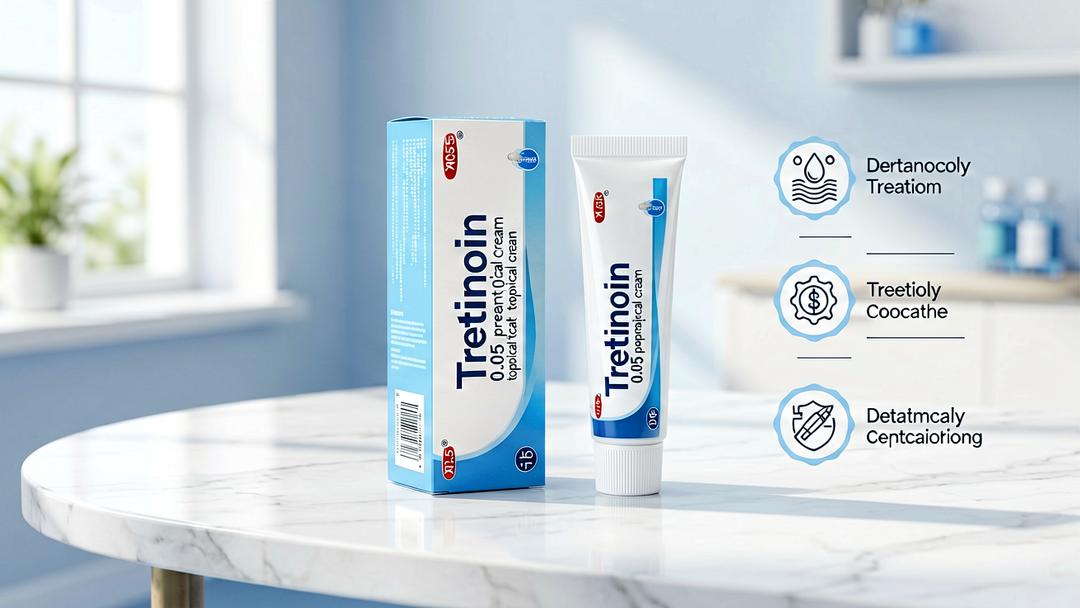
Tretinoin (all-trans retinoic acid) is a first-generation topical retinoid. Unlike cosmetic “retinol” that the skin must convert step-by-step, tretinoin is already the active molecule, which is why it works faster and more predictably. It is dispensed as creams, gels, and lotions in strengths from 0.01% to 0.1%, and as a microencapsulated formula (Retin-A Micro) that releases the drug gradually to cut irritation.
How Tretinoin Works (Mechanism of Action)
Tretinoin binds nuclear retinoic acid receptors in skin cells, resetting the differentiation and shedding cycle. Dead cells stop piling up and plugging follicles, so comedones clear. It also dials down inflammation in the follicle wall and, over months, stimulates fibroblasts to lay down new collagen and glycosaminoglycans in the dermis — the mechanism behind smoother, firmer, less lined skin. Visible anti-aging change typically takes 3–6 months of consistent use.
Understanding the timeline helps prevent early quitting. Weeks 1–2 bring adjustment (tightness, flaking); weeks 3–6 the purge may peak; months 2–3 breakouts subside and tone evens; months 4–6 texture and fine lines improve as new collagen matures. Tretinoin works with the skin’s own renewal clock, not against it — patience is the active ingredient after the cream itself.
Approved and Common Uses
- Acne vulgaris: first-line for comedonal and inflammatory acne in teens and adults.
- Photodamage / fine wrinkles: FDA-approved at 0.02%–0.05% creams (Renova) for facial fine wrinkling, mottled pigmentation, and roughness.
- Hyperpigmentation: often paired with hydroquinone or azelaic acid for melasma support.
- Keratosis pilaris and rough texture: off-label smoothing of upper arms and thighs.
Strengths and How to Start
| Strength | Typical use | Notes |
|---|---|---|
| 0.01%–0.025% cream | Sensitive skin, beginners | Lowest irritation |
| 0.04% micro gel | Mild–moderate acne | Gradual release |
| 0.05% cream/gel | Acne + early anti-aging | Balanced efficacy |
| 0.1% cream/gel | Resistant acne, tolerant users | Highest potency, most irritation |
Most clinicians advise starting every third night with a pea-sized amount over dry skin, then stepping up to nightly as tolerance builds — a slow ramp that protects the skin barrier.
Building a Tolerable Routine
- Cleanse gently with a non-foaming, sulfate-light wash; pat skin completely dry (wait 20 minutes).
- Apply a pea-sized dot to the whole face — more is not better and raises irritation.
- Buffer if needed: apply over a plain moisturizer (“sandwich method”) during the first weeks.
- Always morning SPF 30+: tretinoin thins the stratum corneum and raises sun sensitivity.
- Skip actives: avoid benzoyl peroxide, strong acids, and vitamin C at the same time early on.
What Not to Mix: Interactions and Conflicts
- Benzoyl peroxide: can oxidize and deactivate tretinoin on contact; if both are prescribed, use one in the morning and one at night.
- Alpha/beta hydroxy acids and scrubs: stacking them in the same routine multiplies barrier damage and stinging.
- Strong vitamin C (L-ascorbic acid) and exfoliating toners: best kept to mornings until skin is fully tolerant.
- Hair-removal waxing: tretinoin-thinned skin tears more easily; pause the drug a few days before waxing.
- Other retinoids: oral isotretinoin plus topical tretinoin is redundant and overly irritating — never combine without a clinician.
The “Retinoid Purge” and Side Effects
The most common early effects are dryness, peeling, redness, and a temporary upswing in breakouts — the so-called purge — as dormant clogs surface. This usually peaks at weeks 2–6 then settles. Persistent burning, swelling, or crusting means overuse; back off to every fourth night and add occlusive moisturizer. Rarely, contact allergy appears and the drug must be stopped.
Safety Profile and Who Should Avoid
- Pregnancy and breastfeeding: tretinoin is pregnancy category concerns topically; most clinicians avoid it, especially in the first trimester — discuss alternatives.
- Eczema or rosacea flares: compromised barriers tolerate it poorly; introduce only when stable.
- Sun exposure: daily broad-spectrum sunscreen is mandatory; skip the beach-day application.
- Other exfoliants: stacking acids and scrubs multiplies irritation and barrier damage.
Tretinoin vs Adapalene (Differin): Which Retinoid?
| Feature | Tretinoin | Adapalene |
|---|---|---|
| Potency | Higher, faster | Lower, gentler |
| Irritation | More (purge common) | Less (better for beginners) |
| Availability | Prescription | OTC in many markets |
| Best for | Stubborn acne, anti-aging | Mild acne, sensitive skin |
Many clinicians suggest starting on adapalene, then stepping up to tretinoin once skin is tolerant — a graduated path that minimizes the purge while still reaching tretinoin’s collagen benefits later.
Clinical Evidence and Patient Experience
Decades of trials back tretinoin for acne: combination with topical antibiotics or benzoyl peroxide clears lesions faster than either alone, and long-term use sustains remission. For photoaging, pivotal studies (including NIH-sponsored trials) showed 0.05%–0.1% tretinoin reduced fine wrinkles, pigmentation, and roughness versus vehicle after 6–12 months, with histological proof of new collagen. Patient experience mirrors the data — early grit (peeling, purge) gives way to clearer, smoother skin for the majority who persist past the first two months.
Cost: Generic vs Branded
Prices vary by strength, tube size, and pharmacy. The ranges below include a ±10% margin and are illustrative, not quotes.
- Indian generic tretinoin 0.05% (20g): commonly $4.50–$5.50 per tube; 0.1% nearer $6–$7.50.
- US branded (Retin-A / Retin-A Micro): a 20g tube often runs $130–$160 at retail.
- US generic prescription: typically $25–$35 for the same 20g tube before insurance, and often under $15 with discount programs.
The branded premium is steep for an identical active ingredient; a generic prescription delivers the same molecule at a fraction of the cost. For complementary skin regimens, see the Minoxidil guide and the Finasteride + Minoxidil combination therapy article in our pharmaceuticals catalog.
Practical Decision Guide
- Start low, go slow: 0.025% every third night beats 0.1% nightly for most beginners.
- Moisturize aggressively in the first eight weeks to protect the barrier.
- Sun protection is non-negotiable — tretinoin without SPF backfires.
- Give it 12 weeks before judging acne results; 6 months for anti-aging.
- Pair, don’t pile: one active at a time until skin is tolerant.
Frequently Asked Questions
Can tretinoin be used with moisturizer?
Yes. Applying it over or after a plain moisturizer (“buffering”) reduces irritation without removing the benefit, and is a smart way to build tolerance in the early weeks.
How long until I see results?
Acne often improves by 8–12 weeks; textural and anti-aging changes such as finer lines and even tone generally need 3–6 months of steady nightly use.
Is generic tretinoin the same as Retin-A?
Clinically yes — generics contain the identical active ingredient and must meet the same standards, so the tube you get is equivalent at a far lower price.
Why is my skin breaking out more at first?
A short-term purge happens as deep clogs surface; it usually resolves by week 6. If breakouts worsen past that or feel painful, reduce frequency and check in with a clinician.
Medical Disclaimer
This article is for general informational purposes only and is not medical advice, diagnosis, or treatment. Price ranges are approximate, vary by pharmacy and region, and carry a ±10% margin; they are not a quote. Tretinoin is a prescription medication — use it only under the supervision of a licensed healthcare provider, and avoid it during pregnancy unless a clinician directs otherwise.