Escitalopram (Lexapro) Guide: Uses, Dosage, Side Effects & Generic Options
Escitalopram is a selective serotonin reuptake inhibitor (SSRI) widely prescribed for major depressive disorder and generalized anxiety disorder. As the active S-enantiomer of citalopram, it delivers antidepressant efficacy with a favorable tolerability and drug-interaction profile, which is why many clinicians favor it for first-time treatment. This guide examines its safety characteristics, how dosing is individualized, common adverse effects, and how affordable generic versions compare to brand pricing.
What Is Escitalopram?
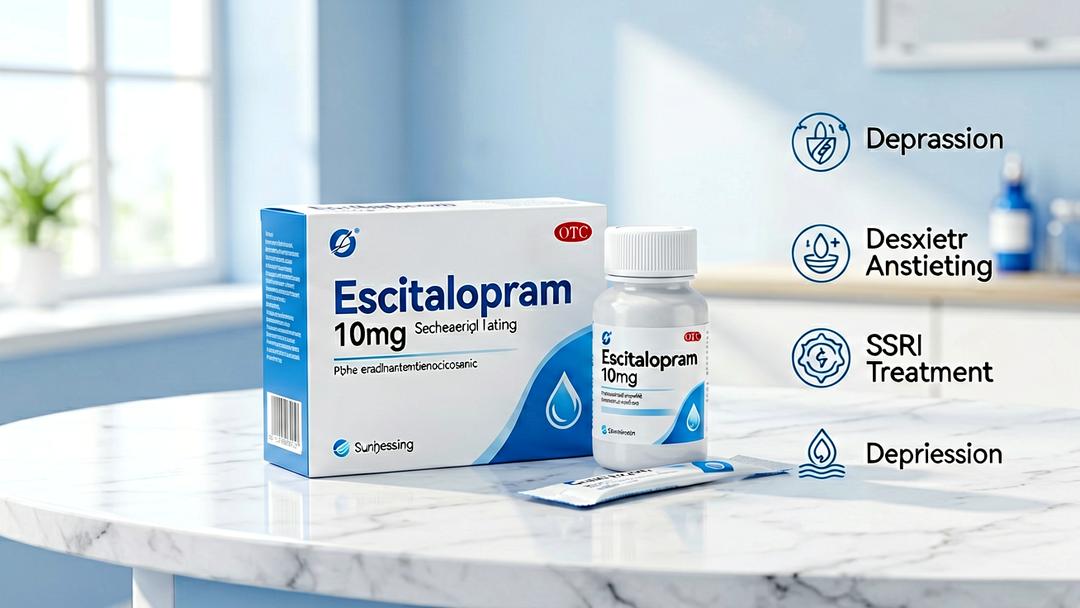
Escitalopram is the left-handed (S) enantiomer of the racemic compound citalopram. By isolating the therapeutically active molecule, escitalopram achieves serotonin reuptake inhibition at lower doses than citalopram. It is supplied as oral tablets and liquid solution, most commonly in 5 mg, 10 mg, and 20 mg strengths. The once-daily dosing and minimal food effect make adherence straightforward, and the liquid form helps patients who struggle to swallow tablets or need fine-grained dose titration.
Mechanism of Action
Escitalopram blocks the serotonin transporter (SERT) on presynaptic neurons, reducing reuptake of serotonin (5-HT) into the neuron and increasing synaptic serotonin availability. Over several weeks, this adaptive change in serotonergic signaling is thought to relieve depressive and anxious symptoms. Its high selectivity for SERT over other monoamine transporters contributes to a cleaner side-effect profile compared with older antidepressants that affect multiple systems. Because it spares norepinephrine and dopamine reuptake at therapeutic doses, escitalopram tends to cause less activation, sweating, and blood-pressure change than dual-action agents, which supports its favorable tolerability in everyday practice.
Approved Uses & Clinical Evidence
Regulatory approvals and clinical data support escitalopram for:
- Major depressive disorder (MDD): Multiple placebo-controlled trials show response rates of roughly 50%–60% versus 30%–40% for placebo over 8 weeks. Remission, not just response, is the realistic goal with continued therapy.
- Generalized anxiety disorder (GAD): Effective for persistent worry and somatic anxiety symptoms.
- Off-label contexts: Sometimes used for panic disorder, social anxiety, and OCD augmentation under specialist direction.
Meta-analyses rank escitalopram among the better-tolerated SSRIs, with a lower burden of drug interactions than paroxetine or fluoxetine, making it a pragmatic first-line choice.
Dosage Guidelines
Escitalopram is taken once daily, with or without food. The table summarizes typical adult regimens.
| Indication | Starting Dose | Target / Max |
|---|---|---|
| Major depression | 10 mg once daily | 10–20 mg (max 20 mg) |
| Generalized anxiety | 10 mg once daily | 10–20 mg (max 20 mg) |
| Older adults (≥65) | 5 mg once daily | Max 10 mg |
Clinicians typically allow 2–4 weeks before judging efficacy and advise continuing for at least 6–12 months after remission to prevent relapse. Abrupt cessation should be avoided; tapering reduces discontinuation symptoms.
Side Effects & Safety Profile
Escitalopram is generally well tolerated. Early side effects often fade within the first weeks:
- Common: Nausea, headache, insomnia or somnolence, dry mouth, sexual dysfunction.
- Serotonin syndrome (rare): Risk rises when combined with other serotonergic drugs (e.g., MAOIs, tramadol, triptans).
- Hyponatremia: Low sodium, especially in older adults; monitor if symptoms like confusion appear.
- Black-box warning: Antidepressants may increase suicidal thinking in children, adolescents, and young adults under 25 during initial treatment.
Because of its limited CYP interactions, escitalopram is safer alongside many concomitant medications than some peers—a key reason for its first-line status.
Escitalopram vs Alternative Antidepressants
| Agent | Class | Key Advantage | Main Drawback |
|---|---|---|---|
| Escitalopram | SSRI | Low interaction burden, well tolerated | Sexual side effects, startup nausea |
| Sertraline | SSRI | Strong anxiety/PTSD data | GI effects, dose timing |
| Fluoxetine | SSRI | Long half-life eases discontinuation | More drug interactions, activation |
| Venlafaxine | SNRI | Potent for severe depression | Blood pressure, withdrawal |
Cost & Generic Pricing
Brand-name Lexapro in the United States often costs approximately $300–$450 for a 30-tablet monthly supply without insurance. Generic escitalopram, manufactured to the same bioequivalence standards, typically ranges from $6–$25 per 30-tablet pack through reputable international generic suppliers. Because patients frequently stay on antidepressants for many months, the cumulative savings of a quality-assured generic can be significant. Prices shift with manufacturer and region, so confirm current costs with a licensed pharmacy.
For a broader look at mood and anxiety therapies, our antidepressants topic archive compares SSRIs, SNRIs, and related options.
Decision Guide: Is Escitalopram Right for You?
Escitalopram suits many adults beginning treatment for depression or generalized anxiety, particularly those taking other medications where interaction risk matters. It is generally avoided with MAOIs and requires caution in pregnancy, bipolar disorder, and a history of mania. A prescriber should evaluate mood history, suicidal-risk screening, and concurrent drugs before starting.
Key Takeaways
- Escitalopram is the active S-enantiomer of citalopram, selectively blocking serotonin reuptake with few drug interactions.
- It is a first-line SSRI for major depression and generalized anxiety, typically started at 10 mg daily (5 mg in older adults).
- Benefits build over 4–6 weeks; full effect needs consistent use and often 6–12 months of continuation.
- Watch for startup nausea, sexual side effects, and the under-25 suicidal-thoughts black-box warning.
- A quality-assured generic escitalopram matches brand Lexapro on active ingredient at far lower cost.
Withdrawal & Discontinuation Planning
Stopping escitalopram should be planned, not abrupt. A gradual taper—often over several weeks—reduces discontinuation symptoms such as dizziness, “brain zaps,” mood lability, and flu-like sensations. The risk rises after long duration or higher doses, though escitalopram’s moderate half-life makes it more forgiving than short-acting SSRIs. Clinicians schedule a taper aligned with life stability, since stopping during a crisis invites relapse. Discussing a relapse-action plan and psychotherapy options before discontinuation improves long-term outcomes, and any re-emergence of suicidal thoughts during taper warrants immediate contact with the prescriber.
Drug Interactions
Escitalopram is among the SSRIs with the fewest cytochrome interactions, yet meaningful combinations remain. Concomitant use with MAO inhibitors is contraindicated and must be separated by at least 14 days because of serotonin syndrome risk. Tramadol, triptans, tryptophan, St. John’s wort, and other serotonergic agents can also raise that risk and are screened carefully. NSAIDs and aspirin add bleeding risk through platelet effects, and escitalopram may mildly prolong the QT interval, so caution applies with other QT-prolonging drugs or in patients with electrolyte disturbances.
Special Populations
Young adults under 25: Carry the black-box suicidal-thoughts warning; close monitoring in the first weeks is essential.
Older adults: More sensitive to hyponatremia and falls; a 5 mg starting dose with slower titration is standard.
Pregnancy and lactation: SSRIs cross the placenta and enter breast milk; the prescriber weighs fetal and infant risks against maternal mental-health needs, especially near delivery when neonatal adaptation effects are possible.
Bipolar disorder: Escitalopram can trigger mania if used without a mood stabilizer; screening for prior episodes is routine.
Monitoring & Follow-up
Clinicians reassess mood, anxiety, sleep, and adverse effects at 2 and 4 weeks, then periodically. Suicidal-ideation screening is repeated early in treatment and after dose changes. Baseline and periodic sodium checks help catch rare hyponatremia in vulnerable patients. If inadequate response by week 6–8, dose optimization, augmentation, or switch is considered rather than indefinite continuation at a subtherapeutic level. Planned discontinuation uses a gradual taper to limit discontinuation syndrome—dizziness, brain zaps, irritability.
Storage & Handling
Keep tablets at room temperature (about 20–25°C), in a dry container away from light and moisture. Liquid solution, if dispensed, follows its labeled storage instructions. Protect all antidepressants from children, and return unused supplies through pharmacy take-back rather than discarding in household trash.
FAQ
How long until escitalopram works?
Some improvement may appear in 1–2 weeks, but full therapeutic effect typically builds over 4–6 weeks of consistent use.
Can I drink alcohol on escitalopram?
Alcohol can worsen depression and amplify sedation; most clinicians recommend avoiding or strictly limiting it during treatment.
What if I miss a dose?
Take it when remembered unless close to the next dose; do not double up. Consistent daily timing stabilizes blood levels.
Is generic escitalopram identical to Lexapro?
Generics must match the brand’s active ingredient, strength, and bioequivalence, so a quality-assured generic provides the same clinical effect at lower cost.
Medical Disclaimer
This article is for informational purposes only and does not replace professional diagnosis or treatment. Antidepressants require careful monitoring, especially during initiation and in younger patients. Never discontinue or adjust dosing without a prescriber’s supervision, as abrupt stops can cause withdrawal symptoms. Price ranges are approximate and vary by supplier and region; verify with a licensed pharmacy.
References
- U.S. FDA. Escitalopram prescribing information.
- Cipriani A, et al. Comparative efficacy and tolerability of antidepressants. The Lancet.
- APA Practice Guideline for the Treatment of Patients with Major Depressive Disorder.
- WHO Model List of Essential Medicines.
- UpToDate: Selective serotonin reuptake inhibitors.