

Biktarvy Side Effects: What to Expect and How to Manage Them
When starting or switching to Biktarvy for HIV treatment, many people search for reliable information about Biktarvy side effects. As a popular single-tablet regimen, Biktarvy offers convenience, but understanding its potential side effects helps patients feel more confident and prepared for treatment.
This comprehensive educational guide covers general information on Biktarvy side effects, common reactions, rarer concerns, and practical considerations. This content is for informational purposes only and is not medical advice. Every patient responds differently. Always consult your healthcare provider for personalized recommendations, monitoring, and guidance regarding your HIV treatment.
What Is Biktarvy?
Biktarvy is a complete once-daily HIV-1 treatment that combines three antiretroviral medicines in a single tablet: bictegravir (an integrase strand transfer inhibitor or INSTI), emtricitabine, and tenofovir alafenamide (TAF). It is designed to suppress HIV replication, help maintain a healthy immune system, and simplify daily medication routines for many adults and certain adolescents.
Its high barrier to resistance and generally favorable tolerability make it a preferred option in many current treatment guidelines. However, like all medications, it can cause side effects in some individuals.

Common Biktarvy Side Effects
Most people taking Biktarvy experience mild or no side effects. The most commonly reported ones include:
- Headache
- Diarrhea or loose stools
- Nausea
- Fatigue
- Insomnia or sleep disturbances
- Abnormal dreams
These effects are often temporary and tend to improve within the first few weeks as the body adjusts to the medication. Staying hydrated, eating balanced meals, and maintaining a consistent daily routine can help ease mild symptoms.
Other Possible Side Effects
Less frequent side effects may include dizziness, vomiting, abdominal discomfort, rash, or changes in mood. Some patients also report weight changes after starting integrase inhibitor-containing regimens like Biktarvy. Discuss any noticeable weight gain or loss with your healthcare team for appropriate monitoring and support.
Kidney, Bone, and Liver Health Considerations
Biktarvy contains tenofovir alafenamide, which is generally associated with better kidney and bone safety compared to older tenofovir disoproxil fumarate formulations. Nevertheless, routine laboratory monitoring of kidney function, bone density (in at-risk patients), and liver enzymes remains standard practice during HIV treatment.
Serious but Rare Side Effects
Although uncommon, serious reactions can occur with any antiretroviral therapy. These may include lactic acidosis, severe liver problems, or hypersensitivity reactions. Patients co-infected with hepatitis B should be particularly careful, as stopping Biktarvy suddenly can cause hepatitis B flare-ups.
Seek immediate medical attention if you experience symptoms such as severe fatigue with muscle pain, yellowing of the skin or eyes, dark urine, severe abdominal pain, or signs of an allergic reaction (swelling, difficulty breathing, rash with fever).
Factors That May Affect Biktarvy Side Effects
Individual experiences can vary based on age, other medical conditions, concurrent medications, diet, alcohol use, and overall health. Drug interactions with antacids, calcium supplements, iron, or certain other medicines can also influence how the body processes Biktarvy.
Managing Side Effects While on Biktarvy
Many mild side effects can be managed through lifestyle adjustments, supportive care, or timing changes (as advised by your doctor). Regular follow-up appointments allow your healthcare provider to monitor your response and make any necessary adjustments to your care plan. Never stop taking Biktarvy or change the dose without professional medical advice, as this can lead to loss of viral control and development of resistance.
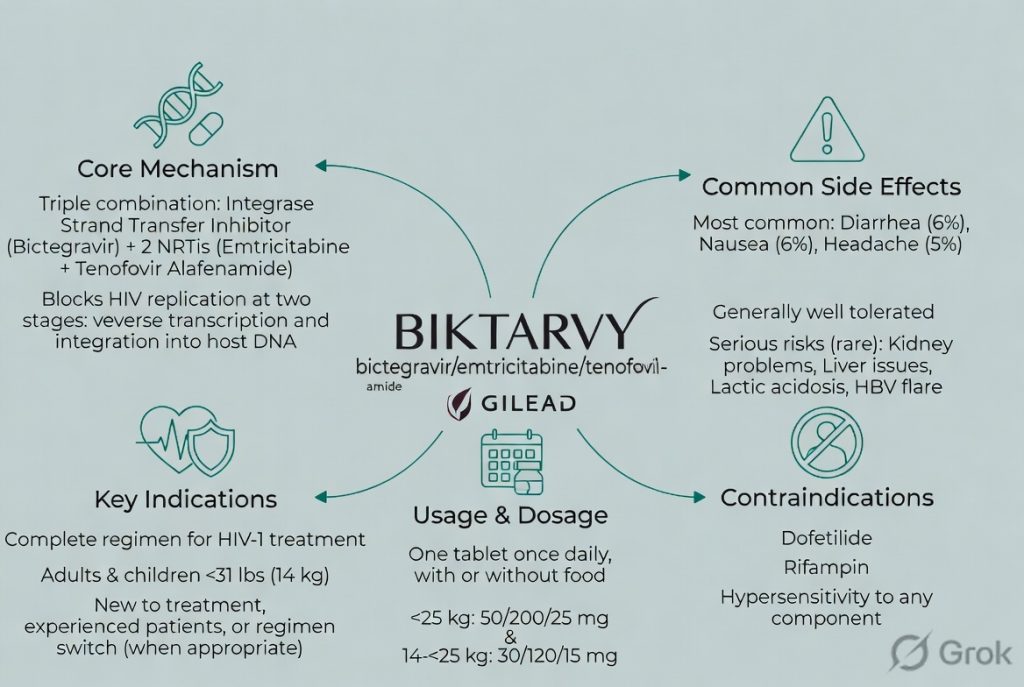 Dosage, Common Side Effects, and Contraindications.” width=”800″ height=”537″ srcset=”https://984online.com/wp-content/uploads/2026/05/JfC0G-1-1024×687.jpg 1024w, https://984online.com/wp-content/uploads/2026/05/JfC0G-1-300×201.jpg 300w, https://984online.com/wp-content/uploads/2026/05/JfC0G-1-768×516.jpg 768w, https://984online.com/wp-content/uploads/2026/05/JfC0G-1.jpg 1168w” sizes=”auto, (max-width: 800px) 100vw, 800px” />
Long-Term Use and Monitoring
Many patients use Biktarvy successfully for years with good tolerability. Long-term success depends on consistent adherence, regular viral load testing, CD4 count monitoring, and overall wellness. Healthcare providers tailor monitoring schedules based on each patient’s unique health profile.
FAQs About Biktarvy Side Effects
1. What are the most common side effects of Biktarvy?
Common Biktarvy side effects include headache, diarrhea, nausea, fatigue, and trouble sleeping. These are usually mild and often resolve after the initial weeks of treatment. Individual experiences vary significantly.
2. Does Biktarvy cause weight gain?
Some people report weight changes after starting Biktarvy or other integrase inhibitor regimens. Factors such as improved appetite due to better health, diet, and lifestyle play important roles. Regular weight monitoring and healthy lifestyle discussions with your doctor are recommended.
3. Can Biktarvy affect kidney function?
While tenofovir alafenamide has a relatively favorable kidney safety profile, periodic kidney function tests are standard. Patients with pre-existing kidney issues require closer monitoring. Your healthcare provider will assess your risk and order appropriate lab work.
4. Is insomnia or vivid dreams common with Biktarvy?
Some patients experience sleep disturbances or abnormal dreams, especially early in treatment. If these become bothersome, discuss them with your provider. They may suggest management strategies or evaluate alternative options if needed.
5. What should I do if I get a rash while taking Biktarvy?
Report any new rash to your healthcare provider promptly. While many rashes are mild, they can occasionally signal an allergic reaction that needs medical evaluation.
6. Does Biktarvy interact with other medications?
Yes. Certain antacids, mineral supplements, and other drugs can reduce Biktarvy absorption. Always share your complete medication list, including over-the-counter products and supplements, with your doctor and pharmacist.
7. Is it safe to drink alcohol while on Biktarvy?
Alcohol may increase the risk of liver stress or worsen certain side effects. Moderation or complete avoidance is often recommended. Discuss your alcohol consumption openly with your healthcare provider for personalized advice.
8. How long do Biktarvy side effects typically last?
Mild side effects frequently improve within a few days to several weeks. Persistent or worsening symptoms should be discussed with your doctor rather than self-managing by stopping the medication.
9. Are there differences in Biktarvy side effects for women or during pregnancy?
Some considerations vary by sex, age, and pregnancy status. Women who are pregnant, planning pregnancy, or breastfeeding should have thorough discussions with their HIV specialist about benefits and risks.
10. What are warning signs of serious Biktarvy side effects?
Seek urgent medical care for symptoms including severe muscle pain with weakness, yellowing of skin or eyes, dark urine, extreme fatigue, or signs of allergic reaction such as swelling of the face or throat.
11. Can I switch from Biktarvy if side effects are bothersome?
Yes, there are alternative regimens. Any switch should be carefully planned by your HIV care provider with proper viral load monitoring and resistance testing if indicated.
12. Is Biktarvy generally well tolerated long term?
Many patients tolerate Biktarvy well over extended periods. Regular medical follow-ups and laboratory monitoring help ensure continued safety and effectiveness.
Conclusion
Biktarvy is an effective and convenient option for many people living with HIV, with most users experiencing mild or no side effects. Understanding potential Biktarvy side effects empowers patients to communicate effectively with their healthcare team and maintain successful long-term treatment.
Important Next Step: If you are taking or considering Biktarvy, maintain open communication with your doctor or HIV specialist. Report any new symptoms promptly and attend all scheduled monitoring appointments. Adherence to prescribed therapy combined with healthy lifestyle choices supports the best possible outcomes.
Disclaimer: This article provides general educational information only and does not constitute medical advice, diagnosis, or treatment recommendations. Treatment decisions should always be made in consultation with qualified healthcare professionals based on individual medical history and current clinical guidelines.
Suggested Images:
- Image 1: Healthcare professional consulting with patient about medication (Alt text: Doctor explaining HIV treatment to patient)
- Image 2: Generic illustration of common medication side effect icons (Alt text: Common medication side effects awareness graphic)
- Image 3: Person taking a daily pill at home (Alt text: Patient taking daily HIV medication)