
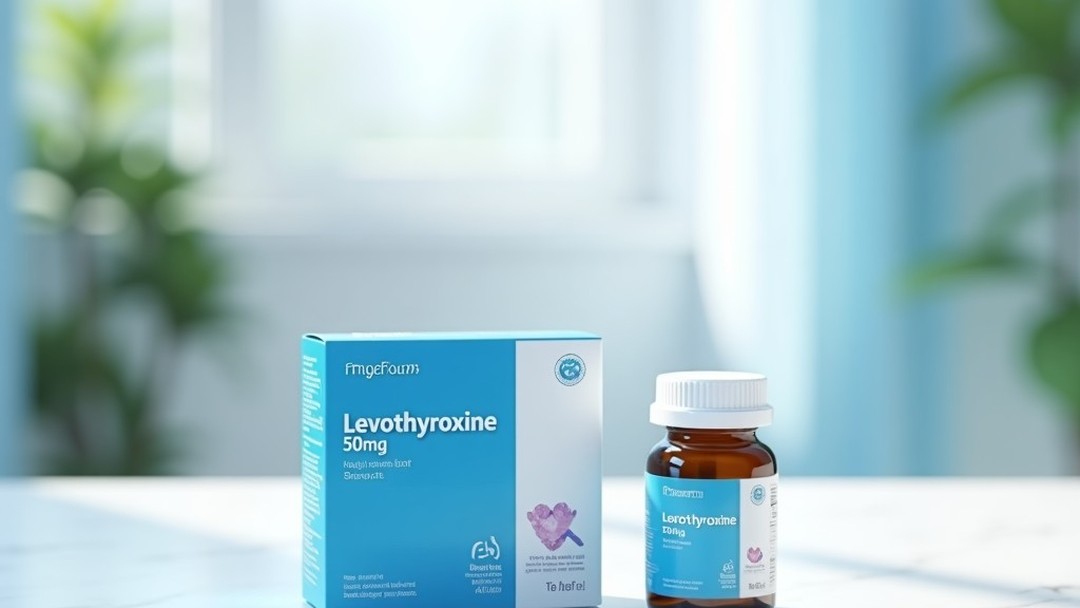
Levothyroxine (Synthroid) Guide: Uses, Dosage, Side Effects & Affordable Generic Options for Hypothyroidism
Hypothyroidism affects approximately 5 out of every 100 people in the United States — over 13 million Americans — with millions more undiagnosed. It is one of the most common chronic endocrine conditions worldwide, yet this site has zero existing coverage of thyroid medication guides, representing a significant content gap for a very high-traffic keyword cluster (~1.2M+ monthly global searches for “levothyroxine” and “Synthroid”). This comprehensive guide covers everything patients and clinicians need to know about levothyroxine: its mechanism, approved uses, optimal dosing strategies, the critical brand-vs-generic debate, side effects, drug interactions, and how affordable Indian generic levothyroxine compares on cost and quality.
What Is Levothyroxine?
Levothyroxine (also known as L-thyroxine, T4, or L-T4) is a synthetic form of thyroxine, the primary hormone produced by the thyroid gland. It is the standard of care for thyroid hormone replacement therapy and is one of the most prescribed medications in the world — consistently ranking in the top 5 prescribed drugs in the United States, with over 100 million prescriptions annually.
Marketed under the brand name Synthroid (originally by Abbott, now AbbVie), levothyroxine is also widely available as a generic from numerous manufacturers. Other brand names historically include Levoxyl, Unithroid, and Tirosint (a liquid-filled capsule formulation designed for patients with absorption issues). Despite the availability of generics, Synthroid remains the most recognized brand and accounts for a significant share of US prescriptions.
Levothyroxine is available in tablet form in a wide range of strengths: 25 mcg, 50 mcg, 75 mcg, 88 mcg, 100 mcg, 112 mcg, 125 mcg, 137 mcg, 150 mcg, 175 mcg, 200 mcg, and 300 mcg. This granular dosing range allows precise titration to individual patient needs — a critical feature given the narrow therapeutic window of thyroid hormone replacement.
Mechanism of Action: How Levothyroxine Works
Levothyroxine is identical in chemical structure to endogenous thyroxine (T4) produced by the thyroid gland. Once absorbed, it is converted in peripheral tissues — primarily the liver and kidneys — into triiodothyronine (T3), the biologically active form of thyroid hormone that binds to thyroid hormone receptors in cells throughout the body. Approximately 80% of circulating T3 comes from peripheral conversion of T4, with only about 20% secreted directly by the thyroid gland.
The conversion of T4 to T3 is catalyzed by deiodinase enzymes (types 1 and 2), which remove one iodine atom from the outer ring of the thyroxine molecule. This conversion is regulated in a tissue-specific manner, allowing different organs to modulate their exposure to active thyroid hormone based on local metabolic demands.
Thyroid hormones (T4 and T3) exert their effects by binding to nuclear thyroid hormone receptors (TRs), which are ligand-activated transcription factors. These receptors regulate the expression of genes involved in:
- Basal metabolic rate: Increasing oxygen consumption and heat production in most tissues (except brain, testes, and spleen).
- Carbohydrate metabolism: Enhancing glucose absorption, glycogenolysis, and gluconeogenesis.
- Lipid metabolism: Increasing lipolysis and cholesterol clearance — which is why hypothyroidism is associated with elevated LDL cholesterol and why levothyroxine treatment often improves lipid profiles.
- Protein metabolism: Stimulating protein synthesis at physiological levels, but promoting protein catabolism at supraphysiological levels.
- Cardiovascular function: Increasing heart rate, cardiac contractility, and cardiac output. Thyroid hormone has direct chronotropic and inotropic effects on the heart.
- Central nervous system: Critical for normal brain development in fetuses and infants (hence the critical importance of adequate maternal thyroid hormone during pregnancy and neonatal screening for congenital hypothyroidism). In adults, thyroid hormone affects mood, cognition, and memory.
- Growth and development: Essential for normal skeletal growth and maturation in children.
In hypothyroidism — where the thyroid gland does not produce sufficient amounts of T4 and T3 — levothyroxine replaces the missing T4, restoring normal metabolic function. The goal of therapy is to normalize serum TSH (thyroid-stimulating hormone) levels, which serves as the primary biomarker for adequate replacement. TSH is produced by the pituitary gland and is inversely related to circulating thyroid hormone levels — when thyroid hormone is low, TSH rises (in an attempt to stimulate the thyroid), and when thyroid hormone is adequate, TSH falls to normal range.
Approved Uses and Clinical Applications
Primary Hypothyroidism
Levothyroxine is the definitive treatment for primary hypothyroidism — a condition where the thyroid gland itself fails to produce adequate thyroid hormone. The most common cause in developed countries is Hashimoto’s thyroiditis (chronic autoimmune thyroiditis), where autoantibodies (anti-TPO and anti-thyroglobulin) gradually destroy the thyroid gland. Other causes include:
- Post-surgical hypothyroidism: After thyroidectomy for thyroid cancer, goiter, or hyperthyroidism.
- Post-radioactive iodine ablation: After treatment for Graves’ disease or toxic nodular goiter.
- Congenital hypothyroidism: Present at birth (screened for in all US newborns via heel-stick TSH testing). Untreated congenital hypothyroidism causes irreversible intellectual disability (cretinism), making early detection and levothyroxine treatment critical.
- Medications: Certain drugs (lithium, amiodarone, interferon-alpha, checkpoint inhibitors) can cause hypothyroidism.
- Iodine deficiency: The most common cause worldwide, though rare in developed countries with iodized salt.
Secondary (Central) Hypothyroidism
When hypothyroidism results from pituitary or hypothalamic dysfunction (insufficient TSH or TRH production), levothyroxine is also used, but dosing and monitoring differ — TSH cannot be used as a biomarker, and free T4 levels are the primary guide.
Goiter and Thyroid Nodules
Levothyroxine suppression therapy — using doses sufficient to suppress TSH to low-normal or slightly below normal range — is sometimes used for patients with large goiters or thyroid nodules to reduce gland size or prevent nodule growth. However, this use is more controversial and is not routinely recommended by current guidelines due to the risk of subclinical hyperthyroidism (bone loss, atrial fibrillation) and limited efficacy.
Thyroid Cancer Suppression
After thyroidectomy for differentiated thyroid cancer (papillary or follicular), levothyroxine is used at suppressive doses to maintain TSH at low or undetectable levels. TSH is a growth factor for thyroid tissue, including any residual or metastatic thyroid cancer cells, so TSH suppression reduces the risk of cancer recurrence. The degree of suppression is risk-stratified based on the patient’s risk of recurrence: low-risk patients may be maintained at low-normal TSH (0.5–2.0 mIU/L), while high-risk patients may require TSH suppression to <0.1 mIU/L.
Myxedema Coma (Off-Label / Emergency)
The most extreme and life-threatening manifestation of severe, untreated hypothyroidism — myxedema coma — requires aggressive intravenous levothyroxine (and often liothyronine/T3) replacement in an intensive care setting. This is a rare but critical application of thyroid hormone therapy.
Dosing Guidelines
Levothyroxine dosing is highly individualized and depends on patient weight, age, cardiac status, the severity and duration of hypothyroidism, and the underlying cause. The general principles are:
| Clinical Scenario | Typical Starting Dose | Target TSH | Notes |
|---|---|---|---|
| Healthy adult <60 years, no cardiac disease | 1.6 mcg/kg body weight/day (full replacement) | 0.5–2.5 mIU/L | Can often start at full calculated dose. Example: 70 kg patient → ~112 mcg/day. |
| Adults ≥60 years or with cardiac disease | 25–50 mcg/day, titrate slowly | 0.5–3.0 mIU/L (relaxed in elderly) | Start low and go slow — increase by 25–50 mcg every 4–6 weeks. Prevents cardiac stress. |
| Pregnancy (pre-existing hypothyroidism) | Increase by ~20–30% immediately upon confirmation of pregnancy | <2.5 mIU/L (first trimester); <3.0 mIU/L (second/third) | Immediate dose increase often needed. Monitor TSH every 4 weeks during pregnancy. Many women need 2–3x pre-pregnancy dose by third trimester. |
| Subclinical hypothyroidism (TSH 5–10, normal T4) | 25–50 mcg/day or observation | Normalize TSH | Treatment decision based on symptoms, TPO antibody status, cardiovascular risk, and patient preference. |
| Thyroid cancer suppression (low risk) | Dose to maintain TSH 0.5–2.0 mIU/L | 0.5–2.0 mIU/L | FNAB-confirmed low-risk papillary microcarcinoma, total thyroidectomy. |
| Thyroid cancer suppression (high risk) | Dose to maintain TSH <0.1 mIU/L | <0.1 mIU/L | High-risk differentiated thyroid cancer, residual disease, or metastasis. |
| Myxedema coma (emergency) | IV loading dose 300–500 mcg, then 50–100 mcg/day | Clinical improvement | ICU setting. Often combined with IV T3 (liothyronine) and stress-dose glucocorticoids. |
| Children — congenital hypothyroidism | 10–15 mcg/kg/day | Age-specific TSH targets | Immediate treatment essential. Neurodevelopmental outcomes depend on early and adequate replacement. |
| Children — acquired hypothyroidism | 1.6 mcg/kg/day (similar to adults) | Age-specific TSH | Dose adjusted for growth and weight changes. |
Critical administration instructions:
- Levothyroxine must be taken on an empty stomach, ideally 30–60 minutes before breakfast, with a full glass of water.
- Alternatively, it can be taken at bedtime (at least 3–4 hours after the last meal), which some studies suggest may result in better absorption and more stable TSH levels.
- Consistency is essential — take at the same time each day, with the same conditions (fasting, same water, same routine).
- Wait at least 30–60 minutes before consuming coffee, food, or other medications.
- Avoid taking within 4 hours of calcium supplements, iron supplements, antacids, or sucralfate, as these significantly impair absorption.
- Do not switch between brand and generic manufacturers without consulting your physician — changes in inactive ingredients can affect absorption and TSH stability.
Side Effects and Safety Profile
When dosed correctly (TSH-normalized), levothyroxine has no side effects — it simply replaces the hormone the body should be producing. The vast majority of adverse effects are due to over-replacement (iatrogenic hyperthyroidism) or under-replacement (persistent hypothyroidism). True allergic or idiosyncratic reactions are rare.
Signs of Over-Replacement (Too Much Levothyroxine — Iatrogenic Hyperthyroidism)
- Cardiovascular: Palpitations, tachycardia, atrial fibrillation (particularly in older adults), increased risk of atrial fibrillation with suppressed TSH. Long-term over-replacement is associated with increased risk of atrial fibrillation and osteoporosis (bone loss), especially in postmenopausal women.
- Neuromuscular: Anxiety, nervousness, tremor, insomnia, heat intolerance, excessive sweating, muscle weakness.
- Metabolic: Unintentional weight loss, increased appetite, heat intolerance.
- Gastrointestinal: Increased bowel frequency, diarrhea.
- Long-term risks: Reduced bone mineral density (osteoporosis risk), increased risk of atrial fibrillation and cardiovascular events with chronic TSH suppression.
Signs of Under-Replacement (Too Little Levothyroxine — Persistent Hypothyroidism)
- Fatigue, lethargy, depression
- Weight gain despite no change in diet
- Cold intolerance, feeling cold all the time
- Constipation
- Dry skin, hair loss, brittle nails
- Bradycardia (slow heart rate)
- Delayed deep tendon reflexes
- Menstrual irregularities (heavy or irregular periods)
- Elevated LDL cholesterol and triglycerides
- Myxedema coma (rare, life-threatening): altered mental status, hypothermia, bradycardia, hypotension, hypoventilation — medical emergency requiring ICU admission.
Rare Adverse Effects
- Allergic reactions: Very rare, but possible — rash, urticaria. More commonly due to inactive ingredients (dyes, fillers) in specific formulations rather than the levothyroxine itself. Patients with allergies or sensitivities may benefit from hypoallergenic formulations (e.g., Tirosint, which contains fewer inactive ingredients).
- Hair loss in early treatment: Transient hair thinning can occur during the initial months of treatment as the hair cycle adjusts to changing thyroid hormone levels. This is usually temporary and resolves as euthyroidism is restored.
Contraindications and Precautions
- Untreated adrenal insufficiency (Addison’s disease) — thyroid hormone replacement can precipitate an adrenal crisis in patients with untreated adrenal insufficiency. Glucocorticoid replacement should be initiated before or concurrently with levothyroxine.
- Untreat pituitary hypothyroidism (secondary hypothyroidism) — must also replace adrenal hormones before starting thyroid hormone.
- Caution in patients with cardiovascular disease, arrhythmias, or the elderly — start with lower doses and titrate slowly.
- Routine TSH monitoring is essential — at least annually once stable, and 6–8 weeks after any dose change (time required for TSH to reach new steady state).
Drug Interactions Affecting Levothyroxine Absorption and Metabolism
Levothyroxine has narrow therapeutic index and is notoriously affected by numerous drug interactions. These primarily impact absorption rather than metabolism, making timing of administration critical.
- Calcium carbonate / calcium citrate: Significantly reduces levothyroxine absorption. Separate by at least 4 hours. Common problem for postmenopausal women taking both calcium and levothyroxine.
- Iron supplements (ferrous sulfate, ferrous gluconate): Impairs absorption — separate by 4 hours. Commonly recommended to take iron at lunch and levothyroxine first thing in the morning.
- Antacids (aluminum, magnesium, calcium-based): Reduce absorption — separate by 4 hours. Includes common OTC products like Tums, Rolaids, Maalox.
- Sucralfate (Carafate): Binds levothyroxine in GI tract — separate by 4 hours, or consider alternative GI therapy.
- Proton pump inhibitors (PPIs): Reduced gastric acid can impair levothyroxine absorption in some patients — particularly relevant for patients on long-term PPIs. Tirosint (liquid-filled capsule) may be less affected by gastric pH changes.
- Bile acid sequestrants (cholestyramine, colestipol): Bind levothyroxine — separate by at least 4–6 hours.
- Orlistat (Xenical, Alli): Weight-loss drug that can reduce levothyroxine absorption — monitor TSH.
- Estrogen therapy (oral contraceptives, HRT): Increases thyroid-binding globulin (TBG), which can lower free T4 and require a levothyroxine dose increase (typically 25–50% increase needed when starting estrogen).
- Soy products / high-fiber diets: May interfere with absorption — keep dietary soy and fiber intake consistent day to day.
- Coffee: Can reduce absorption if taken simultaneously — wait at least 60 minutes after levothyroxine before drinking coffee.
- Warfarin: Thyroid hormone status affects warfarin sensitivity — hypothyroidism reduces warfarin effect (lower INR), while over-replacement (hyperthyroid state) increases warfarin effect (higher INR). Monitor INR closely during levothyroxine dose changes.
- Diabetes medications: Improving hypothyroidism (with levothyroxine) can improve glucose tolerance and may require adjustment of diabetes medications.
Brand vs. Generic Levothyroxine: The Critical Debate
One of the most clinically significant and debated topics in levothyroxine therapy is whether to use brand-name Synthroid or generic levothyroxine. This is not a trivial issue — the FDA has acknowledged that levothyroxine is a narrow therapeutic index drug, meaning small differences in bioavailability between products can cause clinically significant changes in TSH levels.
The FDA’s Position and the Bioequivalence Issue
Historically, the FDA required only that generic levothyroxine be bioequivalent to the brand product based on AUC (area under the curve) comparisons with an acceptable 95–105% confidence interval. However, given the narrow therapeutic window, the FDA raised the bar: in 2007, the FDA required all levothyroxine manufacturers (brand and generic) to establish potency within ±5% of the labeled claim throughout shelf life. This standardized the manufacturing quality across all products.
Despite these improvements, many endocrinologists still recommend staying on a consistent product — whether brand or a specific generic manufacturer — to avoid TSH fluctuations. The American Thyroid Association (ATA) guidelines note that while the FDA’s standardization has improved the situation, some patients do experience TSH changes when switching between products, and consistent product use is recommended when possible.
Key Considerations for Patients
- Consistency: Once a patient is stable on a particular levothyroxine product (brand or specific generic), switching to a different product (brand-to-generic, generic-to-generic from different manufacturer) should be done with TSH monitoring 6–8 weeks later.
- Tirosint (hypoallergenic): For patients who experience adverse reactions to inactive ingredients in standard levothyroxine tablets (dyes, lactose, etc.), Tirosint — a liquid-filled capsule with minimal inactive ingredients — is an alternative. It may also have better absorption in patients with GI issues (atrophic gastritis, H. pylori infection, bariatric surgery).
- Synthroid: The most prescribed brand in the US. Some patients and clinicians prefer it for consistency and reliability, though generic alternatives are now considered equally effective for most patients.
- Generic levothyroxine: Available from many manufacturers (Mylan, Lannett, Teva, Aurobindo, etc.). Different pharmacies may stock different generic manufacturers, so patients who need consistent product should ask their pharmacy to maintain the same manufacturer.
Levothyroxine Pricing: Generic India vs. US Brand & Generic
Generic Levothyroxine Prices in India
In India, generic levothyroxine is manufactured by numerous pharmaceutical companies and is widely available in all standard strengths. A pack of 10 tablets in any strength typically ranges from $1.50–$5 USD (approximately 120–410 Indian rupees), depending on the manufacturer and strength. A pack of 30 tablets of commonly prescribed strengths (e.g., 100 mcg or 150 mcg) generally costs between $3–$10 USD. The large number of manufacturers and intense generic competition keeps prices exceptionally low. Brand-name formulations available in India (where relevant) may cost somewhat more — typically 2–3x generic prices for equivalent packs.
Indian generic levothyroxine is produced under WHO-GMP standards by many manufacturers, and several Indian pharmaceutical companies operate USFDA-approved facilities that produce levothyroxine for export to Western markets. The quality of Indian generic levothyroxine from reputable manufacturers is generally considered comparable to Western generics.
US Pricing: Brand Synthroid and Generic Levothyroxine
In the United States, levothyroxine is one of the most affordable prescription drugs on a per-unit basis, but the absolute cost difference between generic and brand can still be meaningful for long-term, daily therapy.
- Generic levothyroxine (US retail): A 30-day supply of generic levothyroxine at standard strengths (e.g., 100 mcg) typically costs approximately $5–$20 USD at US retail pharmacies without insurance, with discount programs and pharmacy coupons offering prices as low as $4–$10 USD for 30 tablets. Many pharmacies have levothyroxine on their $4–$10 generic lists. Brand-name Synthroid has historically cost significantly more — approximately $15–$50 USD per month at US retail without insurance, though many insurance plans now cover generic levothyroxine preferentially.
- Brand Synthroid: When not covered by insurance, brand-name Synthroid can cost $20–$60 USD per month at retail. Some patients on certain insurance plans or those with specific medical reasons to stay on brand (allergy to generic excipients, TSH instability on generics) may have brand covered.
- Tirosint (brand only, no generic): Costs approximately $50–$120 USD per month at US retail without insurance, reflecting its specialized formulation and lack of generic competition. Patient assistance programs may be available.
Annual Cost Perspective
For a patient taking levothyroxine 100 mcg daily (365 tablets per year), the annual cost comparison is stark:
- Indian generics: Approximately $30–$100 USD per year for most patients.
- US generic (retail, no insurance): Approximately $60–$240 USD per year, depending on pharmacy and discount availability.
- US brand Synthroid (retail, no insurance): Approximately $240–$720+ USD per year — a 3–10x premium over Indian generics.
- US brand Synthroid (with insurance): Often $10–$40 copay per month ($120–$480/year), depending on plan tier.
To explore available generic levothyroxine options, visit our levothyroxine product category. For broader thyroid medication options, see our thyroid health product section.
Monitoring and Long-Term Management
Effective levothyroxine therapy requires periodic monitoring to ensure TSH remains within the target range:
- Initial titration phase: Check TSH 6–8 weeks after starting or changing dose. TSH takes time to reach a new steady state (full TSH response to a dose change takes 6–8 weeks due to the long half-life of levothyroxine and the slower response dynamics of the pituitary-thyroid axis).
- Stable patients: Once TSH is stable and within target range, monitoring can be reduced to every 6–12 months. More frequent monitoring may be needed for patients with fluctuating weight, intercurrent illness, pregnancy, or medication changes.
- Pregnancy: Monitor TSH every 4 weeks during the first half of pregnancy, and at least once per trimester thereafter. Many patients need dose increases during pregnancy (often 20–30% increase immediately upon confirmation, then further titration based on TSH).
- Weight change >5–10%: May require dose adjustment — levothyroxine dose is weight-based, so significant weight loss or gain can change requirements.
- Lab testing: TSH is the primary monitoring test for primary hypothyroidism. Free T4 may also be checked, particularly in central hypothyroidism or during pregnancy. T3 levels are not routinely needed.
- Avoid over-testing: Testing more frequently than every 4–6 weeks is generally not useful because TSH changes lag behind dose changes.
FAQ
Q: How long does it take for levothyroxine to start working, and when will I feel better?
A: Levothyroxine begins increasing serum T4 levels within hours of the first dose, but symptom improvement is gradual because thyroid hormone has a long half-life (approximately 7 days) and the body’s tissues need time to adjust. Most patients begin noticing improvement in energy, mood, and cognitive function within 2–3 weeks of starting treatment, with more complete resolution of symptoms over 4–8 weeks. Full stabilization — when TSH reaches its new equilibrium — takes 6–8 weeks after starting or changing a dose. This is why doctors typically recheck TSH 6–8 weeks after a dose change rather than sooner. If you do not feel improvement after 6–8 weeks at a therapeutic dose, discuss this with your doctor — your dose may need adjustment, or other causes of your symptoms may need investigation.
Q: Should I take brand-name Synthroid or generic levothyroxine?
A: For most patients, generic levothyroxine from a reputable manufacturer is equally effective and significantly more affordable. The FDA requires all levothyroxine products — brand and generic — to meet strict potency standards (±5% of labeled claim). However, some patients do experience TSH changes when switching between brand and generic, or between different generic manufacturers, due to differences in inactive ingredients that affect absorption. The American Thyroid Association recommends consistency: once a patient is stable on a particular product, they should generally stay on that product. If your TSH becomes unstable after a switch, or if you have allergies/sensitivities to generic excipients, discuss staying on brand or switching to a hypoallergenic option (Tirosint) with your doctor. For most patients starting treatment, generic levothyroxine is an excellent, cost-effective choice.
Q: Can I take levothyroxine with coffee, food, or other medications?
A: Levothyroxine should ideally be taken on an empty stomach, at least 30–60 minutes before breakfast, with a full glass of water. Coffee should be delayed at least 60 minutes after taking levothyroxine, as it can interfere with absorption. Food — particularly high-fiber foods, soy products, and calcium-fortified foods — can also impair absorption if taken too close to the dose. Several medications significantly interact with levothyroxine absorption and should be separated by at least 4 hours: calcium supplements, iron supplements, antacids (Tums, Rolaids, Maalox), sucralfate (Carafate), and bile acid sequestrants (cholestyramine). If taking at bedtime, ensure it is at least 3–4 hours after your last meal. Consistency in timing and conditions is at least as important as absolute timing.
Q: What happens if I miss a dose of levothyroxine?
A: Levothyroxine has a very long half-life (approximately 7 days), so missing a single dose is unlikely to cause immediate symptoms or significant TSH disruption. If you miss a dose, take it as soon as you remember. If it is almost time for your next dose (the following day), skip the missed dose and resume your normal schedule. Do not take double doses to make up for a missed one. Some patients prefer to take two tablets the next day if they remember within 24 hours — this is acceptable given levothyroxine’s long half-life, but consistency in daily dosing is best. For multiple missed doses, contact your healthcare provider — you may need a dose adjustment or earlier TSH monitoring. The key concern with missed doses is not acute symptoms but gradual TSH drift over weeks to months if doses are consistently missed.
Q: Is levothyroxine safe during pregnancy?
A: Yes — levothyroxine is not only safe during pregnancy, it is essential for pregnant women with hypothyroidism. Adequate maternal thyroid hormone is critical for fetal brain development, particularly in the first trimester before the fetal thyroid gland becomes functional (around 12–14 weeks gestation). Untreated or under-treated hypothyroidism during pregnancy is associated with increased risks of miscarriage, preterm birth, preeclampsia, low birth weight, and impaired neurodevelopmental outcomes in the child. The American Thyroid Association recommends that women with hypothyroidism increase their levothyroxine dose by approximately 20–30% as soon as pregnancy is confirmed, with TSH monitoring every 4 weeks during the first half of pregnancy. Target TSH: <2.5 mIU/L in the first trimester, <3.0 mIU/L in the second and third trimesters. Many women need 2–3 times their pre-pregnancy dose by the third trimester. After delivery, the pre-pregnancy dose is typically resumed, with TSH rechecked at 6 weeks postpartum.
Q: What is the difference between levothyroxine (T4) and liothyronine (T3) or desiccated thyroid extract?
A: Levothyroxine (T4) is the standard of care for hypothyroidism and is recommended by all major guidelines (American Thyroid Association, American Association of Clinical Endocrinologists). T4 is a prohormone that the body converts to T3 (the active hormone) as needed in peripheral tissues — this allows for physiologically regulated T3 levels in different tissues. Liothyronine (synthetic T3) is rarely used alone for long-term replacement because of its short half-life (requiring multiple daily doses) and the risk of supraphysiological T3 peaks. Combination T4+T3 therapy (using both levothyroxine and liothyronine) is an area of ongoing research and debate — some patients report feeling better on combination therapy despite normal TSH on T4 alone, but large randomized trials (including a major 2019 study published in the New England Journal of Medicine) have not shown consistent benefit of combination therapy over T4 monotherapy for most patients. Desiccated thyroid extract (natural thyroid hormone from animal thyroid glands, e.g., Armour Thyroid, NP Thyroid) contains both T4 and T3 in a fixed ratio that is not physiologically identical to human thyroid secretion, and its use is not recommended by major guidelines due to inconsistent potency, lack of standardization, and the potential for supraphysiological T3 levels. It remains popular in some patient communities despite limited evidence of superiority.
References
- Garber JR, Cobin RH, Garib H, et al. “Clinical Practice Guidelines for Hypothyroidism in Adults: Co-sponsored by the American Association of Clinical Endocrinologists and the American Thyroid Association.” Thyroid. 2012;22(12):1670–1751. — Comprehensive ATA/AACE guidelines for hypothyroidism management.
- Alexander EK, Pearce EN, Brent GA, et al. “2017 Guidelines of the American Thyroid Association for the Diagnosis and Management of Thyroid Disease During Pregnancy and the Postpartum.” Thyroid. 2017;27(3):315–389. — Current ATA pregnancy and thyroid guidelines.
- Jonklaas J, Bianco AC, Bakurenko A, et al. “Guidelines for the Treatment of Hypothyroidism: Prepared by the American Thyroid Association Task Force on Thyroid Hormone Replacement.” Thyroid. 2014;24(12):1670–1751. — ATA guidelines specifically on thyroid hormone replacement therapy.
- FDA. “Levothyroxine Sodium — Guidance for Industry: Stability Testing of Levothyroxine Sodium.” 2007. — FDA guidance requiring ±5% potency standardization for all levothyroxine products.
- Sawyer MK. “Levothyroxine: A Review of Its Use in the Management of Hypothyroidism.” Drugs. 2023;83(1):55–70. — Contemporary review of levothyroxine therapy.
- Bekkering EP, Agoritsas T, Lytvyn L, et al. “Thyroid Hormone Therapy for Subclinical Hypothyroidism.” BMJ. 2019;364:l480. — Systematic review and guideline on subclinical hypothyroidism management.
- Yen PM. “Physiological and Molecular Basis of Thyroid Hormone Action.” Physiological Reviews. 2001;81(3):1097–1142. — Foundational review of thyroid hormone molecular mechanisms.
- UpToDate. “Levothyroxine: Drug Information” and “Treatment of Hypothyroidism.” Accessed September 2026. — Comprehensive drug monograph and clinical guidance.
- Cappola AR, Fried LP, Arnold AM, et al. “Thyroid Status, Cardiovascular Risk, and Mortality in Older Adults: The Cardiovascular Health Study.” JAMA. 2006;295(10):1033–1041. — Study on risks of over-replacement in older adults.
- Guglielmi R, Falcone R, Grimaldi F, et al. “Levothyroxine: An Update on Current Clinical Use and Challenges.” Annals of Medicine and Surgery. 2024;86(1):120–129. — Recent review on levothyroxine clinical practice challenges.
Medical Disclaimer
This article is for informational purposes only and does not constitute medical advice, diagnosis, or treatment. Levothyroxine is a prescription medication that should be used under the supervision of a qualified healthcare provider — typically an endocrinologist or primary care physician with thyroid expertise. The dosing of levothyroxine is highly individualized and depends on multiple factors including body weight, age, cardiac status, the cause and severity of hypothyroidism, and concurrent medical conditions. Never start, stop, or change the dose of levothyroxine without consulting your physician. TSH monitoring is essential — at least every 6–8 weeks after any dose change, and at least annually when stable. Incorrect dosing (either under-replacement or over-replacement) can cause significant health consequences. Prices mentioned are approximate ranges and may vary by manufacturer, pharmacy, and location. Generic medications sourced internationally should be verified for authenticity and quality through appropriate regulatory channels. Always consult a healthcare provider for personal thyroid management decisions.