
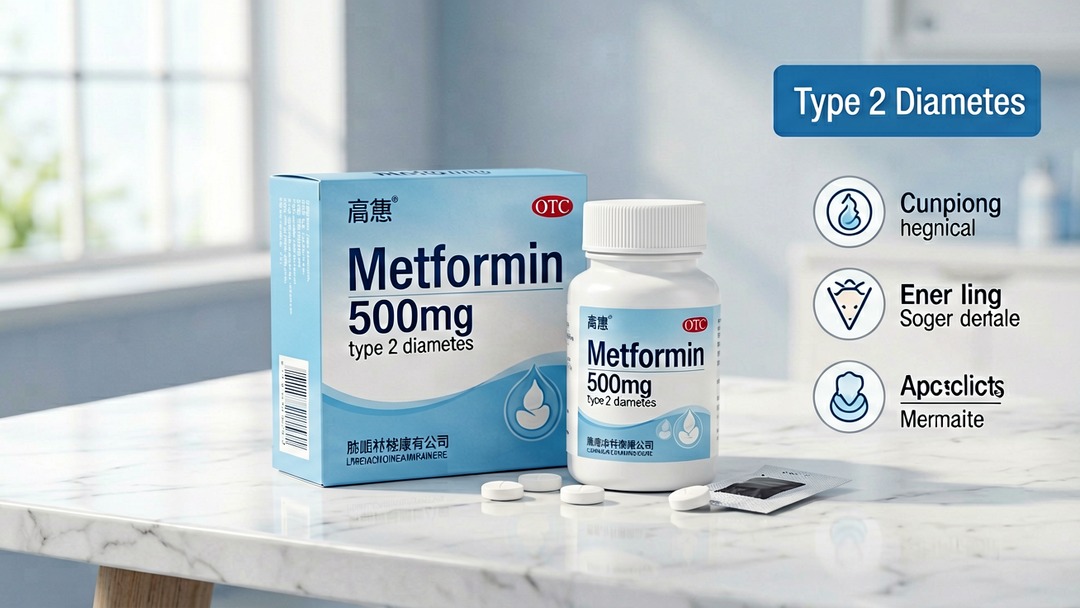
Metformin is the most widely prescribed oral medicine for type 2 diabetes worldwide, and it has remained a first-line therapy for more than two decades. Usually started as a 500 mg tablet taken with meals, it lowers blood glucose without causing weight gain or hypoglycemia, which is why major guidelines place it at the foundation of diabetes care. This guide explains how metformin works at the cellular level, who benefits most, correct dosing, what the landmark trials prove, how it compares with other glucose-lowering drugs, and what a month of generic therapy typically costs.
What Is Metformin?
Metformin is an oral antihyperglycemic agent in the biguanide class. It was first derived from the French lilac (Galega officinalis) and has been used in Europe since the 1950s before gaining broad global acceptance. It is sold under the brand name Glucophage and, increasingly, as numerous generic equivalents. Unlike insulin or sulfonylureas, metformin does not increase insulin secretion and therefore does not by itself cause low blood sugar.
In clinical practice metformin is used for several related conditions. Its core indication is type 2 diabetes, where it reduces both fasting and post-meal glucose. It is also commonly used off-label and in guideline-supported ways for polycystic ovary syndrome (PCOS) to improve insulin resistance and menstrual regularity, for prediabetes to delay progression to diabetes, and in some cases of gestational diabetes under specialist supervision. It is not a cure; it is a long-term metabolic management tool.
How Metformin Works: Mechanism of Action
Metformin’s primary effect is to reduce glucose production by the liver. It activates an enzyme called AMP-activated protein kinase (AMPK), often described as the cell’s “fuel gauge.” When AMPK is switched on, the liver reduces its output of glucose into the bloodstream, particularly overnight and between meals when hepatic gluconeogenesis would otherwise keep blood sugar high. This single action addresses one of the central defects in type 2 diabetes: excess endogenous glucose production.
Beyond the liver, metformin improves insulin sensitivity in muscle and fat tissue, so the body uses its own insulin more efficiently. It also modestly slows glucose absorption from the intestine and may alter the gut microbiota in ways that support metabolic health. Importantly, metformin does not stimulate pancreatic beta cells, which is why the risk of hypoglycemia is very low when it is used alone. The medication is not metabolized significantly by the liver and is excreted unchanged by the kidneys, a fact that explains its dosing limits in kidney disease.
Approved Uses and Indications
- Type 2 diabetes mellitus: first-line monotherapy and combination therapy to improve glycemic control in adults and, in appropriate cases, children aged 10 and older.
- Prediabetes: used to reduce the risk of progression to overt diabetes, especially alongside lifestyle change.
- Polycystic ovary syndrome (PCOS): to improve insulin resistance, ovulation, and menstrual regularity.
- Gestational diabetes: considered in selected patients when diet and exercise are insufficient, under obstetric supervision.
- Weight-neutral or weight-reducing effect: often preferred in patients who are overweight or obese because it does not promote weight gain.
Metformin is not used for type 1 diabetes as a replacement for insulin, although it is sometimes added to insulin in overweight type 1 patients to reduce insulin requirements. It is a management medicine, not an emergency treatment for very high blood sugar or diabetic ketoacidosis.
Dosage and How to Take It
| Situation | Typical Regimen | Notes |
|---|---|---|
| Immediate-release, initial | 500 mg twice daily or 850 mg once daily | Take with meals to reduce stomach upset. |
| Immediate-release, maintenance | 500–1000 mg twice daily | Titrate up gradually every 1–2 weeks. |
| Extended-release (ER), initial | 500–1000 mg once daily with evening meal | Swallow whole; do not crush or chew. |
| Maximum daily dose (IR) | 2550 mg split into 3 doses | Most patients stay at 2000 mg or less. |
| Maximum daily dose (ER) | 2000 mg once daily | ER often better tolerated for GI effects. |
| Kidney function limits | eGFR below 30 mL/min: contraindicated | eGFR 30–45: use with caution and monitor. |
Always start low and go slow. A common mistake is jumping to a high dose too quickly, which triggers nausea and diarrhea. If a dose is missed, take it with the next meal unless it is almost time for the following dose — never double up. Because metformin is cleared by the kidneys, your clinician will check renal function periodically and before any procedure requiring intravenous contrast dye, when the drug is briefly held.
Clinical Evidence: What the Trials Show
Metformin’s reputation rests on unusually durable evidence. The United Kingdom Prospective Diabetes Study (UKPDS), published in 1998, followed thousands of newly diagnosed overweight patients with type 2 diabetes for an average of 10 years. Those randomized to metformin had a 32% reduction in diabetes-related endpoints and a 36% reduction in all-cause mortality compared with conventional diet therapy, and notably better outcomes than those started on sulfonylureas or insulin. The mortality and cardiovascular advantage of metformin has not been reliably reproduced by any other single glucose-lowering drug.
Subsequent analyses and the Diabetes Prevention Program (DPP) in the United States showed that in people with prediabetes, metformin reduced the incidence of progression to diabetes by about 31% over roughly three years, performing nearly as well as intensive lifestyle intervention and more consistently across groups. For PCOS, multiple randomized trials demonstrate improved ovulation rates and menstrual regularity compared with placebo. These datasets explain why guideline committees from the ADA, EASD, and WHO continue to recommend metformin as the initial pharmacological step for most patients with type 2 diabetes.
Metformin vs Other Type 2 Diabetes Medications
| Feature | Metformin | Sulfonylureas | SGLT2 Inhibitors |
|---|---|---|---|
| Primary mechanism | Reduces hepatic glucose, improves insulin sensitivity | Stimulates insulin release | Increases urinary glucose loss |
| Risk of hypoglycemia | Very low alone | Moderate to high | Low |
| Effect on weight | Neutral to modest loss | Weight gain | Modest loss |
| Cardiovascular evidence | Strong (UKPDS mortality benefit) | Neutral | Strong in heart-failure/CKD |
| Main limiting side effect | GI upset | Hypoglycemia, weight gain | Genital infection, dehydration |
| Typical acquisition cost (generic) | Very low | Very low | Higher |
For most newly diagnosed patients, metformin remains the anchor because of its efficacy, safety, low cost, and cardiovascular track record. SGLT2 inhibitors and GLP-1 receptor agonists are added when cardiovascular or kidney protection, or weight loss, is a priority; sulfonylureas are inexpensive but carry more hypoglycemia and weight-gain burden.
Generic Metformin vs Brand Glucophage: Cost Comparison
Metformin has been off patent for many years, so the active ingredient is identical between brand and generic products, and regulators require bioequivalence before approval. The price gap between a licensed generic and the original brand can be substantial for patients paying out of pocket.
| Option | Typical 30-day supply (500 mg, twice daily) | Typical 90-day supply |
|---|---|---|
| Indian generic metformin 500 mg | $2–$5 | $5–$13 |
| US generic metformin 500 mg | $4–$25 | $10–$60 |
| US brand-name formulation (cash price) | $60–$180 | $150–$450 |
In India, metformin 500 mg is manufactured by dozens of WHO-GMP-certified facilities, and a month of therapy commonly costs only a few dollars. If you are comparing licensed generic diabetes medication options, a verified supplier can reduce annual out-of-pocket spending from hundreds of dollars on brand pricing to a small fraction of that. The clinical product is the same molecule; the main variable is consistent daily adherence.
Who Should Consider Metformin?
Metformin is appropriate if you have been diagnosed with type 2 diabetes and your clinician recommends an oral first-line agent, particularly if you are overweight or trying to avoid hypoglycemia and weight gain. It is also a reasonable option for people with prediabetes at high risk of progression, and for women with PCOS-related insulin resistance. It is not a medication to start independently: dosing, renal screening, and combination planning require a clinician. If brand pricing is unaffordable, ask your doctor about switching to a bioequivalent generic — the therapeutic expectation is equivalent.
Side Effects and Safety Profile
The most common side effects are gastrointestinal: nausea, vomiting, diarrhea, abdominal discomfort, and a metallic taste. These affect a meaningful minority of starters but usually fade within a few weeks, especially with extended-release formulations and dose titration with food. Taking the tablet with meals and using the ER version are the two most effective strategies.
- Common: diarrhea, nausea, abdominal bloating, flatulence, metallic taste, mild appetite reduction.
- Less common but important: vitamin B12 deficiency with long-term use; periodic B12 monitoring is advised.
- Rare but serious: lactic acidosis, a medical emergency more likely in severe kidney or liver disease, severe infection, or hypoxia.
- Contraindications: eGFR below 30 mL/min, acute metabolic acidosis, severe acute illness, and certain imaging with iodinated contrast (brief hold).
Seek urgent care for unusual muscle pain with malaise, trouble breathing, severe drowsiness, or cold clammy skin, as these can signal lactic acidosis. Long-term users should have vitamin B12 checked every one to two years because deficiency can contribute to neuropathy that mimics diabetic nerve damage.
Drug Interactions to Discuss With Your Doctor
- Contrast dye (CT/MRI with iodinated contrast): hold metformin before and 48 hours after to protect kidney function.
- Loop diuretics, corticosteroids, and some antipsychotics: can raise glucose and blunt metformin’s effect.
- Cimetidine and certain HIV/heart medicines: may increase metformin levels by competing for renal elimination.
- Alcohol: excessive intake raises lactic acidosis risk; limit consumption.
- Other glucose-lowering drugs: combination therapy increases hypoglycemia risk when paired with sulfonylureas or insulin.
Frequently Asked Questions
How long does it take for metformin to lower blood sugar?
Glucose-lowering begins within a few days, but the full effect builds over two to four weeks as the dose is titrated. Maximum benefit is usually seen at steady maintenance dosing of several weeks.
Should I take metformin with food?
Yes. Taking it with meals substantially reduces nausea and diarrhea. Extended-release tablets should be swallowed whole with an evening meal and never crushed or split.
Is generic metformin as effective as Glucophage?
Yes. Generic metformin must meet the same bioequivalence standards as the brand, and clinical outcomes are equivalent. The main practical differences are tablet appearance, cost, and sometimes formulation (immediate versus extended release).
Can metformin cause vitamin B12 deficiency?
Long-term use can lower B12 levels, potentially contributing to anemia or neuropathy. Clinicians typically recommend periodic B12 testing, and a supplement may be advised if levels fall.
Is metformin safe during pregnancy?
Metformin is sometimes used in pregnancy for gestational diabetes or PCOS under specialist care, but decisions are individualized. Always discuss risks and benefits with an obstetrician before continuing or starting it.
What happens if I miss a dose?
Take the missed dose with your next meal unless it is nearly time for the following dose. Never take two doses at once, as doubling up increases gastrointestinal side effects without added benefit.
Medical Disclaimer
This article is for informational purposes only and does not replace professional medical advice, diagnosis, or treatment. Metformin is a prescription medicine; always consult a licensed healthcare provider before starting, stopping, or changing your dose. Drug prices vary by country, pharmacy, insurance status, and over time; figures shown are approximate ranges, not quotes or guarantees. Never share prescription medicines, and never import medicines without verifying applicable regulations in your country.
References
- FDA. Glucophage (metformin hydrochloride) Prescribing Information.
- UK Prospective Diabetes Study (UKPDS) Group. Effect of intensive blood-glucose control with metformin on complications in overweight patients with type 2 diabetes. Lancet. 1998;352(9131):854-865.
- Knowler WC, et al. Reduction in the incidence of type 2 diabetes with lifestyle intervention or metformin. N Engl J Med. 2002;346(6):393-403.
- American Diabetes Association. Standards of Care in Diabetes. Pharmacologic Approaches to Glycemic Treatment.
- Nathan DM, et al. Long-term effects of metformin on diabetes prevention.
- Legro RS, et al. Metformin in women with PCOS: randomized trial evidence. Endocr Pract.