Minoxidil 5% Solution & Foam: Complete Guide for Hair Regrowth, Side Effects & Affordable Generic Options
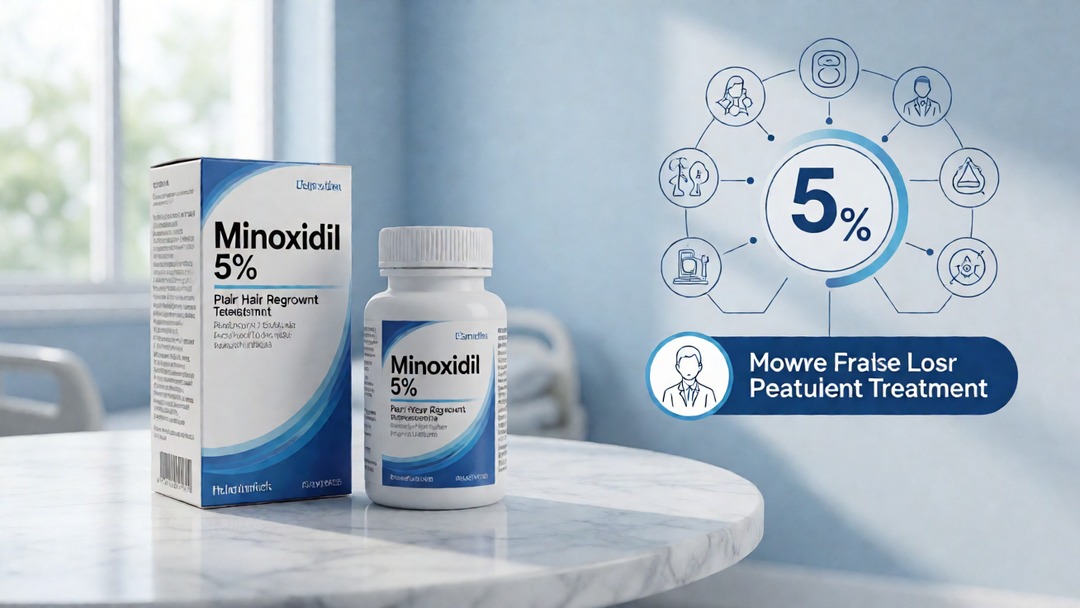
Hair loss affects an estimated 80 million people in the United States alone, and for most of them the culprit is androgenetic alopecia — the inherited pattern of thinning that creeps in gradually, usually starting at the temples or the crown. Among all the products that claim to slow or reverse this process, minoxidil 5% is one of the very few that carries FDA approval for that specific use. It is available both as a brand-name foam and solution (Rogaine) and as far more affordable generic versions manufactured in countries like India, where competition among pharmaceutical companies has driven prices down significantly. This guide walks through what minoxidil actually does, how the 5% strength differs from lower concentrations, what the solution-versus-foam decision really means, realistic timelines for results, side effects worth knowing, and how to think about pricing when comparing brand and generic options. An internal link to our hair care product collection is included for readers who want to browse related items.
What Is Minoxidil?
Minoxidil was originally developed in the 1960s as an oral medication for severe high blood pressure. During clinical trials researchers noticed an unexpected side effect: patients were growing hair in unusual places, including on the forehead, arms, and scalp. That observation led to the development of a topical formulation, and by the mid-1980s minoxidil solution was approved for treating androgenetic alopecia. Today it is sold over the counter in most countries. The drug belongs to a class called vasodilators, and although researchers do not yet have a complete picture of every pathway involved, the net effect on hair follicles is well documented: minoxidil extends the growth (anagen) phase of the hair cycle, increases blood flow to the follicle, and appears to stimulate dormant follicles to produce thicker shafts. The 5% concentration is the strength most commonly studied and recommended for men, while 2% has historically been used more often for women, though 5% once-daily foam is now also approved for female pattern hair loss in many markets.
How Minoxidil Works on Hair Follicles
Hair grows in cycles. Each follicle spends years in the anagen (growth) phase, then shifts into a brief catagen transition, followed by telogen (resting), and finally sheds the hair before starting over. In androgenetic alopecia, genetic and hormonal factors shorten the anagen phase and shrink the follicle over time, so hairs grow progressively thinner and shorter until the follicle stops producing visible hair altogether. Minoxidil counteracts that process in several ways:
- Prolongs anagen phase. Minoxidil keeps hair follicles in the active growth stage longer than they would naturally stay, allowing more time for the hair shaft to thicken and lengthen.
- Increases follicular blood flow. As a vasodilator, minoxidil widens the small blood vessels around the follicle, improving delivery of oxygen and nutrients that support healthy hair production.
- Activates potassium channels. Minoxidil opens ATP-sensitive potassium channels in the cell membranes of hair follicle cells, which is thought to trigger signaling pathways that promote follicle activity and may help reverse some of the miniaturization process.
- May stimulate prostaglandin pathways. Some research suggests minoxidil upregulates prostaglandin E2 (PGE2) in the scalp, a signaling molecule linked to hair growth, while possibly downregulating prostaglandin F2alpha, which is associated with hair shedding.
- Calls dormant follicles back to work. In areas where follicles have shrunk but not fully died, minoxidil can sometimes reactivate them, leading to the regrowth of hairs that were no longer visible.
One important caveat: minoxidil does not block dihydrotestosterone (DHT), the hormone that drives the underlying genetic process of pattern baldness. That is why it works best as part of a broader approach and why stopping treatment usually leads to a reversal of gains within a few months.
Minoxidil 5% Solution vs. 5% Foam
Both the liquid solution and the foam contain the same active ingredient at the same 5% concentration, and head-to-head studies have generally found them similarly effective when patients use them consistently. The real differences are in the inactive ingredients, the feel on the scalp, and how easy each is to use correctly.
| Feature | 5% Solution | 5% Foam |
|---|---|---|
| Active ingredient | Minoxidil 5% | Minoxidil 5% |
| Common inactive ingredient | Propylene glycol (helps absorption but can irritate) | Stearyl alcohol, butylated hydroxytoluene (generally gentler) |
| Feel on scalp | Can feel greasy or damp; takes time to dry | Dries faster; lighter, less greasy feel |
| Irritation risk | Higher — propylene glycol is a common sensitizer | Lower — preferred by people with sensitive skin |
| Application | Dropper or spray; can drip or run into eyes/face | Mousse applicator; easy to massage in, less mess |
| Cost (brand, U.S.) | Rogaine solution ~$30-$50 per month supply | Rogaine foam ~$35-$55 per month supply |
| Cost (generic, India-sourced) | ~$9-$22 per 60 ml bottle (varies by manufacturer) | Often slightly higher than generic solution, ~$11-$24 per equivalent |
| Best for | Budget-conscious users without scalp sensitivity | Users who dislike greasiness or have experienced irritation from solution |
For many users, the deciding factor is simply whether their scalp tolerates propylene glycol. If the solution causes itching, flaking, or redness, switching to the foam is often the easiest fix without changing active ingredients.
Dosage, Application, and Realistic Timeline
How to use minoxidil 5%
- Men (androgenetic alopecia): Apply 1 ml of 5% solution (or half a capful of foam) to the affected areas of the scalp twice daily, roughly 12 hours apart. Do not exceed the recommended dose — more is not better and increases the risk of systemic side effects.
- Women (female pattern hair loss): The 5% foam is typically applied once daily; the 2% solution may be used twice daily. Follow the specific product labeling or a clinician’s instructions, since recommendations can vary by country and formulation.
- Application method: Apply to a clean, dry scalp directly onto the thinning areas. Massage gently with fingertips. Wash hands immediately afterward to avoid transferring the product to the face or other areas.
- Drying time: Allow the product to dry completely before lying down, wearing a hat, or applying other styling products. This usually takes 2-4 hours.
- Consistency is essential: Missed applications reduce effectiveness. If you forget a dose, apply it when you remember unless it is nearly time for the next dose; do not double up.
- Avoid washing too soon: Try not to wash the treated area for at least 4 hours after application to allow adequate absorption.
What timeline should you expect?
Minoxidil is a slow-acting treatment, and managing expectations is critical. The typical sequence looks like this:
- Weeks 2-8: Some people notice increased shedding. This is actually a good sign — minoxidil is synchronizing the hair cycle and pushing out old, weak hairs so that stronger ones can take their place. It is temporary and does not mean the treatment is failing.
- Months 3-4: Shedding usually slows. Early regrowth may be visible as fine, thin hairs (often called “vellus-like” hairs) in previously thinned areas. These hairs can gradually thicken over time.
- Months 6-12: This is when most people see the clearest visible improvement. Hairs become thicker and more cosmetically noticeable. Clinical studies commonly use the 6-month and 12-month marks as primary assessment points.
- 12+ months: Maximum benefit is usually reached by one year. Continued use maintains the result; stopping typically leads to a return to the pre-treatment state within 3-4 months, because minoxidil does not cure the underlying genetic predisposition.
It is also worth noting that minoxidil tends to work better on the crown (vertex) than on the frontal hairline. People whose primary concern is recession at the temples should have realistic expectations and may want to discuss surgical or alternative medical options with a dermatologist.
Side Effects and Safety Considerations
Minoxidil 5% is generally well tolerated, especially compared with oral medications that affect the whole body. Most adverse effects are local and mild. Still, people should be aware of what can happen.
Common side effects
- Scalp irritation: Itching, dryness, flaking, and redness are the most frequently reported problems, especially with the propylene glycol-containing solution. Switching to foam often resolves this.
- Unwanted hair growth elsewhere: If the product drips or is transferred by hands to the forehead, temples, cheeks, or other areas, fine hair can grow there. This is reversible if the exposure stops.
- Initial shedding: As noted above, a temporary increase in shedding during the first weeks is common and expected, not a sign of harm.
- Contact dermatitis: A true allergic reaction to propylene glycol or another inactive ingredient is less common but can occur. Symptoms include persistent redness, swelling, and intense itching.
Less common but more serious effects
- Systemic absorption: Though rare with proper topical use, enough minoxidil can be absorbed to cause dizziness, lightheadedness, rapid heartbeat (tachycardia), or fluid retention, particularly in people who overuse the product, apply it to broken skin, or have underlying heart conditions.
- Chest pain or palpitations: Anyone experiencing these symptoms should stop using minoxidil and seek medical attention promptly.
- Pregnancy and breastfeeding: Topical minoxidil is generally not recommended during pregnancy due to limited safety data, and it should not be applied by or used by women who are breastfeeding without medical guidance.
People with a history of heart disease, uncontrolled hypertension, or arrhythmia should consult a physician before starting minoxidil, even though the topical form has far lower systemic exposure than the older oral blood-pressure formulation.
Generic vs. Brand-Name Minoxidil: Is There a Real Difference?
The short answer is that the active ingredient is identical, and generic versions are required to meet bioequivalence standards — meaning they must deliver roughly the same amount of minoxidil to the scalp over the same time frame as the brand product. In practice, many people use generic minoxidil with results comparable to Rogaine. The main differences are:
- Price: Brand-name Rogaine typically costs two to four times more than an equivalent generic, especially when comparing foam products. For a condition that requires months or years of continuous use, that difference adds up quickly.
- Inert ingredients: Generics may use different solubilizers, preservatives, or propellants. These do not change the active drug but can affect how the product feels, how quickly it dries, and how likely it is to irritate a particular user’s scalp.
- Packaging and applicator design: Brand products often have more polished dispensers and clearer instructions, which can matter for people who struggle with consistent application. Generics may be simpler but still effective.
- Availability: In some regions, only certain generic manufacturers are present, so choice may be limited by what is stocked or imported.
If cost is the main concern, generic minoxidil 5% is a reasonable and widely used option. If a user has tried a generic and experienced irritation or poor results, switching to a different generic manufacturer — or to the brand foam — may be worthwhile before concluding that minoxidil itself is ineffective.
Pricing: Brand and Generic Ranges
Pricing for hair loss treatments varies enormously by country, pharmacy, and whether a person has insurance or a discount program. The figures below are approximate ranges meant to help with comparison, not exact quotes. All amounts are in U.S. dollars unless noted.
| Product / Market | Typical Monthly Cost Range | Notes |
|---|---|---|
| Rogaine 5% foam (brand, U.S.) | $35-$55 | Often sold in 3-month supply packs; per-month cost drops slightly with larger packs |
| Rogaine 5% solution (brand, U.S.) | $30-$50 | Similar pack structure; generic solution is usually cheaper |
| Generic minoxidil 5% solution (India-sourced) | $9-$22 | Per 60 ml bottle; multiple Indian manufacturers compete on price; shipping and import rules may apply for non-residents |
| Generic minoxidil 5% foam (India-sourced) | $11-$24 | Less common than solution; a good option for people who need foam but want to avoid brand pricing |
| Generic minoxidil 2% solution (India-sourced) | $7-$16 | Sometimes used for women; lower concentration generally costs a bit less |
| Brand minoxidil in Western Europe / Australia | $25-$60 | Varies by country and reimbursement rules; some national health systems subsidize part of the cost |
Price source: The price ranges in this article combine publicly listed Indian generic pharmaceutical prices with standard U.S. retail brand pricing. Actual costs vary by pharmacy, prescription coverage, quantity, and local taxes. Always confirm current pricing with your pharmacist.
A practical tip: because minoxidil treatment is long-term, many people find that buying in larger quantities (when storage conditions and expiration dates allow) lowers the effective monthly cost. Always check expiration dates and store products in a cool, dry place away from direct sunlight.
Frequently Asked Questions
The following questions and answers are included to help search engines surface key information. They reflect general medical knowledge and should not replace a consultation with a qualified healthcare professional.
Medical Disclaimer
Important: This content is for general informational and educational purposes only. It does not constitute medical advice, diagnosis, or treatment. Drug information may change as new clinical data emerge; always verify dosing and safety information with a licensed healthcare provider or pharmacist. Prices for generic and brand medications vary by manufacturer, supplier, quantity, location, and currency exchange rates. The ranges shown are approximate estimates based on publicly available data and may not reflect current pricing. Never start, stop, or change a prescription medication without consulting your doctor. Generic medications should be obtained from regulated, licensed pharmacies that require a valid prescription where mandated by law.
References
- Olsen EA, Weiner MS, Delgado R, et al. “Comparative efficacy of minoxidil 5% foam once daily. ” Journal of the American Academy of Dermatology, multiple clinical trials supporting 5% foam efficacy in men and women.
- U.S. Food and Drug Administration. “Rogaine (minoxidil) Topical Solution and Foam — Prescribing Information and OTC Monograph.” Accessed via FDA database; official labeling for approved uses, dosing, and warnings.
- American Academy of Dermatology. “Hair Loss: Diagnosis and Treatment.” AAD patient and clinician resources on androgenetic alopecia and approved treatments including minoxidil.
- Whiting DA, et al. “Double-blind, placebo-controlled study evaluating the efficacy and safety of topical minoxidil in female pattern hair loss.” Journal of the American Academy of Dermatology, foundational female-minoxidil studies.
- Gupta AK, Charrette C. “The efficacy and safety of minoxidil for hair loss: a systematic review.” Journal of the American Academy of Dermatology / related dermatology reviews summarizing evidence across multiple randomized trials.
- National Health Service (NHS, UK). “Minoxidil for hair loss.” Public patient information on how minoxidil works, how to use it, and common side effects.