
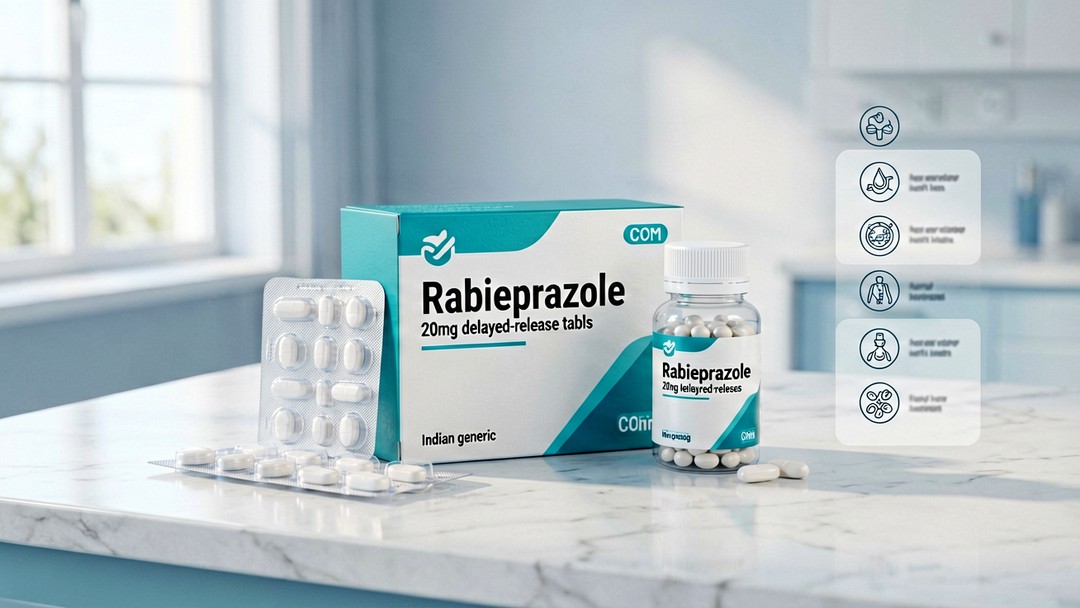
What Is Rabeprazole 20mg?
Rabeprazole 20mg is a proton pump inhibitor (PPI) used to treat acid-related disorders of the upper gastrointestinal tract, including gastroesophageal reflux disease (GERD), erosive esophagitis, peptic ulcer disease, and H. pylori infection as part of combination therapy. It belongs to the benzimidazole class of drugs and works by blocking the final step of gastric acid secretion directly at the proton pump in stomach parietal cells. Among the available PPIs, rabeprazole is recognized for its relatively fast onset of acid suppression and a predictable, largely non-enzymatic metabolism that translates into fewer drug-drug interactions.
Rabeprazole is available as 10mg and 20mg delayed-release tablets and as an intravenous formulation. The 20mg tablet is the standard maintenance and therapeutic dose for most acid-related conditions. In India, rabeprazole is manufactured by a wide range of pharmaceutical companies and is one of the most affordable prescription PPIs available, making long-term management of GERD and ulcer disease far more economical for patients compared with brand-name alternatives in Western markets.
Mechanism of Action
Rabeprazole is a weak base that becomes trapped and activated within the highly acidic environment of the parietal cell’s secretory canaliculus. Once protonated, it forms a reactive sulfenamide that binds covalently to cysteine residues on the H+/K+-ATPase enzyme, the “proton pump” responsible for the terminal step of gastric acid secretion. This irreversible inhibition of the proton pump blocks acid release regardless of the stimulus — whether histamine, gastrin, or acetylcholine — and produces a pronounced and sustained reduction in both basal and stimulated gastric acid output.
Because rabeprazole covalently modifies the pump enzyme, its acid-suppressive effect persists until new pump molecules are synthesized, which is why once-daily dosing provides round-the-clock control. Improvements in acid suppression begin within the first hour of administration and approach maximal effect after several days of continuous therapy. Rabeprazole also has antimicrobial relevance in H. pylori eradication regimens: by raising gastric pH, it enhances the stability and activity of co-administered antibiotics such as amoxicillin and clarithromycin, improving eradication rates.
Clinical Uses and Indications
Rabeprazole 20mg is approved and widely used for the following conditions:
- Gastroesophageal Reflux Disease (GERD): Symptomatic relief of heartburn and regurgitation, including maintenance of healed erosive esophagitis.
- Erosive Esophagitis: Healing of esophageal erosions caused by chronic acid reflux, typically over 4–8 weeks.
- Peptic Ulcer Disease: Healing and prevention of recurrence of gastric and duodenal ulcers, including NSAID-associated ulcers.
- H. pylori Eradication: Component of triple therapy (rabeprazole 20mg twice daily with clarithromycin and amoxicillin) for 7–14 days.
- Zollinger-Ellison Syndrome: Management of excessive gastric acid secretion in this rare neuroendocrine tumor condition.
- Stress Ulcer Prophylaxis: Reduction of upper GI bleeding risk in critically ill patients.
- Dyspepsia: Symptomatic treatment of functional dyspepsia when acid-mediated symptoms predominate.
Dosage and Administration
| Condition | Dosage Regimen | Duration |
|---|---|---|
| Erosive esophagitis | 20mg PO once daily | 4–8 weeks |
| GERD symptom relief / maintenance | 20mg PO once daily (10mg in some patients) | Ongoing as needed |
| Duodenal ulcer healing | 20mg PO once daily | 4 weeks |
| Gastric ulcer healing | 20mg PO once daily | 6–8 weeks |
| H. pylori eradication (triple therapy) | 20mg PO twice daily with antibiotics | 7–14 days |
| Zollinger-Ellison syndrome | 20–60mg PO once or twice daily (dose individualized) | Long-term |
Rabeprazole delayed-release tablets should be swallowed whole with water, ideally taken about 30 minutes before a meal to coincide with peak pump activity. Unlike some PPIs, rabeprazole demonstrates consistent absorption that is not significantly affected by food timing in most patients. Symptoms may improve within a day, but several days of therapy are usually required for full effect. Long-term continuous PPI use should be reviewed periodically, and the lowest effective dose should be used for maintenance.
Rabeprazole vs. Other PPIs: Comparison
| PPI | Onset of Action | Metabolism | Dosing | Key Advantage |
|---|---|---|---|---|
| Rabeprazole | Fast (1–2 hours) | Non-enzymatic (mostly) | 20mg once daily | Fewer drug interactions |
| Omeprazole | Moderate | CYP2C19 | 20–40mg once daily | Widely available, well studied |
| Esomeprazole | Moderate | CYP2C19 | 20–40mg once daily | Higher bioavailability |
| Pantoprazole | Moderate | CYP2C19 | 20–40mg once daily | Good safety data |
| Lansoprazole | Moderate | CYP2C19 | 15–30mg once daily | Available in ODT/OTC forms |
The clinical significance of differences among PPIs is modest, and most patients respond to any of them. Rabeprazole is often chosen for its reliable efficacy and lower interaction burden, which can matter in patients taking multiple medications. For a deeper look at a closely related PPI, readers can review our omeprazole guide, which compares these agents for GERD management.
Side Effects and Safety Profile
Rabeprazole is generally well tolerated. The most common side effects are headache, diarrhea, nausea, abdominal pain, and flatulence, which are usually mild and transient. Serious adverse events are uncommon. Long-term PPI use is associated with a few well-characterized risks that apply across the class, including reduced absorption of certain nutrients and an increased risk of Clostridioides difficile infection, community-acquired pneumonia, and possibly osteoporosis-related fractures with prolonged high-dose use. Hypomagnesemia and vitamin B12 deficiency have also been reported with long-term therapy.
A notable theoretical concern involves the dependence of clopidogrel activation on CYP2C19: because rabeprazole is largely metabolized by non-enzymatic reduction rather than CYP2C19, it is less likely than omeprazole or esomeprazole to interfere with clopidogrel’s antiplatelet effect. Rabeprazole should be used at the lowest effective dose for the shortest duration consistent with treatment goals, and the need for ongoing therapy should be reassessed periodically. Rebound acid hypersecretion can occur if a PPI is stopped abruptly after prolonged use, so gradual tapering is sometimes recommended.
Indian Generic Pricing and Affordability
India is a major manufacturer of rabeprazole, and generic 20mg tablets are available at very low cost. A 15-tablet strip of generic Rabeprazole 20mg from Indian manufacturers typically costs approximately ₹100–₹250 ($1.20–$3.05) in the domestic market. A one-month supply of 30 tablets generally ranges from ₹200–₹500 ($2.40–$6.10). By comparison, a 30-tablet supply of the US brand version typically costs $300–$700, and US generic rabeprazole 20mg ranges from $40–$130 depending on pharmacy and insurance coverage.
Because GERD and ulcer disease often require months or years of daily maintenance, the cost of treatment is a critical consideration for many patients. Comparing licensed generic medication suppliers can lower monthly PPI costs by 80–90% compared with US retail prices. Indian manufacturers producing rabeprazole operate under CDSCO regulatory oversight, and many facilities carry international certifications, supporting consistent quality for exported medicines. As with all PPIs, patients should use the lowest effective dose and periodically review the continued need for therapy.
Drug Interactions and Precautions
Rabeprazole’s non-enzymatic metabolism results in fewer drug-drug interactions than other PPIs. Nonetheless, by raising gastric pH, it can reduce the absorption of drugs that require an acidic environment, including ketoconazole, itraconazole, iron salts, and certain HIV protease inhibitors, which should be taken with an acidic beverage or at a different time. Rabeprazole may also increase plasma levels of methotrexate, and patients on high-dose methotrexate should be monitored.
While rabeprazole has minimal effect on CYP2C19-dependent activation of clopidogrel, individuals who are poor metabolizers may still have reduced antiplatelet response, and this should be discussed with a cardiologist. Long-term rabeprazole use warrants monitoring of magnesium, vitamin B12, and bone health, particularly in elderly patients and those on other medications affecting these parameters. Rabeprazole is generally safe during pregnancy when clinically indicated, after risk-benefit assessment with the treating clinician.
Safety and Regulatory Information
Rabeprazole is a prescription-only (Schedule H) medication in India, though over-the-counter availability exists in some countries for approved indications. Regulatory labeling instructs that acute interstitial nephritis has been observed in patients taking PPIs, and that long-term use is associated with the risks described above. Generic rabeprazole products must demonstrate bioequivalence to the reference product, and facilities are subject to CDSCO inspection with many also audited internationally. Patients should take rabeprazole exactly as directed and consult a healthcare provider if symptoms persist or worsen.
Frequently Asked Questions (FAQ)
How quickly does Rabeprazole 20mg work?
Patients typically notice heartburn relief within the first hour or two of the first dose, and maximal acid suppression develops over several days of once-daily dosing. For full healing of esophagitis, 4–8 weeks of therapy is usually required.
Is Rabeprazole the same as Omeprazole?
Both are proton pump inhibitors with similar overall efficacy, but they differ in metabolism. Rabeprazole relies less on the CYP2C19 enzyme, so its effect is more predictable across patients and it causes fewer drug interactions, particularly with clopidogrel.
Can I take Rabeprazole long term?
Many patients take rabeprazole for months or years to control GERD. Because very long-term PPI use carries small risks (nutrient deficiency, increased infection and fracture risk), it is advisable to use the lowest effective dose and have the ongoing need reviewed periodically by a doctor.
Should I take Rabeprazole before or after food?
Take rabeprazole about 30 minutes before a meal for best results, ensuring the drug is absorbed and in the bloodstream when the proton pumps are most active. Be consistent with timing, typically before breakfast.
Can Rabeprazole be taken with other acid reflux medicines?
Avoid combining it with other PPIs or high-dose antacids without medical advice. For breakthrough symptoms, your doctor may recommend a specific schedule; H2 blockers and antacids generally should not be used simultaneously with rabeprazole unless directed.
References
- US Food and Drug Administration. Rabeprazole Sodium Prescribing Information (AcipHex). FDA Label Database. 2023.
- Katz PO, et al. ACG Clinical Guideline for the Diagnosis and Management of Gastroesophageal Reflux Disease. Am J Gastroenterol. 2022;117(1):27–56.
- Malfertheiner P, et al. Management of Helicobacter pylori infection: the Maastricht VI/Florence consensus report. Gut. 2022;71(12):2380–2413.
- Freedberg DE, et al. Acid suppression therapy and bacterial infection risk: a systematic review. Ann Intern Med. 2015;163(9):693–702.
- WHO Model List of Essential Medicines — 22nd List. World Health Organization. 2021.
- Scheiman JM. The management of reflux disease and peptic ulcer disease: proton pump inhibitors in perspective. Nat Rev Gastroenterol Hepatol. 2020;17(9):550–561.
Disclaimer: This article is for informational purposes only and does not constitute medical advice. Always consult a qualified healthcare provider before starting, stopping, or changing any medication. Rabeprazole is a prescription proton pump inhibitor, and long-term use is associated with small increases in the risk of certain infections, nutrient deficiencies, and bone fractures. Pricing information is approximate, varies by market and pharmacy, and is subject to change. Medications should only be purchased from licensed, reputable sources.