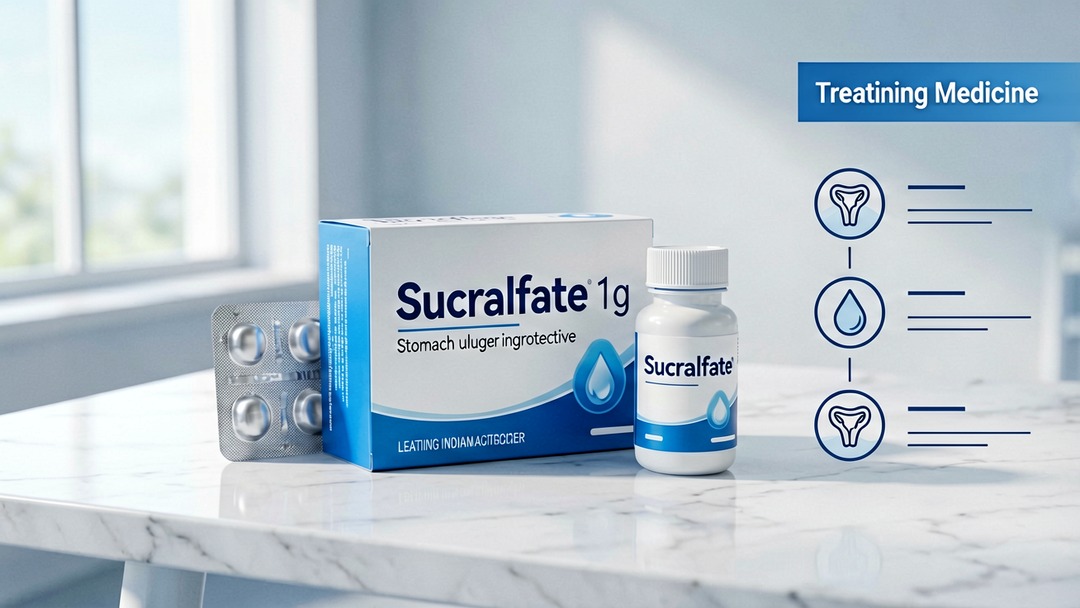
Sucralfate, sold under the brand name Carafate, is a distinctive medicine used to protect the lining of the stomach and the first part of the small intestine from acid damage. Unlike drugs that reduce acid production, sucralfate works by forming a protective coating over ulcers, allowing them to heal. This guide explains how sucralfate works, who needs it, correct dosing, what the clinical evidence shows, how it compares with acid-reducing medications, and what a typical course costs when you choose generic alternatives.
What Is Sucralfate (Carafate)?
Sucralfate is a prescription gastroprotective agent approved for the short-term treatment of duodenal ulcers and for maintenance therapy to reduce recurrence. It is a complex salt of sucrose and aluminum hydroxide that behaves much like a bandage for the stomach lining. When taken orally, it becomes a viscous, gel-like substance that binds selectively to damaged tissue and forms a barrier against acid, bile salts, and pepsin.
The drug was introduced in the 1960s and has remained in use for decades because of its favorable safety profile and its unique mechanism, which is fundamentally different from the acid-suppressing drugs most people associate with ulcer treatment. Because it does not enter the bloodstream in meaningful amounts, it has fewer systemic side effects than many alternatives, though its antacid-like aluminum content requires careful use in patients with kidney problems.
How It Works: Mechanism of Action
Sucralfate does not neutralize acid on a large scale, nor does it block the proton pump or histamine receptors that drive acid secretion. Instead, it acts topically. In the acidic environment of the stomach, sucralfate polymerizes into a sticky, adhesive gel. This gel preferentially binds to the positively charged protein-rich areas of ulcer craters — the denuded, inflamed tissue — while adhering far less to healthy mucosa.
Once formed, the protective layer shields the ulcer from further erosion by gastric acid, pepsin, and bile acids, giving the damaged tissue a chance to regenerate and heal. In addition to its mechanical barrier effect, sucralfate has been shown to stimulate local prostaglandin production, enhance mucus and bicarbonate secretion, and bind growth factors — all of which support mucosal repair. Its action is largely confined to the gastrointestinal tract, which explains the drug’s low rate of systemic side effects.
Approved Uses and Indications
- Duodenal ulcer (short-term treatment): the classic indication, usually dosed for 4 to 8 weeks until healing is confirmed.
- Duodenal ulcer (maintenance): continued use at a lower dose to reduce the chance of recurrence.
- Gastric ulcer: used in some patients, though acid suppression is often preferred first-line.
- Stress ulcer prophylaxis: sometimes used in hospitalized patients at risk of stress-related mucosal damage.
- Off-label uses: including symptomatic relief of esophagitis and as an adjunct in gastroesophageal reflux disease when acid suppression alone is insufficient.
Sucralfate is not an antacid for occasional heartburn, and it is not designed to provide rapid symptom relief the way acid-neutralizing products do. Its role is preventive and healing-focused: it protects the ulcer surface so the tissue can repair itself. It is also not a cure for the underlying cause of an ulcer — such as Helicobacter pylori infection — which typically requires additional treatment, most commonly antibiotics.
Dosage and How to Take It
| Situation | Typical Regimen | Notes |
|---|---|---|
| Active duodenal ulcer | 1 g four times daily | Usually on an empty stomach, 1 hour before meals and at bedtime. |
| Maintenance after healing | 1 g twice daily | Continue as directed by your clinician. |
| Duration | 4–8 weeks for healing | Confirm healing and test for H. pylori where relevant. |
| With antacids | Take antacids 30 minutes apart | Antacids can reduce sucralfate binding; separate the doses. |
| Renal impairment | Use with caution, reduced dose | Aluminum accumulation risk in kidney disease. |
Take sucralfate on an empty stomach, typically one hour before meals and again at bedtime, so the drug reaches the ulcer before food dilutes it. Tablets can be swallowed whole or split; the liquid suspension is also available. Space it at least 30 minutes away from antacids and two hours away from other oral medicines, because sucralfate can bind to them and reduce their absorption. If you miss a dose, take it when you remember, but do not double up.
Clinical Evidence: What the Trials Show
Sucralfate’s reputation rests on a solid body of older clinical trials, several of which date from the 1980s and 1990s when it was a first-line ulcer treatment. In patients with active duodenal ulcers, studies consistently found sucralfate 1 g four times daily achieved healing rates comparable to cimetidine, one of the first acid-reducing drugs. Reported healing rates typically ranged from 60% to 90% over four to eight weeks, depending on ulcer size and methodology, with the drug’s protective mechanism driving mucosal repair.
Head-to-head comparisons generally showed sucralfate to be about as effective as the older H2-receptor antagonists for healing duodenal ulcers, with a comparable reduction in nighttime symptoms. Unlike acid suppressants, sucralfate does not change the acidity of the stomach, which some clinicians view as an advantage when assessing patients with mild or moderate disease, and it may be especially useful when systemic drug exposure is a concern.
In modern practice, the emphasis has shifted toward proton pump inhibitors for symptom control and toward eradicating H. pylori, the leading cause of duodenal ulcers. Sucralfate remains a reasonable option for patients who need a gastroprotective agent, who do not tolerate acid suppressants, or who have specific situations where a topical barrier is preferred. Its role as an adjunct in reflux disease is supported by symptomatic benefit even if endoscopic healing is less dramatic than with potent acid suppression.
Sucralfate vs Acid-Reducing Medications (PPIs, H2 Blockers)
| Feature | Sucralfate | Omeprazole (PPI) | Cimetidine (H2 blocker) |
|---|---|---|---|
| Mechanism | Topical protective barrier | Blocks acid secretion | Blocks histamine-stimulated acid |
| Systemic absorption | Very low | Yes | Yes |
| Speed of symptom relief | Slower | Fast | Moderate |
| Ulcer healing efficacy | Comparable (classic trials) | High | Moderate-high |
| Dosing frequency | 3–4 times daily | Once daily | 1–2 times daily |
| Long-term data | Good safety profile | Extensive | Extensive |
The main practical trade-off is convenience. Sucralfate requires multiple daily doses on an empty stomach, whereas a proton pump inhibitor like omeprazole is taken once daily and suppresses acid more potently, giving faster symptom relief. For patients with H. pylori-associated ulcers, acid suppression combined with antibiotics is the cornerstone of care; sucralfate plays a supporting role at best in that setting.
Side Effects and Safety Profile
Sucralfate is generally very well tolerated because it is not absorbed systemically in meaningful amounts. The most common side effect is constipation, which affects a small but notable minority of users and is related to the aluminum content of the drug. Less common effects include nausea, vomiting, dizziness, dry mouth, and flatulence. These are usually mild and often settle as the body adjusts.
- Common: constipation, nausea, dry mouth, dizziness, flatulence.
- Absorption concern: because it binds other drugs, it can reduce the absorption of several medicines taken at the same time.
- Aluminum caution: in patients with chronic kidney disease, aluminum may accumulate; use with caution and clinician oversight.
- Bowel obstruction: rare cases reported, mainly with concurrent constipation or other predisposing factors.
The most clinically important interaction is with other oral medicines. Because sucralfate can bind to drugs in the gut, it is typically recommended to take other medications at least two hours before or after a dose. Compounds affected include some antibiotics (tetracyclines, quinolones), digoxin, warfarin, thyroid hormone (levothyroxine), and phenytoin — so separating doses is essential to avoid reduced effectiveness.
Drug Interactions to Discuss With Your Doctor
- Quinolone and tetracycline antibiotics: sucralfate markedly reduces their absorption; separate by at least two hours.
- Levothyroxine: binding reduces thyroid hormone absorption; separate dosing time.
- Warfarin and digoxin: potential reduced absorption; separate doses and monitor where appropriate.
- Antacids: take at least 30 minutes apart so they do not impair sucralfate’s binding.
Generic Sucralfate vs Brand Carafate: Cost Comparison
Carafate’s patent expired many years ago, and sucralfate is now available as a low-cost generic in tablet and suspension forms. Generic and brand products must meet the same bioequivalence and quality standards, so the expected effect at the correct dose is equivalent. For patients paying out of pocket, generic pricing offers considerable savings.
| Option | Typical 30-day supply (1 g QID) | Notes |
|---|---|---|
| Indian generic sucralfate 1 g | $10–$16 | Widely produced by WHO-GMP manufacturers. |
| US generic sucralfate 1 g | $25–$70 | Varies by pharmacy, insurer, and form. |
| US brand Carafate (cash price) | $120–$290 | Brand pricing is typically far higher. |
In India, sucralfate is inexpensive and available from many manufacturers at a fraction of the cost of brand therapy in high-income countries. If you are looking for affordable stomach and acid reflux treatment options, comparing licensed generic suppliers can reduce treatment expense significantly. As with any prescription medicine, obtain it only through a legitimate prescription pathway and follow your clinician’s plan.
Who Should Consider Sucralfate?
Sucralfate is a good option for patients who need to heal a duodenal or gastric ulcer but cannot take acid-suppressing drugs, who experience troubling side effects from PPIs, or who need a gastroprotective coating as part of their treatment. It may also be appropriate for hospitalized patients needing stress ulcer prophylaxis. Because it is largely non-systemic, it can be attractive for people who prefer to limit systemic drug exposure, though its multiple daily doses and need to be taken on an empty stomach reduce convenience.
Before starting, tell your clinician about any kidney disease, constipation history, or other medications you take, especially antibiotics, thyroid hormone, digoxin, or warfarin, because of the binding interaction. Because ulcers often stem from H. pylori or NSAID use, treating the underlying cause is essential; sucralfate alone will not cure those. Obtain it through a legitimate prescription pathway and follow the dosing plan exactly.
Frequently Asked Questions
How long does it take sucralfate to heal an ulcer?
Most duodenal ulcers heal within 4 to 8 weeks of consistent sucralfate therapy. Healing needs to be confirmed where appropriate, and any underlying cause such as H. pylori or NSAID use must also be addressed for the best long-term result.
Can I take sucralfate with my other medicines?
Yes, but separate them. Take sucralfate at least two hours apart from most other oral medicines and at least 30 minutes apart from antacids, because it can bind to other drugs and reduce how well they absorb.
Is sucralfate safe for long-term use?
It is generally well tolerated, and maintenance dosing reduces ulcer recurrence. However, because of the aluminum content and its effect on other drugs, people with kidney disease or on multiple medications should use it under close clinician supervision.
Can I take sucralfate for heartburn?
It is not a fast-acting antacid and is not designed primarily for occasional heartburn relief. It is used to protect the stomach lining and help ulcers heal. For frequent heartburn or reflux, discuss acid-suppressing options with your clinician.
Should I take sucralfate before or after meals?
Take it on an empty stomach, typically one hour before meals and at bedtime, so it reaches the ulcer surface before food dilutes or washes it away. Take it at a consistent time each day.
What if I miss a dose of sucralfate?
Take the missed dose as soon as you remember if it is close to your usual time. If your next scheduled dose is soon, skip it and continue on schedule. Do not take two doses at once.
Medical Disclaimer
This article is for informational purposes only and does not replace professional medical advice, diagnosis, or treatment. Sucralfate is a prescription medicine; always consult a licensed healthcare provider before starting, stopping, or changing your dose, and address any underlying ulcer cause such as H. pylori. Drug prices vary by country, pharmacy, insurance status, and over time; figures shown are approximate ranges, not quotes or guarantees. Never share prescription medicines, and never import medicines without verifying applicable regulations in your country.
References
- FDA. Carafate (sucralfate) Prescribing Information.
- McCarthy DM. Sucralfate. N Engl J Med. 1991;325(14):1017-1025.
- Isenberg JI, et al. Healing of benign gastric ulcer with low-dose sucralfate or cimetidine. (Comparative trial evidence.)
- Centers for Disease Control and Prevention. Helicobacter pylori infection fact sheet.
- Brunner G, et al. Sucralfate in the treatment of duodenal ulcer: controlled trials review. 1990.