

Dolutegravir vs Efavirenz: Key Differences in HIV Treatment
Living with HIV has transformed dramatically over the past decades thanks to effective antiretroviral therapy (ART). Two important medications frequently compared are dolutegravir and efavirenz. Patients and healthcare providers often search for clear information on dolutegravir vs efavirenz when considering treatment options.
This comprehensive guide explores the key differences between these two antiretrovirals in an educational and balanced way. We cover mechanisms of action, efficacy, safety profiles, tolerability, current guidelines, and practical considerations. This article is for informational purposes only and is not medical advice. Always consult a qualified healthcare professional for personalized treatment recommendations.
What Is Dolutegravir?
Dolutegravir (DTG) belongs to the class of integrase strand transfer inhibitors (INSTIs). It works by blocking the HIV integrase enzyme, preventing the virus from integrating its genetic material into the DNA of human immune cells. This effectively halts viral replication.
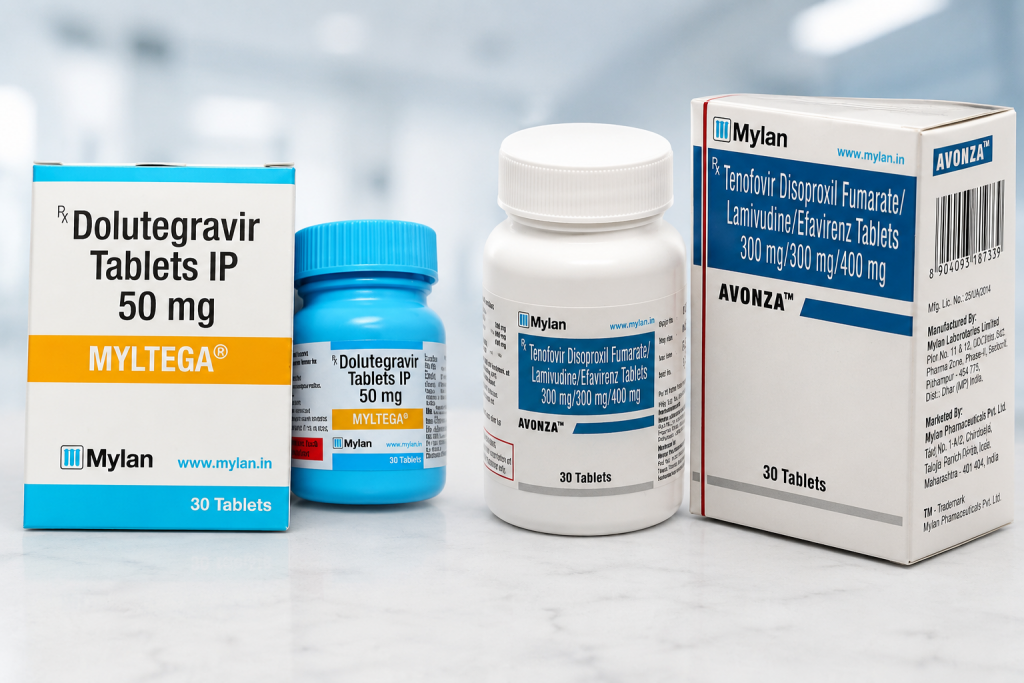
Dolutegravir is usually taken once daily and is available in single-tablet regimens combined with other drugs such as tenofovir and lamivudine. It is known for its high genetic barrier to resistance, making it a robust choice in many treatment scenarios.
What Is Efavirenz?
Efavirenz (EFV) is a non-nucleoside reverse transcriptase inhibitor (NNRTI). It binds to the reverse transcriptase enzyme, interfering with the virus’s ability to convert its RNA into DNA, a critical step in the HIV life cycle.
Efavirenz has been used for many years as part of combination therapy, typically as a 600 mg or 400 mg once-daily dose. While effective, its side effect profile has influenced its role in modern treatment guidelines.
Mechanism of Action
Dolutegravir
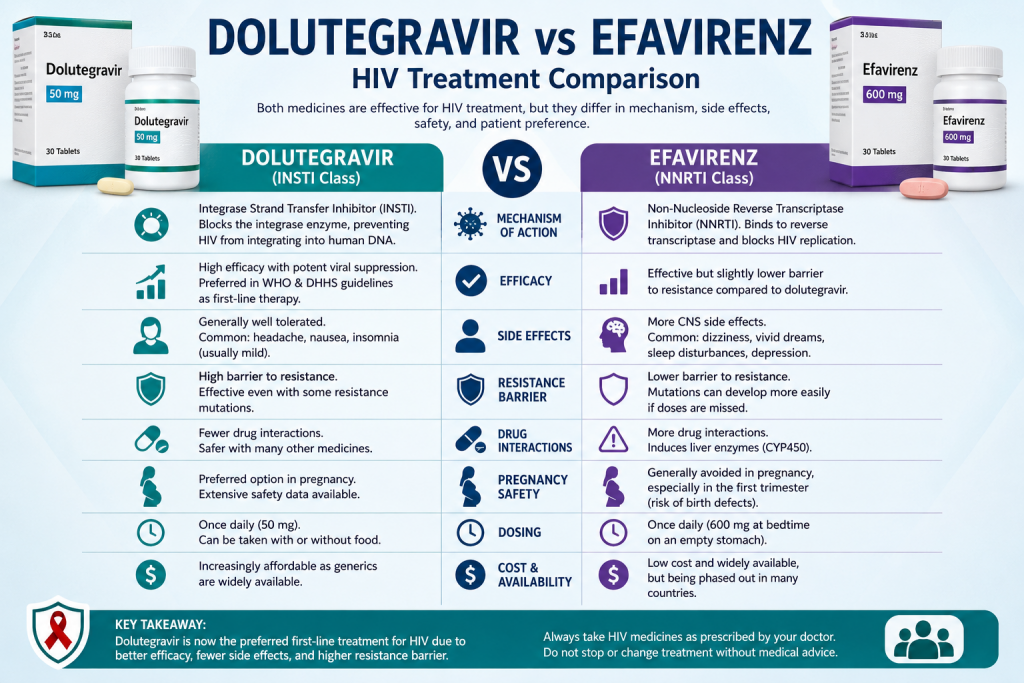
Dolutegravir inhibits the HIV integrase enzyme. Integrase is responsible for inserting viral DNA into the host cell genome after reverse transcription. By blocking the strand transfer step, dolutegravir prevents stable integration of HIV genetic material, thereby stopping viral replication.
Because integration is essential for productive infection, integrase inhibitors achieve rapid viral suppression and maintain activity against many resistant viral strains.
Efavirenz
Efavirenz inhibits HIV reverse transcriptase by binding directly to an allosteric site on the enzyme. This blocks the conversion of viral RNA into DNA, an early and essential step in viral replication.
Unlike nucleoside reverse transcriptase inhibitors, efavirenz does not require intracellular phosphorylation for activation.
Dolutegravir vs Efavirenz: Efficacy Comparison
Both medications are potent when used as part of a complete ART regimen. Dolutegravir-based regimens generally show high rates of viral suppression and good long-term outcomes. Many analyses suggest advantages in speed of viral load reduction and treatment continuation rates compared to efavirenz-based regimens.
Efavirenz remains effective for numerous patients, particularly those who have used it successfully for years. Individual responses vary based on adherence, baseline viral load, drug resistance profile, and co-existing conditions.
Safety and Side Effects: Dolutegravir vs Efavirenz
Dolutegravir side effects are generally mild and may include headache, insomnia, nausea, or mild gastrointestinal discomfort. It is often described as well-tolerated by many patients.
Efavirenz side effects more commonly include central nervous system (CNS) effects such as dizziness, vivid or abnormal dreams, insomnia, anxiety, or mood changes, especially in the first few weeks of treatment. Rash and potential liver enzyme elevations are also possible.
Discontinuation rates due to adverse effects tend to be lower with dolutegravir in many observational reports. Both drugs require monitoring for drug-drug interactions, though efavirenz has more notable interactions with medications metabolized by CYP450 enzymes.
Important: Side effects vary widely between individuals. Never adjust or stop medication without consulting your doctor.
Uses and Indications
Both dolutegravir and efavirenz are used for the treatment of HIV-1 infection in combination with other antiretrovirals. They support immune system recovery (measured by CD4 count) and help reduce the risk of HIV-related complications when viral suppression is achieved.
Current Guidelines and Recommendations
Many international and national guidelines, including those from the World Health Organization (WHO), prefer dolutegravir-based regimens as first-line therapy for most people living with HIV due to its overall profile. Efavirenz remains an alternative option in specific clinical situations or resource-limited settings.
Other Practical Considerations
- Dosing Convenience: Both are once-daily, but dolutegravir offers flexible combination options.
- Pregnancy and Reproductive Health: Guidelines have specific recommendations for each drug. Professional medical consultation is essential.
- Drug Resistance: Dolutegravir generally has a higher barrier to resistance.
- Cost and Access: Both are available as generics in many countries. Long-term value may differ based on tolerability and regimen durability.
Who Might Benefit More from Each Option?
Dolutegravir is often preferred for treatment-naïve patients, those experiencing CNS side effects on other regimens, or individuals seeking regimens with fewer interactions. Efavirenz may still be suitable for patients who tolerate it well or have specific clinical reasons for its use.
FAQs About Dolutegravir vs Efavirenz
1. What is the main difference between dolutegravir and efavirenz?
Dolutegravir is an integrase inhibitor with a high resistance barrier and generally favorable tolerability. Efavirenz is an NNRTI associated with higher rates of CNS-related side effects. Current guidelines often favor dolutegravir for most patients.
2. Is dolutegravir better than efavirenz?
“Better” depends on the individual. Many comparative observations show advantages for dolutegravir in tolerability and viral suppression outcomes. However, some patients do well on efavirenz. Treatment choice must be individualized.
3. What are the most common side effects of each drug?
Dolutegravir: headache, mild insomnia, GI upset. Efavirenz: dizziness, abnormal dreams, mood changes, rash. Discuss any symptoms with your healthcare provider.
4. Can pregnant women use dolutegravir or efavirenz?
Current guidelines provide specific recommendations for use in pregnancy and women of childbearing potential. Professional medical advice with risk-benefit discussion is required.
5. How do I switch from efavirenz to dolutegravir?
Switching is possible under medical supervision. Your doctor will consider timing, viral load, resistance testing, and potential interactions before making any change.
6. Do these drugs cure HIV?
No. Neither dolutegravir nor efavirenz cures HIV. They are part of lifelong combination therapy that suppresses the virus, allowing many people to live long and healthy lives.
7. Which drug has fewer drug interactions?
Dolutegravir generally has a more favorable interaction profile compared to efavirenz, which affects many medications through liver enzyme induction.
8. Is one drug significantly more expensive than the other?
Both are widely available as affordable generic formulations in many regions. Overall treatment costs may be influenced more by regimen durability and monitoring needs than the price of the individual drug.
9. How quickly do these drugs work?
Both contribute to viral load reduction when part of an effective regimen. Some data suggest faster initial decline with dolutegravir-based therapy, but individual results vary greatly based on adherence and starting viral load.
10. What should I discuss with my doctor regarding dolutegravir vs efavirenz?
Discuss your full medical history, current medications, reproductive plans, adherence concerns, and any previous side effects. Your doctor can recommend the most appropriate option based on lab results and guidelines.
Suggested Internal Links
- Dolutegravir Uses and Dosage
- Efavirenz Uses
- HIV Treatment Guidelines
- Antiretroviral Therapy (ART)
- HIV Drug Resistance
Conclusion
Dolutegravir and efavirenz represent different generations of HIV treatment options. Dolutegravir is currently preferred in most guidelines due to its efficacy, tolerability, and resistance profile, while efavirenz continues to serve patients in specific contexts. Advances in ART continue to improve quality of life for people living with HIV.
Next Step: Speak with your healthcare provider about the best HIV treatment strategy for your individual needs. Regular monitoring, adherence, and open communication remain essential for successful long-term outcomes.
Disclaimer: This content is educational and does not replace professional medical advice. Treatment decisions should always be made in consultation with a licensed healthcare provider.