
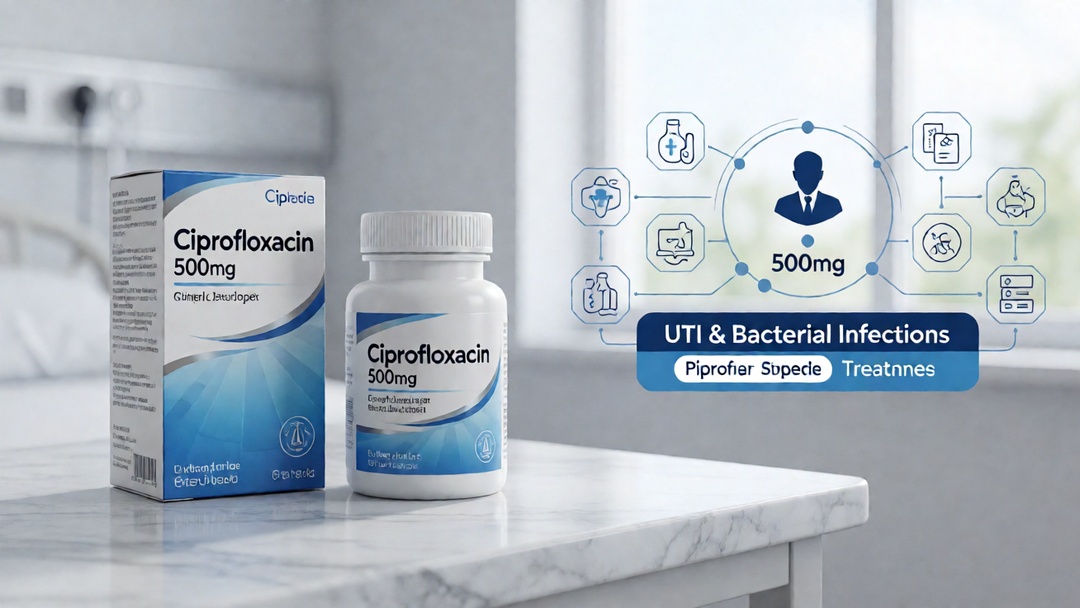
Ciprofloxacin (Cipro) Guide: Uses, Dosage, Side Effects & Affordable Generic Options for UTI, Respiratory & Bacterial Infections
Ciprofloxacin is one of the most recognizable antibiotic names in modern medicine — a fluoroquinolone that transformed the treatment of urinary tract infections, respiratory infections, and a wide range of gram-negative bacterial infections when it was introduced in the late 1980s. As the first fluoroquinolone to achieve widespread clinical adoption, ciprofloxacin demonstrated that oral antibiotics could achieve serum and tissue concentrations previously possible only with intravenous agents, fundamentally changing outpatient infection management.
For the millions of patients treated for UTIs, sinusitis, bronchitis, and other bacterial infections each year, ciprofloxacin offers a potent, broad-spectrum option with convenient once- or twice-daily dosing. Yet the conversation around ciprofloxacin has become more nuanced in recent years: while its efficacy remains strong for susceptible organisms, evolving bacterial resistance patterns and FDA safety warnings about serious adverse effects — including tendon rupture, peripheral neuropathy, and aortic aneurysm risk — have reshaped how clinicians balance its benefits against its risks. Combined with the significant cost disparity between US pharmacy pricing and affordable Indian generic alternatives, this creates a complex decision for patients and prescribers.
This guide provides a comprehensive, evidence-based overview of ciprofloxacin: its mechanism of action, the clinical scenarios where it excels, the conditions where it should be used cautiously or avoided, dosing strategies organized by infection type, the full side effect profile with special attention to the safety warnings that every patient should understand, and practical information about accessing cost-effective generic ciprofloxacin.
What Is Ciprofloxacin?
Ciprofloxacin is a second-generation fluoroquinolone antibiotic that belongs to the broader quinolone class. It was discovered by Bayer in the early 1980s and first approved by the FDA in 1987, quickly becoming one of the most prescribed antibiotics worldwide. Ciprofloxacin is available in multiple formulations: oral immediate-release tablets (typically 250mg, 500mg, and 750mg), oral extended-release tablets (Cipro XR, 500mg and 1000mg), an oral suspension, and an intravenous (IV) formulation for hospital use. The generic version of immediate-release ciprofloxacin is widely available, and numerous manufacturers produce it globally.
In India, ciprofloxacin is manufactured by many generic pharmaceutical companies and is available as a generic tablet and in fixed-dose combinations. The Indian generic manufacturing sector for fluoroquinolones is well-developed, with competitive pricing that can make ciprofloxacin dramatically more affordable for patients seeking cost-effective antibiotic therapy — in many cases representing savings of over 80% compared to US brand-name or branded-generic pricing. For patients who need a full course of antibiotic therapy and are paying out of pocket, these savings can be significant.
Mechanism of Action: How Ciprofloxacin Kills Bacteria
Ciprofloxacin works through a distinct and highly effective mechanism that targets bacterial DNA replication — a process essential for bacterial survival and multiplication. Understanding this mechanism clarifies both why ciprofloxacin is so potent and why resistance can develop when the drug is misused.
- Target: DNA gyrase (topoisomerase II): Ciprofloxacin binds to and inhibits DNA gyrase, a bacterial enzyme that introduces negative supercoils into DNA. DNA gyrase is essential for relieving the torsional stress that builds up ahead of the replication fork during DNA replication — without it, the DNA cannot unwind properly, and replication stalls. DNA gyrase is found primarily in gram-negative bacteria, which explains ciprofloxacin’s particular strength against gram-negative organisms.
- Secondary target: Topoisomerase IV: Ciprofloxacin also inhibits topoisomerase IV, an enzyme that separates interlinked (catenated) daughter DNA molecules after replication. Inhibition of topoisomerase IV prevents proper bacterial cell division. In gram-positive bacteria, topoisomerase IV is often the primary target, while in gram-negative bacteria, DNA gyrase is the dominant target.
- Bactericidal effect: By trapping the enzyme-DNA complex in a state that blocks replication and transcription, ciprofloxacin causes rapid bacterial cell death (bactericidal effect) rather than merely inhibiting growth (bacteriostatic). This bactericidal action is one reason ciprofloxacin is effective for serious infections where rapid bacterial killing is desired.
- Broad-spectrum activity: The dual targeting of DNA gyrase and topoisomerase IV gives ciprofloxacin activity against a wide range of bacteria, including many gram-negative organisms (Escherichia coli, Klebsiella pneumoniae, Proteus mirabilis, Pseudomonas aeruginosa, Haemophilus influenzae, Neisseria gonorrhoeae, Campylobacter, Shigella) and some gram-positive organisms (Staphylococcus aureus — though not MRSA, Streptococcus pneumoniae with variable activity, Enterococcus faecalis).
Why resistance develops: Bacterial resistance to ciprofloxacin arises primarily through mutations in the genes encoding DNA gyrase (gyrA) and topoisomerase IV (parC) — mutations that reduce the drug’s binding affinity. Efflux pumps (bacterial transport proteins that pump the drug out of the cell) and decreased membrane permeability (particularly in gram-negative bacteria) also contribute. When ciprofloxacin is used inappropriately — for viral infections, for conditions where narrower-spectrum antibiotics would suffice, or without completing the full prescribed course — selective pressure favors the emergence and spread of resistant strains. This is why antibiotic stewardship principles emphasize using ciprofloxacin only when it is the right drug for the right infection.
Pharmacokinetics: Ciprofloxacin is well-absorbed orally, with bioavailability of approximately 70-80% — meaning oral ciprofloxacin achieves serum concentrations similar to IV administration. Peak plasma concentrations occur 1-2 hours after an oral dose. The drug is metabolized partially by the liver and is primarily excreted unchanged by the kidneys. The elimination half-life is approximately 3-5 hours in patients with normal renal function, supporting twice-daily (or sometimes once-daily) dosing. Ciprofloxacin achieves good concentrations in many tissues and body fluids, including the urinary tract, prostate, lung, skin, and soft tissues. Urinary concentrations are particularly high — a property that makes ciprofloxacin an excellent choice for UTIs.
Clinical Uses: Where Ciprofloxacin Is Most Effective
Ciprofloxacin’s clinical utility is defined by its spectrum of activity and tissue penetration characteristics. The following sections outline the evidence-supported uses and the situations where ciprofloxacin should be considered carefully.
Urinary Tract Infections (UTIs) — Uncomplicated and Complicated
UTIs are the most common indication for ciprofloxacin. For uncomplicated UTIs (cystitis) caused by susceptible E. coli and other uropathogens, ciprofloxacin 250mg twice daily for 3 days or 500mg twice daily for 3 days achieves clinical cure rates of approximately 85-95% — comparable to or slightly better than trimethoprim-sulfamethoxazole (TMP-SMX) in areas with significant TMP-SMX resistance. However, fluoroquinolones are no longer considered first-line for uncomplicated cystitis by many guidelines (including the Infectious Diseases Society of America) due to concerns about adverse effects and the availability of safer alternatives like nitrofurantoin and fosfomycin — reserving ciprofloxacin for cases where these first-line options cannot be used or where local resistance patterns indicate a need for broader coverage.
For complicated UTIs (involving structural abnormalities, catheters, diabetes, immunocompromise, or pyelonephritis), ciprofloxacin 500mg twice daily for 7-14 days is a standard treatment option. Ciprofloxacin achieves high urinary concentrations and good renal tissue penetration, making it effective for pyelonephritis — an upper UTI involving the kidney parenchyma. Clinical cure rates for complicated UTIs with ciprofloxacin are approximately 80-90% when the causative organism is susceptible.
Acute Bacterial Exacerbation of Chronic Bronchitis (ABECB)
For patients with chronic obstructive pulmonary disease (COPD) who experience an acute bacterial exacerbation — characterized by increased sputum volume, purulence, and dyspnea — ciprofloxacin can be an effective treatment, particularly when the exacerbation is caused by gram-negative organisms (H. influenzae, M. catarrhalis, or gram-negative rods). Ciprofloxacin 500mg twice daily for 5-10 days achieves clinical response rates of approximately 70-85% in ABECB. However, respiratory fluoroquinolones (levofloxacin, moxifloxacin) with better coverage of Streptococcus pneumoniae are often preferred when pneumococcal coverage is needed, as ciprofloxacin’s activity against S. pneumoniae is less reliable than that of the newer-generation fluoroquinolones.
Complicated Intra-Abdominal Infections (with Metronidazole)
Ciprofloxacin combined with metronidazole (to cover anaerobic organisms, which ciprofloxacin does not reliably cover) has been used for complicated intra-abdominal infections. However, in the current era of increasing bacterial resistance and greater awareness of fluoroquinolone safety risks, this combination is often reserved for cases where alternative regimens cannot be used or where susceptibility data support ciprofloxacin use. Newer guidelines increasingly favor other beta-lactam/beta-lactamase inhibitor combinations or carbapenems for serious intra-abdominal infections when broader coverage is required.
Skin and Soft Tissue Infections (complicated)
For complicated skin and soft tissue infections caused by susceptible organisms — particularly when gram-negative coverage is needed — ciprofloxacin can be effective. However, its limited activity against gram-positive organisms (especially S. pneumoniae and some S. aureus strains) means it is not ideal as monotherapy for infections where these organisms are likely pathogens. It is more commonly used in combination with other agents or when culture results demonstrate susceptibility.
Typhlitis / Enteric Fever (Salmonella and Shigella)
Ciprofloxacin has historically been a first-line treatment for enteric fever (typhoid and paratyphoid fever) caused by Salmonella typhi and Salmonella paratyphi, as well as for shigellosis. However, increasing fluoroquinolone resistance in Salmonella — particularly in South Asia — has reduced ciprofloxacin’s effectiveness in these regions. Where susceptibility is confirmed by culture and sensitivity testing, ciprofloxacin remains a viable option. In areas with known resistance, alternatives such as ceftriaxone or azithromycin are preferred. For travelers returning from high-risk areas with prolonged febrile illness, clinicians consider local resistance patterns when selecting empiric therapy.
Prostatitis (Chronic Bacterial)
Ciprofloxacin achieves good concentrations in prostatic tissue and has been a mainstay of treatment for chronic bacterial prostatitis. Ciprofloxacin 500mg twice daily for 4-6 weeks (or longer, up to 12 weeks in some protocols) achieves symptom improvement and bacterial eradication in a significant proportion of patients with confirmed chronic bacterial prostatitis. Fluoroquinolones are preferred for prostatic infections because many other antibiotics (beta-lactams, TMP-SMX, tetracyclines) penetrate the prostate poorly.
Anthrax (Post-Exposure Prophylaxis and Treatment)
Ciprofloxacin is FDA-approved for post-exposure prophylaxis and treatment of inhalational anthrax (Bacillus anthracis). It is one of the primary antibiotics recommended for this indication (along with doxycycline). This is an important public health indication, though one that applies to a very small number of patients in typical clinical practice.
Dosing by Infection Type
The appropriate ciprofloxacin dose and duration depend on the specific infection, its severity, the patient’s renal function, and the susceptibility of the causative organism. Below are standard dosing regimens based on FDA labeling and clinical guidelines.
| Infection Type | Standard Adult Dose | Duration | Notes |
|---|---|---|---|
| Uncomplicated UTI (cystitis) | 250mg PO twice daily | 3 days | Reserved for cases where first-line agents (nitrofurantoin, fosfomycin) cannot be used; check local E. coli resistance rates |
| Complicated UTI / Pyelonephritis | 500mg PO twice daily | 7-14 days | For pyelonephritis: IV ciprofloxacin initially if severe, switch to oral when improving |
| Acute bacterial exacerbation of chronic bronchitis (ABECB) | 500mg PO twice daily | 5-10 days | Respiratory fluoroquinolones (levofloxacin, moxifloxacin) preferred if S. pneumoniae coverage needed |
| Complicated intra-abdominal infection (with metronidazole) | 500mg PO/IV twice daily | 7-14 days (guided by clinical response) | Metronidazole required for anaerobic coverage; use based on susceptibility data or as salvage therapy |
| Chronic bacterial prostatitis | 500mg PO twice daily | 4-6 weeks (may extend to 12 weeks) | Fluoroquinolones preferred due to excellent prostatic penetration |
| Typhoid fever / Enteric fever (susceptible strains) | 500mg PO twice daily | 7-14 days | Check local resistance patterns; ceftriaxone or azithromycin in areas with known fluoroquinolone resistance |
| Inhalational anthrax (post-exposure prophylaxis) | 500mg PO twice daily | 60 days | Doxycycline as alternative; coordinate with public health authorities |
| Inhalational anthrax (treatment) | 500mg PO twice daily (or IV) | 60 days | IV initially if severe; combination with other agents may be used; coordinate with public health authorities |
| Gonorrhea (uncomplicated, susceptible) | 250-500mg PO single dose | Single dose | Ceftriaxone is first-line per CDC; ciprofloxacin only if susceptibility confirmed |
Important administration considerations:
- Take with or without food: Oral ciprofloxacin can be taken with or without food, though taking with a meal may reduce stomach upset.
- Avoid taking with dairy products or calcium-fortified juices alone: Ciprofloxacin chelates with divalent and trivalent cations (calcium, magnesium, aluminum, iron, zinc), which significantly reduces absorption. Dairy products and antacids containing these cations should be taken at least 2 hours before or 6 hours after ciprofloxacin. This is a classic drug-food interaction that can render the antibiotic ineffective if not observed.
- Stay well hydrated: Adequate fluid intake during ciprofloxacin therapy helps prevent crystalluria (crystal formation in the urine) and reduces the risk of urinary stone formation.
- Adjust for renal impairment: In patients with creatinine clearance below 30-50 mL/min, the ciprofloxacin dose should be reduced (typically to 250-500mg every 12-24 hours depending on severity of impairment). No adjustment is needed for hepatic impairment alone.
- Complete the full course: Even if symptoms improve before the antibiotic course is finished, completing the prescribed duration is essential to prevent relapse and the emergence of antibiotic resistance.
Side Effects and FDA Safety Warnings
Ciprofloxacin’s safety profile is generally favorable for short courses of therapy in otherwise healthy patients. However, the FDA has issued several boxed warnings and safety communications about serious adverse effects associated with fluoroquinolones, including ciprofloxacin. These warnings have significantly influenced prescribing patterns and patient counseling.
FDA Boxed Warnings — Serious and Potentially Irreversible Adverse Effects
The FDA requires the following boxed warnings for all fluoroquinolones, including ciprofloxacin:
- Tendinitis and tendon rupture: Fluoroquinolones are associated with an increased risk of tendinitis and tendon rupture, which can occur during treatment or up to several months after discontinuation. The Achilles tendon is most commonly affected, but any tendon can be involved. Risk factors include age over 60, concomitant corticosteroid use, and kidney, heart, or lung transplantation. Patients should be advised to stop ciprofloxacin immediately and avoid exercise and use of the affected area if they develop tendon pain, swelling, or inflammation. Tendon rupture can occur with minimal warning, and surgical repair may be required. The risk persists for an extended period after the drug is stopped.
- Peripheral neuropathy: Fluoroquinolones can cause peripheral neuropathy (nerve damage causing numbness, tingling, pain, or weakness in the extremities) that may be irreversible. Symptoms can occur at any time during treatment and may not improve after the drug is discontinued. Patients should report any symptoms of peripheral neuropathy immediately. The FDA advises that fluoroquinolones should be discontinued if peripheral neuropathy develops.
- CNS effects: Fluoroquinolones can cause CNS effects including dizziness, confusion, agitation, anxiety, insomnia, and rarely, seizures. Patients with a history of seizures or other predispositions to CNS disorders should use ciprofloxacin with caution.
- Exacerbation of myasthenia gravis: Fluoroquinolones can worsen muscle weakness in patients with myasthenia gravis. Fluoroquinolones are contraindicated in patients with known history of myasthenia gravis.
Aortic Aneurysm and Dissection Risk
In 2018, the FDA issued a safety warning about an increased risk of aortic aneurysm and dissection (tearing of the aorta) associated with fluoroquinolone use, based on multiple observational studies showing a roughly 2-fold increased risk. The greatest risk appears to be associated with current use and recent past use (within a few months). Patients at increased risk — including those with hypertension, older age, family history of aortic aneurysm, connective tissue disorders (Marfan syndrome, Ehlers-Danlos syndrome), and history of aortic aneurysm or dissection — should discuss this risk with their prescriber. Fluoroquinolones should be avoided in these high-risk patients when alternative antibiotics are available.
Hypoglycemia and Dysglycemia
Fluoroquinolones can cause dysglycemia — both hypoglycemia and hyperglycemia — through effects on insulin secretion and glucose metabolism. This risk is most significant in patients with diabetes, especially those taking sulfonylureas or insulin. Severe hypoglycemia requiring hospitalization has been reported. Diabetic patients on ciprofloxacin should monitor their blood glucose more frequently and be aware of hypoglycemia symptoms (sweating, tremor, confusion, palpitations).
Common Side Effects
The most commonly reported side effects of ciprofloxacin include nausea (approximately 3-5%), diarrhea (2-4%), vomiting (1-2%), abdominal pain (1-2%), and headache (1-2%). These are generally mild and self-limited. Photosensitivity (increased risk of sunburn) is a well-known quinolone effect — patients should avoid excessive sun exposure and use sunscreen during treatment and for several days after discontinuation.
C. difficile-Associated Diarrhea
As with all antibiotics, ciprofloxacin use is associated with an increased risk of Clostridioides difficile infection (CDI) — ranging from mild diarrhea to severe, life-threatening pseudomembranous colitis. This risk persists for weeks to months after antibiotic completion. Patients who develop watery diarrhea during or after ciprofloxacin treatment should seek medical evaluation and avoid anti-diarrheal medications, which can worsen C. difficile infection.
Ciprofloxacin vs. Other Fluoroquinolones and Common Antibiotics
Understanding how ciprofloxacin compares to related antibiotics helps contextualize its clinical role in the current era of antibiotic stewardship and evolving safety data.
| Attribute | Ciprofloxacin | Levofloxacin | Moxifloxacin | TMP-SMX | Nitrofurantoin |
|---|---|---|---|---|---|
| Class | 2nd-gen fluoroquinolone | 3rd-gen fluoroquinolone (“respiratory FQ”) | 4th-gen fluoroquinolone (“respiratory FQ”) | Folate synthesis inhibitor | Nitrofuran |
| Gram-negative coverage | Excellent (including P. aeruginosa) | Good (some P. aeruginosa) | Moderate (poor P. aeruginosa) | Good (E. coli, Enterobacter) | Excellent for lower UTI (E. coli) |
| Gram-positive coverage | Moderate (poor for S. pneumoniae) | Good (better for S. pneumoniae) | Good (including S. pneumoniae) | Moderate | Poor (above bladder only) |
| Anaerobic coverage | Poor | Moderate | Good | Poor | N/A (lower UTI only) |
| Key advantages | Strong gram-negative, P. aeruginosa, high urinary levels, once- or twice-daily dosing | Once-daily dosing, better respiratory coverage, fewer drug interactions than ciprofloxacin | Once-daily dosing, strong respiratory + anaerobic coverage, fewer drug interactions | Low cost, narrow spectrum, first-line for some UTIs, some MRSA activity | Low resistance, concentrated in urine, first-line for uncomplicated cystitis, minimal systemic effects |
| Key disadvantages | Tendon/CNS/fluoroquinolone class warnings; less reliable S. pneumoniae coverage; drug-food interactions | Similar class warnings as ciprofloxacin; broader spectrum contributes to resistance pressure | Class warnings; QT prolongation risk; no urinary concentration (not for UTIs) | High resistance in many areas; sulfa allergy; not for pyelonephritis; hyperkalemia risk | Not for pyelonephritis or complicated UTI; reduced efficacy in renal impairment; pulmonary toxicity with long-term use |
| Best use case | Susceptible gram-negative infections (UTI, prostatitis); P. aeruginosa coverage needed | Respiratory infections when FQ indicated; simpler dosing | Respiratory infections with anaerobic component; sinusitis, pneumonia | aWhere local E. coli resistance is low; MRSA (some strains); inexpensive option | First-line uncomplicated cystitis (no upper UTI involvement) |
Ciprofloxacin Cost and Generic Sourcing: A Practical Comparison
As with many chronic and acute medications, the cost of a full course of ciprofloxacin antibiotic therapy can vary dramatically depending on where and how it is obtained. For patients managing a UTI, prostatitis, or other infection that requires a full antibiotic course, understanding the pricing landscape is important for financial planning.
US pricing: In the United States, generic ciprofloxacin immediate-release tablets (250mg, 500mg, 750mg) are widely available at reasonable cost. Cash prices for a typical 7-14 day course of generic ciprofloxacin at US retail pharmacies typically range from approximately $15 to $50 depending on the pharmacy, the specific manufacturer of the generic, dosage strength, quantity, and whether a discount card or coupon is used. Insurance copays are generally nominal (often $0 to $10 for generic tier coverage). The extended-release formulation (Cipro XR) and branded versions are significantly more expensive. For patients paying cash without insurance, the cost of a full antibiotic course is manageable for most, but can still add up over multiple infections or for families managing several prescriptions.
Indian generic pricing: India is a major global manufacturer of generic antibiotics, including ciprofloxacin. Indian generic manufacturing facilities produce large volumes of ciprofloxacin tablets at competitive prices, supported by economies of scale, competitive manufacturing markets, and lower production costs. For patients sourcing ciprofloxacin from reputable Indian generic manufacturers, the cost can be substantially lower — often representing savings of 70-90% compared to US cash prices. This is consistent with the broader pattern seen across Indian generic pharmaceutical manufacturing, where competitive markets and efficient production translate into affordable end-consumer prices for a wide range of medications.
Quality assurance when sourcing internationally: Patients considering Indian generic ciprofloxacin should verify that the manufacturer adheres to Good Manufacturing Practices (GMP) — ideally WHO-GMP certified or certified by a recognized national regulatory authority. Reputable online generic pharmacies provide transparent information about the specific manufacturer, the product’s quality documentation, and regulatory status. Patients should exercise caution with sources that are opaque about product origin, lack verifiable contact information, or offer prices significantly below market norms.
For patients interested in affordable generic ciprofloxacin options, our Antibiotics product category provides information on available generic ciprofloxacin and related antibiotic medications at competitive prices.
Frequently Asked Questions
Q: How quickly does ciprofloxacin start working for a UTI?
A: Most patients with a UTI begin to feel symptom improvement (reduced pain, urgency, and frequency) within 24-48 hours of starting ciprofloxacin. Complete symptom resolution typically occurs within 3-5 days. However, it is essential to complete the full prescribed course — usually 3 days for uncomplicated UTI or 7-14 days for complicated UTI — even if symptoms improve earlier, because incomplete treatment can lead to relapse and antibiotic resistance. If symptoms do not improve within 48 hours, the patient should contact their healthcare provider — this may indicate that the causative organism is resistant to ciprofloxacin.
Q: Can I take ciprofloxacin with food?
A: Yes, ciprofloxacin can be taken with food to reduce stomach upset. However, you should avoid taking ciprofloxacin with dairy products (milk, yogurt, cheese) or calcium-fortified juices as the sole source of food, and you should not take it with antacids, mineral supplements, or multivitamins containing calcium, magnesium, aluminum, iron, or zinc — these minerals bind to ciprofloxacin in the gut and significantly reduce absorption. If you take these products, do so at least 2 hours before or 6 hours after taking ciprofloxacin.
Q: Why does ciprofloxacin have so many warnings now compared to the past?
A: The FDA’s warnings about fluoroquinolones (tendon rupture, peripheral neuropathy, aortic aneurysm, CNS effects, and dysglycemia) were issued over 2013-2018 based on accumulated post-marketing safety data and multiple observational studies. These adverse effects — while uncommon in absolute terms — are serious, can be irreversible, and in the case of tendon rupture and peripheral neuropathy significantly impact patients’ quality of life. The warnings led to a reassessment of when fluoroquinolones are appropriate: they are now generally reserved for infections where the benefits clearly outweigh the risks and where alternative, safer antibiotics are not suitable — such as complicated UTIs with resistant organisms, prostatitis, or infections where gram-negative coverage including P. aeruginosa is required.
Q: Is ciprofloxacin safe for pregnant women?
A: Ciprofloxacin is generally not recommended during pregnancy, particularly in the first trimester, due to concerns about cartilage damage observed in animal studies (though human data have not consistently confirmed this risk). When a pregnant woman requires an antibiotic for a UTI or other infection, alternatives such as nitrofurantoin (avoid near term), cephalexin, or amoxicillin/clavulanate are typically preferred, depending on the specific infection and local susceptibility patterns. Pregnant women who have been prescribed ciprofloxacin should discuss the risk-benefit assessment with their obstetrician.
Q: Can ciprofloxacin treat a kidney infection (pyelonephritis)?
A: Yes, ciprofloxacin is effective for acute pyelonephritis (kidney infection) caused by susceptible organisms, including E. coli and other gram-negative rods. Ciprofloxacin 500mg twice daily for 7-14 days achieves clinical cure rates of approximately 85-95% in patients with mild-to-moderate pyelonephritis who can be treated as outpatients. For severe pyelonephritis (high fever, significant systemic illness, vomiting, or inability to take oral medications), IV antibiotics initially, then a switch to oral ciprofloxacin when the patient improves, is standard. Ciprofloxacin achieves high concentrations in renal tissue and urine, making it a good choice for upper urinary tract infections — but local resistance patterns should be considered, and patients should be reassessed if they do not improve within 48-72 hours.
Q: What happens if I miss a dose of ciprofloxacin?
A: If you miss a dose, take it as soon as you remember unless it is almost time for your next scheduled dose. In that case, skip the missed dose and resume your regular schedule — do not double up doses. Missing a dose or two of a full antibiotic course is unlikely to cause treatment failure, but significant missed doses or early discontinuation significantly increase the risk of incomplete bacterial eradication and antibiotic resistance. Set reminders to maintain consistent dosing throughout the course.
Medical Disclaimer
This article is for informational purposes only and does not constitute medical advice. Ciprofloxacin is a prescription antibiotic that should be used only under the guidance of a qualified healthcare professional. Antibiotic use should be guided by culture and sensitivity results where available, taking into account local resistance patterns, the patient’s medical history (especially risk factors for fluoroquinolone adverse effects), and the availability of alternative antibiotics. Antibiotics do not treat viral infections such as the common cold or influenza. Inappropriate antibiotic use contributes to antibiotic resistance — a major public health concern. Always consult your doctor before starting, stopping, or changing any antibiotic regimen. The information about pricing ranges is approximate and subject to market fluctuations; actual costs vary by manufacturer, dosage form, quantity, and point of purchase.
References
- US Food and Drug Administration. Cipro (ciprofloxacin) prescribing information. FDA.gov. Available at: https://www.accessdata.fda.gov/drugsatfda_docs/label/2016/019857s086lbl.pdf
- World Health Organization (WHO). WHO Model List of Essential Medicines. 22nd List (2021). Geneva: WHO; 2021.
- Gupta K, Hooton TM, Naber KG, et al. International clinical practice guidelines for the treatment of acute uncomplicated cystitis and pyelonephritis. Clin Infect Dis. 2011;52(5):e103-e120.
- Zhanel GG, et al. Comparative review of the fluoroquinolones: focus on safety. Drugs. 2004;64(15):1779-1802.
- Bayer AG. Ciprofloxacin: a review of its antibacterial activity, pharmacokinetic properties and therapeutic efficacy. Drugs. 1995;49(1):1-29.
- Thielman NM, Guerrant RL. Clinical practice: ciprofloxacin — a review of its use in the treatment of infectious diseases. N Engl J Med. 2000;343(12):891-900.
- Aminiman S, et al. A systematic review of fluoroquinolone-associated tendinopathy and tendon rupture. Drug Saf. 2011;34(7):581-590.
- Kelsvenness J, et al. FDA safety communication: fluoroquinolone antibacterial drugs — serious side effects. FDA.gov. June 2016.
- Lewis JS, et al. Fluoroquinolone resistance in community-acquired urinary tract infections: a systematic review. J Antimicrob Chemother. 2019;74(6):1390-1399.
- Park HC, et al. Association between fluoroquinolone use and aortic aneurysm and dissection. J Am Coll Cardiol. 2018;72(20):2409-2418.
- Infectious Diseases Society of America (IDSA). Clinical practice guideline for antibiotic stewardship in the community. 2022 update.
- FDA Drug Safety Communication. Fluoroquinolone antibacterial drugs — risk of aortic aneurysm and dissection. December 2018. FDA.gov.