Armour Thyroid vs Levothyroxine: Natural Desiccated Thyroid (NDT) vs Synthetic T4 — Uses, Dosage & Generic Options Compared
For millions of people with hypothyroidism, the daily choice of thyroid hormone replacement comes down to two fundamentally different approaches: synthetic levothyroxine (T4) — the modern standard and most prescribed thyroid medication worldwide — and natural desiccated thyroid (NDT), most famously sold under the brand name Armour Thyroid. Both aim to restore euthyroidism, but they do so through different mechanisms, have different clinical profiles, and appeal to different patient populations.
This guide provides a thorough, evidence-based comparison of Armour Thyroid (NDT) versus levothyroxine: what each product contains, how they work, when each is appropriate, dosing considerations, side effects, and how generic alternatives compare. All pricing is presented as approximate ranges — never as exact figures — and treatment decisions should be made in consultation with an endocrinologist or qualified healthcare provider.
What Is Levothyroxine (Synthetic T4)?
Levothyroxine is a synthetic form of thyroxine (T4), the primary hormone produced by the thyroid gland. It is identical in molecular structure to endogenous human T4 and is manufactured under strict pharmaceutical standards to ensure purity and consistency. Once absorbed, levothyroxine is converted peripherally into triiodothyronine (T3) — the biologically active form of thyroid hormone — by deiodinase enzymes in tissues such as the liver, kidney, and brain.
Levothyroxine ( Synthroid, Levoxyl, Tirosint, and numerous generics) has been the standard of care for hypothyroidism since the mid-20th century. It is the most prescribed thyroid medication in the world, with tens of millions of patients relying on it daily. Guidelines from the American Thyroid Association (ATA), the European Thyroid Association (ETA), and other major bodies recommend levothyroxine as first-line therapy for most forms of hypothyroidism.
Key characteristics of levothyroxine:
- Contains only T4 — no T3 or other thyroid hormones.
- Long half-life (approximately 7 days), which allows for once-daily dosing and stable serum levels.
- Highly stable and predictable pharmacokinetics — small changes in dose can be fine-tuned based on TSH levels.
- Extensive clinical trial data and decades of real-world experience supporting its safety and efficacy.
What Is Armour Thyroid (Natural Desiccated Thyroid / NDT)?
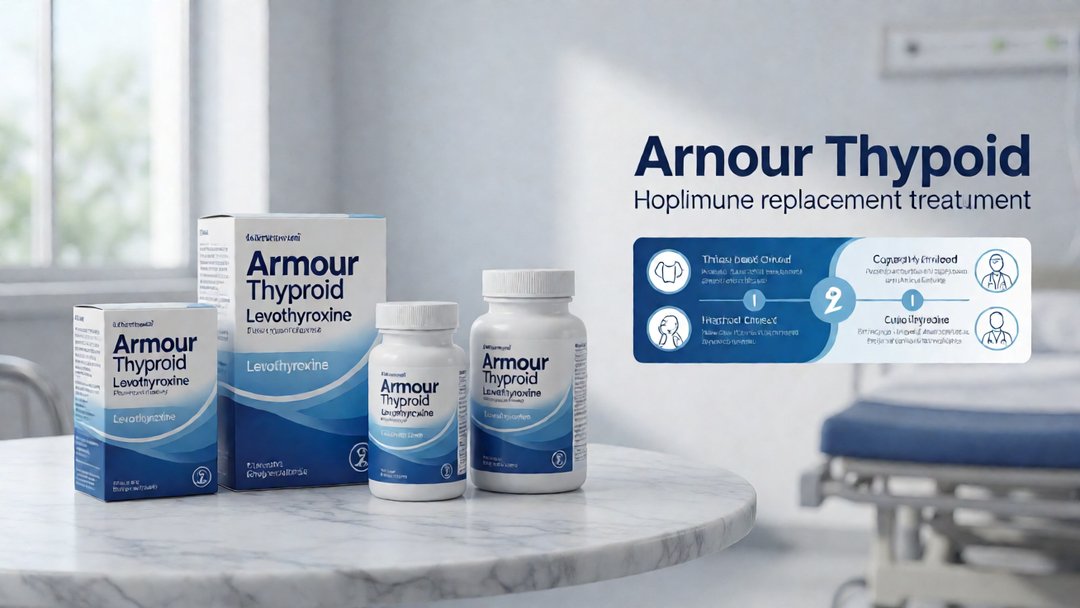
Armour Thyroid is a natural desiccated thyroid (NDT) extract derived from porcine (pig) thyroid glands. The thyroid glands are dried (desiccated), processed, and standardized to contain consistent amounts of thyroid hormones. Unlike levothyroxine, which contains only T4, NDT products contain both T4 and T3 — and in the case of Armour Thyroid, the T4:T3 ratio is approximately 4.5:1 by weight (roughly 38 mcg T4 and 9 mcg T3 per 60 mg grain).
The T3:T4 ratio in pig thyroid (approximately 1:4 to 1:5) differs from the ratio in human thyroid secretion (approximately 1:10 to 1:20 T3:T4). Because T3 is roughly 3–4 times more potent than T4 at the cellular level, the relatively higher T3 content in NDT can produce a different clinical effect compared to T4-only therapy. Some patients report feeling better on NDT — describing improved energy, mood, and cognitive function — while others experience symptoms of thyrotoxicosis (palpitations, anxiety, insomnia) at doses that would be considered physiologic for T4 alone.
Other NDT brands include NP Thyroid, Westhroid, and various compounded thyroid preparations. Armour Thyroid is the most recognized and longest-established brand.
Mechanism: How Each Approach Corrects Hypothyroidism
Hypothyroidism results from inadequate production of thyroid hormones by the thyroid gland, which can be due to autoimmune destruction (Hashimoto’s thyroiditis), surgical removal, radioactive iodine treatment, congenital defects, or other causes. The goal of replacement therapy is to restore normal thyroid hormone levels — particularly T3 at the tissue level — and normalize TSH (thyroid-stimulating hormone).
Levothyroxine (T4-Only) Pathway
When a patient takes levothyroxine, the T4 is absorbed from the gut and circulates in the bloodstream. Peripheral tissues then convert T4 to T3 via deiodinase enzymes (primarily type 1 and type 2 deiodinases). The body’s own conversion machinery determines how much T3 is produced from a given amount of T4 — a process that varies between individuals based on genetics, illness, and other factors. In most patients, this endogenous conversion is sufficient to maintain normal tissue T3 levels, which is why T4 monotherapy works well for the majority of hypothyroid patients.
Natural Desiccated Thyroid (T4 + T3) Pathway
NDT delivers both T4 and T3 directly. Because T3 is already in its active form, it does not need to be converted — it can bind directly to thyroid hormone receptors in cells. This results in a more immediate rise in serum T3 levels after ingestion, which some patients perceive as a more “complete” feeling of thyroid replacement. However, the fixed T4:T3 ratio in NDT (roughly 4.5:1) means the relative T3 dose is higher than what the body would normally produce endogenously from equivalent T4 — which can be beneficial for some patients but problematic for others.
Clinical Evidence: T4 Monotherapy vs. T4+T3 Combination
The clinical debate between T4-only therapy and combination T4+T3 (whether via NDT or synthetic liothyronine/T3 added to levothyroxine) has been the subject of multiple randomized controlled trials and systematic reviews:
- A 2018 systematic review and meta-analysis of randomized trials comparing levothyroxine monotherapy with combination T4+T3 therapy found no consistent evidence that combination therapy provides superior improvements in symptoms, quality of life, or cognitive function for the average hypothyroid patient. Most patients in these trials preferred their usual levothyroxine treatment.
- However, a subset of patients — estimated at roughly 10–15% — do report persistent symptoms (fatigue, brain fog, weight gain, depression) despite biochemically normal TSH on levothyroxine. In these “affected but euthyroid” patients, some clinicians advocate a trial of combination therapy or NDT.
- Patients with known genetic polymorphisms in the deiodinase enzymes (e.g., DIO2 Thr92Ala variant) may have impaired T4-to-T3 conversion in the brain, theoretically making them candidates for T3-containing therapy. This is an area of active research, and genetic testing is not yet routine in clinical practice.
- NDT (Armour Thyroid) has not been studied in large, modern randomized controlled trials to the extent that levothyroxine has. Much of the evidence for NDT comes from clinical experience, observational data, and patient preference — not from robust head-to-head trials against levothyroxine.
Dosage: Key Differences
The dosing of levothyroxine and NDT differs fundamentally because of their different compositions:
Levothyroxine Dosing
Levothyroxine dosing is weight-based — typically starting at approximately 1.6 mcg/kg/day for healthy adults under 60, with lower starting doses (25–50 mcg/day) for older patients, those with cardiac disease, or those with severe longstanding hypothyroidism. The dose is then titrated based on TSH levels, which are checked every 6–8 weeks after a dose change. The goal is to bring TSH into the normal range (typically 0.5–4.0 mIU/L, though optimal targets vary by age and clinical context).
Levothyroxine is available in a very wide range of doses (from 25 mcg to 300 mcg per tablet), making fine-tuning straightforward. Most patients require between 75 and 200 mcg/day, but individual needs vary considerably.
Armour Thyroid / NDT Dosing
NDT dosing is measured in “grains” — a historical unit based on the average weight of a pig thyroid gland. One grain of NDT contains approximately 38 mcg of T4 and 9 mcg of T3. Typical starting doses are around 1/4 to 1/2 grain (15–30 mg) daily, gradually increased based on clinical response and laboratory values.
| Armour Thyroid Strength | Approximate T4 Content | Approximate T3 Content | Typical Use |
|---|---|---|---|
| 15 mg (1/4 grain) | ~9.5 mcg | ~2.25 mcg | Starting dose; mild hypothyroidism |
| 30 mg (1/2 grain) | ~19 mcg | ~4.5 mcg | Starting to moderate replacement |
| 60 mg (1 grain) | ~38 mcg | ~9 mcg | Standard replacement for many adults |
| 90 mg (1.5 grains) | ~57 mcg | ~13.5 mcg | Higher replacement dose |
| 120 mg (2 grains) | ~76 mcg | ~18 mcg | Higher-dose replacement |
| 180 mg (3 grains) | ~114 mcg | ~27 mcg | High-normal or suppressive doses |
Because NDT is less standardized than levothyroxine (batch-to-batch variability can occur), dosing often requires more frequent laboratory monitoring. TSH, free T4, and free T3 are typically checked to ensure adequacy and avoid overdosing.
Side Effects and Safety Considerations
Both levothyroxine and NDT are generally safe when dosed appropriately. The primary risk with any thyroid hormone replacement is overtreatment — i.e., giving too much hormone, which can cause symptoms of hyperthyroidism and long-term complications such as atrial fibrillation, osteoporosis, and myocardial ischemia in susceptible patients.
Levothyroxine: Common and Rare Issues
- Over-replacement: The most common problem — causes palpitations, tremors, anxiety, insomnia, weight loss, heat intolerance, and tachycardia. Chronic overtreatment can lead to bone loss (osteoporosis) and cardiac arrhythmias.
- Under-replacement: Persistent hypothyroid symptoms (fatigue, weight gain, cold intolerance, depression, constipation, dry skin) despite treatment.
- Absorption variability: Levothyroxine absorption is affected by food (especially calcium, iron, and soy products), coffee, and gastrointestinal conditions (celiac disease, H. pylori, atrophic gastritis). It should be taken on an empty stomach, ideally 30–60 minutes before breakfast.
- Brand-to-generic switching: While all levothyroxine products are therapeutically equivalent by FDA standards, some patients and clinicians prefer to stay on a specific brand or manufacturer due to sensitivity to minor variations in bioavailability. TSH should be rechecked after any switch.
Armour Thyroid / NDT: Common and Rare Issues
- T3-related hyperthyroid symptoms: Because NDT delivers T3 directly, some patients experience palpitations, nervousness, anxiety, or insomnia at doses that might be considered equivalent on a T4 basis. This is the most commonly cited downside of NDT — the relatively higher T3 load.
- Batch-to-batch variability: Although manufacturers strive for standardization, desiccated thyroid products can vary slightly between batches. More frequent blood testing is advisable.
- Allergic reactions: Rare, but some patients may react to proteins or other components in the animal-derived product.
- Not suitable for vegetarians/vegans: NDT is derived from pork thyroid, making it unsuitable for those with dietary restrictions based on animal products.
- Same overtreatment risks as levothyroxine: atrial fibrillation, osteoporosis, cardiac strain, and thyrotoxicosis are risks if dosed too high — regardless of whether the source is synthetic or natural.
Pricing: Brand vs. Generic Options
Thyroid medication prices vary widely depending on brand vs. generic, country of purchase, insurance coverage, and pharmacy. The following ranges are approximate estimates based on publicly available market data. They should not be treated as exact prices — always verify with your pharmacy before making purchasing decisions.
| Product Type | Estimated Price Range (per month supply, USD) |
|---|---|
| Levothyroxine generic (US, 100 mcg) | ~$5–$20 |
| Synthroid brand (US) | ~$15–$50+ |
| Tirosint (gel cap, brand, US) | ~$30–$80+ |
| Levothyroxine generic (India) | ~$1–$5 |
| Armour Thyroid brand (US) | ~$20–$60+ |
| NP Thyroid (NDT brand, US) | ~$15–$50+ |
| Generic NDT (limited availability, US compounded) | ~$20–$60+ (compounded) |
Price variability note: All figures are ±10% estimates. Generic levothyroxine is typically the most affordable option in the US market. Indian generic levothyroxine is often the lowest absolute cost, though accessibility varies by country. Armour Thyroid and other NDT products are generally more expensive than generic levothyroxine, reflecting the more complex manufacturing process and lower production volumes.
Comparison Table: Levothyroxine vs. Armour Thyroid
| Dimension | Levothyroxine (Synthetic T4) | Armour Thyroid (NDT) |
|---|---|---|
| Active ingredients | T4 only (synthetic) | T4 + T3 (porcine-derived) |
| T4:T3 ratio | Infinite (T3 absent) — conversion depends on patient’s deiodinase activity | ~4.5:1 (fixed by product) |
| Half-life | ~7 days (T4) | T4: ~7 days; T3: ~1 day — leads to more fluctuating T3 levels |
| Dosing frequency | Once daily (stable levels) | Once daily (T3 peaks may cause transient effects) |
| Standardization | High — synthetic, highly standardized, narrow bioavailability range | Moderate — derived from animal tissue; generally standardized but historically more batch variation |
| Clinical guideline recommendation | First-line for most hypothyroid patients (ATA, ETA, AACE guidelines) | Not first-line in most guidelines; considered an alternative or adjunct for specific patients |
| Evidence base | Extensive RCT and observational data; decades of real-world use | Limited RCTs vs. levothyroxine; much evidence from clinical experience |
| Dietary suitability | Synthetic — suitable for vegetarians/vegans | Porcine-derived — not suitable for vegetarians/vegans |
| Generic availability | Widely available as generic; very affordable | Brand (Armour, NP Thyroid) is common; true generics are limited in some markets |
| Typical cost (US, monthly) | ~$5–$20 (generic); $15–$50+ (brand) | ~$20–$60+ (brand NDT) |
Which Is Right for You? Decision Framework
There is no “one size fits all” answer — the right thyroid medication depends on individual factors. Here is a framework to guide the discussion with your healthcare provider:
Levothyroxine is likely the best first choice when:
- You are newly diagnosed with hypothyroidism and have no contraindications to T4 therapy.
- You have Hashimoto’s thyroiditis (autoimmune hypothyroidism) — the most common cause.
- You prefer a medication with an extensive evidence base, highly predictable pharmacokinetics, and strong guideline support.
- You are cost-conscious and want the most affordable option (generic levothyroxine is typically the cheapest).
- You are vegetarian or vegan and prefer a synthetic, animal-product-free option.
- You have cardiac disease or are elderly — the slow, steady T4-only approach with its long half-life is generally safer and easier to titrate.
Armour Thyroid / NDT may be worth considering when:
- You have persistent hypothyroid symptoms (fatigue, brain fog, weight issues, mood disturbances) despite a normal TSH on levothyroxine — i.e., the so-called “hypothyroid but euthyroid” phenomenon.
- You have known or suspected impaired T4-to-T3 conversion (e.g., genetic deiodinase polymorphisms, though testing is not routine).
- You prefer a medication that contains both T4 and T3 in a single preparation, rather than taking separate T4 and T3 pills.
- You have tried combination T4+T3 (e.g., levothyroxine plus liothyronine/Cytomel) and prefer the NDT formulation.
- You and your clinician have discussed the potential risks of T3 excess and agree on a careful monitoring plan.
Practical considerations for switching
Switching from levothyroxine to NDT (or vice versa) is not a simple 1:1 conversion. A typical approach when switching to NDT is to start at a low dose and titrate gradually while monitoring TSH, free T4, and free T3 every 4–6 weeks. The conversion from levothyroxine to NDT is approximately 1 grain of NDT per 100 mcg of levothyroxine — but individual responses vary, and clinical judgment is essential.
Never switch thyroid medications without consulting your healthcare provider. Abrupt changes can cause dangerous swings in thyroid hormone levels.
Frequently Asked Questions
Q1: Is Armour Thyroid better than levothyroxine?
There is no universal answer. Levothyroxine is the guideline-recommended first-line treatment for most hypothyroid patients and has a far larger evidence base. However, some patients who remain symptomatic on levothyroxine (despite normal TSH) report improvement when switched to NDT or combination T4+T3 therapy. Several randomized trials have not shown a clear overall advantage of combination therapy for the average patient, but a subset of patients may benefit. The decision should be individualized based on symptoms, laboratory values, and patient preference — always under the guidance of a qualified healthcare provider.
Q2: Can I take Armour Thyroid and levothyroxine together?
This is generally not recommended as a routine approach because it creates a complex and hard-to-monitor dosing situation. However, some clinicians do prescribe a combination of levothyroxine (T4) and liothyronine (synthetic T3, brand name Cytomel) for patients who do not respond adequately to T4 monotherapy. This combination is different from NDT in that the T4:T3 ratio can be adjusted more precisely. Taking Armour Thyroid alongside additional levothyroxine would typically result in an unpredictable excess of thyroid hormone and is generally avoided. Discuss any combination approach with your endocrinologist.
Q3: How fast does thyroid medication work?
Levothyroxine has a long half-life (~7 days), so it takes 4–6 weeks to reach steady state after a dose change. Patients may start to feel improvement in symptoms within 2–3 weeks, but full effect takes longer. NDT, because it contains T3 with a shorter half-life (~1 day), can produce more rapid changes in T3 levels — patients may feel changes within days of a dose adjustment, but this also makes it harder to achieve stable levels. In both cases, thyroid function tests (TSH, free T4, free T3) should be checked 4–6 weeks after any dose change.
Q4: What are the risks of taking too much thyroid medication?
Overtreatment with any thyroid hormone — whether levothyroxine or NDT — can cause symptoms of hyperthyroidism: palpitations, rapid heart rate, anxiety, tremors, insomnia, heat intolerance, weight loss, and diarrhea. Over the long term, excessive thyroid hormone can lead to atrial fibrillation (an abnormal heart rhythm), osteoporosis (bone thinning), and in susceptible individuals, exacerbation of angina or heart failure. This is why regular monitoring of TSH and clinical symptoms is essential — even for patients who feel well on their current dose.
Q5: Is Armour Thyroid natural? Is it better because it’s “natural”?
Armour Thyroid is “natural” in the sense that it is derived from animal thyroid tissue, but that does not automatically make it safer or more effective than synthetic levothyroxine. “Natural” and “synthetic” are not synonyms for “better” and “worse” in medicine. Levothyroxine is bioidentical to human T4 — it is the same molecule your thyroid would produce. Armour Thyroid contains additional T3, which is also a naturally occurring hormone, but in a ratio that differs from human physiology. The choice between the two should be based on evidence, individual response, and clinical goals — not on the “natural vs. synthetic” framing alone.
Medical Disclaimer
Informational purposes only. This article is for educational and informational purposes only and does not constitute medical advice, diagnosis, or treatment. Thyroid hormone therapy requires careful monitoring by a qualified healthcare provider — typically an endocrinologist or a physician experienced in thyroid disorders. Never start, stop, or change your thyroid medication without consulting your doctor. Drug prices are estimates and subject to change — verify current prices with your pharmacy or healthcare provider. If you have symptoms of thyroid dysfunction or are experiencing side effects from thyroid medication, contact your healthcare provider promptly.
Price variability disclosure: All pricing information in this article is presented as approximate ranges (±10% variability) based on publicly available market data. Actual prices vary by location, pharmacy, manufacturer, insurance coverage, and time. No exact prices are guaranteed.
References
- American Thyroid Association (ATA). “Guidelines for the Treatment of Hypothyroidism: Prepared by the American Thyroid Association Task Force on Thyroid Hormone Replacement.” Thyroid. 2014;24(12):1670-1751. (Updated recommendations reflected in subsequent clinical practice.)
- Jonklaas J, et al. “Consensus statement: a proposal for a new nomenclature for thyroid hormone therapy — ‘thyroid hormone replacement therapy (THRT)’ — and a suggested classification system.” Thyroid. 2019;29(8):1095-1105.
- Grozinsky-Glasberg S, et al. “Levothyroxine monotherapy versus levothyroxine plus liothyronine (T3) combination therapy for hypothyroidism: a systematic review and meta-analysis.” Journal of Clinical Endocrinology & Metabolism. 2013;98(8):3406-3414.
- Winther KH, et al. “The effects of combination therapy with levothyroxine and liothyronine on quality of life, mood, and cognition in hypothyroidism: a randomised, double-blind, cross-over trial.” European Journal of Endocrinology. 2018;179(6):323-333.
- UpToDate. “Treatment of hypothyroidism: conventional and alternative approaches.” Wolters Kluwer. Accessed September 2026. (Evidence-based clinical decision support resource.)
- Dhatariya K, et al. “Desiccated thyroid extract: an old remedy with new interest.” Clinical Endocrinology. 2020;93(3):324-331. Review of NDT products and clinical use patterns.
- Jonklaas J, Davidson B. “A pilot trial of triiodothyronine (T3) as adjunctive therapy in major depressive disorder: a preliminary open-label study.” Journal of Clinical Psychiatry. 2021;82(4):20r13728. (Explores T3 in psychiatric context — relevant to the T3-responsive symptoms debate.)
Internal Resources
Explore more thyroid-related guides on 984online.com:
- Levothyroxine (Synthroid) Guide: Uses, Dosage, Side Effects & Affordable Generic Options
- Liothyronine (Cytomel) Guide: T3 Therapy for Hypothyroidism
- Methimazole vs. Propylthiouracil (PTU): Hyperthyroidism Treatment Compared