Introduction
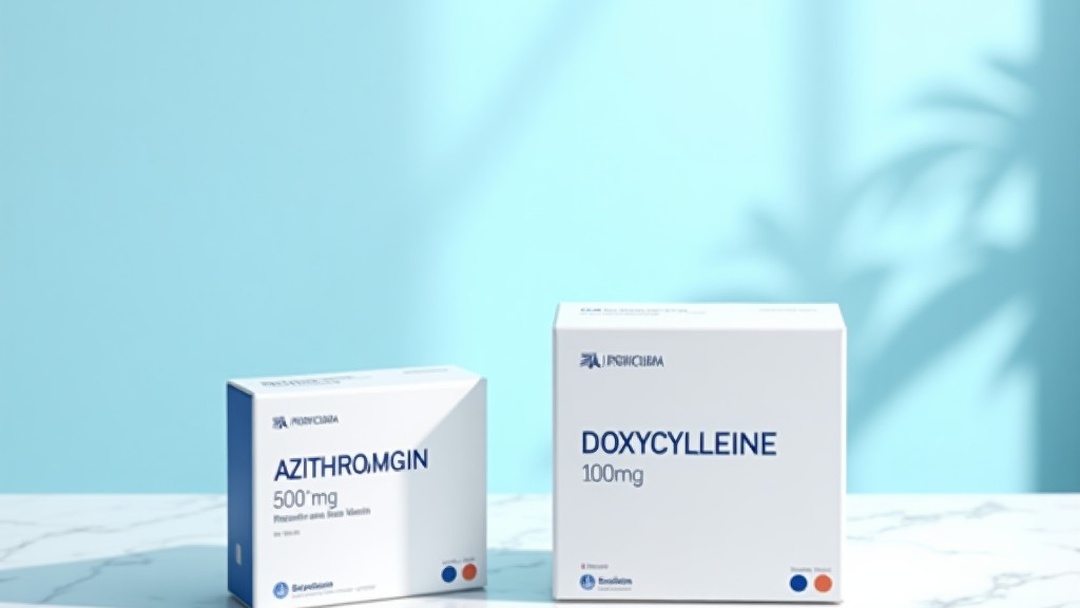
When it comes to treating bacterial infections, two of the most commonly prescribed antibiotics in both outpatient and inpatient settings are Azithromycin and Doxycycline. Both are broad-spectrum antibiotics that work against a wide range of pathogens, but they belong to entirely different drug classes and have distinct mechanisms of action, dosing schedules, side effect profiles, and clinical indications.
Choosing between Azithromycin vs Doxycycline is not always straightforward. The decision depends on the type of infection, patient-specific factors such as age and allergies, potential drug interactions, local resistance patterns, and cost considerations. For patients seeking affordable generic antibiotics from India, understanding these differences is crucial for making informed treatment decisions in consultation with a healthcare provider.
This comprehensive comparison covers the pharmacology, clinical uses, dosing guidelines, side effects, drug interactions, and cost of Azithromycin and Doxycycline to help patients and healthcare professionals alike.
What Is Azithromycin?
Azithromycin is a macrolide antibiotic that works by binding to the 50S ribosomal subunit of susceptible bacteria, thereby inhibiting protein synthesis. It is derived from erythromycin but has an improved pharmacokinetic profile, including a longer half-life and better tissue penetration.
Azithromycin is well-known for its convenient short-course dosing regimens. A typical Z-Pak course consists of a loading dose followed by once-daily dosing for a total of 5 days. It is effective against a broad spectrum of gram-positive, gram-negative, and atypical bacteria, making it a go-to choice for respiratory tract infections, sexually transmitted infections, and certain skin infections.
Common brand names include Zithromax, Z-Pak, and generic azithromycin. The generic version is widely manufactured by leading Indian pharmaceutical companies and is available at significantly lower prices compared to branded equivalents.
What Is Doxycycline?
Doxycycline is a tetracycline-class antibiotic that inhibits bacterial protein synthesis by binding to the 30S ribosomal subunit. It is bacteriostatic, meaning it stops bacteria from multiplying, which allows the immune system to eliminate the infection.
Doxycycline has excellent oral bioavailability and is highly lipophilic, enabling it to penetrate tissues effectively including the prostate, respiratory tract, and skin. It is used for a remarkably wide range of conditions, from acne and rosacea to malaria prophylaxis, Lyme disease, and respiratory infections.
Common brand names include Vibramycin, Doryx, Monodox, and Oracea. Generic doxycycline hyclate and doxycycline monohydrate are widely available from Indian generic manufacturers at affordable prices.
Key Differences at a Glance
| Feature | Azithromycin | Doxycycline |
|---|---|---|
| Drug Class | Macrolide antibiotic | Tetracycline antibiotic |
| Mechanism | Binds 50S subunit, inhibits protein synthesis | Binds 30S subunit, inhibits protein synthesis |
| Typical Duration | 1–5 days (short course) | 7–14 days or longer (chronic use for acne) |
| Half-Life | ~68 hours (long) | ~18–24 hours |
| Food Effect | Take on empty stomach or with food (formulation dependent) | Avoid dairy, antacids, iron within 2 hours |
| Photosensitivity | No | Yes — avoid prolonged sun exposure |
| Pediatric Use | Safe in children (≥6 months) | Contraindicated under 8 years (tooth discoloration) |
| Pregnancy | Category B (generally considered safe) | Category D (avoid in pregnancy) |
| Generic Availability | Widely available from India | Widely available from India |
Uses Comparison
Both Azithromycin and Doxycycline are approved for multiple indications, though their areas of overlap and specialization differ significantly.
| Condition | Azithromycin | Doxycycline |
|---|---|---|
| Community-Acquired Pneumonia | ✅ First-line (outpatient) | ✅ Alternative (especially atypical coverage) |
| Acute Bronchitis | ✅ Commonly prescribed | ✅ Sometimes used |
| Sinusitis | ✅ Second-line | ✅ Alternative |
| Pharyngitis / Tonsillitis | ✅ Alternative to penicillin | ❌ Not typically used |
| Acne Vulgaris | ❌ Not indicated | ✅ First-line (oral + topical) |
| Rosacea | ❌ Not indicated | ✅ First-line (sub-antimicrobial dose) |
| Chlamydia / Urethritis | ✅ First-line (single dose) | ✅ Alternative |
| Gonorrhea | ✅ Part of dual therapy | ❌ Resistance concerns |
| Lyme Disease (Early) | ❌ Second-line (if doxycycline contraindicated) | ✅ First-line |
| Malaria Prophylaxis | ❌ Not used | ✅ Recommended |
| Skin and Soft Tissue Infections | ✅ Moderate to severe | ✅ Mild to moderate |
| Rickettsial Infections | ❌ Not effective | ✅ Drug of choice |
Dosage Comparison
Dosing varies significantly between these two antibiotics, both in terms of frequency and duration of therapy.
| Parameter | Azithromycin | Doxycycline |
|---|---|---|
| Adult Typical Dose | 500 mg on day 1, then 250 mg once daily (Z-Pak) | 100 mg twice daily or 200 mg once daily |
| Course Duration | 3–5 days (most common) | 7–14 days (acute); months (acne/rosacea) |
| Chlamydia (Single Dose) | 1 gram (1,000 mg) single dose | 100 mg twice daily for 7 days |
| Pediatric Dosing | 10 mg/kg day 1, then 5 mg/kg days 2–5 | 2.2–4.4 mg/kg/day divided (≥8 years only) |
| Renal Adjustment | No adjustment needed | No adjustment needed |
| Hepatic Adjustment | Caution in severe liver disease | Caution in severe liver disease |
| Administration | With or without food | With food; avoid dairy within 2 hours |
Effectiveness by Condition
Both antibiotics are highly effective, but certain infections respond better to one than the other.
Respiratory Tract Infections
Azithromycin is a cornerstone of empirical outpatient treatment for community-acquired pneumonia (CAP) and acute exacerbations of chronic bronchitis. Its short-course regimen (Z-Pak) promotes compliance. Doxycycline is an alternative for CAP, especially when atypical coverage is needed, but it is less preferred for severe pneumonia.
Sexually Transmitted Infections (STIs)
Azithromycin 1 g single dose remains first-line for uncomplicated genital chlamydia. Doxycycline (100 mg twice daily for 7 days) is an effective alternative but requires a full week of compliance. For gonorrhea, azithromycin is part of recommended dual therapy (with ceftriaxone); doxycycline is not routinely used due to resistance.
Acne and Dermatological Conditions
Doxycycline is among the most prescribed oral antibiotics for moderate to severe acne and rosacea. Its anti-inflammatory properties provide added benefit. Azithromycin has no role in acne management.
Vector-Borne and Zoonotic Infections
Doxycycline is the drug of choice for Lyme disease, Rocky Mountain spotted fever, ehrlichiosis, anaplasmosis, and other rickettsial diseases. Azithromycin is generally not effective for these conditions. However, azithromycin may be used for early Lyme disease in patients who cannot take doxycycline (e.g., children under 8 or pregnant women).
Side Effects Comparison
Both drugs are generally well-tolerated, but their side effect profiles differ.
| Side Effect | Azithromycin | Doxycycline |
|---|---|---|
| Gastrointestinal (nausea, diarrhea) | ✅ Common (mild-moderate) | ✅ Common (especially nausea) |
| QT Prolongation / Cardiac Risk | ⚠️ Known risk (use caution with other QT-prolonging drugs) | ❌ No significant risk |
| Photosensitivity | ❌ Not associated | ⚠️ Moderate to high risk |
| Tooth Discoloration (children) | ❌ Not associated | ⚠️ Avoid in children <8 years |
| Esophageal Ulceration | ❌ Rare | ⚠️ Risk if taken without water or before lying down |
| Pseudomembranous Colitis | ⚠️ Rare risk | ⚠️ Rare risk |
| Hepatotoxicity | ⚠️ Rare (idiosyncratic) | ⚠️ Rare (idiosyncratic) |
| Vestibular (dizziness, vertigo) | ❌ Rare | ⚠️ Uncommon but reported |
| Allergic Reactions | ⚠️ Uncommon | ⚠️ Uncommon |
Notable: The cardiac risk with azithromycin — specifically QT interval prolongation — is an important consideration in patients with pre-existing heart conditions or those taking other QT-prolonging medications. Doxycycline does not carry this risk but requires strict sun protection measures.
Drug Interactions
Both antibiotics interact with several commonly prescribed medications.
| Drug / Class | Azithromycin | Doxycycline |
|---|---|---|
| Antacids (Al, Mg, Ca) | Minimal interaction | ⚠️ Reduced absorption (separate by 2+ hours) |
| Oral Contraceptives | No significant interaction reported | Potential reduced efficacy (debated; use backup method) |
| Warfarin | ⚠️ May potentiate effect (monitor INR) | ⚠️ May potentiate effect (monitor INR) |
| QT-Prolonging Drugs | ⚠️ Avoid or combine cautiously | No interaction |
| Digoxin | ⚠️ May increase digoxin levels | No interaction |
| Iron / Calcium Supplements | Minimal interaction | ⚠️ Reduced absorption (separate by 2+ hours) |
| Methotrexate | No interaction | ⚠️ May increase methotrexate toxicity |
| Bismuth Subsalicylate | No interaction | ⚠️ Reduced absorption |
Patients should always inform their healthcare provider about all medications, supplements, and herbal products they are taking before starting either antibiotic.
Cost Comparison
One of the key advantages of choosing generic medications manufactured in India is the significant cost savings. Below are the typical price ranges for generic Azithromycin and Doxycycline available through reputable online pharmacies.
| Medication | Strength & Quantity | Price Range (Generic from India) |
|---|---|---|
| Azithromycin | 500 mg (3 tablets) | $1–$4 |
| Azithromycin | Z-Pak Course (6 tablets) | $2–$7 |
| Doxycycline | 100 mg (strip of 10 capsules) | $3–$8 |
| Doxycycline | 100 mg (30 capsules) | $8–$18 |
| Doxycycline (ER) | 40 mg (30 extended-release capsules) | $7–$14 |
Prices may vary based on manufacturer, dosage form, and quantity. These ranges reflect typical pricing for high-quality generic antibiotics sourced from Indian pharmaceutical companies. For the latest pricing and availability, visit the Pharmaceuticals category on 984online.com.
Which Antibiotic Is Right for You?
The choice between Azithromycin and Doxycycline depends on several factors that your healthcare provider will consider:
- Type of infection: Azithromycin excels for respiratory infections, chlamydia, and gonorrhea. Doxycycline is preferred for acne, rosacea, Lyme disease, rickettsial infections, and malaria prophylaxis.
- Patient age: Doxycycline is contraindicated in children under 8 years due to permanent tooth discoloration. Azithromycin is safe in children as young as 6 months.
- Pregnancy and breastfeeding: Azithromycin (Category B) is preferred over Doxycycline (Category D) in pregnant or breastfeeding women.
- Compliance and convenience: Azithromycin’s short course (1–5 days) and once-daily dosing make it easier to complete therapy. Doxycycline often requires twice-daily dosing for 7–14 days.
- Drug interactions: Patients on QT-prolonging medications may be better suited to Doxycycline. Conversely, those needing antacids or calcium supplements may find Azithromycin more convenient.
- Sun exposure: Patients with significant sun exposure should consider Doxycycline’s photosensitivity risk.
- Cost: Both generic options from India are highly affordable. Compare prices at 984online.com to find the best deal for your prescription.
Ultimately, the decision must be made by a qualified healthcare professional based on clinical presentation, microbiology results, patient history, and individual risk factors.
FAQ
1. Can Azithromycin and Doxycycline be taken together?
In some cases, healthcare providers may prescribe Azithromycin and Doxycycline together for specific infections such as certain atypical mycobacterial infections or dual STI coverage. However, routine co-administration is not recommended due to the risk of additive side effects. Always follow your doctor’s prescription exactly — never combine antibiotics without professional guidance.
2. Which is stronger for a sinus infection — Azithromycin or Doxycycline?
Both Azithromycin and Doxycycline are effective for acute bacterial sinusitis. Azithromycin is often preferred due to its shorter course (5 days vs 10–14 days) and once-daily dosing. However, local resistance patterns should guide selection. Doxycycline is a reasonable alternative for patients who cannot tolerate macrolides or have drug interactions with Azithromycin.
3. Is Doxycycline effective for Chlamydia?
Yes, Doxycycline (100 mg twice daily for 7 days) is an effective alternative to Azithromycin for treating uncomplicated genital chlamydia. In fact, some guidelines now prefer Doxycycline over Azithromycin due to emerging evidence of slightly higher efficacy. The CDC’s 2021 STI treatment guidelines recommend Doxycycline as a first-line option.
4. How long does it take for each antibiotic to start working?
Both antibiotics typically begin working within 24–48 hours of the first dose. Patients usually notice symptom improvement (reduced fever, less pain, improved breathing) within 2–3 days. If no improvement is seen after 3 full days, contact your healthcare provider — the infection may be resistant or a different antibiotic may be needed.
References
- Centers for Disease Control and Prevention. (2021). Sexually Transmitted Infections Treatment Guidelines, 2021. MMWR Recommendations and Reports, 70(4), 1–187.
- Mandell, L. A., et al. (2007). Infectious Diseases Society of America/American Thoracic Society Consensus Guidelines on the Management of Community-Acquired Pneumonia in Adults. Clinical Infectious Diseases, 44(Supplement_2), S27–S72.
- Sanchez, A. R., Rogers, R. S., & Sheridan, P. J. (2004). Tetracycline and other tetracycline-derivative staining of the teeth and oral cavity. International Journal of Dermatology, 43(10), 709–715.
- Wormser, G. P., et al. (2006). The Clinical Assessment, Treatment, and Prevention of Lyme Disease, Human Granulocytic Anaplasmosis, and Babesiosis. Clinical Infectious Diseases, 43(9), 1089–1134.
- Khan, S. A., et al. (2019). Azithromycin in the management of community-acquired pneumonia: a review of clinical efficacy and safety. Journal of Global Antimicrobial Resistance, 16, 106–113.
- Bolognia, J. L., Jorizzo, J. L., & Schaffer, J. V. (2018). Dermatology (4th ed.). Elsevier — Acne and Rosacea Treatment Guidelines.
- World Health Organization. (2022). WHO Model List of Essential Medicines — 22nd List. Geneva: WHO Press.
This article is for informational purposes only and does not constitute medical advice. Always consult a qualified physician before taking any medication.