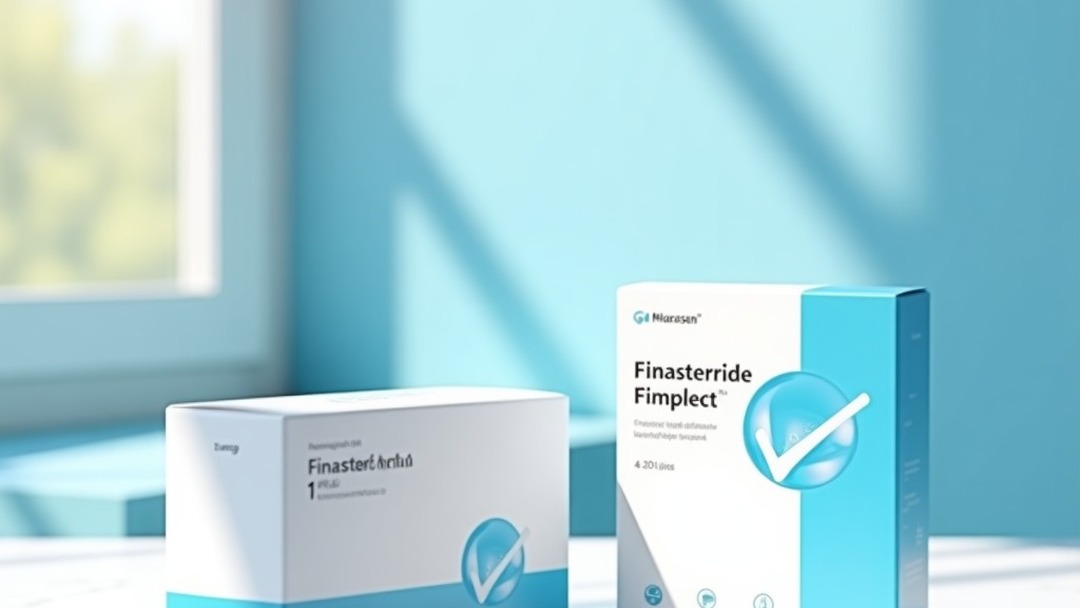
Finasteride is one of the few medicines that has become widely known to the general public through its dual brand identities: Propecia for hair loss and Proscar for enlarged prostate. Originally developed and marketed by Merck, it is now available as a low-cost generic from many manufacturers worldwide, including in India. This guide explains how finasteride works, who it helps, how to take it, how it differs from other hair loss and BPH treatments, what a month of therapy costs, and the key safety issues — especially those that every user should understand before starting.
What Is Finasteride?
Finasteride is a 5-alpha reductase inhibitor (5-ARI), a class of drugs that blocks the enzyme responsible for converting testosterone into dihydrotestosterone (DHT). DHT is a much more potent androgen than testosterone and plays a central role in two common male conditions: androgenetic alopecia (male pattern hair loss) and benign prostatic hyperplasia (BPH, or non-cancerous enlargement of the prostate gland).
Finasteride was discovered in the 1980s and approved in the early 1990s. It was first marketed as Proscar (5 mg) for BPH, and later as Propecia (1 mg) for androgenetic alopecia, after clinical trials showed that the lower dose was effective for hair loss with fewer side effects. Today, generic finasteride is widely available in both 1 mg and 5 mg strengths from many manufacturers worldwide. It is also used in combination with other treatments, such as minoxidil for hair loss, and in some cases for off-label uses.
A crucial point that many users overlook: finasteride affects hormone metabolism, so it is a prescription medicine with real biological effects — not a cosmetic or supplement. Its use requires a doctor’s supervision and an understanding of its benefits, limitations, and risks.
Mechanism of Action
The enzyme 5-alpha reductase exists in two main isoforms: type 1 (found mainly in skin, including scalp and sebaceous glands) and type 2 (found mainly in the prostate, genital tissues, and hair follicles). Both isoforms convert testosterone to DHT, but type 2 is the dominant form in the prostate and in the hair follicles of the scalp in balding men.
Finasteride selectively and irreversibly inhibits type 2 5-alpha reductase (and to a lesser extent type 1 at higher doses). By blocking this enzyme, finasteride reduces DHT production by roughly 60–70% in the serum and in the scalp. Lower DHT levels mean:
- Less DHT binding to hair follicle receptors in the scalp → the miniaturization of susceptible hair follicles is slowed or reversed, allowing thicker, healthier hair to grow. This is the basis for its effect in androgenetic alopecia.
- Less DHT-driven growth of prostate cells → the prostate gland shrinks over time (by about 20–30% in volume), improving urinary flow and reducing symptoms of BPH.
Important mechanistic notes:
- Testosterone levels are not reduced — they may actually rise slightly because less testosterone is being converted to DHT, and there is a small increase in testosterone available for other functions.
- Finasteride does not block androgen receptors directly. It reduces the supply of DHT, the most potent androgen at those receptors. This is a different mechanism from anti-androgens like spironolactone or bicalutamide, which block the receptor itself.
- Effects are not immediate. For hair loss, visible results take 3 to 6 months and maximum benefit may take 12 months or more of continuous use. For BPH, symptom improvement may begin within a few weeks but the maximum effect on prostate size takes several months.
- Effects are reversible on stopping. If finasteride is discontinued, DHT levels return to baseline and the benefits for hair and prostate are lost over time (usually within 6–12 months for hair, somewhat faster for urinary symptoms).
Approved Uses and Indications
Finasteride is approved for two main conditions, at different doses:
- Androgenetic alopecia (male pattern hair loss) — 1 mg daily (Propecia dose): FDA-approved for men with mild to moderate hair loss. It slows or stops hair loss in most men and promotes hair regrowth in a significant proportion. It is most effective in the crown (vertex) area and less effective for a receding frontal hairline. It is not approved for women (see safety section) and is not effective for other types of hair loss (telogen effluvium, alopecia areata, etc.).
- Benign prostatic hyperplasia (BPH) — 5 mg daily (Proscar dose): FDA-approved for symptomatic BPH to improve urinary flow, reduce the risk of acute urinary retention, and reduce the need for surgical intervention. It is often used in combination with an alpha-blocker (like tamsulosin) for faster symptom relief, as finasteride alone takes months to shrink the prostate.
Off-label and other uses (variable evidence and approval status):
- Female pattern hair loss: Sometimes used off-label in postmenopausal women, though evidence is limited and it is not approved for women of childbearing potential due to teratogenic risk (see safety).
- Hirsutism in women: Occasionally used off-label in combination with other treatments, but spironolactone is generally preferred.
- Prevention of prostate cancer: The PCPT trial showed that finasteride 5 mg reduces the overall risk of prostate cancer, though there was a controversial signal of increased high-grade cancer detection in the finasteride group, likely due to detection bias. Current guidelines note that finasteride may be discussed for risk reduction in selected men after careful counseling.
- Other androgen-dependent conditions: Rare off-label uses in some settings.
Not effective for: Finasteride does not treat hair loss due to nutritional deficiency, thyroid disease, stress (telogen effluvium), autoimmune disease (alopecia areata), or fungal infection. It does not treat prostate cancer (though it is sometimes used in active surveillance or study contexts).
Dosage and How to Take It
| Condition | Dose | Frequency | Duration for effect | Notes |
|---|---|---|---|---|
| Male pattern hair loss (androgenetic alopecia) | 1 mg | Once daily, oral | Visible results: 3–6 months; maximum: 12+ months | Continuous use needed to maintain benefit; stopping reverses gains over months |
| Benign prostatic hyperplasia (BPH) | 5 mg | Once daily, oral | Symptom improvement: weeks to months; prostate shrinkage: months | Often used with an alpha-blocker initially; long-term use reduces need for surgery |
| Off-label use (e.g., female hair loss, postmenopausal, specialist-directed) | Varies (0.5–5 mg) | As directed by specialist | Varies | Not standard; discuss risks, especially pregnancy potential |
How to take finasteride:
- Take it once daily, with or without food. Consistency matters more than timing; take it at the same time each day if possible.
- Swallow the tablet whole; do not crush, split, or chew (though for hair loss some doctors may prescribe splitting a 5 mg tablet into 1 mg doses — this should only be done under medical guidance and using a pill cutter, and the 1 mg formulation is generally preferred to ensure consistent dosing).
- If a dose is missed, take it when remembered unless it is close to the next dose; do not double up.
- Effects are dose-dependent and reversible. Skipping doses or stopping will reduce benefit over time.
- For hair loss, many patients use finasteride for at least a year before assessing whether it is working well enough to continue long-term. Combining with topical minoxidil can improve results for some patients.
- For BPH, finasteride 5 mg is usually taken long-term. Regular monitoring of prostate-specific antigen (PSA) and symptom scores (IPSS) is standard.
Special considerations:
- Kidney or liver impairment: No specific dose adjustment is required for mild to moderate kidney or liver impairment, but severe hepatic impairment may warrant caution (finasteride is metabolized by the liver).
- Elderly: No specific dose adjustment for age alone, but BPH patients are often elderly and may be on multiple medications; review drug interactions and side effects.
- Women: Finasteride is contraindicated in women who are or may become pregnant due to risk of fetal harm (see safety section). It is not approved for use in women of childbearing potential. Use in postmenopausal women is off-label and requires specialist supervision.
- Children: Not approved for use in children; safety and efficacy not established.
Clinical Evidence: What the Trials Show
Finasteride has decades of clinical trial data supporting its use for both hair loss and BPH.
Androgenetic Alopecia (1 mg):
The key trials for Propecia (finasteride 1 mg) showed that over 2 years, finasteride significantly increased hair count and reduced hair loss compared to placebo. In the pivotal studies, roughly 80–90% of men had stabilization of hair loss (no further loss), and about 30–40% had visible regrowth. Hair count increased from baseline by a clinically meaningful amount, with the greatest benefit in the vertex (crown). The frontal hairline showed less improvement.
Longer-term data (up to 5 years) showed that the benefit is maintained with continued use, and that stopping leads to loss of gained hair and return of the pre-treatment rate of loss within 12 months. Finasteride is generally considered a first-line medical treatment for male pattern hair loss, alongside topical minoxidil, and the two can be used together for additive benefit.
BPH (5 mg):
The MTOPS trial (Medical Therapy of Prostatic Symptoms) was a landmark long-term study comparing finasteride, terazosin (an alpha-blocker), combination therapy, and placebo over nearly 5 years. Finasteride alone reduced the risk of overall clinical progression of BPH (including acute urinary retention and need for surgery) by about 45% compared to placebo, with the effect mainly driven by reduction in the risk of acute urinary retention and surgical intervention. The combination of finasteride plus terazosin was more effective than either alone for symptom improvement, while finasteride alone was better for disease modification (reducing progression events).
The PCPT trial showed that finasteride 5 mg reduced the 7-year risk of prostate cancer by about 25% compared to placebo (from ~24% to ~18%), though there was a complex interaction with high-grade cancer detection that has been widely debated and is thought largely attributable to detection bias rather than a true carcinogenic effect.
Key clinical takeaways:
- For hair loss: Finasteride 1 mg is effective at slowing or stopping loss and promoting some regrowth in a significant proportion of men. Best results are in the crown; the frontal hairline is more resistant. It works best when started early, before extensive baldness has developed. Continuous use is required to maintain benefit.
- For BPH: Finasteride 5 mg shrinks the prostate and reduces the risk of urinary retention and surgery, with moderate symptom improvement. It is particularly useful in men with larger prostates (>40 mL). It takes months to work fully and is often combined with an alpha-blocker for faster symptom relief.
- For prostate cancer risk: Finasteride reduces the overall risk of prostate cancer but has a complex relationship with high-grade cancer detection that requires careful interpretation and counseling. It is not routinely used for cancer prevention, but may be discussed in selected men.
Finasteride vs Other Hair Loss and BPH Treatments
| Feature | Finasteride 1 mg (Propecia) | Minoxidil 5% (topical) | Dutasteride 0.5 mg | Tamsulosin (Flomax) | Finasteride 5 mg (Proscar) |
|---|---|---|---|---|---|
| Class | 5-alpha reductase inhibitor (type 2) | Vasodilator; hair growth stimulant (mechanism not fully understood) | 5-alpha reductase inhibitor (types 1 & 2) | Alpha-1 adrenergic blocker | 5-alpha reductase inhibitor (type 2) |
| Primary use | Male pattern hair loss | Male and female pattern hair loss (also used for beard growth off-label) | Hair loss (off-label in some countries; approved in Korea, Japan, etc.) and BPH | BPH symptom relief (urinary flow) | BPH |
| Effect on DHT | Reduces serum DHT ~60–70% | No direct effect on DHT | Reduces serum DHT ~90%+ (more complete inhibition) | No effect on DHT | Reduces serum DHT ~60–70% |
| Onset of visible effect (hair) | 3–6 months; max ~12+ months | 4–6 months; max ~12 months | Similar to finasteride, possibly faster/sh stronger | N/A (not for hair) | N/A (not for hair) |
| Effect on prostate | Shrinks prostate (long-term) at 5 mg dose | No effect | Shrinks prostate more than finasteride (greater volume reduction) | Relaxes prostate smooth muscle; no shrinkage; rapid symptom relief | Shrinks prostate ~20–30% over months |
| Symptom relief speed (BPH) | Slow (months); best for disease modification | N/A | Slow (months) | Fast (days to weeks) | Slow (months) |
| Administration | Oral, once daily | Topical, twice daily (foam or solution) | Oral, once daily | Oral, once daily | Oral, once daily |
| Key advantage | Disease-modifying for both hair and prostate; oral; once daily; cheap generic | Can be used by women (topical, 5%); works via different mechanism; additive with finasteride | More complete DHT suppression; may be more effective for hair loss in some men | Rapid BPH symptom relief; well tolerated | BPH standard; cheap generic; once daily |
| Key limitation | Sexual side effects (see below); works only on DHT-driven hair loss; not for women of childbearing potential; reversible on stopping | Must apply topically twice daily; can cause scalp irritation; initial shedding; less convenient than pill; works for vertex better than frontal | Similar side effects to finasteride but potentially more (stronger DHT suppression); not FDA-approved for hair loss in US (though approved for BPH) | Does not shrink prostate; can cause orthostatic hypotension, ejaculation issues; does not prevent BPH progression | Higher dose; same sexual side effects as 1 mg; not for hair loss; daily pill |
| Typical 30-day cost (US generic, cash) | $15–$50 | $15–$40 | $30–$80 | $15–$50 | $15–$50 |
| Typical 30-day cost (Indian generic) | $2–$6 | $2–$5 | $4–$10 | $2–$6 | $2–$6 |
Key takeaways:
- For hair loss: Finasteride 1 mg and topical minoxidil 5% are the two most evidence-backed first-line treatments for male androgenetic alopecia. They work through different mechanisms and can be used together. Dutasteride is more potent at suppressing DHT and may be more effective for hair, but it is not FDA-approved for hair loss in the US and has a longer half-life (meaning effects persist longer if stopped).
- For BPH: Finasteride 5 mg and other 5-ARIs (like dutasteride) shrink the prostate and reduce the risk of urinary retention and surgery over the long term. Alpha-blockers (like tamsulosin) work faster for symptom relief but do not shrink the prostate. Combination therapy is common for men with bothersome symptoms and an enlarged prostate.
- Cost: All of these drugs are available as affordable generics, especially from India, making long-term therapy feasible for many patients paying out of pocket.
Generic vs Brand: Cost Comparison
Brand Propecia and Proscar are expensive in the US — often hundreds of dollars per month without insurance. Generic finasteride, however, is extremely affordable, especially from Indian manufacturers, and makes long-term therapy accessible.
| Option | Typical 30-day supply (1 mg, 30 tablets) | Typical 90-day supply | Notes |
|---|---|---|---|
| Indian generic finasteride 1 mg (30 tablets) | $2–$6 | $5–$16 | Multiple WHO-GMP-certified manufacturers; verify licensing |
| Indian generic finasteride 5 mg (10 tablets, for BPH) | $2–$6 | $5–$16 | Same price per tablet; 5 mg is typically 1 tablet/day |
| US generic finasteride 1 mg (30 tablets) | $15–$50 | $30–$120 | Without insurance; with insurance copay may be lower |
| US generic finasteride 5 mg (30 tablets) | $15–$50 | $30–$120 | BPH dose; widely available |
| Brand Propecia 1 mg (30 tablets, US) | $120–$300+ | $300–$700+ | Cash price; rarely covered by insurance if generic available |
| Brand Proscar 5 mg (30 tablets, US) | $130–$350+ | $350–$800+ | Cash price; generic equivalent is chemically identical |
Practical guidance on cost: For hair loss, a 1 mg daily dose means 30 tablets per month. For BPH, a 5 mg daily dose means 30 tablets of 5 mg per month, or alternatively the 5 mg tablet is sometimes halved or quartered under medical guidance (though the 5 mg formulation is not officially scored for this, and splitting is not recommended without a doctor’s advice). Indian generics offer a large price advantage for patients paying out of pocket, but authenticity and licensing are critical — use only verified, licensed suppliers. For those exploring options, licensed generic hair loss and BPH medications can be compared through reputable channels.
Side Effects and Safety Profile
Finasteride’s side effects are well documented and deserve careful attention. Most are related to its hormonal mechanism and are generally reversible on stopping, but they can be significant for some users and are a common reason for discontinuation.
Sexual side effects (most discussed):
- Decreased libido: Reported in about 1–4% of men in clinical trials (placebo typically 1–2%). May occur at any time during treatment.
- Erectile dysfunction: Reported in about 1–4% of men (placebo ~1%). Usually mild to moderate and often improves with continued use or on stopping.
- Reduced ejaculate volume: Reported in about 1–2% of men. Can be bothersome but not dangerous.
- Ejaculation disorder (including ejaculation failure, decreased ejaculate): Reported in clinical trials at low but measurable rates.
Other common side effects:
- Breast tenderness or gynecomastia (breast enlargement): Rare but reported; may be due to altered testosterone/estrogen ratio. Usually reversible on stopping.
- Depression, mood changes: Rare but recognized; some post-marketing reports of depressive symptoms. Patients with a history of depression should be monitored.
- Testicular pain: Rare.
- Allergic reactions: Rare (rash, itching, swelling).
- Liver enzyme changes: Rare; finasteride is metabolized by the liver.
Persistent side effects (controversial and not fully settled):
- Post-finasteride syndrome (PFS): A controversial condition reported by some users, characterized by persistent sexual, neurological, and physical symptoms after stopping finasteride. The existence and mechanism of PFS are debated in the medical literature, and the absolute risk is uncertain. Most regulatory agencies acknowledge the possibility of persistent symptoms in a small number of patients but have not established a definitive causal link. Patients should be informed of this controversy before starting finasteride.
- Persistent sexual dysfunction: A small number of men report ongoing sexual side effects after discontinuing finasteride. The proportion is unclear, and studies have yielded conflicting results. The FDA labeling acknowledges that sexual side effects may persist in some men after discontinuation, though the data are limited.
Prostate cancer considerations:
- PSA levels: Finasteride reduces PSA (prostate-specific antigen) levels by about 50% after 6 months of use. This must be accounted for when interpreting PSA tests for prostate cancer screening — a “normal” PSA on finasteride may actually represent a doubling of the true value. Doctors should double the measured PSA when evaluating cancer risk in men on finasteride.
- High-grade cancer: The PCPT trial found a reduction in overall prostate cancer but a slight increase in the proportion of high-grade (Gleason 7–10) cancers detected in the finasteride group. This has been widely attributed to detection bias (finasteride shrinks the prostate, making high-grade cancers easier to find on biopsy) rather than a true carcinogenic effect, but the issue remains clinically relevant in discussions about finasteride use.
Pregnancy and teratogenicity — CRITICAL:
- Finasteride is contraindicated in women who are or may become pregnant. It can cause abnormalities of the external genitalia of a male fetus (ambiguous genitalia or undervirilization) if a pregnant woman is exposed.
- Women should not handle crushed or broken finasteride tablets if they are pregnant or may become pregnant, because absorption through the skin is possible.
- Men taking finasteride should be aware that their female partners who are or may become pregnant should not handle crushed or broken tablets.
- Finasteride is not approved for use in women of childbearing potential.
Other precautions:
- Liver disease: Use with caution in severe hepatic impairment; no adjustment needed for mild to moderate.
- Kidney disease: No dose adjustment needed for kidney impairment.
- Blood donation: Men taking finasteride should not donate blood to a woman of childbearing potential (to avoid transfusing the drug to a pregnant recipient). Some blood banks advise waiting a period (e.g., 1 month) after stopping before donating. Check local policies.
- Driving and machinery: Finasteride is not known to cause significant sedation, but if dizziness or other CNS effects occur, caution should be used.
Who Should Consider Finasteride — and Who Should Not
Finasteride may be a good option if you are a man who has:
- Early to moderate androgenetic alopecia (thinning at the crown or mid-scalp, receding hairline with some remaining hair) and want to slow or reverse it
- Benign prostatic hyperplasia with bothersome urinary symptoms and an enlarged prostate, especially if you also want to reduce the long-term risk of urinary retention or surgery
- Been evaluated by a doctor who has confirmed the diagnosis and ruled out other causes of hair loss or urinary symptoms
Use with caution, avoid, or discuss very carefully if you:
- Are a woman of childbearing potential (contraindicated; risk to male fetus)
- Are pregnant or planning pregnancy (contraindicated)
- Have a history of depression or mood disorders (monitor closely)
- Have experienced sexual side effects with other medications and are concerned about similar effects with finasteride
- Are considering finasteride primarily for a receding frontal hairline (this area responds less well; manage expectations)
- Have liver disease (severe) — discuss with doctor
- Are taking other medications that affect hormones or liver enzymes — review with doctor or pharmacist
- Are a blood donor — understand the restrictions on donating blood while on finasteride
- Have prostate cancer or are undergoing evaluation for prostate cancer — finasteride affects PSA interpretation
Manage expectations: Finasteride is not a miracle cure. For hair loss, it works best when started early and used consistently for at least a year. Some men see substantial regrowth, many see stabilization, and some see little benefit. For BPH, symptom improvement is moderate and gradual, and the main long-term benefit is reducing the risk of urinary retention and surgery.
Frequently Asked Questions
Does finasteride work for a receding hairline?
Finasteride is generally more effective for hair loss at the crown (vertex) than for a receding frontal hairline. Some improvement at the frontal area is possible, but it is less consistent. If the frontal hairline is the main concern, a combination approach (finasteride plus minoxidil, and possibly a hair transplant for stable, advanced recession) is often discussed with a dermatologist or hair restoration specialist. Managing expectations is important: finasteride is not usually enough to fully restore a deeply receded hairline.
How long do I need to take finasteride for hair loss?
Hair loss treatment with finasteride is typically lifelong — or at least continuous — because the underlying genetic predisposition and DHT sensitivity do not go away. If you stop taking finasteride, the DHT levels return to normal, and any hair gained or preserved will gradually be lost over 6 to 12 months, returning you to your pre-treatment state. Some men use it for a few years and then reassess, but most who benefit continue indefinitely.
Can women use finasteride for hair loss?
Finasteride is not approved for women, and it is contraindicated in women who are or may become pregnant. In postmenopausal women, some specialists use finasteride off-label for female pattern hair loss, but the evidence is weaker than for men, and safer alternatives (like topical minoxidil, which is approved for women) are usually tried first. Any use in women requires careful specialist supervision and a clear understanding of the pregnancy risks.
What are the chances of sexual side effects with finasteride?
In clinical trials, sexual side effects (decreased libido, erectile dysfunction, ejaculation disorder) were reported in about 1–4% of men taking finasteride 1 mg, compared to about 1–2% on placebo. These are generally mild to moderate and often improve over time or on stopping the drug. However, post-marketing reports and patient surveys suggest that a subset of men experience more significant or persistent issues. The absolute risk of persistent problems is uncertain. It is important to discuss this openly with your doctor before starting and to report any side effects promptly.
Can finasteride cause birth defects if my partner is pregnant?
If a man is taking finasteride, his female partner can still become pregnant normally, and finasteride in the male partner’s body does not pose a direct risk to the fetus through intercourse. However, a pregnant woman should not handle crushed or broken finasteride tablets, because the drug can be absorbed through the skin and could affect a male fetus. The partner should avoid handling any broken or crushed tablets. If a male patient’s partner is or may become pregnant, this should be discussed with the doctor.
Is finasteride the same as “propecia” or “proscar”?
Finasteride is the generic name of the drug. Propecia and Proscar are brand names for the same active ingredient, finasteride, at different strengths and for different indications: Propecia = finasteride 1 mg (for hair loss), Proscar = finasteride 5 mg (for BPH). Generic finasteride is chemically identical and bioequivalent to these brand products. The brand names are used for historical reference and to indicate the typical indication and dose.
Does finasteride cause permanent infertility?
There is no strong evidence that finasteride causes permanent infertility in most men. Some men report decreased semen volume or sperm parameters, and these effects are generally reversible on stopping. However, if a man has fertility concerns, he should discuss this with his doctor before starting finasteride and may want to check a semen analysis before and during treatment if needed. Men trying to conceive should talk to their doctor about whether to use finasteride or consider alternatives.
Medical Disclaimer
This article is for informational purposes only and does not constitute medical advice, diagnosis, or treatment. Finasteride is a prescription medicine with significant hormonal effects; it should only be used under the supervision of a licensed healthcare provider who can assess your individual situation, confirm your diagnosis, review your medical history and other medications, and monitor for side effects. Do not start, stop, or change your dose without medical advice. Finasteride is contraindicated in women who are or may become pregnant. Drug prices are approximate ranges and vary by country, manufacturer, pharmacy, currency, and other factors; they are not quotes or guarantees. Do not share prescription medicines. Do not import medicines without checking the applicable laws in your country. If you experience a medical emergency, seek immediate medical attention.
References
- FDA. Propecia (finasteride) Prescribing Information. U.S. Food and Drug Administration.
- FDA. Proscar (finasteride) Prescribing Information. U.S. Food and Drug Administration.
- Kaufman KD, et al. Finasteride in the treatment of men with androgenetic alopecia. J Am Acad Dermatol. 1998;39(4):578-589.
- Leyden J, et al. Finasteride in the treatment of men with male pattern hair loss. J Am Acad Dermatol. 1999;41(4):576-589.
- Roberts RO, et al. The MTOPS Trial: long-term outcomes of medical therapy for BPH. JAMA. 2003;290(1):116-121.
- Thompson IM, et al. The PCPT trial: finasteride and prostate cancer risk. JAMA. 2003;290(1):29-33.
- European Medicines Agency. Assessment report on finasteride.
- WHO. WHO Model List of Essential Medicines. Finasteride.