What Is Nitrofurantoin and How Does It Work?
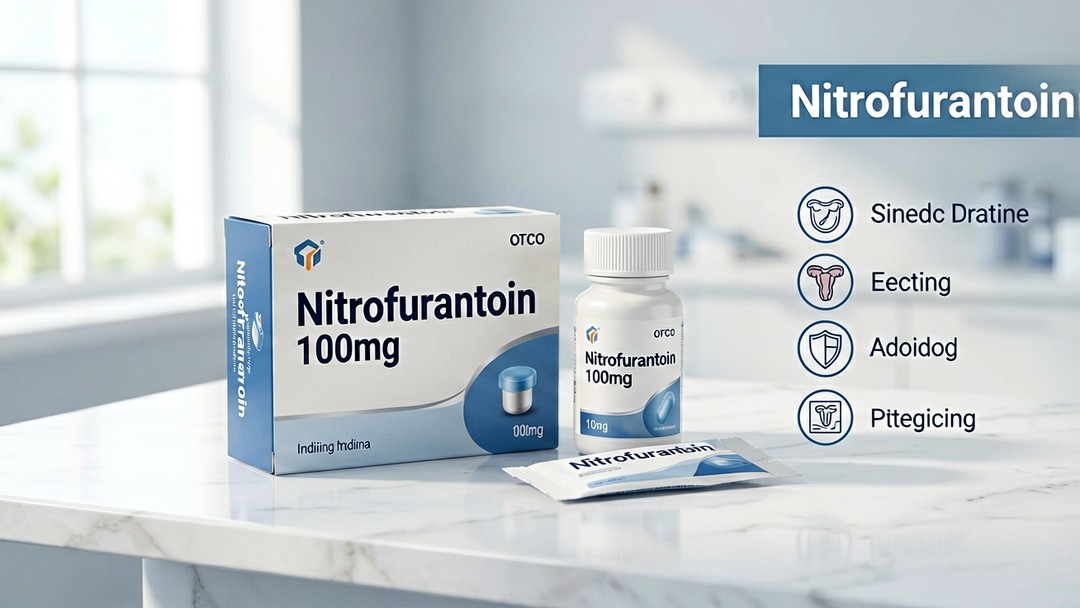
Nitrofurantoin, best known by its brand name Macrobid in the United States and Furadantin in other markets, is a urinary antiseptic that has been used for more than six decades and remains one of the most important first-line treatments for uncomplicated urinary tract infections (UTIs). It was approved by the FDA in 1953, and remarkably, it is still recommended as a first-choice agent in current guidelines because bacterial resistance to it has remained low even after decades of use. Nitrofurantoin is a synthetic nitrofuran that works through a unique mechanism: inside susceptible bacteria, it is reduced by bacterial nitroreductase enzymes into highly reactive intermediates that damage bacterial DNA, RNA, ribosomal proteins, and other cellular components. This multitargeted action makes the development of resistance difficult, because a bacterium would need to mutate multiple pathways simultaneously to escape the drug’s effects.
An equally important property is the drug’s pharmacokinetics. Nitrofurantoin is rapidly absorbed from the gastrointestinal tract and quickly excreted into the urine, where it reaches concentrations of 50 to 250 mg per liter, far above the minimum inhibitory concentration for most uropathogens. Because the drug achieves only minimal tissue concentrations outside the urinary tract, its activity is essentially confined to the urine and the bladder wall, which is exactly where uncomplicated cystitis lives. This urinary concentration explains both its excellent efficacy for cystitis and its limitations: it is not useful for systemic infections, pyelonephritis, or prostatitis, where the drug cannot reach effective tissue levels.
Approved Uses and Clinical Role
Nitrofurantoin is indicated for the treatment of uncomplicated urinary tract infections (acute cystitis) caused by susceptible strains of Escherichia coli, enterococci, Staphylococcus saprophyticus, and certain strains of Klebsiella and Enterobacter species. It is also approved for long-term suppressive prophylaxis of recurrent UTIs in selected patients, typically at a lower dose taken once nightly.
Current international guidelines, including those from the Infectious Diseases Society of America (IDSA), the European Association of Urology, and the European Society of Clinical Microbiology and Infectious Diseases, list nitrofurantoin as a first-line agent for uncomplicated cystitis in otherwise healthy adult women. This recommendation reflects three factors: high clinical cure rates of 75 to 90 percent, a low ecological footprint compared with broad-spectrum agents like fluoroquinolones, and stable resistance rates over time. In the United States, nitrofurantoin is actually the most commonly prescribed antibiotic for uncomplicated cystitis in women, ahead of trimethoprim-sulfamethoxazole and fosfomycin.
Nitrofurantoin is not appropriate for pyelonephritis (kidney infection), complicated UTIs, or infections in men with suspected prostatitis, and it should be avoided in patients with significant renal impairment (creatinine clearance below 30 mL/min), because inadequate urinary concentrations and accumulation increase the risk of toxicity without therapeutic benefit.
Nitrofurantoin vs Other UTI Antibiotics
| Feature | Nitrofurantoin | Trimethoprim-sulfamethoxazole | Fosfomycin | Ciprofloxacin | |
| First-line for uncomplicated cystitis | Yes | Yes (where resistance <20%) | Yes (single dose) | Reserve agent | |
| Typical course | 5 days (100 mg twice daily) | 3 days | Single 3 g dose | 3 days | |
| Resistance in E. coli (US data) | ~1-5% | ~20-30% | ~2-5% | ~15-30% | |
| Tissue penetration | Urine only | Systemic | Urine + some tissue | Systemic | |
| Works for pyelonephritis | No | Yes | No | Yes | |
| Major safety concerns | Pulmonary/hepatic (rare) | Hyperkalemia, rash | GI upset | Tendon rupture, QT | |
| Common cost for a course (US generic) | $12-$40 | $5-$20 | $30-$80 | $10-$35 |
The comparison highlights why nitrofurantoin is preferred when E. coli resistance to trimethoprim-sulfamethoxazole exceeds 20 percent, which is now true in many regions. Ciprofloxacin and other fluoroquinolones are deliberately restricted because of collateral damage: they drive resistance in gut flora and carry rare but serious risks of tendon rupture and aortic dissection. Fosfomycin offers the convenience of a single dose but has slightly lower efficacy in some trials and higher cost per course.
Dosage and Administration
| Formulation | Indication | Dose | Duration |
| Macrocrystals (Macrobid, 100 mg capsule) | Acute uncomplicated cystitis in women | 100 mg twice daily with food | 5 days |
| Macrocrystals (Furadantin, 50/100 mg) | Acute cystitis | 50-100 mg four times daily | 7 days |
| Macrocrystals (50 mg) | Recurrent UTI prophylaxis | 50-100 mg once nightly | 6-12 months (individualized) |
| Oral suspension (25 mg/5 mL) | Children (cystitis) | 5-7 mg/kg/day divided q6h | 7 days |
Nitrofurantoin should always be taken with food or milk to improve absorption and reduce gastrointestinal upset. The capsule should be swallowed whole; it must not be crushed or chewed because the macrocrystalline formulation is designed for slow release. Urine commonly turns dark yellow or brownish during treatment, which is harmless but worth knowing about in advance. Symptoms of cystitis usually improve within 24 to 48 hours, but the full course should be completed to prevent relapse. If there is no improvement within 48 hours, a urine culture is recommended because resistant organisms or an undiagnosed complicated infection may be present.
Clinical Evidence
The evidence supporting nitrofurantoin as first-line therapy is robust. A Cochrane systematic review of antibiotic treatment for uncomplicated lower UTI in women found clinical cure rates of roughly 73 to 95 percent across nitrofurantoin trials and no significant difference in symptom resolution compared with other antibiotics when susceptibility was confirmed. A widely cited 2014 randomized trial by Huttner and colleagues in Denmark compared a 5-day course of nitrofurantoin (100 mg three times daily) with a 3-day course of pivmecillinam and found clinical cure in 84.9 percent of the nitrofurantoin group, with adverse events mainly limited to mild gastrointestinal symptoms.
Long-term surveillance data are the strongest argument for nitrofurantoin’s durability: resistance rates in outpatient E. coli isolates have remained below 10 percent in most European and North American surveillance programs for decades, in sharp contrast to the steady climb of resistance to trimethoprim-sulfamethoxazole and fluoroquinolones. For prophylaxis of recurrent UTI, a meta-analysis of placebo-controlled trials found that continuous low-dose antibiotic prophylaxis, including nitrofurantoin, reduces the rate of recurrent symptomatic UTI by approximately 85 to 95 percent while treatment continues.
Side Effects and Safety
Common adverse effects include nausea, anorexia, headache, and flatulence; taking the drug with food mitigates most of these. Hypersensitivity reactions, including rash and drug fever, occur in a small minority of patients. The serious adverse effects that make nitrofurantoin a drug requiring caution are uncommon but important:
- Pulmonary toxicity: Acute pulmonary reactions (fever, cough, dyspnea, eosinophilia) can occur within hours to days of starting therapy and usually resolve on discontinuation. Chronic interstitial pneumonitis and pulmonary fibrosis are rare and associated with long-term use, which is why annual monitoring is advised for patients on continuous prophylaxis.
- Hepatotoxicity: Cholestatic jaundice and chronic active hepatitis have been reported, predominantly with prolonged use. Liver function tests are advisable in long-term therapy.
- Peripheral neuropathy: Rare but potentially severe, more likely in patients with renal impairment, anemia, diabetes, or prolonged therapy; the drug should be stopped immediately if numbness or tingling develops.
- Renal impairment: Contraindicated when creatinine clearance is below 30 mL/min because the drug will not concentrate in the urine and toxicity risk rises.
- Glucose-6-phosphate dehydrogenase (G6PD) deficiency: Hemolytic anemia has been reported, and the drug should be used cautiously in populations with high G6PD prevalence.
Nitrofurantoin is generally considered safe in pregnancy and is commonly used for cystitis in the second and third trimesters, though it is avoided near term and in the first trimester in some guidelines because of theoretical concerns; clinicians should make this decision individually.
Generic Nitrofurantoin: Cost and Accessibility
Nitrofurantoin has been generic for decades, and the generic capsules are bioequivalent to the brand. What varies enormously is what patients pay. In the United States, a 5-day course of generic nitrofurantoin monohydrate/macrocrystals 100 mg (10 capsules) typically costs $12 to $40 at retail, while the brand-name Macrobid can cost $135 to $275 for the same course without insurance. With discount programs, some U.S. patients pay as little as $8 to $15.
In India and other regulated generic manufacturing markets, the same 10-capsule course is commonly available for approximately $4 to $9, and a full 30-capsule pack often sells for $8 to $18 from established manufacturers. This makes international sourcing of nitrofurantoin one of the most cost-effective options for patients who pay out of pocket, especially for those who need repeated courses for recurrent UTIs or long-term prophylaxis, where U.S. costs can accumulate to $300 or more per year. For patients comparing options, our antibiotic product range lists quality-assured nitrofurantoin and other first-line UTI antibiotics with transparent pricing.
Decision Guide: When to Use Nitrofurantoin
- Use nitrofurantoin when: you have classic symptoms of uncomplicated cystitis (burning, frequency, urgency, without fever or flank pain), you are a non-pregnant adult woman with no significant renal impairment, or you need long-term suppression of recurrent UTIs.
- Avoid it when: you have fever, chills, or flank pain suggesting pyelonephritis; you have known renal impairment; you are a man with suspected prostatitis; or you have a history of pulmonary or hepatic reactions to nitrofurantoin.
- Always: confirm with a healthcare provider before self-treating, complete the full course, take it with food, and seek medical review if symptoms persist beyond 48 hours.
Frequently Asked Questions
Q: How quickly does nitrofurantoin start working for a UTI? A: Most women notice significant symptom improvement within 24 to 48 hours of the first dose. Full symptom resolution typically occurs by day 2 to 3 of a 5-day course, but the entire course should still be completed to eliminate the bacteria completely.
Q: Can I take nitrofurantoin for a kidney infection? A: No. Nitrofurantoin concentrates only in the urine and does not reach therapeutic levels in kidney tissue, so it is ineffective for pyelonephritis. Kidney infections require systemic antibiotics such as a fluoroquinolone, a third-generation cephalosporin, or an aminoglycoside depending on severity and local resistance patterns.
Q: Is nitrofurantoin safe to take during pregnancy? A: It is one of the antibiotics most commonly used for UTI in pregnancy and is generally considered safe in the second and third trimesters. Some guidelines advise caution in the first trimester and near delivery. Always discuss with your obstetrician, since untreated UTI in pregnancy carries significant risks to mother and baby.
Q: Why does my urine turn dark yellow or brown? A: This is a harmless, well-recognized effect of nitrofurantoin and its metabolites in the urine. It resolves after the course is finished and is not a reason to stop the medication.
Q: Can I drink alcohol while taking nitrofurantoin? A: Alcohol does not directly interact with nitrofurantoin, but it can worsen nausea and gastrointestinal upset and may mask or mimic symptoms of the illness. Moderation or avoidance during the short course is sensible.
Q: What if my UTI symptoms do not improve after 48 hours? A: Contact a healthcare provider. Lack of improvement suggests either a resistant organism or a more complicated infection, and a urine culture with susceptibility testing is usually recommended before switching antibiotics.
References
- U.S. Food and Drug Administration. Macrobid (nitrofurantoin monohydrate/macrocrystals) Prescribing Information. FDA Label.
- Gupta K, Hooton TM, Naber KG, et al. International clinical practice guidelines for the treatment of acute uncomplicated cystitis and pyelonephritis in women: A 2010 update by the IDSA and ESCMID. Clinical Infectious Diseases. 2011;52(5):e103-e120.
- Huttner A, Verhaegh EM, Harbarth S, et al. Nitrofurantoin revisited: a systematic review of the literature. Journal of Antimicrobial Chemotherapy. 2015;70(9):2456-2464.
- Cochrane Database of Systematic Reviews. Antibiotics for treating uncomplicated urinary tract infection in women. 2013.
- European Association of Urology. EAU Guidelines on Urological Infections. 2023 edition.
- Sanchez GV, Babiker A, Master RN, et al. Antibiotic resistance among urinary isolates from female outpatients in the United States in 2003 and 2012. Antimicrobial Agents and Chemotherapy. 2016;60(5):2680-2683.
Medical Disclaimer
This article is for informational purposes only and does not constitute medical advice. Nitrofurantoin is a prescription antibiotic; do not use it to self-treat without professional evaluation, and never share antibiotics with others. Urinary tract infections can progress to serious kidney infections if treated incorrectly. Medication prices vary over time, by pharmacy, and by country; all figures above are approximate ranges for guidance only.