What Is Atorvastatin (Lipitor)?
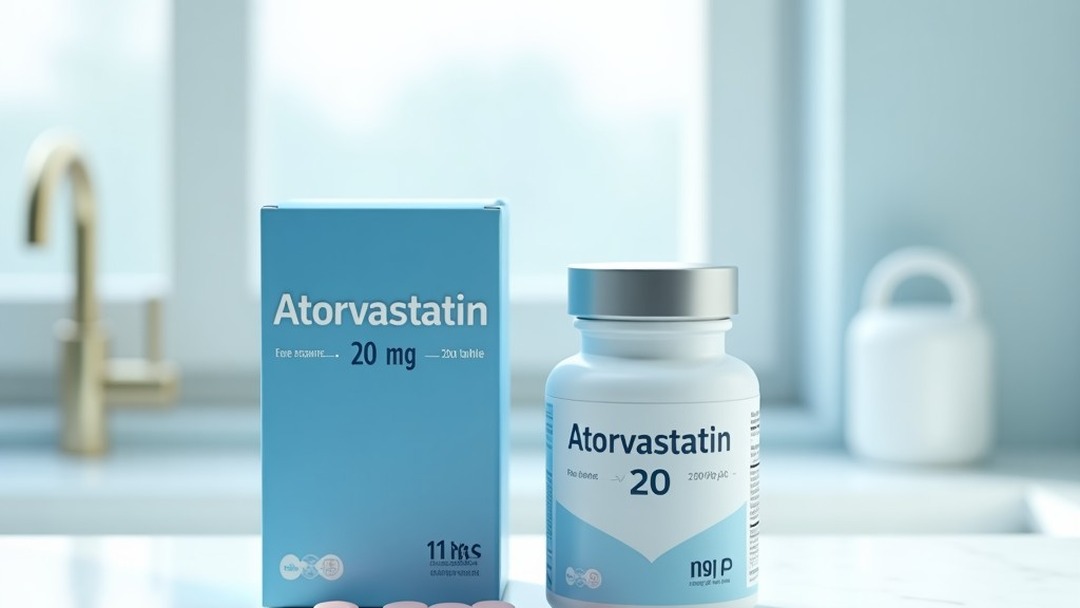
Atorvastatin, sold under the brand name Lipitor, is a statin (HMG-CoA reductase inhibitor) used to lower LDL cholesterol, reduce triglycerides, and prevent cardiovascular events. It is one of the most prescribed drugs worldwide and follows patents that expired in 2011, making Indian generic atorvastatin widely available and affordable.
For patients managing hypercholesterolemia, atorvastatin offers a well-characterized efficacy and safety profile backed by decades of clinical data — from the landmark WOSCOPS, AFCAPS/TexCAPS, and TNT trials.
How Atorvastatin Works: HMG-CoA Reductase Inhibition
Atorvastatin blocks HMG-CoA reductase, the rate-limiting enzyme in hepatic cholesterol synthesis. This leads to:
- Reduced hepatic cholesterol → upregulation of LDL receptors → increased clearance of LDL particles from circulation.
- Lowered LDL-C by 30%–60% at standard doses (10mg–80mg).
- Modest triglycerides reduction and mild HDL-C elevation (~2%–10%).
- Pleiotropic effects: Plaque stabilization, anti-inflammatory properties, and endothelial function improvement — benefits beyond mere lipid lowering.
Clinical Evidence: KEY TRIALS
| Trial | Population | Key Finding |
|---|---|---|
| WOSCOPS (1995) | Men with high LDL | 31% reduction in non-fatal MI |
| AFCAPS/TexCAPS (1998) | Low HDL, average LDL | 37% reduction in first acute coronary event |
| TNT (2005) | Stable CHD patients | 22% reduction in major CV events at 80mg vs. 10mg |
| PROVE-IT (2005) | Post-ACS patients | More intensive lowering (atorvastatin 80mg) superior to moderate |
| JUPITER (2008) | Normal LDL, elevated CRP | Rosuvastatin benefit confirms statin class effect on inflammation |
| IMPROVE-IT (2015) | Post-ACS patients | Simvastatin+ezetimibe benefit reinforces aggressive LDL lowering |
Atorvastatin Dosage Guide
| Starting Dose | Max Dose | Indication | Expected LDL-C Reduction |
|---|---|---|---|
| 10mg once daily | 80mg once daily | Primary / secondary prevention, hypercholesterolemia | 35%–50% |
| 20mg once daily | 80mg once daily | CHD risk equivalent (diabetes, ACS risk) | 40%–55% |
| 40mg once daily | 80mg once daily | High-risk ACS patients | 45%–60% |
| 80mg once daily | 80mg | High-risk after TNT evidence | 50%–60% |
Atorvastatin may be taken at any time of day (no food timing requirements). Hepatic enzymes should be monitored at baseline, 12 weeks after initiation or dose escalation, and periodically thereafter.
Atorvastatin Side Effects and Drug Interactions
Most Common
- Myalgia (muscle aches): Reported by 5%–10% of patients. Check CK if persistent.
- Elevated liver enzymes (ALT/AST): Typically mild, reversible upon dose adjustment or discontinuation.
- GI symptoms: Flatulence, nausea, diarrhea, constipation — usually transient.
- Headache and mild CNS effects.
Serious (rare)
- Rhabdomyolysis: Extremely rare with monotherapy; risk rises when combining with CYP3A4 inhibitors (clarithromycin, itraconazole, HIV protease inhibitors).
- New-onset diabetes: Statins may slightly increase blood glucose; benefits in CV prevention outweigh this small risk.
- Cognitive effects: Reversible memory fog reported rarely.
Generic Atorvastatin in India: Pricing and Quality
Indian generic atorvastatin from quality manufacturers costs approximately $3–$9 per box of 10mg/30 tablets, whereas U.S. brand Lipitor typically ranges $120–$200+ per box (pre-fallback insurance copay rates may zero out cost for insured U.S. patients).
Key quality indicators when purchasing generics:
- WHO-GMP certification or equivalent national standard (CDSCO licensing for export).
- Bioequivalence studies showing 90% CI within 80%–125% for AUC and Cmax vs. reference listed drug Lipitor.
- Known, reputable manufacturer (e.g., Cipla, Dr. Reddy’s, Sun Pharma, Lupin, Torrent).
Browse available options at the 984online Heart Health & Cholesterol category.
Atorvastatin vs Rosuvastatin: Which Statin?
| Parameter | Atorvastatin (Lipitor) | Rosuvastatin (Crestor) |
|---|---|---|
| Max dose | 80mg | 40mg |
| LDL-C lowering (max) | 50%–60% | 50%–65% |
| CYP metabolism | Yes (CYP3A4) | Minimal (CYP2C9) |
| Drug interaction risk | Higher | Lower |
| Generic availability | Yes (India, post-2011) | Yes (emerging) |
| Cost in India | $3–$9 / box | $5–$12 / box |
Frequently Asked Questions
When should I take atorvastatin — morning or night?
Anytime. Unlike some statins, atorvastatin has a long half-life (~14 hours), so cholesterol synthesis is inhibited continuously whether taken in the morning or at bedtime.
Can I stop taking atorvastatin once my cholesterol improves?
No. For most patients with established cardiovascular disease or high risk, statin therapy is lifelong. Stopping abruptly can allow LDL to rebound and increase event risk.
What foods should I avoid while on atorvastatin?
Limit grapefruit and grapefruit juice (contains furanocoumarins that inhibit intestinal CYP3A4, raising atorvastatin bioavailability and risk of toxicity). Moderate alcohol consumption is acceptable; heavy use increases liver-stress risk.
Can I take atorvastatin with other medications?
Many drugs are safe to combine. Key contraindicated interactions include strong CYP3A4 inhibitors (clarithromycin, itraconazole, ritonavir). Always tell your doctor and pharmacist about all medications.
Is atorvastatin safe for long-term use?
Yes. The statin safety record spans decades. Monitor liver enzymes and CK if muscle symptoms occur. Most patients tolerate long-term use well with periodic monitoring.
Important Warnings
Atorvastatin is contraindicated in active liver disease and unexplained persistent elevations of hepatic transaminases. Use with caution in patients >65 years or with renal impairment. Pregnant or breastfeeding women should not use atorvastatin — it is Category X. Statins may cause embryonic harm.
Disclaimer: Informational only. Consult a licensed healthcare provider for medical advice. Prices are approximate ranges andsubject to change; verify current pricing with your pharmacy.
References
- Pfizer. Lipitor (atorvastatin) Prescribing Information. FDA Label, 2011. accessdata.fda.gov
- Shepherd J et al. “Pravastatin in Elderly Individuals at Risk of Vascular Disease (PROSPER).” Lancet 2002;360:1623–30.
- Downs JR et al. “Primary Prevention of Acute Coronary Events with Lovastatin.” NEJM 1998;338:1–10. (AFCAPS/TexCAPS rationale class)
- LaRosa JC et al. “High- vs Low-Dose Atorvastatin in CHD.” NEJM 2005;352:1425–35. (TNT)
- Cannon CP et al. “Intensive vs Moderate Lipid Lowering with Statins.” NEJM 2004;350:1495–504. (PROVE-IT class)
- Ridker PM et al. “Rosuvastatin to Prevent Vascular Events in Men and Women with Elevated CRP.” NEJM 2008;359:2195–207. (JUPITER)
- Stone NJ et al. “2013 ACC/AHA Guideline on the Treatment of Blood Cholesterol.” J Am Coll Cardiol 2014;63:2889–934.
Atorvastatin in High-Risk Patients
Atorvastatin’s role extends beyond basic LDL lowering to specific high-risk populations.
Diabetes Patients
Statin therapy is first-line for ASCVD prevention in adults with diabetes aged 40–75 years. HPS and CARDS trials showed ~33% reduction in major CV events with atorvastatin 10–80mg in diabetic populations.
Familial Hypercholesterolemia
Atorvastatin is frequently an initial agent for heterozygous FH. Higher doses (40–80mg) can reduce LDL by 45%–60%, often combined with ezetimibe or PCSK9 inhibitors. Cascade screening for first-degree relatives is essential.
Post-AACS Event
Following ACS, intensive atorvastatin 80mg reduced recurrent events per PROVE-IT. The benefit extends to reduced stroke, recurrent MI, and need for revascularization.
Aging and Polypharmacy
In patients >75 years, statin therapy remains beneficial for secondary prevention. Monitor for myopathy given polypharmacy prevalence.
Atorvastatin Drug Interactions
- CYP3A4 inhibitors: Clarithromycin, itraconazole, HIV protease inhibitors substantially increase atorvastatin. Avoid combining; if unavoidable, limit to 20mg/day and monitor CK.
- Gemfibrozil: Raises statin levels greatly — avoid. Fenofibrate preferred.
- Niacin: May increase myopathy risk — use with caution.
Sustained Lifestyle Management
Medication works best alongside lifestyle change. Mediterranean or DASH diet, moderate aerobic activity, weight management, and smoking cessation enhance lipid reduction beyond statin alone.
Disclaimer: This article is for informational purposes only and does not constitute medical advice.
Atorvastatin Monitoring and Follow-Up
Safe statin therapy requires structured monitoring:
- Liver panel (ALT/AST): Check at baseline, 12 weeks after initiation or dose change, then periodically. Avoid if active liver disease.
- CK (creatine kinase): Check if muscle symptoms reported. Significant CK elevation warrants reassessment.
- Fasting lipid panel: Recheck 4–12 weeks after starting or changing dose; goal is usually LDL-C <70 mg/dL for very high risk patients.
- Glucose monitoring: Slight increase in blood glucose is possible with long-term statin use. Monitor A1c in diabetic or prediabetic patients.
- Drug interaction review: At every visit, update the medication list to catch new CYP3A4 inhibitors (e.g., clarithromycin for bronchitis).
Atorvastatin in Special Populations
Women of Childbearing Age
Atorvastatin is contraindicated in pregnancy (FDA Category X). Statins are teratogenic in animal studies. Women who become pregnant while on atorvastatin should discontinue immediately and discuss with obstetrics. Effective contraception should be used during treatment.
Breastfeeding
It is unknown whether atorvastatin is excreted in human milk. Due to potential serious adverse reactions in nursing infants, discontinue atorvastatin or suspend breastfeeding — individualized decision based on clinical need.
Asian and Ethnic Considerations
Asian patients may have higher systemic exposure to atorvastatin even at equivalent doses. Consider starting at lower doses (10mg) in this population and titrating based on lipid response and tolerability.
Generic Atorvastatin Quality Assurance in India
Quality generic atorvastatin from India should meet these criteria: WHO-GMP certification, CDSCO manufacturing and export license, ISO 9001:2015 quality system, published bioequivalence study with 90% CI for AUC and Cmax within 80%–125% vs. Lipitor reference, and known stable manufacturer reputation (Cipla, Dr. Reddy’s, Sun Pharma, Lupin, Torrent). Products from informal supply chains may have variable dissolution profiles and sub-therapeutic potency.
Prices in India typically range $3–$9 per box of 10mg/30 tablets vs. $120–$200 per box for U.S. brand Lipitor. Browse options at the 984online Heart Health & Cholesterol category.
Disclaimer: This article is for informational purposes only and does not constitute medical advice. Prices shown are approximate ranges and subject to change; verify current pricing with your pharmacy.