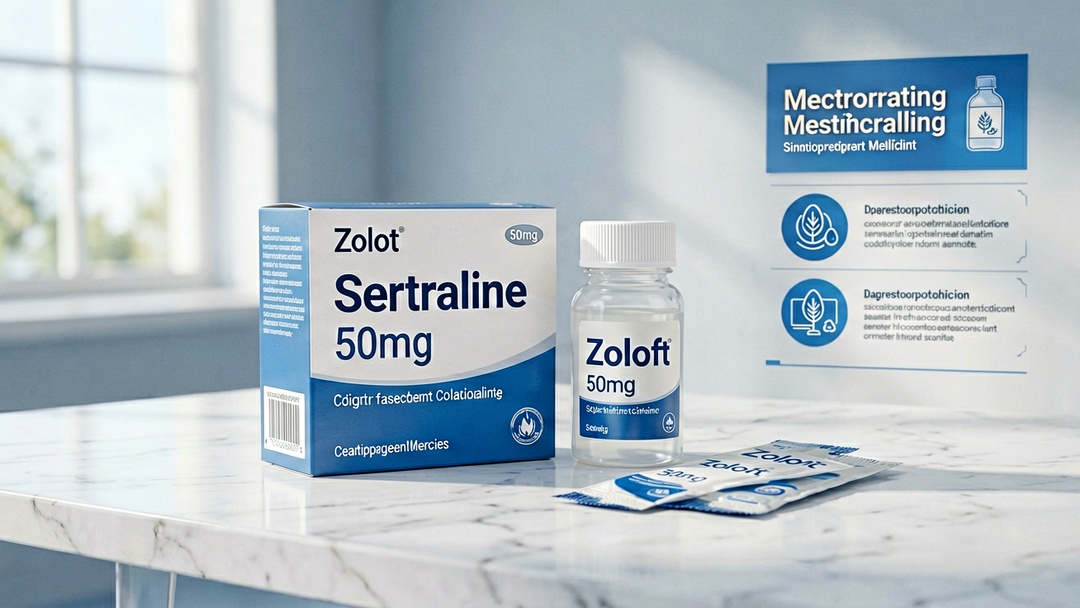
Sertraline, widely known by its brand name Zoloft, is a selective serotonin reuptake inhibitor (SSRI) that has become one of the most prescribed antidepressant medications worldwide. Since its FDA approval in 1991, sertraline has established itself as a first-line treatment for major depressive disorder (MDD), obsessive-compulsive disorder (OCD), panic disorder, post-traumatic stress disorder (PTSD), social anxiety disorder, and premenstrual dysphoric disorder (PMDD). This comprehensive guide examines sertraline’s pharmacology, clinical evidence, dosing considerations, safety profile, and cost-effective generic alternatives.
What Is Sertraline and How Does It Work?
Sertraline belongs to the SSRI class of antidepressants, which exert their therapeutic effects by blocking the reuptake of serotonin (5-hydroxytryptamine, 5-HT) at the presynaptic neuronal membrane. By inhibiting the serotonin transporter protein (SERT), sertraline increases the concentration of serotonin in the synaptic cleft, enhancing serotonergic neurotransmission. This mechanism distinguishes SSRIs from older antidepressant classes such as tricyclic antidepressants (TCAs) and monoamine oxidase inhibitors (MAOIs), which have broader pharmacological profiles and less favorable safety profiles.
What makes sertraline particularly notable among SSRIs is its relatively high selectivity for the serotonin transporter compared to the norepinephrine transporter, with a selectivity ratio of approximately 60:1. This selectivity translates into a favorable side effect profile compared to less selective agents. Sertraline also has mild dopaminergic reuptake inhibition properties at higher doses, which may contribute to its distinct clinical profile and lower incidence of certain side effects compared to other SSRIs.
FDA-Approved Indications
Sertraline has received FDA approval for six distinct psychiatric indications, making it one of the most versatile SSRIs available:
- Major Depressive Disorder (MDD): Characterized by persistent depressed mood, loss of interest or pleasure (anhedonia), changes in appetite or weight, sleep disturbances, fatigue, feelings of worthlessness, and recurrent thoughts of death.
- Obsessive-Compulsive Disorder (OCD): Involves recurrent, unwanted thoughts (obsessions) and/or repetitive behaviors (compulsions) that the individual feels driven to perform.
- Panic Disorder: Characterized by recurrent, unexpected panic attacks and persistent concern about additional attacks or their consequences.
- Post-Traumatic Stress Disorder (PTSD): Develops after exposure to actual or threatened death, serious injury, or sexual violence, with symptoms including intrusive memories, avoidance, negative alterations in cognition, and hyperarousal.
- Social Anxiety Disorder (Social Phobia): Marked fear or anxiety about social situations in which the individual may be scrutinized by others.
- Premenstrual Dysphoric Disorder (PMDD): A severe form of premenstrual syndrome characterized by significant affective and physical symptoms occurring during the luteal phase of the menstrual cycle.
Sertraline Dosage and Administration
Sertraline is available in 25 mg, 50 mg, and 100 mg tablets, as well as a 20 mg/mL oral concentrate. Dosing varies by indication and requires gradual titration to minimize initial side effects.
| Indication | Starting Dose | Usual Therapeutic Dose | Maximum Dose |
|---|---|---|---|
| Major Depressive Disorder | 50 mg once daily | 50-200 mg once daily | 200 mg/day |
| Obsessive-Compulsive Disorder | 25-50 mg once daily | 50-200 mg once daily | 200 mg/day |
| Panic Disorder | 25 mg once daily | 50-200 mg once daily | 200 mg/day |
| PTSD | 25-50 mg once daily | 50-200 mg once daily | 200 mg/day |
| Social Anxiety Disorder | 25-50 mg once daily | 50-200 mg once daily | 200 mg/day |
| PMDD (continuous dosing) | 50 mg once daily | 50-150 mg once daily | 150 mg/day |
| PMDD (luteal phase dosing) | 50 mg once daily | 50-100 mg once daily | 100 mg/day |
For most indications, sertraline is administered once daily, typically in the morning or evening. The oral concentrate should be diluted before use. Dose adjustments should be made at intervals of no less than 1 week for most indications, with the exception of PMDD luteal phase dosing which follows a 14-day cycle.
Comparative Efficacy: Sertraline vs. Other Antidepressants
Sertraline has been extensively compared to other antidepressants in head-to-head clinical trials and meta-analyses. A landmark network meta-analysis published in The Lancet evaluating 21 antidepressants found sertraline to be among the most effective and best-tolerated options for the acute treatment of MDD.
| Parameter | Sertraline (Zoloft) | Escitalopram (Lexapro) | Fluoxetine (Prozac) | Paroxetine (Paxil) |
|---|---|---|---|---|
| Relative efficacy (vs. placebo, OR) | 1.67 | 1.76 | 1.54 | 1.63 |
| Acceptability (dropout rate) | 17-22% | 15-20% | 19-24% | 22-28% |
| Half-life | 24-26 hours | 27-32 hours | 4-6 days (active metabolite) | 21-24 hours |
| Drug interactions (CYP inhibition) | Mild (CYP2D6) | Minimal | Moderate (CYP2D6, CYP3A4) | Moderate (CYP2D6) |
| Weight gain risk | Low-Moderate | Low | Low | Moderate-High |
| Sexual dysfunction rate | 15-25% | 10-20% | 12-22% | 25-35% |
Clinical Efficacy Evidence
The efficacy of sertraline in MDD has been established in multiple randomized controlled trials involving over 4,000 patients. Response rates (defined as 50% or greater reduction in depression severity scores) typically range from 55-65% with sertraline compared to 35-45% with placebo. Remission rates (complete resolution of depressive symptoms) range from 35-45% with sertraline over 8-12 weeks of treatment.
For OCD, sertraline has demonstrated particular efficacy in both adult and pediatric populations. The Pediatric OCD Treatment Study (POTS) found sertraline to be significantly superior to placebo, with a response rate of approximately 48% compared to 15% for placebo. Sertraline is the only SSRI approved by the FDA for the treatment of OCD in children aged 6 and older.
In PTSD treatment, sertraline has shown consistent benefit in reducing all three symptom clusters (re-experiencing, avoidance/numbing, and hyperarousal) in both male and female veterans and civilian trauma survivors. The effect size is moderate but clinically meaningful, particularly for the avoidance/numbing symptom cluster.
Safety Profile and Side Effects
Sertraline is generally well-tolerated, with most side effects occurring during the first 1-2 weeks of treatment and resolving thereafter. Common side effects include nausea (20-26%), diarrhea (15-20%), insomnia (15-20%), dry mouth (12-16%), dizziness (10-14%), fatigue (10-12%), and headache (10-12%). Sexual dysfunction, including decreased libido, delayed ejaculation, and anorgasmia, occurs in 15-25% of patients and may persist throughout treatment.
Serious adverse events include serotonin syndrome (rare, potentially life-threatening), increased risk of suicidal thinking in children, adolescents, and young adults (FDA black box warning for ages up to 24), and abnormal bleeding (especially when combined with NSAIDs or anticoagulants). Sertraline carries a lower risk of QTc prolongation compared to citalopram and escitalopram, making it a preferred choice in patients with cardiac risk factors.
Cost Comparison: Brand vs. Generic Sertraline
The cost difference between brand Zoloft and generic sertraline represents one of the most dramatic examples of generic medication savings. In the United States, brand Zoloft 50 mg tablets typically cost $300-$420 for a 30-tablet supply (approximately $10-$14 per tablet), while brand Zoloft 100 mg costs $340-$460 for 30 tablets ($11-$15 per tablet).
Generic sertraline, widely manufactured by numerous WHO-GMP certified facilities in India and other countries, is available at substantially lower prices. A 30-tablet supply of generic sertraline 50 mg costs approximately $3-$8 ($0.10-$0.27 per tablet), while the 100 mg strength costs $5-$12 ($0.17-$0.40 per tablet).
For patients exploring affordable generic antidepressant options, the annual savings are remarkable. A year’s supply of generic sertraline 50 mg (365 tablets) can cost as little as $36-$96 through international pharmacy sources, compared to $3,650-$5,110 for brand Zoloft in U.S. retail pharmacies.
| Product | Strength | 30-Tablet Price | Cost Per Tablet |
|---|---|---|---|
| Brand Zoloft (USA retail) | 50 mg | $300-$420 | $10-$14 |
| Brand Zoloft (USA retail) | 100 mg | $340-$460 | $11-$15 |
| Generic Sertraline (Indian mfr.) | 50 mg | $3-$8 | $0.10-$0.27 |
| Generic Sertraline (Indian mfr.) | 100 mg | $5-$12 | $0.17-$0.40 |
Discontinuation and Withdrawal Considerations
Discontinuation syndrome is a recognized phenomenon with SSRIs, and sertraline has a moderate risk compared to other agents in the class. Paroxetine carries the highest risk due to its short half-life and lack of active metabolites, while fluoxetine has the lowest risk due to its long half-life. Sertraline’s risk profile is intermediate. Symptoms of discontinuation syndrome include dizziness, vertigo, paresthesias (tingling sensations), anxiety, irritability, nausea, and sleep disturbances.
To minimize the risk and severity of discontinuation syndrome, sertraline should be tapered gradually rather than abruptly discontinued. A typical tapering schedule involves reducing the dose by 25-50 mg every 1-2 weeks, with slower tapering at lower doses. The total duration of tapering may range from 2-8 weeks depending on the patient’s dose and duration of treatment.
Frequently Asked Questions
1. How long does sertraline take to work for depression?
Patients may begin to notice some improvement in sleep, appetite, and energy within 1-2 weeks. However, the full antidepressant effect typically requires 4-8 weeks of consistent dosing at the therapeutic dose.
2. Is 50 mg of sertraline a high dose?
No, 50 mg is the standard starting dose for most indications. The therapeutic dose range extends from 50 mg to 200 mg daily. Doses above 100 mg are typically reserved for patients who have not achieved adequate response.
3. Can sertraline be taken for anxiety?
Yes, sertraline is FDA-approved for panic disorder, social anxiety disorder, and PTSD, all of which have significant anxiety components. Many clinicians prescribe sertraline off-label for generalized anxiety disorder as well.
4. Does sertraline cause weight gain?
Sertraline has a lower risk of weight gain compared to paroxetine and mirtazapine. Short-term use is associated with minimal weight changes, though long-term use may be associated with modest weight gain in some patients.
5. Is generic sertraline as effective as brand Zoloft?
Yes, generic sertraline contains the identical active ingredient and meets rigorous bioequivalence standards established by regulatory authorities including the FDA and EMA.
Conclusion
Sertraline remains a cornerstone of modern psychopharmacology, offering proven efficacy across a wide range of psychiatric conditions with a favorable tolerability profile. Its versatility, predictable pharmacokinetics, and moderate drug interaction potential make it an excellent first-line choice for many patients. The widespread availability of affordable generic sertraline has substantially improved global access to this essential psychiatric medication, supporting public health efforts to address the growing burden of mental illness worldwide.
References
- Cipriani A, et al. Comparative efficacy and acceptability of 21 antidepressant drugs for MDD: a network meta-analysis. Lancet. 2018;391(10128):1357-1366.
- FDA Prescribing Information: Zoloft (sertraline hydrochloride) tablets. Roerig/Pfizer. Revised 2023.
- Pediatric OCD Treatment Study (POTS) Team. Cognitive-behavioral therapy, sertraline, and their combination for children and adolescents with OCD. JAMA. 2004;292(16):1969-1976.
- Davidson JRT, et al. Multicenter, double-blind comparison of sertraline and placebo in the treatment of PTSD. Arch Gen Psychiatry. 2001;58(5):485-492.
- World Health Organization. Model List of Essential Medicines. 23rd List, 2023.
- Mittal M, et al. Generic antidepressants: a review of bioequivalence and clinical considerations. J Clin Psychiatry. 2022;83(4):22r14498.
Medical Disclaimer: This article is for informational purposes only and does not constitute medical advice. Always consult a licensed healthcare provider before starting or discontinuing any antidepressant medication. Pricing information reflects approximate market ranges and may vary based on location, insurance coverage, pharmacy, and time of purchase.