Introduction
Benign Prostatic Hyperplasia (BPH) is one of the most common urological conditions affecting aging men, with prevalence rates exceeding 50% by age 60 and nearly 90% by age 85. This non-cancerous enlargement of the prostate gland causes bothersome lower urinary tract symptoms (LUTS) that significantly impact quality of life. Finasteride, a 5-alpha-reductase inhibitor (5-ARI), is an FDA-approved first-line medication for BPH that reduces prostate size, improves urinary flow, and prevents disease progression. This comprehensive guide explores Finasteride’s role in BPH management, proper dosing, potential side effects, and affordable generic alternatives from India.
For men seeking long-term BPH management, Indian generic Finasteride offers the same clinical efficacy as brand-name Proscar® at a fraction of the cost. Understanding the benefits, risks, and treatment outcomes is essential for making informed healthcare decisions.
What Is Finasteride?
Finasteride is a synthetic 4-azasteroid compound that acts as a competitive inhibitor of type II 5-alpha-reductase, the intracellular enzyme responsible for converting testosterone to the more potent androgen dihydrotestosterone (DHT). It was originally developed by Merck and received FDA approval for BPH in 1992 under the brand name Proscar®. A lower-dose formulation (Propecia®, 1mg) was later approved for male pattern hair loss.
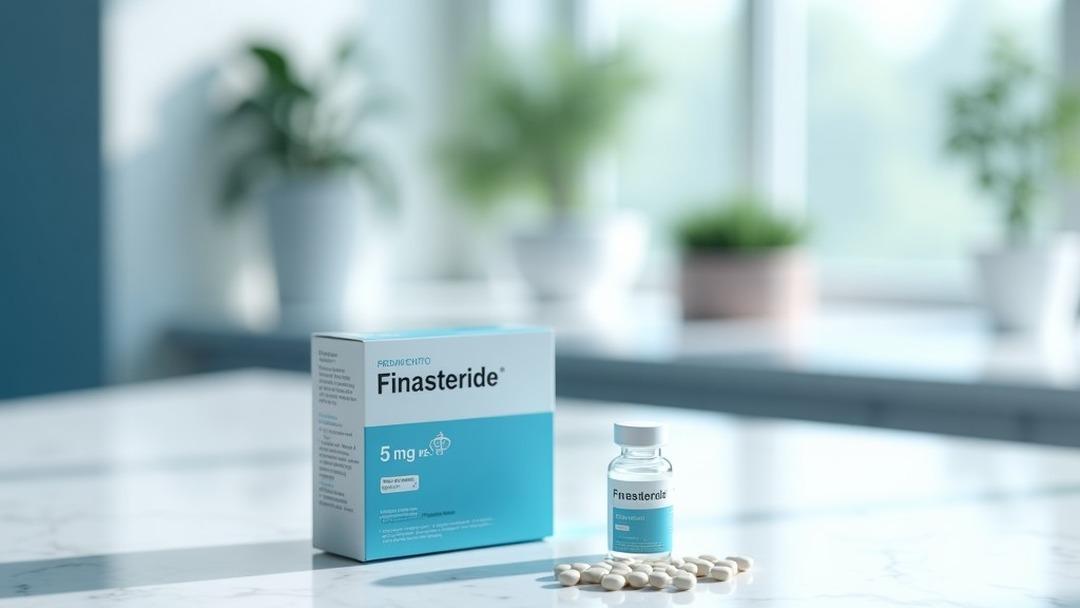
Finasteride is available in oral tablet form, with the 5mg strength approved for BPH treatment. It is manufactured by numerous pharmaceutical companies worldwide, with high-quality generic versions produced extensively in India.
Mechanism of Action in BPH
In BPH, prostate enlargement is driven by the potent androgen DHT, which promotes cell proliferation in the prostatic stromal tissue. Finasteride inhibits the 5-alpha-reductase enzyme, reducing serum DHT levels by approximately 70% and intraprostatic DHT levels by 85–90%.
This reduction in DHT leads to several clinically significant effects:
- Apoptosis (programmed cell death) of prostate epithelial cells
- Reduction in prostate volume by 15–25% after 6–12 months of treatment
- Improved urinary flow rate (peak flow rate increase of 1.5–2.5 mL/sec)
- Reduction in symptom scores (AUA-SI or IPSS decrease of 3–6 points)
- Decreased risk of acute urinary retention by approximately 50%
- Reduced need for BPH-related surgery by approximately 50% over 4 years
Unlike alpha-blockers (such as tamsulosin) which provide rapid symptomatic relief by relaxing prostate smooth muscle, Finasteride addresses the underlying pathophysiology of prostatic enlargement. Clinical benefit typically requires 3–6 months of continuous therapy to become apparent, with maximum effect achieved after 6–12 months.
FDA Approval and Indications
Finasteride 5mg is FDA-approved for three primary indications related to BPH:
- Symptomatic treatment of BPH in men with an enlarged prostate
- Reduction of the risk of acute urinary retention requiring catheterization
- Reduction of the risk of the need for BPH-related surgery (TURP or prostatectomy)
The landmark Proscar Long-Term Efficacy and Safety Study (PLESS), a 4-year, double-blind, placebo-controlled trial involving over 3,000 men, demonstrated that Finasteride reduced the risk of acute urinary retention by 57% and the need for BPH-related surgery by 55% compared to placebo. These findings established Finasteride as a disease-modifying therapy for BPH, not merely a symptomatic treatment.
Dosage and Administration
| Indication | Dose | Frequency | Duration to Effect | Duration of Therapy |
|---|---|---|---|---|
| BPH (symptomatic) | 5 mg | Once daily | 3–6 months | Long-term (chronic) |
| BPH (AUR risk reduction) | 5 mg | Once daily | 4–6 months | Long-term (≥4 years) |
| Male pattern hair loss | 1 mg | Once daily | 3–6 months | Long-term (chronic) |
Key administration guidelines:
- Finasteride can be taken with or without food
- Tablets should be swallowed whole and should not be crushed or split to avoid exposure in women who are or may become pregnant
- No dose adjustment is necessary for elderly patients or those with renal impairment
- Dose adjustment is not required based on hepatic function, though caution is advised in severe hepatic impairment
- Treatment should be continued for at least 6–12 months to evaluate therapeutic response
Side Effects and Safety Profile
| Side Effect | Incidence (Finasteride) | Incidence (Placebo) | Notes |
|---|---|---|---|
| Decreased libido | 3–10% | 1–6% | May persist in a small subset of patients |
| Erectile dysfunction | 4–16% | 2–7% | Typically resolves with continued use or discontinuation |
| Ejaculation disorder | 2–7% | 1–2% | Decreased ejaculate volume |
| Breast tenderness/enlargement | 1–2% | <1% | Gynecomastia; may require discontinuation |
| Depression | Rare | <1% | Post-marketing reports; causal link debated |
| High-grade prostate cancer | Debated | See notes | The PLCO trial showed a small increase in high-grade cancer risk; clinical significance remains controversial |
Important safety considerations:
Serum PSA (prostate-specific antigen) levels decrease by approximately 50% after 6 months of Finasteride therapy. This must be accounted for when interpreting PSA screening results for prostate cancer. A new baseline PSA should be established after 6 months of treatment, and any confirmed increase above this new baseline should prompt further evaluation.
Women who are or may become pregnant should not handle crushed or broken Finasteride tablets due to the risk of fetal harm (inhibition of male genital development). The medication is contraindicated in women and children.
Finasteride vs. Other BPH Treatments
| Medication | Class | Onset of Action | Effect on Prostate Size | Effect on PSA | Common Side Effects |
|---|---|---|---|---|---|
| Finasteride (Proscar®) | 5-ARI | 3–6 months | Reduces by 15–25% | Decreases by ~50% | Sexual dysfunction, gynecomastia |
| Dutasteride (Avodart®) | 5-ARI (dual) | 3–6 months | Reduces by 20–28% | Decreases by ~50% | Similar to finasteride |
| Tamsulosin (Flomax®) | Alpha-blocker | Days to weeks | No change | No change | Dizziness, retrograde ejaculation, nasal congestion |
| Alfuzosin | Alpha-blocker | Days to weeks | No change | No change | Dizziness, hypotension |
| Tadalafil (Cialis®) | PDE5 inhibitor | 2–4 weeks | No change | No change | Headache, dyspepsia, back pain |
Combination therapy with Finasteride and an alpha-blocker (e.g., tamsulosin) is a common and effective strategy for patients with moderate-to-severe BPH. The MTOPS (Medical Therapy of Prostatic Symptoms) study demonstrated that combination therapy was significantly more effective than either agent alone in reducing the risk of overall clinical progression (66% risk reduction vs. 39% for doxazosin alone and 34% for finasteride alone).
Affordable Generic Finasteride Options from India
India’s pharmaceutical industry produces high-quality generic Finasteride 5mg tablets at a fraction of the cost of brand-name Proscar®. These products are manufactured under WHO-GMP certification and are bioequivalent to the original brand medication.
Generic Finasteride 5mg pricing (estimated ranges):
- Finasteride 5mg tablets (30 tablets / 1 month supply): $4–$8 (Indian generic) vs. $45–$65 (US brand Proscar®)
- Finasteride 5mg tablets (90 tablets / 3 months supply): $10–$18 (Indian generic) vs. $120–$170 (US brand Proscar®)
- Finasteride 5mg tablets (180 tablets / 6 months supply): $16–$30 (Indian generic) vs. $220–$310 (US brand Proscar®)
Popular Indian generic Finasteride brands include Finast (Cipla), Finax (Sun Pharma), and Fincar (Intas). All contain the identical active pharmaceutical ingredient (finasteride 5mg) and meet international pharmacopoeial standards. The CDSCO (Central Drugs Standard Control Organization) regulates these products, ensuring quality, safety, and efficacy.
For more information about available options, visit our Men’s Health Medication category to explore affordable BPH treatment alternatives.
Frequently Asked Questions
How long does Finasteride take to work for BPH?
Finasteride requires 3–6 months of continuous therapy before significant symptom improvement is noticed. Prostate volume reduction begins around 3 months, with maximum reduction observed after 6–12 months. Patients should not expect immediate relief and should continue therapy as prescribed.
Can I stop taking Finasteride once symptoms improve?
No. Finasteride does not cure BPH; it controls the underlying disease process. Discontinuation leads to a gradual return of DHT levels, prostate re-enlargement, and recurrence of symptoms within 6–12 months. BPH treatment with Finasteride is typically a lifelong therapy.
Does Finasteride affect fertility?
Finasteride can reduce ejaculate volume and may affect sperm parameters in some men. However, it is not a reliable contraceptive. Men concerned about fertility should discuss this with their healthcare provider. In most cases, any effects on fertility are reversible upon discontinuation.
Can Finasteride prevent prostate cancer?
The Prostate Cancer Prevention Trial (PCPT) found that Finasteride reduced the overall risk of prostate cancer by approximately 25% over 7 years. However, there was a small increase in high-grade (Gleason 7–10) cancers in the Finasteride group, a finding that remains controversial. Finasteride is not FDA-approved for cancer prevention.
What is the difference between Finasteride 1mg and 5mg?
Finasteride 5mg is FDA-approved for BPH treatment, while Finasteride 1mg (marketed as Propecia®) is approved for male pattern hair loss. Both doses reduce serum DHT by approximately 60–70%, but the 5mg dose achieves greater intraprostatic DHT suppression for BPH treatment.
Drug Interactions
Finasteride has relatively few clinically significant drug interactions:
- No significant CYP450 interactions: Finasteride is metabolized primarily via glucuronidation, not the CYP450 system
- No clinically relevant interactions with alpha-blockers (tamsulosin, alfuzosin, doxazosin), allowing safe combination therapy
- No interaction with PDE5 inhibitors (sildenafil, tadalafil, vardenafil), though both can cause hypotension
- No interaction with antihypertensives, diuretics, or cardiac glycosides
Long-Term Outcomes and Clinical Evidence
The efficacy of Finasteride for BPH is supported by extensive long-term data:
- The PLESS trial demonstrated sustained improvement in urinary symptoms and flow rates over 4 years with continued Finasteride therapy.
- The MTOPS study (mean follow-up 4.5 years) showed that Finasteride alone and in combination with doxazosin significantly reduced the risk of BPH clinical progression.
- The CombAT study demonstrated that combination therapy with dutasteride and tamsulosin was superior to either monotherapy for symptom improvement and flow rate enhancement over 4 years.
- A 10-year open-label extension study confirmed the long-term safety and sustained efficacy of Finasteride for BPH.
References
- FDA Prescribing Information for Proscar® (Finasteride) 5mg tablets. U.S. Food and Drug Administration, 2019.
- McConnell JD, et al. The long-term effect of doxazosin, finasteride, and combination therapy on the clinical progression of benign prostatic hyperplasia. New England Journal of Medicine, 2003;349(25):2387–2398.
- McConnell JD, et al. Finasteride in benign prostatic hyperplasia: the Proscar Long-Term Efficacy and Safety Study (PLESS). Journal of Urology, 1998;159(5):1521–1526.
- Thompson IM, et al. The influence of finasteride on the development of prostate cancer. New England Journal of Medicine, 2003;349(3):215–224.
- Roehrborn CG, et al. The effects of combination therapy with dutasteride and tamsulosin on clinical outcomes in men with symptomatic BPH: 4-year results from the CombAT study. European Urology, 2010;57(1):123–131.
- National Institute of Diabetes and Digestive and Kidney Diseases (NIDDK). Prostate Enlargement (Benign Prostatic Hyperplasia). NIH Publication, 2022.
- UpToDate: Medical treatment of benign prostatic hyperplasia. Wolters Kluwer Health, 2026.
Safety and Medical Disclaimer
The information provided in this article is for educational purposes only and does not constitute medical advice. Always consult a qualified healthcare provider before starting, stopping, or modifying any medication regimen. Finasteride is a prescription medication available only under medical supervision. Prices mentioned are approximate ranges based on market data and may vary significantly by location, pharmacy, insurance coverage, and time of purchase. Indian generic medications are manufactured under WHO-GMP certified facilities; however, patients should ensure they purchase from licensed and reputable sources. Women who are or may become pregnant should not handle crushed or broken Finasteride tablets.