
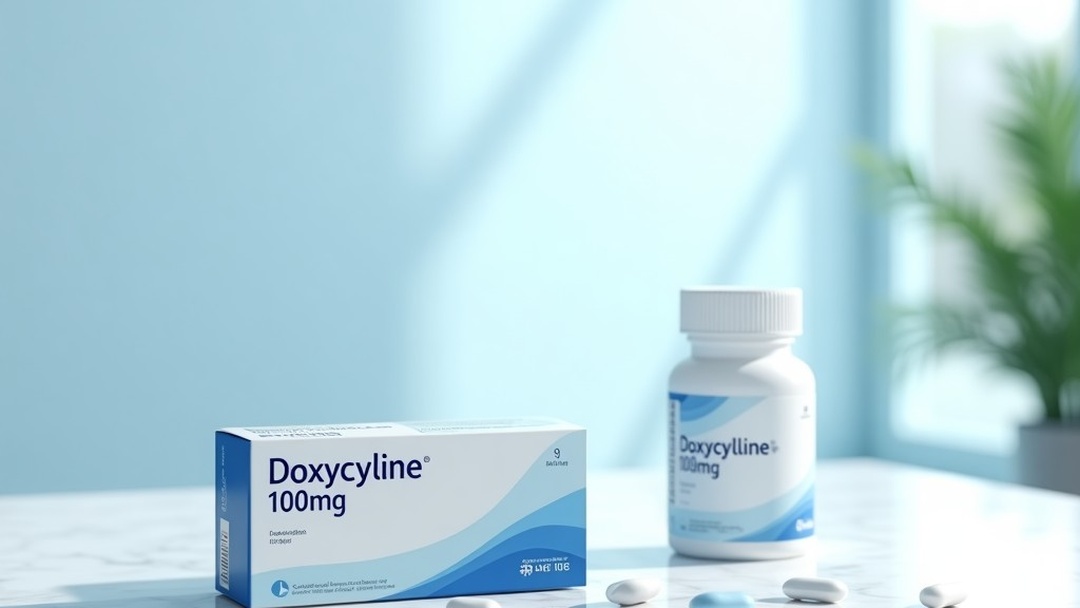
What Is Doxycycline?
Doxycycline is a broad-spectrum tetracycline-class antibiotic with bacteriostatic activity against a wide range of gram-positive, gram-negative, atypical, and intracellular bacteria. Developed in the 1960s, Doxycycline remains one of the most versatile and widely prescribed antibiotics in clinical practice. It is available under brand names such as Vibramycin, Doryx, Monodox, and Acticlate, as well as numerous generic formulations.
Doxycycline is unique among tetracyclines due to its favorable pharmacokinetic profile — it has nearly complete oral absorption, a long half-life (18–24 hours) allowing once or twice-daily dosing, high tissue penetration, and dual routes of elimination (renal and hepatic). It is also the first-line recommended treatment for several infectious diseases and a cornerstone therapy for acne vulgaris, sexually transmitted infections, and tick-borne illnesses.
Mechanism of Action
Doxycycline inhibits bacterial protein synthesis by reversibly binding to the 30S ribosomal subunit, specifically the A-site on the 16S rRNA. This binding blocks the attachment of aminoacyl-tRNA to the mRNA-ribosome complex, preventing peptide chain elongation and halting bacterial growth. Doxycycline is bacteriostatic, meaning it inhibits growth rather than directly killing bacteria, allowing the host immune system to clear the infection.
In addition to its antimicrobial properties, Doxycycline demonstrates anti-inflammatory and matrix metalloproteinase (MMP) inhibitory effects. These non-antibiotic properties contribute to its efficacy in conditions like acne vulgaris and rosacea, where the anti-inflammatory action — independent of antibacterial effect — is clinically significant. The MMP inhibition also underlies research into Doxycycline for periodontal disease and corneal neovascularization.
FDA-Approved and Common Uses
- Acne Vulgaris: First-line oral antibiotic for moderate-to-severe acne. Doxycycline 40 mg once-daily (extended-release) or 50–100 mg twice daily is highly effective. Anti-inflammatory effects are evident even at sub-antimicrobial doses.
- Sexually Transmitted Infections: First-line treatment for Chlamydia trachomatis (100 mg twice daily × 7 days), a recommended alternative for gonorrhea (in combination), and the recommended regimen for non-gonococcal urethritis, pelvic inflammatory disease, and lymphogranuloma venereum.
- Lyme Disease: First-line therapy for early localized and early disseminated Lyme disease (Borrelia burgdorferi) in adults and children ≥8 years. Standard regimen: 100 mg twice daily or 200 mg once daily × 14–21 days.
- Respiratory Tract Infections: Community-acquired pneumonia (especially due to Mycoplasma pneumoniae, Chlamydophila pneumoniae, and Legionella pneumophila), acute bacterial sinusitis, and acute exacerbations of chronic bronchitis.
- Malaria Prophylaxis: Recommended for chloroquine-resistant Plasmodium falciparum areas. Start 1–2 days before travel, continue during stay, and for 4 weeks after return.
- Skin and Soft Tissue Infections: MRSA skin infections (in combination), Rickettsial diseases (Rocky Mountain spotted fever, typhus), anthrax (post-exposure prophylaxis), and Vibrio vulnificus infections (high-risk wound infections).
- Rosacea: Low-dose doxycycline (40 mg once daily) is FDA-approved for inflammatory lesions of rosacea.
- Periodontal Disease: Sub-antimicrobial dose doxycycline (20 mg twice daily) as adjunctive therapy for chronic periodontitis.
Doxycycline Dosage Guide
| Indication | Adult Dosage | Pediatric Dosage (≥8 years) | Duration |
|---|---|---|---|
| Chlamydia Trachomatis | 100 mg twice daily | 2.2 mg/kg twice daily | 7 days |
| Acne Vulgaris | 50–100 mg twice daily or 40 mg ER once daily | 1–2 mg/kg once daily | 2–4 months |
| Lyme Disease (Early) | 100 mg twice daily | 2.2 mg/kg twice daily (max 100 mg) | 14–21 days |
| Community-Acquired Pneumonia | 100 mg twice daily | 2.2 mg/kg twice daily | 7–10 days |
| Malaria Prophylaxis | 100 mg once daily | 2.2 mg/kg once daily (max 100 mg) | Travel + 4 weeks post |
| Rosacea (Inflammatory) | 40 mg ER once daily | Not established | Ongoing |
Note: Doxycycline should be taken with a full glass of water. Avoid lying down for 30 minutes after dosing to reduce esophagitis risk. Avoid concurrent antacids, calcium, iron, magnesium, and bismuth subsalicylate.
Side Effects and Safety Profile
- Gastrointestinal: Nausea (10–25%), epigastric pain, vomiting, and diarrhea. Esophagitis and esophageal ulceration can occur if capsules lodge in the esophagus — taking with adequate water and remaining upright reduces this risk.
- Photosensitivity: Dose-dependent phototoxic reaction — exaggerated sunburn reaction on sun-exposed skin. Patients should use SPF 50+ sunscreen and avoid prolonged sun exposure. This is a class effect of tetracyclines and can occur even with short-term use.
- Permanent Tooth Discoloration: Avoid in children under 8 years of age and in pregnant women during the second and third trimesters. Doxycycline binds to calcium ions in developing tooth enamel, causing permanent yellow-gray-brown discoloration.
- Bone Growth Suppression: Reversible inhibition of fibula bone growth in premature infants. Contraindicated in pregnancy and in children under 8 years except for specific serious infections (e.g., anthrax, Rocky Mountain spotted fever) where benefit outweighs risk.
- Vestibular Toxicity: Dizziness, vertigo, and ataxia are more common with doxycycline than other tetracyclines (incidence ~5–15%). Symptoms are usually reversible on discontinuation.
- Intracranial Hypertension: Pseudotumor cerebri (benign intracranial hypertension) — rare but serious. Presents with headache, blurred vision, and papilledema. Discontinue immediately if symptoms occur.
- Candidiasis: Suprainfection with Candida albicans can occur, leading to oral thrush or vaginal yeast infections.
Doxycycline Hyclate vs. Monohydrate
| Parameter | Doxycycline Hyclate | Doxycycline Monohydrate |
|---|---|---|
| Salt Form | Hydrochloride hemiethanolate hemihydrate | Monohydrate |
| Solubility | Highly water-soluble | Less water-soluble |
| GI Tolerance | Higher nausea rate | Better tolerated, lower nausea |
| Bioequivalence | Standard reference | Therapeutically equivalent |
| Available Formulations | Capsules, tablets (immediate-release) | Tablets (often film-coated for GI comfort) |
| Generic Cost (30 capsules, 100 mg) | $8–$18 | $11–$22 |
India Generic Pricing for Doxycycline
India produces high-quality generic Doxycycline that meets international pharmacopoeial standards (USP, BP, IP). Major manufacturers include Cipla, Lupin, Dr. Reddy’s Laboratories, Aurobindo Pharma, and Alembic Pharmaceuticals. These manufacturers supply Doxycycline API and finished dosage forms to over 100 countries, including the US, UK, Canada, Australia, and EU markets.
Generic Doxycycline Pricing (India):
- Doxycycline 100 mg capsule/tablet: $3–$8 per strip of 10 capsules
- Doxycycline 50 mg capsule: $2–$5 per strip of 10 capsules
- Doxycycline 40 mg extended-release: $7–$14 per bottle of 30 capsules
- Doxycycline 20 mg (sub-antimicrobial): $5–$11 per bottle of 30 tablets
- Doxycycline 100 mg injection: $4–$9 per vial
Brand-Name Doryx/Monodox Pricing (US): Approximately $40–$160 for a 30-day supply without insurance. Generic US doxycycline is typically $14–$40 per month.
Indian generic Doxycycline offers savings of 50–80% compared to US generic prices and 80–95% compared to US brand prices. Browse our generic antibiotics collection for current availability.
Drug Interactions
- Antacids and Minerals: Calcium, magnesium, aluminum, iron, zinc, and bismuth subsalicylate chelate with doxycycline, significantly reducing oral absorption. Separate administration by at least 2–3 hours.
- Oral Contraceptives: Doxycycline may reduce the efficacy of combined oral contraceptives by altering gut flora and enterohepatic circulation. Use backup contraception during treatment.
- Warfarin: Doxycycline can potentiate anticoagulant effects by reducing vitamin K-producing gut flora and interfering with warfarin metabolism. Monitor INR closely.
- Anticonvulsants: Phenytoin, carbamazepine, and barbiturates induce hepatic enzymes, potentially reducing doxycycline’s half-life and serum concentrations.
- Methotrexate: Synergistic toxicity — both drugs are protein-bound; displacement can increase free methotrexate levels.
- Retinoids (Isotretinoin, Acitretin): Concurrent use with doxycycline significantly increases the risk of pseudotumor cerebri (intracranial hypertension). This combination is contraindicated.
Clinical Evidence and Efficacy
- A 2021 Cochrane review confirmed doxycycline 100 mg twice daily for 7 days as the gold standard for Chlamydia trachomatis, with microbial cure rates exceeding 95%.
- For early Lyme disease, a prospective randomized trial (n=815) demonstrated equivalent efficacy between doxycycline 100 mg twice daily and amoxicillin 500 mg three times daily, with doxycycline showing better tolerance.
- A network meta-analysis of 33 randomized controlled trials found doxycycline the most effective oral antibiotic for moderate-to-severe acne vulgaris, with a 63% mean reduction in inflammatory lesion count at 12 weeks.
- The IDSA/ATS community-acquired pneumonia guidelines strongly recommend doxycycline as first-line monotherapy for outpatients with no comorbidities or recent antibiotic use (strong recommendation, high-quality evidence).
Frequently Asked Questions
Can I take doxycycline with milk or dairy?
Calcium in dairy products can reduce doxycycline absorption. It is best to take doxycycline on an empty stomach, at least 1 hour before or 2 hours after consuming dairy.
How long does doxycycline take to work for acne?
Most patients see initial improvement in inflammatory acne within 2–4 weeks, with maximum benefit at 8–12 weeks. Extended-release 40 mg once daily may take longer but has a lower side-effect profile.
Does doxycycline make you more sensitive to the sun?
Yes. Doxycycline causes photosensitivity reactions. Use broad-spectrum SPF 50+ sunscreen, wear protective clothing, and avoid tanning beds. This effect can persist for several days after discontinuation.
Can I drink alcohol while taking doxycycline?
Alcohol does not directly interact with doxycycline, but it can worsen gastrointestinal side effects and impair immune function, potentially slowing recovery from infection.
Can doxycycline be used for COVID-19?
Doxycycline has no direct antiviral activity against SARS-CoV-2. However, it was studied as an adjunctive therapy for hospitalized COVID-19 patients to prevent secondary bacterial infections and modulate inflammation; results have been mixed.
What should I avoid while taking doxycycline?
Avoid dairy products, antacids, iron supplements, calcium supplements, magnesium-containing laxatives, and bismuth subsalicylate within 2–3 hours of dosing. Also avoid prolonged sun exposure and isotretinoin (Accutane).
Safety Precautions
Before starting doxycycline, inform your healthcare provider if you have:
- Liver disease or hepatic impairment
- Renal impairment (dose adjustment is usually not needed for mild-moderate impairment, but caution is advised)
- History of lupus erythematosus or myasthenia gravis (tetracyclines may exacerbate these conditions)
- Pregnancy or breastfeeding (doxycycline is generally avoided in pregnancy)
- Sulfite allergy (some formulations contain sulfites)
- Current use of isotretinoin (contraindicated due to intracranial hypertension risk)
Doxycycline is generally safe for children ≥8 years, but its use in younger children is restricted to serious or life-threatening infections where alternative antibiotics are not available (e.g., anthrax, Rocky Mountain spotted fever).
References
- Food and Drug Administration. Doxycycline Prescribing Information. FDA Label. 2022. Available at: https://www.accessdata.fda.gov/
- Geisler WM. Diagnosis and management of uncomplicated Chlamydia trachomatis infections in adolescents and adults: a review. Clin Infect Dis. 2021;73(11):e4340-e4348.
- Wormser GP, Dattwyler RJ, Shapiro ED, et al. The clinical assessment, treatment, and prevention of Lyme disease, human granulocytic anaplasmosis, and babesiosis: practice guidelines. Clin Infect Dis. 2006;43(9):1089-1134.
- Zaenglein AL, Pathy AL, Schlosser BJ, et al. Guidelines of care for the management of acne vulgaris. J Am Acad Dermatol. 2016;74(5):945-973.
- Metlay JP, Waterer GW, Long AC, et al. Diagnosis and treatment of adults with community-acquired pneumonia. Am J Respir Crit Care Med. 2019;200(7):e45-e67.
- Bien P, Newman J, Albrecht R, et al. Doxycycline for the treatment of rosacea: an overview of current evidence. Dermatol Ther (Heidelb). 2020;10(6):1213-1230.
Medical Disclaimer: This article is for informational purposes only and does not constitute medical advice. Always consult a qualified healthcare provider before starting any medication. Prices mentioned are approximate ranges and may vary by location, pharmacy, and insurance coverage. Generic medication prices can fluctuate based on market conditions, manufacturer, and purchasing platform.