What Is Escitalopram?
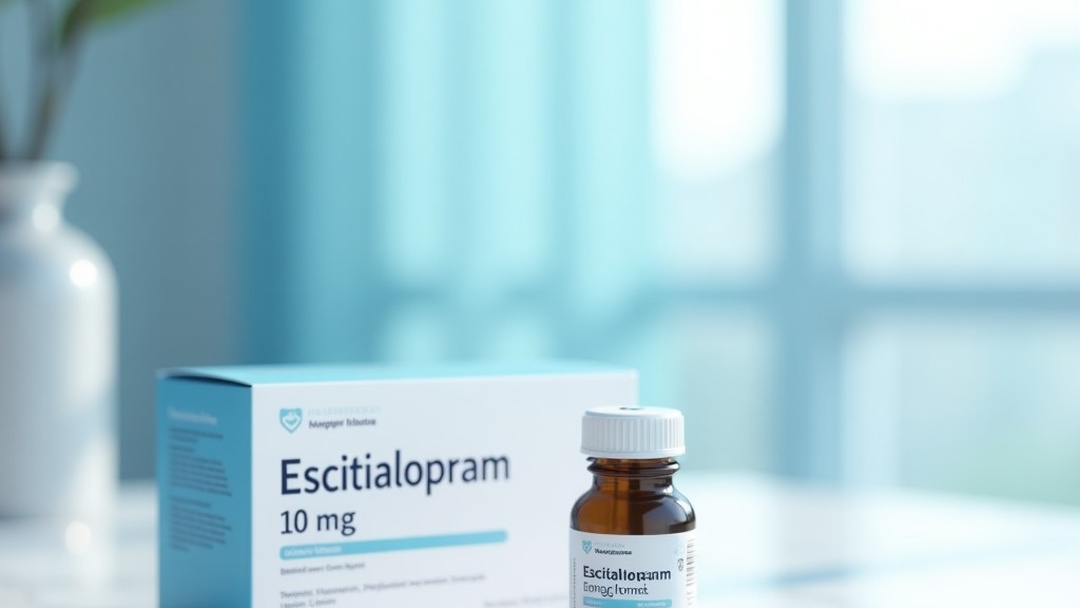
Escitalopram is a selective serotonin reuptake inhibitor (SSRI) and is the S-enantiomer of citalopram. It is one of the most commonly prescribed antidepressants worldwide, available as a generic medication at a fraction of the cost of its original brand-name formulation (Lexapro). Generic Escitalopram 10mg tablets contain the same active pharmaceutical ingredient as the branded version and have been proven bioequivalent through rigorous FDA and CDSCO regulatory standards.
Escitalopram belongs to the SSRI class, which also includes fluoxetine (Prozac), sertraline (Zoloft), paroxetine (Paxil), and fluvoxamine (Luvox). Among SSRIs, escitalopram is distinguished by its high selectivity for the serotonin transporter (SERT) and minimal affinity for off-target receptors, resulting in a favorable side effect profile and better tolerability compared to many other antidepressants.
Mechanism of Action
Escitalopram acts by selectively inhibiting the reuptake of serotonin (5-hydroxytryptamine, 5-HT) at the presynaptic neuronal membrane. By blocking the serotonin transporter (SERT), escitalopram increases the concentration of serotonin in the synaptic cleft, enhancing serotonergic neurotransmission. This mechanism is believed to underlie its antidepressant and anxiolytic effects.
Unlike some other SSRIs, escitalopram has a unique binding mode — it binds to both the primary binding site and an allosteric site on SERT, which may contribute to its higher clinical potency and faster onset of action. The drug has negligible affinity for histaminergic, muscarinic, and adrenergic receptors, which explains its lower incidence of sedation, weight gain, and anticholinergic side effects compared to tricyclic antidepressants (TCAs) and some other SSRIs.
While the antidepressant effect typically takes 2–4 weeks to manifest, the molecular changes (including increased BDNF expression, neurogenesis in the hippocampus, and modulation of HPA axis activity) occur over weeks to months. This delayed therapeutic onset underscores the importance of adherence during the early treatment phase.
FDA-Approved Indications
Escitalopram 10mg is FDA-approved for:
- Major Depressive Disorder (MDD): Acute and maintenance treatment in adults and adolescents (12–17 years). The STAR*D trial (Sequenced Treatment Alternatives to Relieve Depression) demonstrated that approximately 47–53% of MDD patients achieve remission with first-line SSRI therapy including citalopram/escitalopram.
- Generalized Anxiety Disorder (GAD): Acute treatment in adults. Escitalopram has demonstrated significant superiority over placebo in reducing Hamilton Anxiety Rating Scale (HAM-A) scores in multiple randomized controlled trials.
Off-label uses (with clinical evidence support):
- Panic disorder (with or without agoraphobia)
- Social anxiety disorder (social phobia)
- Obsessive-compulsive disorder (OCD)
- Post-traumatic stress disorder (PTSD)
- Premenstrual dysphoric disorder (PMDD)
- Bulimia nervosa
- Body dysmorphic disorder
- Hot flashes in postmenopausal women
Dosage Guidelines
| Indication | Starting Dose | Usual Therapeutic Dose | Maximum Dose | Notes |
|---|---|---|---|---|
| Major Depressive Disorder (adults) | 10 mg once daily | 10–20 mg once daily | 20 mg/day | May increase to 20 mg after minimum 1 week |
| Generalized Anxiety Disorder | 10 mg once daily | 10–20 mg once daily | 20 mg/day | Response may take 2–4 weeks |
| MDD (adolescents 12–17 years) | 10 mg once daily | 10–20 mg once daily | 20 mg/day | Monitor for suicidal ideation |
| Elderly patients (>65 years) | 5 mg once daily | 5–10 mg once daily | 10 mg/day | Reduced dosing due to decreased clearance |
| Hepatic impairment (Child-Pugh A/B) | 5 mg once daily | 5–10 mg once daily | 10 mg/day | Dose reduction of 50% recommended |
| CYP2C19 poor metabolizers | 5 mg once daily | 5–10 mg once daily | 10 mg/day | Genetic testing recommended where available |
Important dosing considerations: Escitalopram 10mg can be taken with or without food. Morning dosing is recommended to minimize insomnia, though some patients prefer evening dosing if sedation occurs. The tablet can be split along the score line for 5 mg dosing. Dose titration should be gradual, and abrupt discontinuation should be avoided (taper by 5 mg every 1–2 weeks to prevent discontinuation syndrome).
Side Effects and Safety Profile
Common side effects (incidence >5% and at least twice placebo):
- Nausea (15% vs. 7% placebo) — typically transient, resolves within 1–2 weeks
- Insomnia (9–12%) — consider morning dosing
- Ejaculation disorder / delayed ejaculation (9–14% in males)
- Fatigue / somnolence (5–8%)
- Headache (but similar to placebo in controlled trials)
- Diaphoresis (excessive sweating — 5–8%)
- Decreased libido (3–7%)
- Anorgasmia / delayed orgasm (2–6%)
- Dry mouth (5–6%)
- Diarrhea (5–8%)
Serious adverse reactions (rare):
- Serotonin syndrome: Potentially life-threatening condition characterized by agitation, hyperthermia, hyperreflexia, clonus, autonomic instability. Risk increases with concomitant use of other serotonergic drugs (MAOIs, triptans, linezolid, tramadol, St. John’s Wort).
- QT interval prolongation: Dose-dependent (above 20 mg/day). Maximum recommended dose is 20 mg/day to maintain QTcF increase below 10 ms threshold.
- Suicidal ideation and behavior: Black box warning — increased risk in children, adolescents, and young adults (age 18–24) during initial treatment phase (first 1–2 months).
- Hyponatremia: More common in elderly patients and those with volume depletion, due to SIADH (syndrome of inappropriate antidiuretic hormone secretion).
- Bleeding risk: Increased risk of upper gastrointestinal bleeding, especially when co-prescribed with NSAIDs, aspirin, or anticoagulants.
- Activation of mania/hypomania: In patients with bipolar disorder (screening for personal/family history of bipolarity is essential before initiating treatment).
- Angle-closure glaucoma: Very rare — SSRIs can cause pupillary dilation.
Discontinuation syndrome: Abrupt cessation of escitalopram can cause dizziness, sensory disturbances (paresthesia, “electric shock” sensations), irritability, agitation, anxiety, insomnia, and flu-like symptoms. Gradual tapering is essential.
Escitalopram vs. Other SSRIs: Comparison
| Parameter | Escitalopram 10mg | Citalopram 20mg | Fluoxetine 20mg | Sertraline 50mg |
|---|---|---|---|---|
| SERT selectivity | Highest (+++) | High (++) | Moderate (+) | High (++) |
| Half-life | 27–32 hours | 35 hours | 4–6 days (active metabolite: 16 days) | 26 hours |
| FDA approvals | MDD, GAD | MDD | MDD, OCD, Bulimia, PMDD, Panic | MDD, OCD, Panic, PTSD, SAD, PMDD |
| Drug interaction potential | Low (minimal CYP inhibition) | Moderate (CYP2C19) | High (CYP2D6, CYP3A4) | Moderate (CYP2D6, CYP3A4) |
| QT prolongation risk | Low (dose-dependent above 20mg) | Higher (dose-dependent above 40mg) | Minimal | Minimal |
| Weight gain potential | Low–moderate | Moderate | Low (may cause initial weight loss) | Low–moderate |
| Sexual dysfunction | Moderate (15–20%) | Moderate | Moderate–high | Moderate |
| Sedation vs. activation | Neutral (dose-dependent) | Neutral | Activating | Neutral–activating |
| Onset of action | ~2–4 weeks | ~2–4 weeks | ~3–6 weeks (may be faster) | ~2–4 weeks |
Generic Escitalopram Pricing in India
India is a leading global manufacturer of generic antidepressants, offering Escitalopram 10mg at prices dramatically lower than the original branded Lexapro in Western markets. Indian pharmaceutical companies produce WHO-GMP certified generic escitalopram that is exported to over 100 countries.
Indian Generic Escitalopram 10mg Prices (per strip of 10 tablets):
- Generic Escitalopram 10mg (standard Indian brands): $1–$4 (₹90–₹350 per 10 tablets)
- Generic Escitalopram 20mg (if available): $2–$5 (₹160–₹420 per 10 tablets)
International Brand Price Comparison:
- Brand Lexapro (escitalopram) 10mg, US retail (without insurance): $90–$230 for 30 tablets (one month supply)
- Generic escitalopram 10mg, US retail: $9–$40 for 30 tablets (with discount programs like GoodRx)
- Indian generic escitalopram 10mg, 30 tablets: $3–$12
Estimated monthly savings with Indian generics: 85–97% vs. US brand prices.
All prices are approximate ±10–15% ranges. Prices vary by manufacturer, pharmacy location, currency fluctuation, insurance coverage, and time of purchase. The information above is for educational reference only. For current pricing from verified Indian generic suppliers, visit our pharmaceuticals collection.
Frequently Asked Questions
How long does it take for Escitalopram 10mg to start working?
Can I drink alcohol while taking Escitalopram 10mg?
Is Escitalopram 10mg safe for long-term use?
What is the difference between Escitalopram and Citalopram?
Does Escitalopram 10mg cause weight gain?
Safety and Medical Disclaimer
IMPORTANT DISCLAIMER: This article is for educational and informational purposes only. It does not constitute medical advice, diagnosis, or treatment. Antidepressants are prescription medications that should only be used under the supervision of a qualified healthcare professional. Escitalopram carries an FDA black box warning regarding increased risk of suicidal thoughts and behavior in children, adolescents, and young adults during initial treatment. Do not discontinue escitalopram abruptly — this may cause a discontinuation syndrome with potentially distressing symptoms. The price information provided is approximate and for reference only. Always consult your physician before starting, stopping, or changing any medication regimen.
References
- U.S. Food and Drug Administration (FDA). Lexapro (escitalopram oxalate) Prescribing Information. Silver Spring, MD: FDA; 2024. Available at: https://www.accessdata.fda.gov/
- Trivedi MH, Rush AJ, Wisniewski SR, et al. Evaluation of outcomes with citalopram for depression using measurement-based care in STAR*D. American Journal of Psychiatry. 2006;163(1):28–40. DOI: 10.1176/appi.ajp.163.1.28.
- Cipriani A, Furukawa TA, Salanti G, et al. Comparative efficacy and acceptability of 21 antidepressant drugs for the acute treatment of adults with major depressive disorder: a systematic review and network meta-analysis. The Lancet. 2018;391(10128):1357–1366. DOI: 10.1016/S0140-6736(17)32802-7.
- Kasper S, Sacher J, Klein N, et al. Differences in the dynamics of serotonin reuptake transporter occupancy may explain superior clinical efficacy of escitalopram versus citalopram. International Clinical Psychopharmacology. 2009;24(3):119–125.
- National Institute for Health and Care Excellence (NICE). Depression in adults: treatment and management. NICE Guideline [NG222]. London: NICE; 2022.
- Thase ME, Nierenberg AA, McGrath PJ, et al. A study of the efficacy and safety of escitalopram in treating major depressive disorder. Journal of Clinical Psychiatry. 2010;71(4):431–440.
- Stahl SM. Stahl’s Essential Psychopharmacology: Neuroscientific Basis and Practical Applications. 5th ed. Cambridge University Press; 2021. ISBN: 978-1-108-94168-0.
- Kennedy SH, Lam RW, McIntyre RS, et al. Canadian Network for Mood and Anxiety Treatments (CANMAT) 2016 clinical guidelines for the management of adults with major depressive disorder. Canadian Journal of Psychiatry. 2016;61(9):540–560.