

HIV Treatment Drugs List: Types, Uses, and Safety Guide
SEO Meta
Title Tag: HIV Treatment Drugs List: Types & Safety Guide
Meta Description: Explore a comprehensive HIV treatment drugs list, including medication types, uses, side effects, and important treatment information.
Introduction
HIV treatment has evolved significantly over the years, improving long-term disease management and quality of life for many people worldwide. Today, several types of HIV treatment drugs are available, and healthcare providers often use combination therapies to help manage the virus effectively.
Patients, caregivers, and researchers frequently search for an updated HIV treatment drugs list to better understand available medication categories, treatment approaches, safety considerations, and common antiviral combinations.
This educational guide explains the major classes of HIV medications, commonly prescribed drugs, treatment goals, side effects, and factors that healthcare professionals may consider when selecting therapy. The information is intended for educational purposes only and should not replace professional medical advice.
What Are HIV Treatment Drugs?
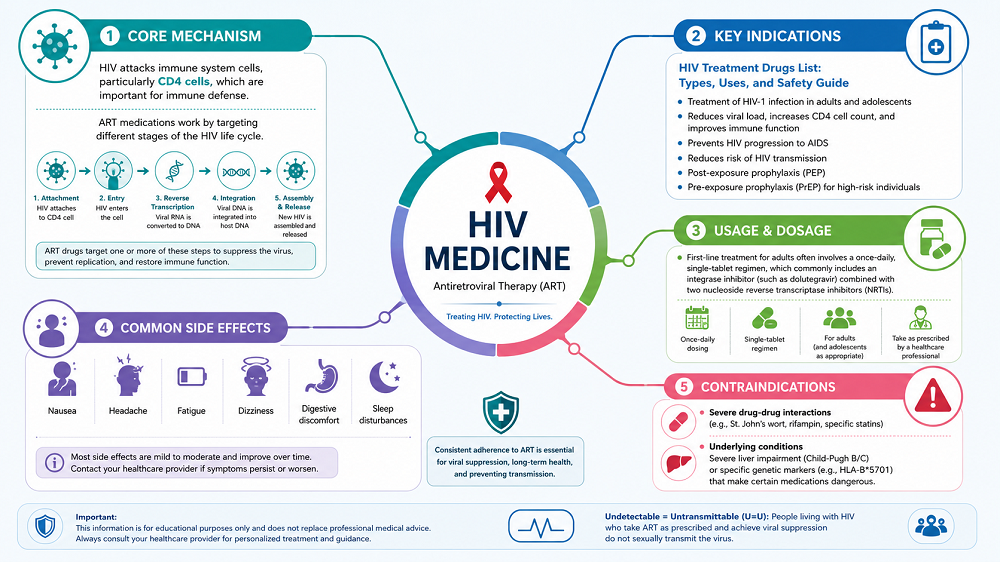
HIV treatment drugs are antiviral medications used to help manage Human Immunodeficiency Virus (HIV). These medicines work by reducing the virus’s ability to replicate in the body.
Most HIV treatment plans involve antiretroviral therapy (ART), which usually combines multiple medications from different drug classes. Combination therapy may help improve treatment effectiveness and reduce the likelihood of viral resistance.
Main Goals of HIV Treatment
- Reduce viral replication
- Support immune system function
- Lower the risk of disease progression
- Improve long-term health outcomes
- Reduce transmission risk when medically appropriate
Comprehensive HIV Treatment Drugs List
Several categories of HIV medications are used in modern treatment protocols. Each class targets the virus differently.
1. Nucleoside Reverse Transcriptase Inhibitors (NRTIs)
NRTIs are among the most commonly used HIV treatment drugs.
Examples of NRTIs
- Tenofovir
- Lamivudine
- Emtricitabine
- Abacavir
- Zidovudine
These medications interfere with the virus’s replication process.
2. Non-Nucleoside Reverse Transcriptase Inhibitors (NNRTIs)
NNRTIs also target reverse transcriptase but through a different mechanism.
Examples of NNRTIs
- Efavirenz
- Nevirapine
- Doravirine
- Rilpivirine
3. Protease Inhibitors (PIs)
Protease inhibitors block an enzyme the virus needs for maturation.
Examples of Protease Inhibitors
- Atazanavir
- Darunavir
- Lopinavir
- Ritonavir
4. Integrase Strand Transfer Inhibitors (INSTIs)
INSTIs are commonly used in many current HIV treatment regimens.
Examples of INSTIs
- Dolutegravir
- Bictegravir
- Raltegravir
- Elvitegravir
5. Entry and Fusion Inhibitors
These medications help prevent HIV from entering human immune cells.
Examples
- Maraviroc
- Enfuvirtide
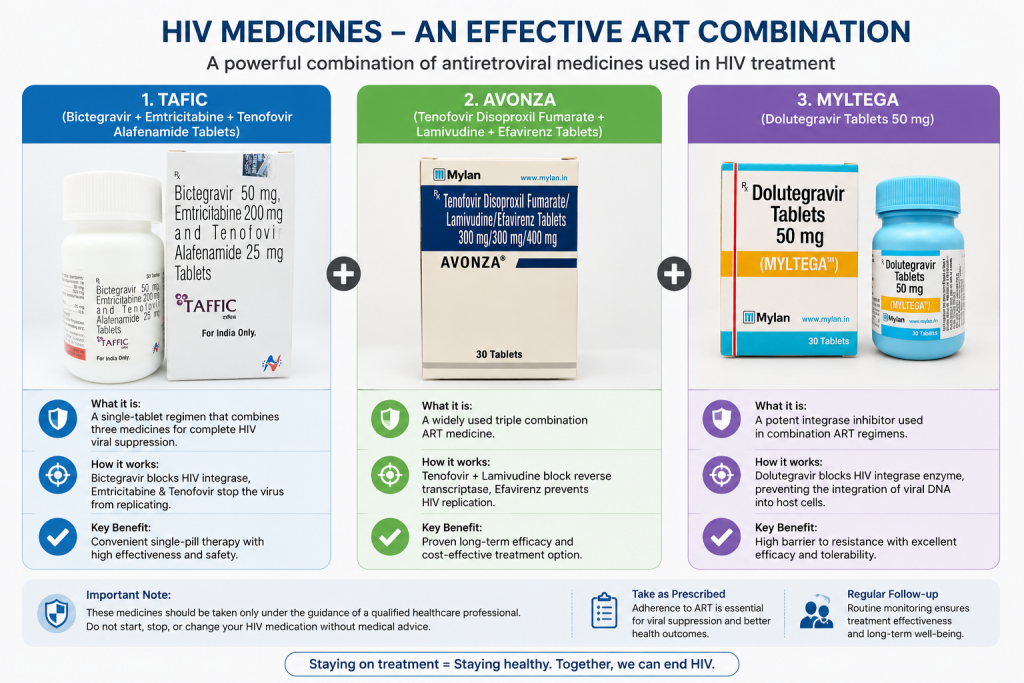
6. Combination HIV Medicines
Many modern HIV treatments combine multiple antiviral agents into a single tablet.
Examples of Combination Therapies
- Tenofovir + Emtricitabine combinations
- Dolutegravir-based combinations
- Bictegravir-based combinations
How HIV Treatment Is Selected
Healthcare providers consider several factors when selecting HIV medications.
Factors That May Influence Treatment Choice
- Viral resistance patterns
- Overall health condition
- Kidney and liver function
- Potential drug interactions
- Pregnancy considerations
- Treatment history
- Convenience and adherence factors
Individualized treatment planning remains important in HIV care.
Common Side Effects of HIV Medications
Side effects vary depending on the medication, dosage, and patient health profile.
Commonly Reported Side Effects
- Nausea
- Headache
- Fatigue
- Dizziness
- Digestive discomfort
- Sleep disturbances
Monitoring During Treatment
Healthcare providers may monitor:
- Viral load
- CD4 cell counts
- Liver function
- Kidney health
- Medication tolerance
Patients should report unusual or persistent symptoms to healthcare professionals.
Generic vs Brand HIV Medications
Many HIV drugs are available as generic formulations in several countries.
| Feature | Generic HIV Drugs | Brand HIV Drugs |
|---|---|---|
| Cost | Generally lower | Usually higher |
| Availability | Widely available in some regions | Depends on market access |
| Active Ingredients | Equivalent active ingredients | Original branded formulation |
| Packaging | May vary | Brand specific |
Healthcare providers may recommend specific formulations depending on patient needs and regional availability.
Importance of Adherence in HIV Treatment
Consistent adherence to prescribed HIV medication schedules may support effective viral management. Missing doses can affect treatment performance and increase the risk of viral resistance in some cases.
Ways Patients May Support Adherence
- Using medication reminders
- Maintaining regular follow-up visits
- Discussing side effects with providers
- Keeping a consistent medication schedule
Global HIV Treatment Market Insights
The HIV treatment market continues to evolve with newer antiviral combinations, expanded generic manufacturing, and broader healthcare access initiatives.
Several trends are shaping HIV treatment globally:
- Growth in single-tablet regimens
- Increased availability of generics
- Expanded access programs
- Development of long-acting therapies
- Improved treatment accessibility in developing regions
Healthcare systems continue working to improve access to affordable HIV care worldwide.
Data and Insights Section
Modern HIV management often relies on combination antiretroviral therapy rather than single-drug treatment. Healthcare providers typically personalize treatment plans based on clinical guidelines and patient-specific factors.
Generic manufacturing has improved access to HIV medications in many international markets. However, availability and pricing may vary depending on healthcare systems, government programs, and pharmaceutical regulations.
Patients researching HIV treatment drugs commonly search for:
- Updated HIV medication lists
- Best HIV treatment options
- Generic HIV medicines
- HIV drug side effects
- Single-tablet HIV regimens
- Long-term HIV treatment information
Frequently Asked Questions (FAQs)
1. What are the main types of HIV treatment drugs?
The main categories include NRTIs, NNRTIs, protease inhibitors, integrase inhibitors, and entry inhibitors. Each class works differently to reduce viral replication. Healthcare providers often combine medications from multiple classes as part of antiretroviral therapy (ART).
2. What is antiretroviral therapy (ART)?
ART refers to the use of multiple HIV medications together to help manage the virus. Combination therapy is commonly used because it may improve treatment effectiveness and lower the risk of drug resistance. Treatment plans are personalized for each patient.
3. Are HIV medications available as generics?
Yes. Many HIV medications are available in generic form in several countries. Generic options may improve affordability and accessibility while containing equivalent active ingredients approved by regulatory authorities.
4. Can HIV treatment cure HIV?
Current HIV medications are generally used for long-term management rather than providing a guaranteed cure. Treatment aims to help control viral activity and support immune system health. Research in HIV therapy continues to evolve globally.
5. What are common side effects of HIV medicines?
Side effects may include nausea, fatigue, headache, dizziness, digestive discomfort, or sleep-related issues. Side effects vary depending on the medication and the individual patient. Healthcare providers monitor treatment response and medication tolerance during therapy.
6. How do doctors choose HIV medications?
Healthcare providers consider viral resistance, medical history, other medications, kidney and liver function, and treatment goals when selecting HIV therapy. Individualized care is an important part of long-term HIV management.
7. What happens if patients miss HIV medication doses?
Missing doses may affect treatment consistency and could contribute to viral resistance in some situations. Patients are encouraged to follow prescribed medication schedules carefully and discuss adherence concerns with healthcare providers.
8. What are single-tablet HIV regimens?
Single-tablet regimens combine multiple HIV medications into one pill taken daily. These combinations may simplify treatment schedules and improve convenience for some patients. Medication suitability depends on physician evaluation.
9. Are newer HIV drugs safer than older medications?
Some newer HIV treatments may offer improved convenience or different safety profiles compared to older therapies. However, treatment suitability depends on the patient’s overall medical condition and clinical needs.
10. Is long-term HIV treatment common?
Yes. HIV treatment is often long term and requires regular monitoring by healthcare professionals. Ongoing care may include viral load testing, medication reviews, and general health assessments.
Suggested Images
Image 1
Description: Assorted HIV antiviral medication packaging and tablets
Alt Text: HIV treatment drugs and antiretroviral medication overview
Image 2
Description: Healthcare provider discussing HIV therapy options with patient
Alt Text: Doctor explaining HIV treatment medication choices
Image 3
Description: Medical laboratory monitoring HIV treatment progress
Alt Text: HIV viral load and treatment monitoring process
Extra SEO Recommendations
Suggested URL Slug
hiv-treatment-drugs-list
Related Long-Tail Keywords
- Complete HIV treatment drugs list
- HIV antiretroviral medications
- Best HIV treatment drugs
- Generic HIV medicines list
- HIV treatment medication guide
- ART drugs for HIV
- Common HIV antiviral medications
- Single tablet HIV regimens
- HIV medication side effects
- Modern HIV treatment options
Suggested Internal Linking Topics
- Understanding HIV viral load testing
- Guide to antiretroviral therapy
- Generic antiviral medications explained
- HIV medication adherence tips
- Long-term HIV management strategies
Conclusion
The range of HIV treatment drugs available today has expanded significantly, providing healthcare professionals with multiple therapeutic options for individualized patient care. Modern antiretroviral therapy often combines medications from different drug classes to help manage HIV effectively.
Understanding the different categories of HIV medications, their uses, and safety considerations may help patients and caregivers make informed healthcare discussions. Regular monitoring, consistent treatment adherence, and professional medical guidance remain important parts of HIV management.
For more information about HIV treatment options, medication updates, and antiviral therapy education, consult qualified healthcare providers or explore trusted medical resources.