
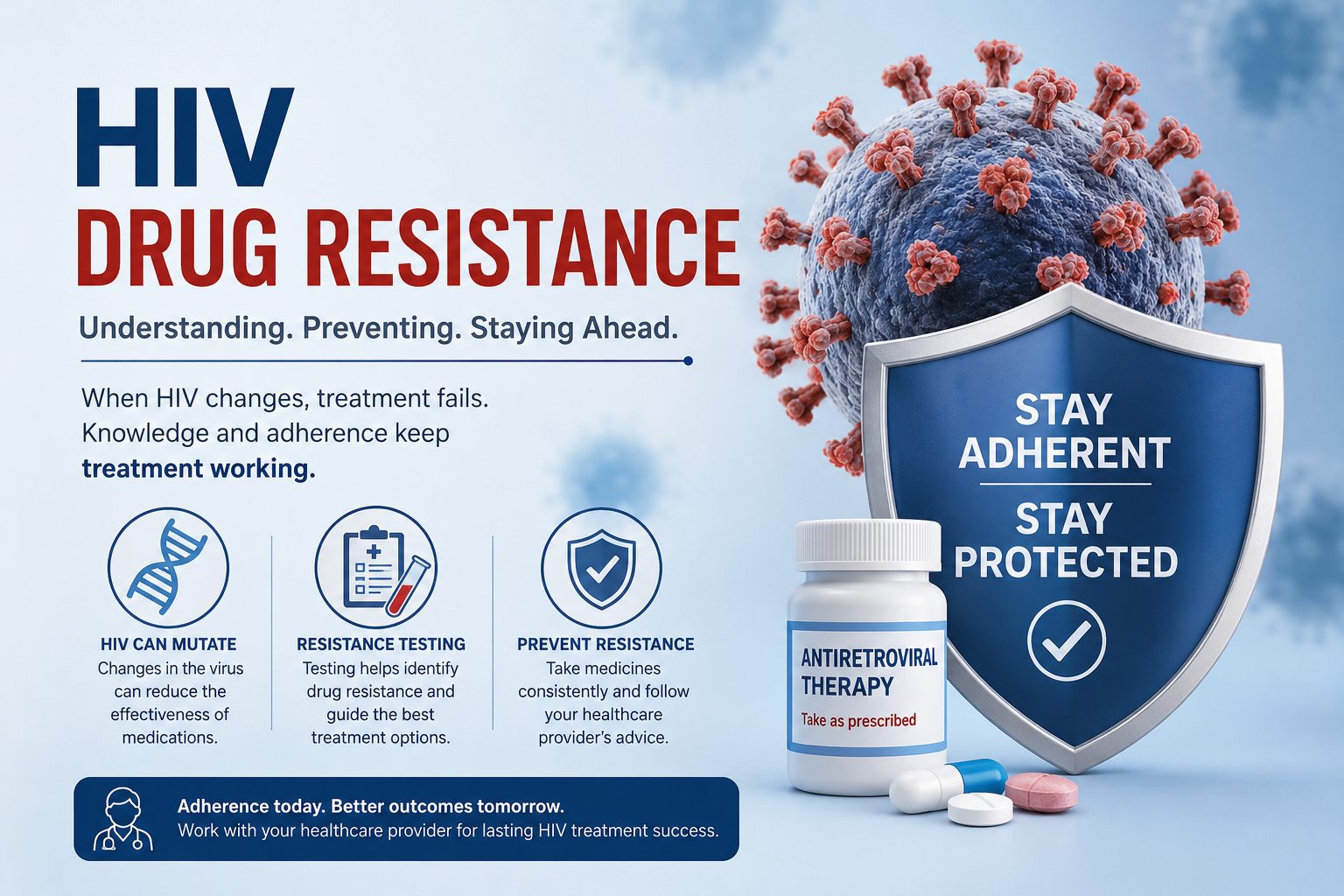
HIV Drug Resistance: Causes, Resistance Mutations, Testing, Treatment Failure, and Prevention
SEO Meta
Title Tag: HIV Drug Resistance: Causes, Risks & Prevention
Meta Description: Learn about HIV drug resistance, including causes, resistance testing, treatment challenges, prevention strategies, and HIV medication management.
Suggested URL Slug: /hiv-drug-resistance
Introduction
Modern HIV treatment has transformed HIV infection from a life-threatening disease into a manageable chronic condition. Today, highly effective antiretroviral therapy (ART) combinations such as Dolutegravir/Emtricitabine/Tenofovir Alafenamide and Abacavir/Dolutegravir/Lamivudine help millions of people achieve long-term viral suppression and live healthy lives.
Despite these advances, HIV drug resistance remains an important challenge. Drug resistance occurs when HIV mutates and becomes less responsive to one or more antiretroviral medications. If resistance develops, treatment may become less effective, allowing the virus to multiply and potentially limiting future treatment options.
The good news is that most cases of HIV drug resistance can be prevented through proper medication adherence, regular viral load monitoring, and timely medical follow-up. Understanding how resistance develops, how it is detected, and how healthcare providers manage resistant HIV is essential for anyone receiving HIV treatment.
This comprehensive guide explains the science behind HIV drug resistance, common resistance mutations, resistance testing methods, treatment failure, and strategies to maintain long-term treatment success.
What Is HIV Drug Resistance?
HIV drug resistance occurs when genetic changes (mutations) in the virus reduce the effectiveness of antiretroviral medications. HIV reproduces rapidly and can generate billions of new viral particles every day. During this replication process, random mutations occur naturally.
Some mutations allow the virus to survive despite the presence of HIV medications. When treatment is inconsistent or drug levels become too low, these resistant strains can multiply and become the dominant form of the virus.
Drug-resistant HIV may lead to:
- Reduced treatment effectiveness
- Increased viral load
- Declining immune function
- Greater risk of disease progression
- Fewer future treatment options
Because HIV drug resistance can directly affect patient outcomes, it is considered a critical aspect of long-term HIV management.
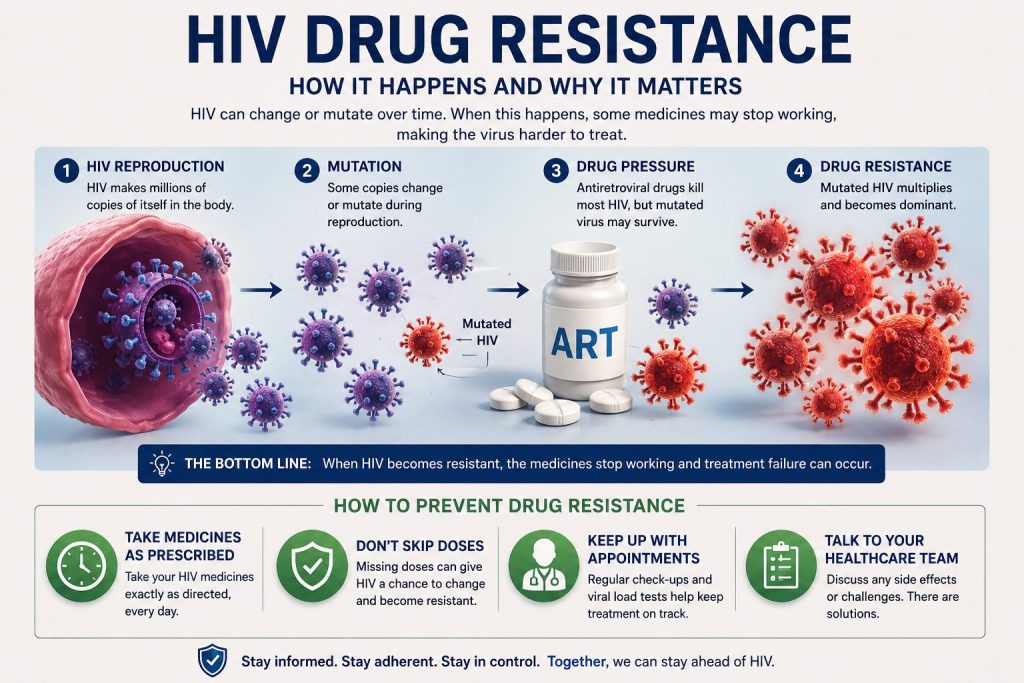
How HIV Drug Resistance Develops
Incomplete Viral Suppression
Resistance is more likely to develop when HIV is not fully suppressed. If the virus continues replicating during treatment, mutations may occur that help HIV survive despite medication exposure.
Missed Medication Doses
Inconsistent adherence to antiretroviral therapy is one of the most commonly discussed factors associated with HIV drug resistance. Missing doses may reduce medication levels in the body, creating conditions that allow resistant viral strains to emerge.
Previous HIV Treatment Exposure
Some individuals may have prior exposure to HIV medications through earlier treatment regimens or prevention-related therapy. Previous exposure can sometimes influence resistance patterns.
Transmitted Drug Resistance
In some cases, people may acquire a strain of HIV that already carries resistance mutations. This is known as transmitted drug resistance.
Types of HIV Drug Resistance
Acquired Drug Resistance
Acquired resistance develops after HIV treatment has started. It is commonly linked to incomplete viral suppression or inconsistent medication adherence.
Transmitted Drug Resistance
Transmitted resistance occurs when a person becomes infected with a strain of HIV that already contains resistance-associated mutations.
Cross-Resistance
Cross-resistance happens when resistance to one medication also affects the effectiveness of similar drugs within the same class.
Common HIV Resistance Mutations
Understanding resistance mutations is essential for selecting effective therapy.
M184V Mutation
Associated Drugs:
- Lamivudine (3TC)
- Emtricitabine (FTC)
Clinical Significance:
- High-level resistance to lamivudine
- High-level resistance to emtricitabine
- Reduced viral fitness
- Increased susceptibility to zidovudine and tenofovir
K65R Mutation
Associated Drugs:
- Tenofovir
- Abacavir
- Didanosine
Effects:
- Reduced effectiveness of several NRTIs
- May compromise future treatment options
K103N Mutation
Associated Drugs:
- Efavirenz
- Nevirapine
Effects:
- Significant resistance to first-generation NNRTIs
Y181C Mutation
Effects:
- Reduced susceptibility to multiple NNRTIs
- Common cause of treatment failure with older NNRTI regimens
Thymidine Analogue Mutations (TAMs)
Associated Drugs:
- Zidovudine
- Stavudine
Effects:
- Cross-resistance across several NRTIs
HIV Drug Classes and Resistance Profiles
| Drug Class | Examples | Resistance Barrier |
|---|---|---|
| NRTIs | Tenofovir, Lamivudine, Abacavir | Moderate |
| NNRTIs | Efavirenz, Nevirapine | Low to Moderate |
| Protease Inhibitors | Darunavir, Atazanavir | High |
| Integrase Inhibitors | Dolutegravir, Bictegravir | Very High |
Modern guidelines increasingly favor high-barrier integrase inhibitor regimens because they are less likely to develop resistance.
Dolutegravir vs Efavirenz: Resistance Comparison
Dolutegravir
Advantages:
- High genetic barrier
- Lower resistance rates
- Effective against many resistant strains
- Recommended by WHO as a preferred first-line therapy
Efavirenz
Limitations:
- Lower resistance barrier
- Resistance can develop after relatively few mutations
- K103N mutation can significantly reduce effectiveness
Clinical Takeaway
Dolutegravir-based regimens are generally preferred due to their superior resistance profile.
Lamivudine vs Tenofovir Resistance Profiles
| Feature | Lamivudine | Tenofovir |
| Common Mutation | M184V | K65R |
| Resistance Development | Relatively rapid | Less common |
| Viral Fitness Impact | Significant | Moderate |
| Current Use | Combination therapy | First-line therapy |
Both medications remain important components of modern ART.
HIV Treatment Failure vs Drug Resistance
Not every increase in viral load indicates resistance.
Treatment failure may result from:
- Poor adherence
- Drug interactions
- Malabsorption
- Incorrect dosing
- Resistance mutations
Signs of treatment failure include:
- Viral rebound
- Falling CD4 count
- Opportunistic infections
- Persistent detectable viral load
Resistance testing helps distinguish between adherence problems and genuine resistance.
HIV Resistance Testing
Genotypic Resistance Testing
The most commonly used resistance test.
Evaluates:
- Resistance mutations
- Drug susceptibility patterns
- Future treatment options
Recommended:
- At diagnosis
- Before treatment changes
- During virologic failure
Benefits
- Faster results
- Lower cost
- Widely available
Phenotypic Resistance Testing
Measures the virus’s actual response to antiretroviral drugs.
Useful when:
- Multiple mutations are present
- Complex treatment histories exist
- Extensive resistance is suspected
Common HIV Drug Classes Affected by Resistance
Resistance may occur across several antiretroviral drug classes, including:
- Nucleoside reverse transcriptase inhibitors (NRTIs)
- Non-nucleoside reverse transcriptase inhibitors (NNRTIs)
- Protease inhibitors (PIs)
- Integrase strand transfer inhibitors (INSTIs)
- Entry and fusion inhibitors
The specific resistance pattern varies between individuals and treatment histories.
Symptoms and Signs of HIV Drug Resistance
HIV drug resistance itself may not cause direct physical symptoms. Instead, healthcare providers often identify resistance when treatment becomes less effective.
Rising Viral Load
An increasing HIV viral load despite ongoing treatment may suggest treatment failure or possible resistance development.
Declining Immune Function
Changes in CD4 cell counts or worsening immune function may indicate that current therapy is not adequately controlling HIV.
Recurring Infections
Persistent or recurring infections may sometimes occur if HIV treatment effectiveness decreases significantly.
Only laboratory testing can confirm drug resistance patterns accurately.
HIV Resistance Testing Explained
Genotypic Resistance Testing
Genotypic testing examines HIV genetic mutations associated with drug resistance. This type of testing is commonly used in HIV treatment management.
Phenotypic Resistance Testing
Phenotypic testing evaluates how HIV responds to different medications in laboratory conditions. It may be used in more complex resistance cases.
When Resistance Testing Is Used
Healthcare providers may recommend resistance testing:
- At HIV diagnosis in some settings
- Before changing treatment regimens
- After treatment failure concerns
- When viral suppression is not achieved
Preventing HIV Drug Resistance
Consistent Medication Adherence
Taking HIV medications exactly as prescribed is considered one of the most important strategies for reducing resistance risk.
Routine Viral Load Monitoring
Regular viral load testing helps healthcare providers evaluate treatment effectiveness and identify potential issues early.
Open Communication With Healthcare Providers
Patients experiencing side effects, adherence challenges, or medication access problems should discuss concerns with healthcare professionals promptly.
Appropriate Treatment Selection
Healthcare providers choose treatment regimens carefully based on medical history, resistance testing, and current clinical guidelines.
HIV Drug Resistance and Treatment Changes
If resistance develops, healthcare providers may recommend modifying the treatment regimen. Modern HIV care often includes multiple medication options that can be adjusted according to resistance patterns.
Combination Therapy Strategies
Combination antiretroviral therapy remains the standard approach because using multiple medications together helps reduce the likelihood of resistance development.
Newer HIV Medications
Some newer HIV drugs may have higher resistance barriers, meaning the virus may require more mutations before resistance develops.
Individualized Treatment Planning
Resistance management depends on several factors, including:
- Previous treatment history
- Resistance testing results
- Coexisting medical conditions
- Drug interactions
- Treatment adherence patterns
Viral Load Monitoring
Regular viral load testing is critical.
Treatment goals:
Viral suppression below detectable levels
Prevention of resistance development
Long-term immune preservation
Patients with persistent viral loads above recommended thresholds require further evaluation.
Global Challenges of HIV Drug Resistance
Access to Resistance Testing
Resistance testing availability varies significantly between healthcare systems and geographic regions.
Medication Availability
Access to newer antiretroviral medications may differ depending on healthcare infrastructure, pricing, and regional treatment programs.
Public Health Concerns
Drug-resistant HIV strains remain an important public health consideration because resistant viruses may potentially spread within populations.
Data & Insights on HIV Drug Resistance
Advances in HIV treatment have significantly improved long-term viral suppression outcomes for many patients worldwide. However, HIV drug resistance continues to be monitored closely by healthcare organizations and researchers.
Modern treatment approaches increasingly emphasize:
- Early diagnosis
- Rapid treatment initiation
- Adherence support
- Routine viral load monitoring
- Access to combination antiretroviral therapy
Resistance trends can vary based on regional treatment practices, healthcare access, and availability of diagnostic testing.
Frequently Asked Questions About HIV Drug Resistance
1. What is HIV drug resistance?
HIV drug resistance occurs when the virus mutates in ways that reduce the effectiveness of antiretroviral medications. Resistant strains of HIV may continue replicating despite treatment if medications are no longer fully effective.
2. How does HIV become resistant to medication?
Resistance may develop when HIV continues replicating while medication levels are insufficient. Missed doses, inconsistent adherence, or incomplete viral suppression can increase the likelihood of resistance mutations developing over time.
3. Can HIV drug resistance be prevented?
While resistance cannot always be completely prevented, consistent medication adherence, regular medical monitoring, and appropriate treatment selection may help reduce risk significantly.
4. What are the signs of HIV drug resistance?
Drug resistance itself may not cause noticeable symptoms. Healthcare providers often identify possible resistance through rising viral load levels, declining immune markers, or reduced treatment effectiveness.
5. What is HIV resistance testing?
Resistance testing analyzes HIV mutations and evaluates how the virus responds to medications. Healthcare providers may use these tests to guide treatment decisions and regimen changes.
6. Can someone be infected with resistant HIV?
Yes, transmitted drug resistance can occur when a person acquires a strain of HIV that already contains resistance-associated mutations.
7. Does missing HIV medication doses cause resistance?
Missing doses may increase the risk of resistance because inconsistent medication levels can allow HIV to continue replicating and developing mutations.
8. Are newer HIV medications less likely to develop resistance?
Some newer HIV medications are designed with higher resistance barriers, meaning resistance may develop less easily compared to certain older therapies. Treatment decisions remain individualized.
9. Can HIV drug resistance be reversed?
Resistance mutations may persist even after treatment changes. Healthcare providers use resistance testing and alternative medication strategies to manage resistant HIV effectively.
10. Why is adherence important in HIV treatment?
Adherence helps maintain consistent medication levels that suppress viral replication. Effective viral suppression reduces the likelihood of resistance development and supports long-term treatment success.
Related Long-Tail Keywords
- HIV drug resistance causes
- how HIV resistance develops
- HIV resistance testing explained
- preventing HIV drug resistance
- antiretroviral drug resistance management
- HIV viral load and resistance
- drug resistant HIV treatment options
- HIV medication adherence importance
- transmitted HIV drug resistance
- HIV treatment failure and resistance
Suggested Internal Linking Topics
- Understanding Antiretroviral Therapy (ART)
- Common HIV Medications Explained
- HIV Drug Resistance
- Modern Advances in HIV Treatment
Conclusion
HIV drug resistance remains an important challenge in long-term HIV treatment management. While modern antiretroviral therapy has transformed HIV care, resistance can still affect treatment effectiveness if viral suppression is not maintained.
Understanding how resistance develops, the role of adherence, and the importance of resistance testing may help support informed healthcare discussions and better treatment awareness.
For more information about HIV medications, antiretroviral therapy strategies, and resistance management, consult trusted healthcare resources or speak with qualified healthcare professionals.